Story Theme Generator
A free AI story theme generator identifies or creates compelling themes for your narrative. Enter your story details or genre to get thematic ideas with supporting motifs and symbols — useful for writers, students, and anyone analyzing literature.
What Is a Story Theme Generator?
A story theme generator is an AI-powered tool that identifies or creates the thematic core of a narrative. It goes beyond plot summary to surface the underlying ideas, arguments, and human truths that give a story its depth and meaning. Whether you are a writer trying to articulate what your novel is really about, a student analyzing a text for class, or a reader exploring why a story resonated — a theme generator makes the abstract concrete.
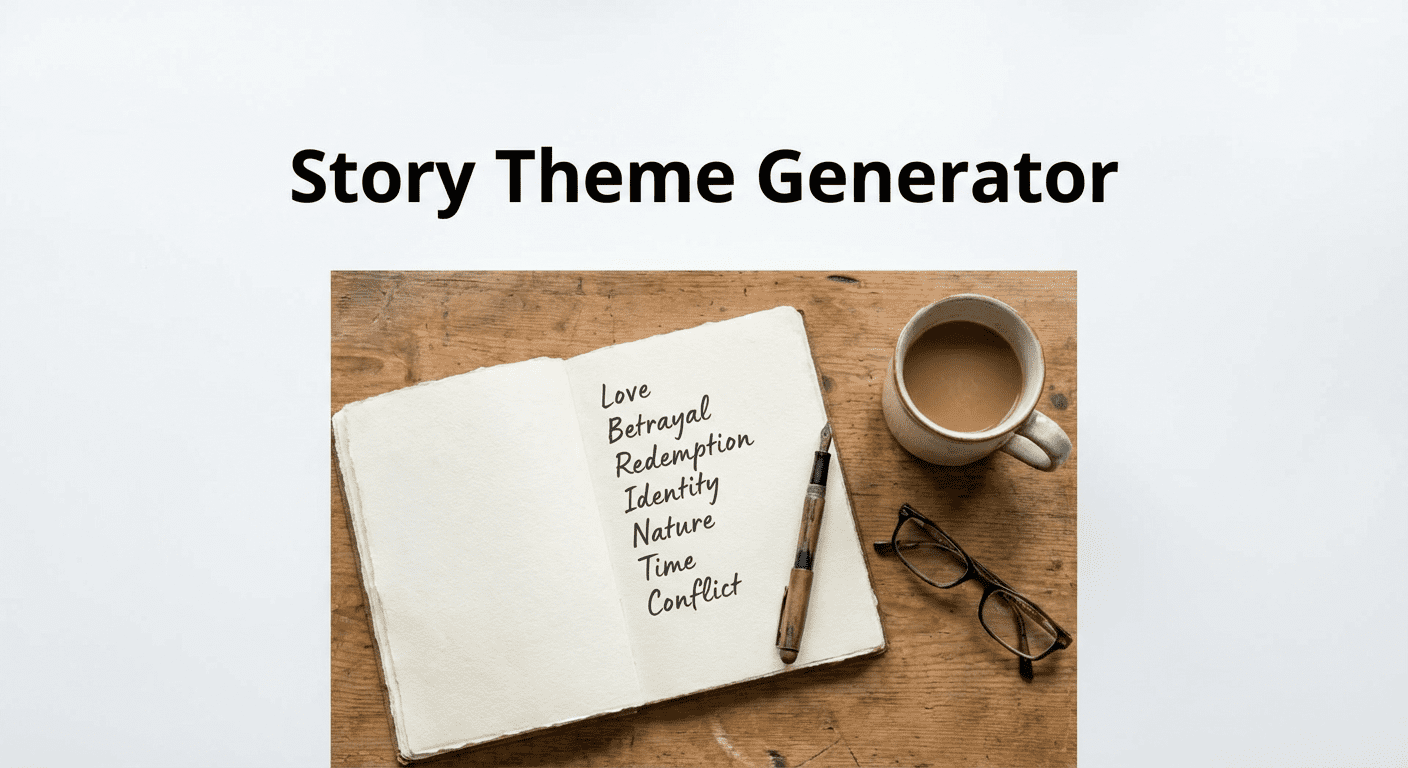
Theme is distinct from topic and subject. The topic of a story might be grief, but the theme is what the story says about grief — that it isolates us, or that it is the price of love, or that it forces growth. A strong theme elevates a story from a sequence of events into a work that leaves a lasting impression. This narrative theme generator helps you find or construct that core with precision. For help developing the plot that carries your theme, use the free AI plot generator, or for generating the story itself, try the free AI story generator.
How the Story Theme Generator Works
Describe Your Story or Pick a Genre
The Story Summary field lets you describe your narrative in as much or as little detail as you like. The more specific your summary — the characters, the central conflict, the emotional journey — the more precise and relevant the generated themes will be. If you are starting from scratch and want thematic inspiration, leave the summary blank and select a genre. The AI will generate strong, genre-appropriate themes from the genre alone.
Choose Theme Depth
The output type selector lets you choose exactly what kind of thematic content you need. Central Theme delivers a single focused theme for your narrative. Multiple Themes surfaces several distinct thematic threads. Theme with Motifs goes deeper, pairing each theme with the recurring images, objects, and patterns that reinforce it. Theme Statement for Essay produces formal thesis-ready statements for academic literary analysis. Each output type serves a different creative or analytical purpose.
Get Themes with Motifs
Motifs are the recurring elements — images, phrases, situations, objects — that appear throughout a story to reinforce its themes. Where a theme is the idea, a motif is the pattern that expresses it. The Theme with Motifs output type identifies or creates these supporting patterns alongside the central theme, giving you a complete thematic architecture you can build your story around or use to analyze an existing text.
Understanding Story Themes
What Makes a Strong Theme
A strong theme is specific, arguable, and universal. Specific means it says something precise rather than vague — not just "love is complicated" but "love that demands the erasure of self is indistinguishable from possession." Arguable means reasonable people could disagree with it — a true theme provokes thought rather than stating the obvious. Universal means it connects to human experiences that transcend the particular story — readers recognize the truth in it even if they have never lived that specific plot.
Strong themes emerge from character choices, especially choices made under pressure. The moment a character must choose between two things they value — loyalty and honesty, survival and dignity, love and freedom — the story reveals what it believes about the world. Building your plot around these choices is the surest way to generate themes that feel earned rather than imposed.
Theme vs Moral vs Message
These three terms are often confused. A moral is a directive — do not lie, be kind, work hard. It tells the reader what to do. A message is the author's explicit intention or point — what they want the reader to take away. A theme is broader and more open-ended: it is the central question or insight the story explores, without necessarily resolving it into a simple instruction. The best literary fiction tends to explore themes without imposing morals, trusting the reader to draw their own conclusions. Genre fiction often blends all three. Neither approach is wrong — they serve different narrative purposes.
Universal Themes in Literature
Certain themes appear across cultures, centuries, and genres because they address fundamental human experiences. Identity and self-discovery. The corruption of power. Love and loss. The tension between individual freedom and social obligation. The nature of good and evil. Coming of age and the loss of innocence. Redemption and the possibility of change. Justice versus mercy. These recurring themes persist because they are never fully resolved — each generation and each story finds new ways to approach them. The AI story theme generator draws on this tradition to generate themes with genuine literary weight. For exploring these themes through plot structure, the AI plot generator provides structural frameworks that carry thematic weight naturally.
Common Themes by Genre
Fantasy Themes (Power, Identity, Good vs Evil)
Fantasy literature has always used its distance from reality to explore deeply real human concerns. The most enduring fantasy themes center on power — who has it, who wants it, what it costs, and what it does to those who wield it. Identity is another central concern: who am I beneath my role, my title, my destiny? The hero who discovers their true lineage must then decide whether that identity determines their choices. Good versus evil remains foundational to the genre, though the most sophisticated fantasy complicates this binary — revealing that the darkness is also within the hero, or that the villain believes they are the protagonist of a righteous story.

Other recurring fantasy themes include the cost of magic (power always comes with a price), the tension between tradition and change (the old world resisting the new), sacrifice and what we are willing to give up for what we love, and the nature of destiny versus free will. For building the fantasy world that carries these themes, the fantasy prompt generator provides detailed world-building and character prompts.
Romance Themes (Love, Sacrifice, Trust)
Romance as a genre explores what it means to be truly known and accepted by another person. The central themes are love in its many forms — passionate, tender, self-sacrificing, destructive — and the vulnerability required to give and receive it. Trust is a recurring theme because romantic conflict almost always involves a breach of it: a secret kept, a wound misread, a fear projected onto the wrong person. Sacrifice appears in stories where love requires characters to give up something precious — career, family, safety, self-concept — and the question of whether love justifies that cost drives the emotional core of the narrative.
Contemporary romance also explores themes of worthiness (the belief that one does not deserve love), healing (finding a relationship that allows past wounds to close), and identity within relationship (maintaining a sense of self while merging lives with another). These themes resonate across subgenres from historical romance to contemporary and paranormal.
Thriller Themes (Justice, Paranoia, Survival)
Thrillers are machines for generating tension, and their themes emerge from that tension. Justice — and its failure — is the genre's most fundamental preoccupation. The thriller protagonist is almost always trying to achieve what the system has failed to provide: safety, accountability, truth. Paranoia is another structural theme: who can be trusted when everyone is a suspect and every assumption might be a trap? The thriller forces characters into environments where normal social trust breaks down and survival instinct overrides social convention. Survival itself — biological, moral, social — is often at stake, and the genre uses this pressure to ask what we are willing to become when the alternative is death or defeat.
Story Theme Examples
Example 1 - Themes for a Coming-of-Age Fantasy
Story: A teenage mage discovers her power is fueled by emotion, and the more powerful she becomes, the more she loses control of herself. Genre: Fantasy. Output: Theme with Motifs.
Theme 1: Power is inseparable from the self it transforms.
Motifs: Fire that burns brighter in anger; mirrors that show a stranger's face; spells that leave scars.
Symbol: The protagonist's changing eye color as her control slips.
Theme 2: The desire to be exceptional isolates as much as it elevates.
Motifs: Empty seats at the dining table; letters left unread; celebrations attended alone.
Symbol: The tower where she trains — high, visible, and utterly solitary.
Example 2 - Themes for a Dystopian Novel
Story: In a society where memories can be extracted and sold, a woman discovers her happiest memories were fabricated. Genre: Sci-Fi. Output: Theme Statement for Essay.
"When identity is constructed from manufactured experience, the self becomes a commodity owned by whoever controls the means of memory production."
"Happiness engineered by an external authority is indistinguishable from control — the willing submission of the mind to its own captivity."
"Authentic selfhood requires the willingness to confront a past that may be painful — because only lived truth, however imperfect, can ground a genuine identity."
Using Story Themes in Your Writing
Start with Theme or Let It Emerge
Some writers begin with a theme — a question they want to explore — and build plot and character to serve it. Others discover their themes through the writing process, finding them embedded in the choices their characters make. Both approaches work. This AI story theme generator supports both: use it to define your thematic intention before you begin, or paste in a draft summary to discover the themes already living in your story. For generating the story structure that carries themes, explore the background story generator for character depth and the dialogue generator for scenes that surface theme through conversation.

Theme for Literary Essays and Academic Analysis
Students and academics use theme analysis as the foundation of literary essays. A strong theme statement functions as a thesis — a single, arguable claim about what the text means that the essay then supports with textual evidence. The Theme Statement for Essay output type generates these formal statements in the language of literary criticism: precise, arguable, and structured as a universal claim rather than a plot summary. For other academic writing tools, the essay outline generator helps structure your literary analysis from thesis to conclusion.
Building Motifs and Symbols Around Your Theme
Once you have a central theme, the next step is to find the images, objects, phrases, and patterns that will carry it through the text. Motifs work through repetition — they gain meaning as they recur in different contexts. A symbol is a specific object or image that concentrates thematic meaning: the green light in The Great Gatsby, the conch shell in Lord of the Flies, the mockingbird in To Kill a Mockingbird. Use the Theme with Motifs output to generate these supporting elements and then plant them deliberately through your story's key scenes. For other creative writing tools that complement theme development, the creative writing prompts generator provides scene-level ideas that help themes surface naturally.
Frequently Asked Questions
Is this theme generator free?
Yes, completely free with no signup required. Generate themes for any genre, story type, or output format without any payment or registration.
What is a story theme?
A story theme is the central idea or insight a narrative explores beneath its surface plot. It is not what happens (plot) or what the story is about at a surface level (topic) but what the story argues or reveals about the human condition. Theme is expressed through character choices, recurring images, and how the narrative resolves (or refuses to resolve) its central conflicts.
Can it find themes in my existing story?
Yes. Paste a summary of your existing narrative into the Story Summary field. The AI will analyze the characters, conflicts, and arc you describe and surface the themes already present. This is a valuable tool for writers who want to ensure their intended themes are clearly expressed, or who have written something and want to understand what it is really saying.
Does it include motifs and symbols?
Yes. Select Theme with Motifs from the output type dropdown and each generated theme will include 2 to 3 supporting motifs (recurring images or patterns) and 1 to 2 symbols — the specific objects or images that concentrate the theme's meaning. These are generated to suit both your story context and your chosen genre.
Can I use it for literary essays?
Yes. Select Theme Statement for Essay from the output type dropdown. The generator produces formal, arguable theme statements in the language of academic literary criticism — single sentences that express the theme as a universal truth or insight. These are structured for use as thesis statements in literary analysis essays. Pair them with the essay outline generator to build your full argument.