29 Best Cloud Hosting Providers in 2026
This guide covers four cloud infrastructure tiers: Hyperscalers (01-06) for enterprise workloads at any scale; Developer cloud and VPS (07-15) for teams wanting clean UIs and predictable pricing; Edge, CDN and security (16-21) for global content delivery and DDoS protection; and PaaS and deployment platforms (22-30) for teams that want git-push deploys without managing servers. AWS holds 29% cloud market share as of Q3 2025, Azure 20%, GCP 13%, and all other providers share the remaining 38%.

Amazon Web Services (AWS)
Amazon Web Services is the world's largest cloud platform with 29% global market share as of Q3 2025, operating 240+ services across 35+ geographic regions. For web hosting, the most commonly used entry points are EC2 (virtual machines), S3 (object storage), Lightsail (simplified VPS from $3.50/month), and Lambda (serverless compute). AWS pricing is famously complex: compute, storage, bandwidth, and each individual service are billed separately, and egress fees of $0.09/GB out are significantly higher than independent VPS providers. Reserved Instances for 1 or 3 years reduce compute costs by up to 72% versus on-demand rates. The AWS free tier changed post-July 2025, with new accounts receiving credits for 6 months rather than the previous 12-month free service tier.
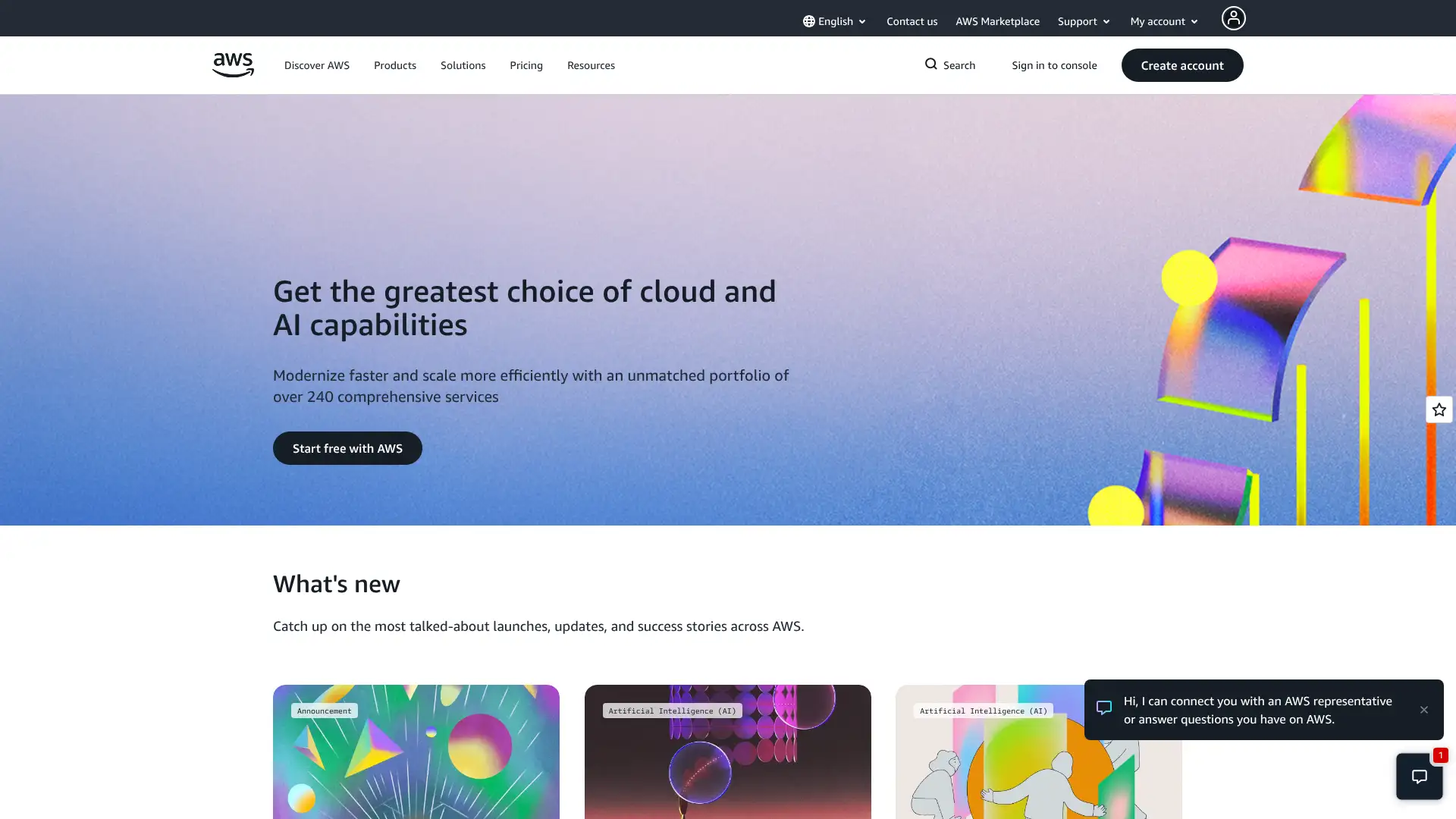
- • 240+ services across 35+ regions: the broadest catalogue covering every conceivable infrastructure need
- • Lightsail: simplified VPS from $3.50/month for developers wanting AWS reliability without full EC2 complexity
- • Lambda serverless: billed per 100ms execution, ideal for event-driven and intermittent workloads
- • Reserved Instances: 1 and 3-year commitments reduce EC2 cost by up to 72% for predictable workloads
- • Compliance leadership: SOC 2, ISO 27001, HIPAA, FedRAMP, and PCI DSS certifications across all regions
Amazon Web Services is the right choice for enterprises needing the broadest service catalogue, the most compliance certifications, or deep integration with other AWS services such as RDS, Lambda, and CloudFront. For startups and individual developers, the complexity and egress costs make DigitalOcean, Hetzner, or Linode more practical starting
Google Cloud Platform (GCP)
Google Cloud Platform holds 13% cloud market share and excels at data-heavy workloads, AI and ML projects, and applications using Google APIs. GCP's standout pricing feature is sustained-use discounts: any workload running for 25% or more of a billing month automatically receives cost reductions without reservation commitments. The always-free e2-micro instance (1 shared vCPU, 1 GB RAM) in US regions is the best permanently free compute tier of any hyperscaler. GCP powers infrastructure for companies like Kinsta for managed WordPress, and Cloud Run provides serverless container hosting with scale-to-zero billing. New accounts receive $300 credit for 90 days.
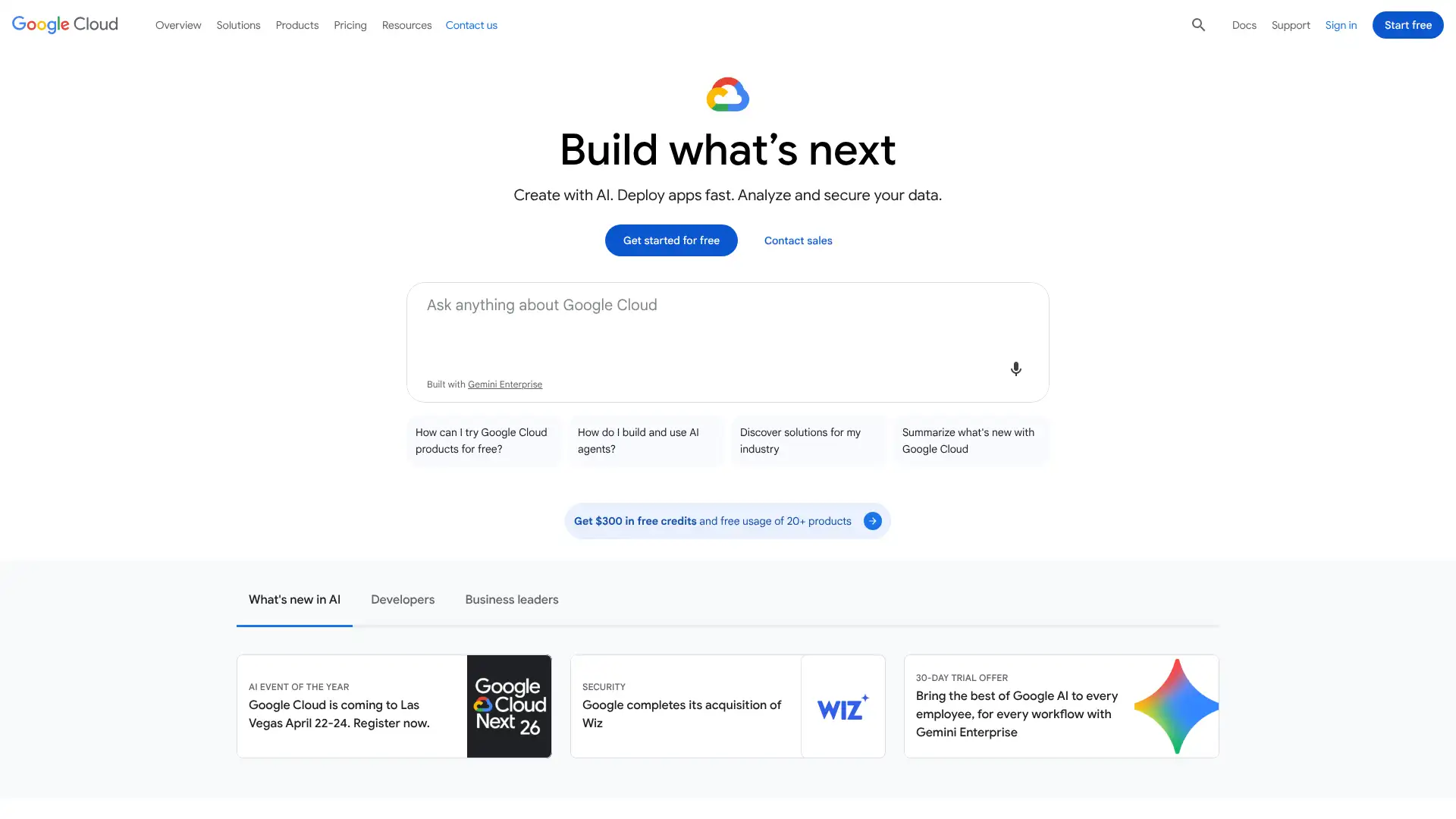
- • Sustained-use discounts: automatic cost reductions for consistent usage without reservation commitments
- • Always-free e2-micro: permanently free VM in US regions, the best always-free compute of any hyperscaler
- • Cloud Run: serverless container hosting with scale-to-zero for cost-efficient application serving
- • BigQuery and Vertex AI: industry-leading data analytics and machine learning infrastructure
- • Google private network backbone: used by Kinsta and others for low-latency global content delivery
Google Cloud Platform is the best hyperscaler for AI and ML workloads, BigQuery-powered data analytics, and sustained-state compute where automatic discounts reduce cost without reservation complexity. The always-free e2-micro is the most generous permanent free tier of any hyperscaler.
Microsoft Azure
Microsoft Azure holds 20% cloud market share and is the natural choice for enterprises with existing Microsoft investments: Windows Server, SQL Server, Microsoft 365, and Entra ID (formerly Active Directory) all integrate natively. The Azure free account provides $200 credit for 30 days plus access to 55+ always-free services. Azure Hybrid Benefit allows organisations to apply existing on-premise Windows Server licences to Azure VMs, reducing costs by up to 40% for Windows workloads. Azure DevOps provides a complete CI/CD, source control, and project management pipeline natively integrated with the cloud platform. B1s entry VMs start at approximately $7.30/month.
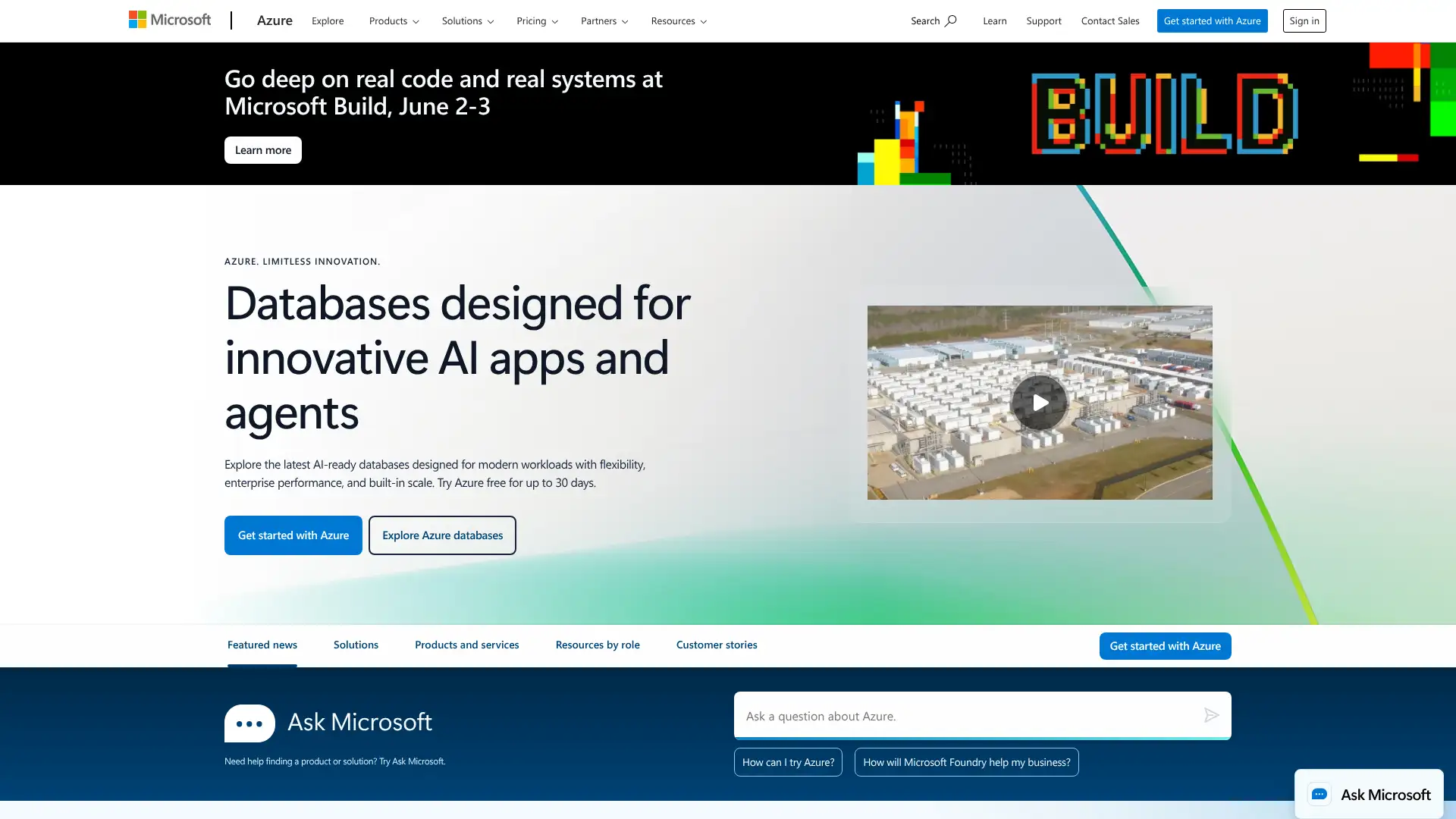
- • Native Microsoft integration: Active Directory, SQL Server, Office 365, and Visual Studio work natively
- • Azure Hybrid Benefit: use existing Windows Server and SQL Server licences in the cloud
- • 55+ always-free services alongside the 30-day $200 trial credit
- • Azure DevOps: complete CI/CD, source control, boards, and pipelines in one integrated platform
- • Government-grade compliance: FedRAMP High, UK G-Cloud, ISO, and HIPAA certifications
Microsoft Azure is the right cloud for enterprises with existing Microsoft investments where Windows Server, Active Directory, and SQL Server integrate without additional complexity. For organisations without a Microsoft stack, AWS or Google Cloud provide equivalent or better value for most workloads.
Oracle Cloud Infrastructure (OCI)
Oracle Cloud Infrastructure offers the most generous always-free compute tier of any cloud provider in 2026: 4 ARM OCPUs and 24 GB RAM permanently available through the Always Free A1 pool, with no 12-month expiry. This allocation would cost over $100/month on AWS, Azure, or GCP. OCI also includes 10 GB Autonomous Database, 20 GB block storage, and 10 TB outbound data per month in the always-free tier. OCI holds approximately 3% cloud market share and is positioned aggressively for enterprise database and mission-critical application workloads. One practical consideration: Oracle may reclaim idle Always Free instances that remain inactive for extended periods. Keeping instances active with a scheduled cron job mitigates this risk.
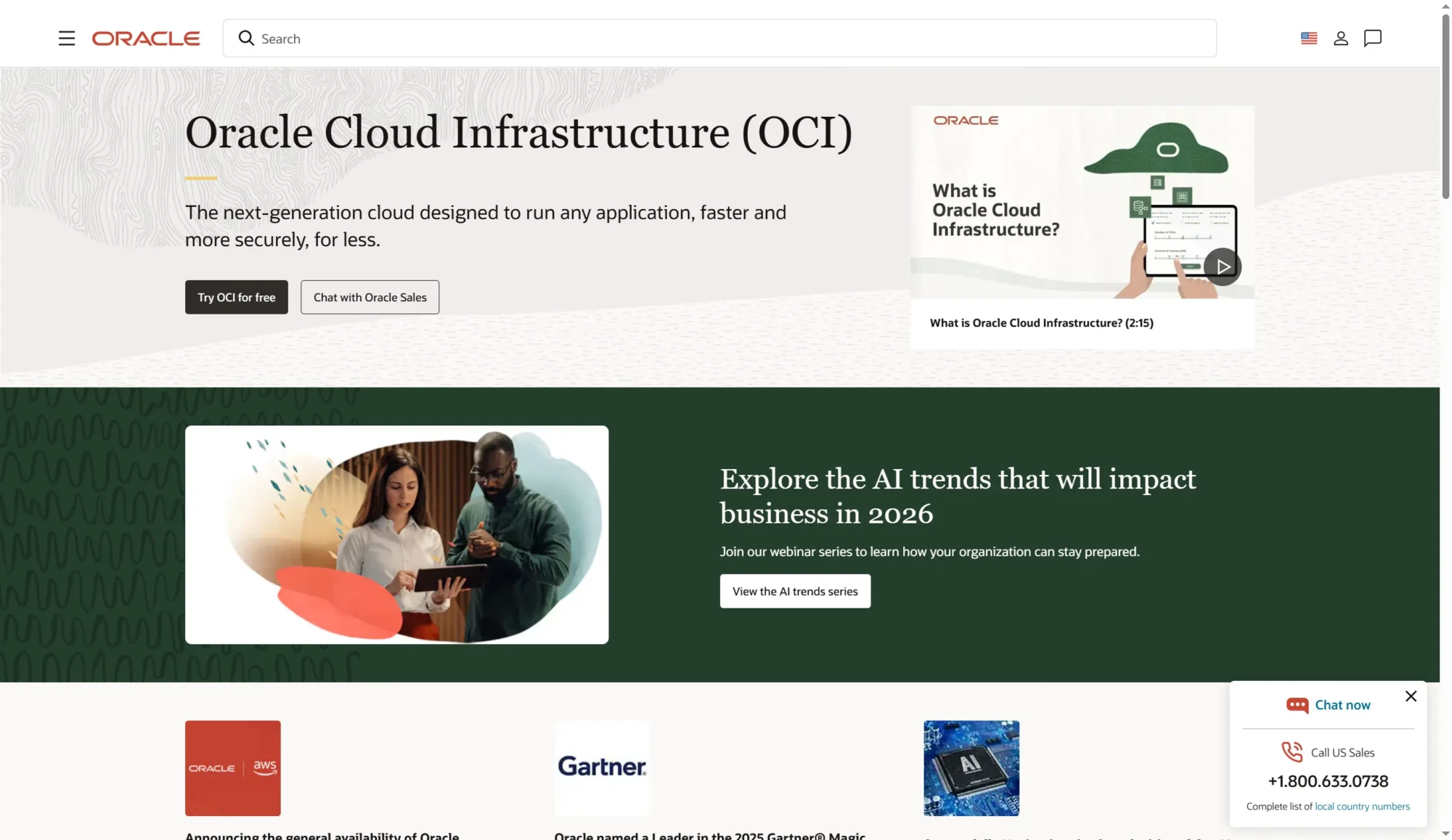
- • 4 OCPUs and 24 GB RAM always-free: the most generous permanently free compute of any cloud provider reviewed
- • 10 TB outbound data per month free: minimal egress cost concerns for most applications
- • Autonomous Database always-free: fully managed Oracle database at no ongoing cost
- • Uniform regional pricing: identical pricing across all OCI regions, unlike AWS or Azure
- • Oracle BYOL: Bring Your Own Licence for Oracle software reduces licensing costs significantly
Oracle Cloud Infrastructure is the best choice for developers who want the maximum amount of permanently free cloud compute for side projects, learning, or low-traffic applications. Plan for idle reclamation risk by keeping instances active. For Oracle database workloads at enterprise scale, OCI provides the best integration and pricing.
IBM Cloud
IBM Cloud holds approximately 2% cloud market share and is positioned primarily for enterprise hybrid cloud deployments and AI workloads powered by Watson. IBM Cloud Virtual Servers for VPC start from approximately $5-10/month for entry configurations, with a 60% off promotional pricing active through 2026 using code BUYVPC. IBM's primary differentiator is hybrid cloud compatibility: organisations running IBM Power Systems or Z mainframes on-premise can extend workloads to IBM Cloud with native compatibility. IBM Cloud Kubernetes Service and Red Hat OpenShift on IBM Cloud are the primary container platforms. Watson AI services provide enterprise NLP, computer vision, and machine learning.
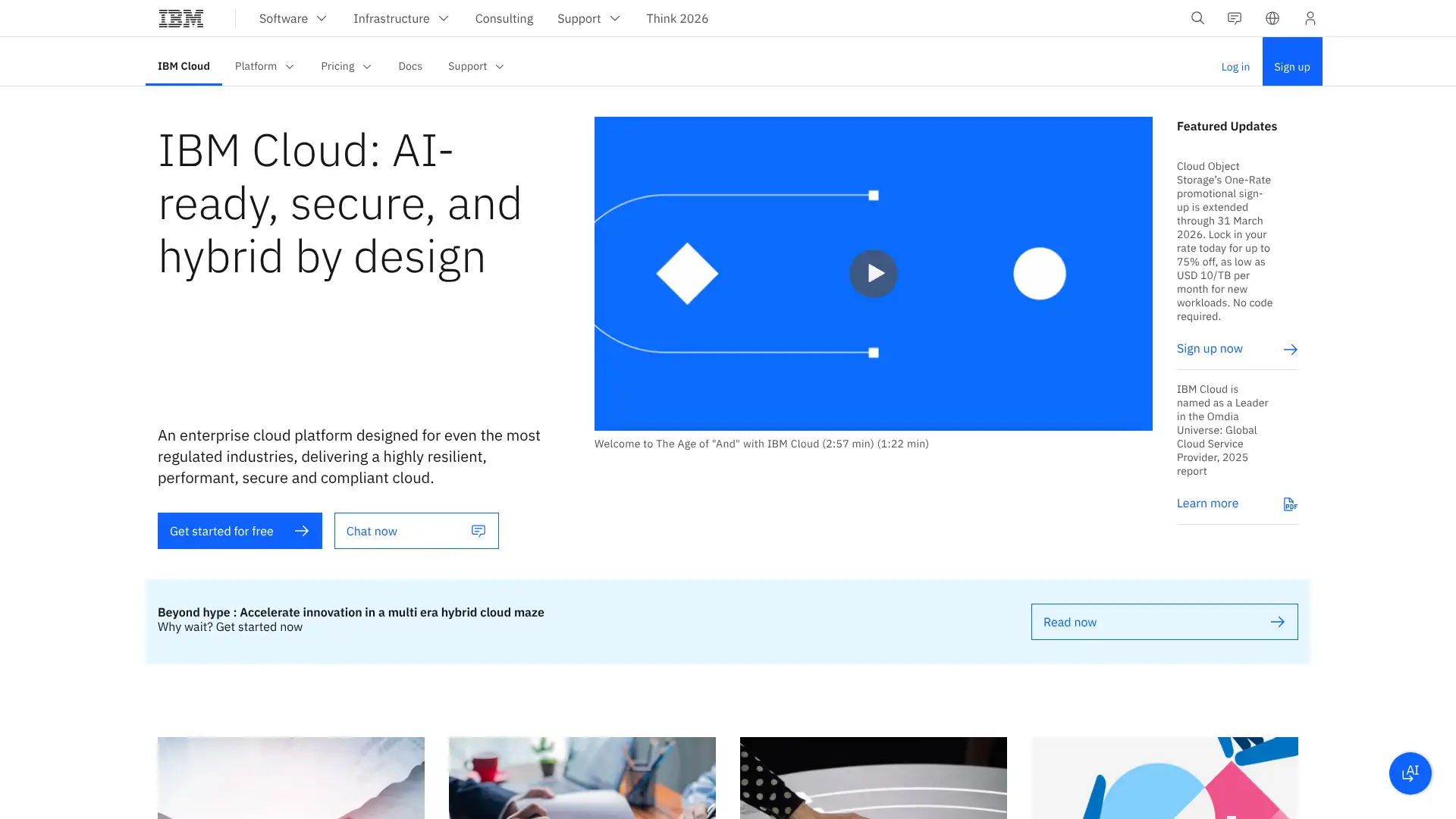
- • IBM Watson AI: enterprise-grade NLP, computer vision, and machine learning services
- • Hybrid cloud for IBM Power and Z mainframe: native compatibility for on-premise IBM workloads
- • Red Hat OpenShift integration: managed Kubernetes with enterprise-grade support and compliance
- • Strong compliance certifications: financial services, healthcare, and government compliance standards
- • BYOL: use existing IBM software licences in the cloud to reduce licensing costs
IBM Cloud is the right choice for large enterprises with existing IBM Power Systems or Z mainframe infrastructure who need hybrid cloud compatibility and Watson AI integration. For organisations without an IBM stack, AWS or Azure provide broader services at competitive pricing.
Alibaba Cloud
Alibaba Cloud holds 6% global cloud market share and is the dominant cloud provider across Asia-Pacific, particularly in mainland China. Its Elastic Compute Service (ECS) starts at approximately $2.50/month for basic configurations, and Object Storage Service (OSS) starts at $0.017/GB, both cheaper than AWS equivalents. Alibaba Cloud operates 89 availability zones across 30 regions worldwide with strong coverage in China, Southeast Asia, India, and the Middle East. For businesses operating in or expanding into mainland China, Alibaba Cloud is the practical choice given local regulatory requirements including MLPS 2.0 compliance. Its ApsaraDB managed database starts at $1.49/month.
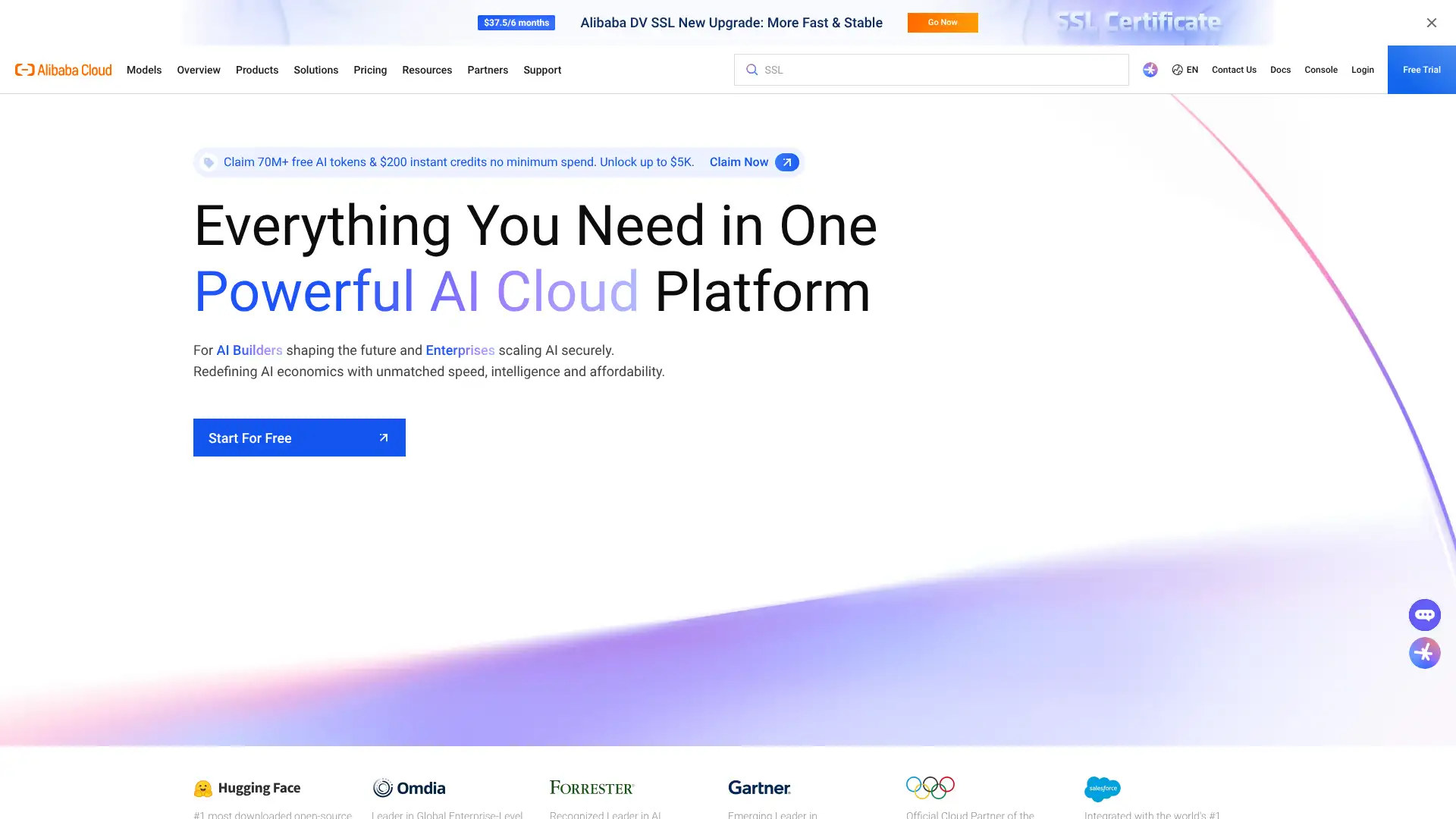
- • 89 availability zones in 30 regions: the strongest Asia-Pacific infrastructure coverage of any cloud provider
- • Competitive pricing versus AWS: ECS, OSS, and RDS all priced below equivalent AWS services
- • China regulatory compliance: MLPS 2.0 and other China-specific requirements met natively
- • PAI (Platform for AI): machine learning platform with GPU compute for AI workloads in APAC
- • Alibaba ecosystem integration: native connection to Taobao, Tmall, and Alipay commerce infrastructure
Alibaba Cloud is for mainland China operations, Alibaba Cloud. For Swiss-law compliance, Exoscale.
DigitalOcean
DigitalOcean is one of the most popular developer-focused cloud providers, holding 1% global market share but commanding strong startup and SMB loyalty. Droplets (virtual machines) start at $4/month for 512 MB RAM or $6/month for 1 vCPU and 1 GB RAM. DigitalOcean's primary differentiator versus Hetzner is its managed services ecosystem: managed PostgreSQL, MySQL, MongoDB, and Redis databases start at $15/month; managed Kubernetes (DOKS) at $12/month; App Platform for PaaS-style deployments; and the Gradient AI Platform for GPU inference. The DigitalOcean interface is widely regarded as the most polished and beginner-friendly of any VPS provider.
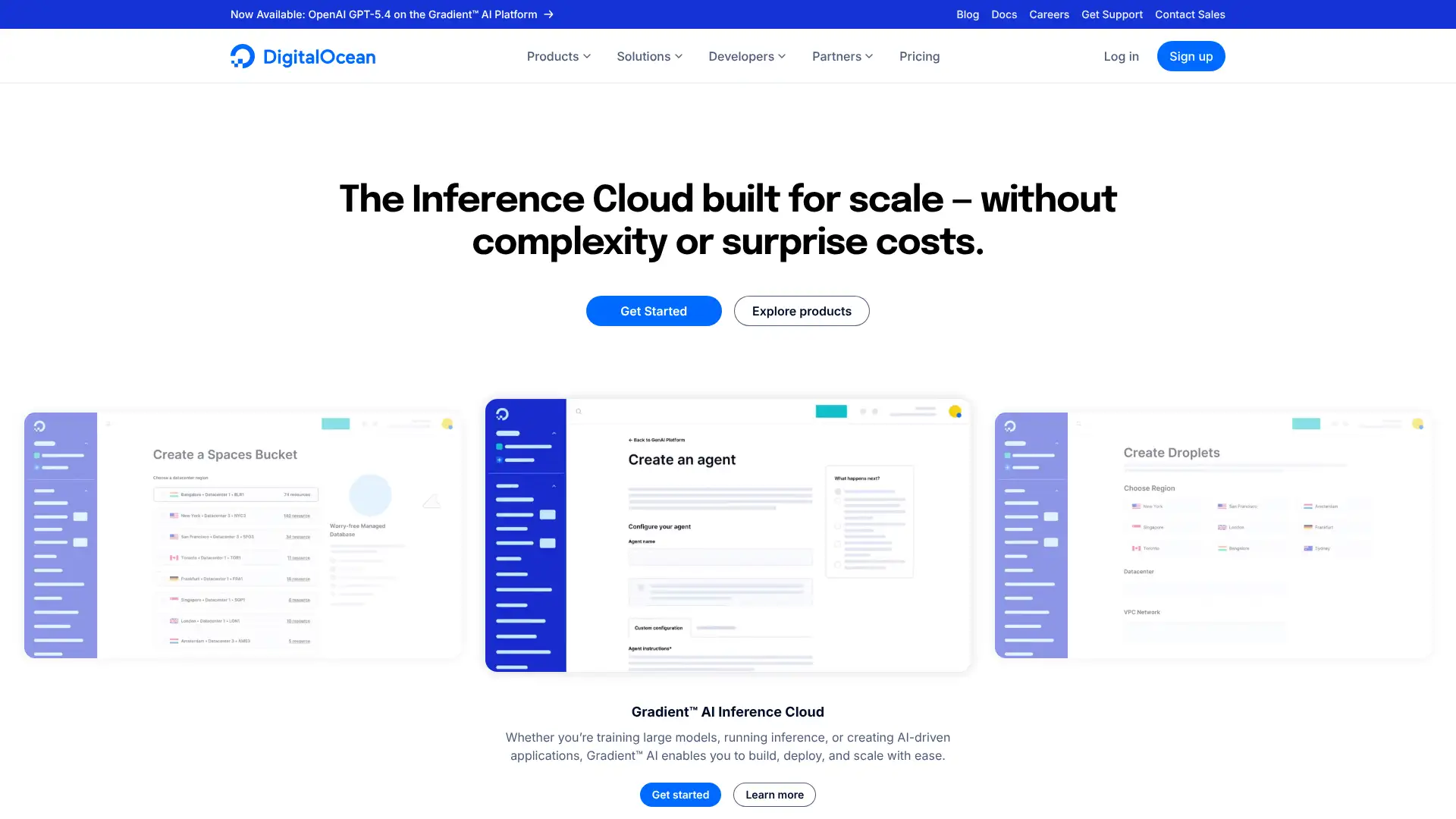
- • Managed database services: PostgreSQL, MySQL, MongoDB, and Redis with automated backups and failover
- • App Platform: PaaS-style deployment layer for static sites, web services, and background workers
- • DigitalOcean Kubernetes (DOKS): managed Kubernetes with simplified provisioning and node upgrades
- • Gradient AI Platform: GPU inference and AI workload hosting alongside standard compute
- • Cleanest control panel in VPS hosting: the most polished and beginner-friendly dashboard reviewed
DigitalOcean is the best VPS and cloud provider for startups and individual developers who want a clean UI, managed databases, and a services ecosystem that grows from a simple Droplet to Kubernetes without changing providers. For teams in Europe who prioritise cost efficiency over UI quality, Hetzner
Vultr
Vultr is a North American cloud provider operating across 32 global data centre regions, the largest geographic footprint of any independent VPS provider. Entry VPS pricing starts at approximately $2.50/month for a 512 MB shared instance or $6/month for 1 vCPU and 1 GB RAM. High Frequency instances with 3+ GHz CPUs are available from $6/month for latency-sensitive applications. Vultr also offers bare-metal cloud instances, block storage, and cloud GPU servers. Full root access, support for multiple Linux distributions, and a comprehensive REST API make it well-suited for developers who need infrastructure deployed across many geographic locations simultaneously.
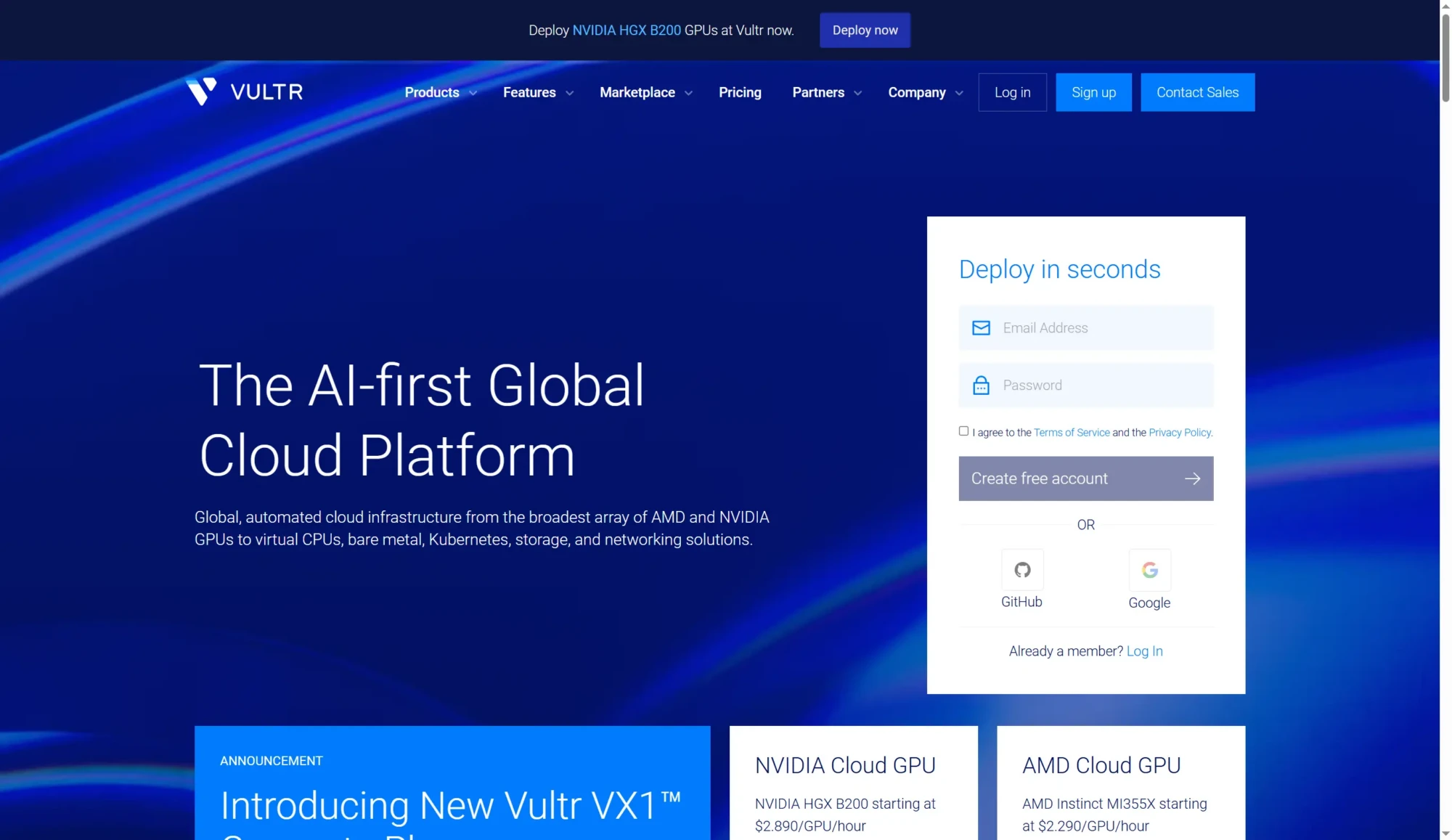
- • 32 global cloud regions: the broadest geographic footprint of any independent VPS provider
- • High Frequency compute: 3+ GHz CPU instances for latency-sensitive applications like gaming servers
- • Bare-metal cloud: single-tenant hardware alongside virtual instances from one provider
- • Full REST API: programmatic infrastructure management and CI/CD integration
- • Multiple Linux distributions: CentOS, Debian, Ubuntu, FreeBSD, and custom ISO support
Vultr is the best VPS provider for applications needing the widest possible geographic reach across 32 simultaneous regions. High Frequency instances differentiate it for gaming servers, real-time APIs, and latency-sensitive workloads. For developers who prioritise documentation quality and ecosystem depth, DigitalOcean is a better fit.
Linode (Akamai Cloud)
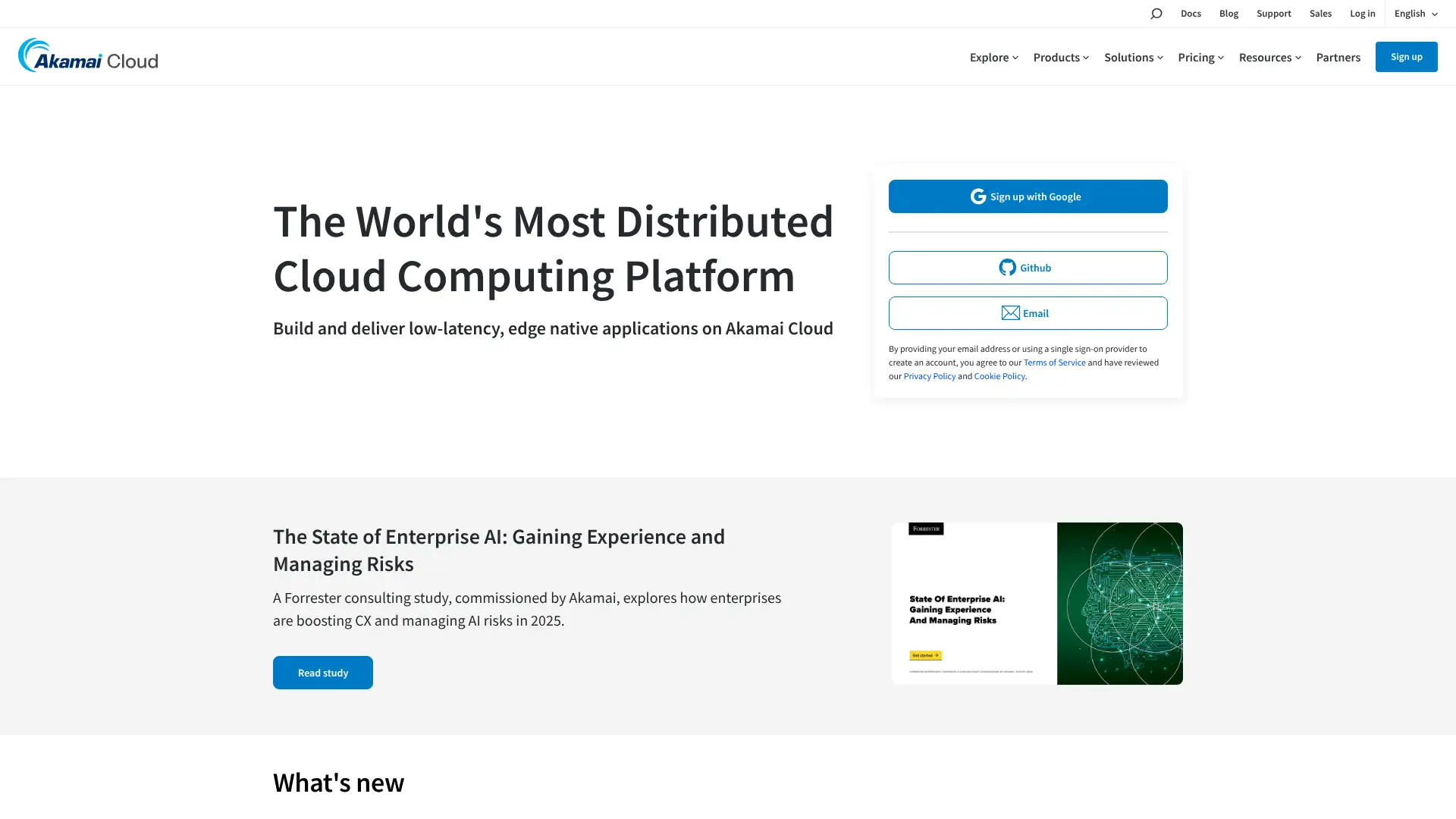
Linode was founded in 2003 as one of the original Linux VPS providers and was acquired by Akamai Technologies in 2022. It now operates as Akamai Cloud, combining Linode's developer-focused VPS infrastructure with Akamai's global CDN and security capabilities. Nanode plans start at $5/month for 1 vCPU, 1 GB RAM, and 25 GB SSD. Linode's documentation is widely regarded as the most comprehensive of any independent VPS provider, covering every major server administration task in detail. Managed databases (PostgreSQL, MySQL, MongoDB), managed Kubernetes (LKE), and S3-compatible object storage are available alongside standard compute.
- • Best documentation of any VPS provider: detailed tutorials for every server administration task
- • Akamai CDN integration: enterprise-grade content delivery and security post-2022 acquisition
- • Managed databases: PostgreSQL, MySQL, and MongoDB with automated backups and failover
- • LKE Kubernetes: managed Kubernetes with simplified node management and upgrade lifecycle
- • Global coverage including Africa: rare among independent VPS providers at this price point
Linode is the best VPS for developers who rely heavily on documentation and want growing enterprise capabilities through the Akamai acquisition. For the lowest price per spec in EU regions, Hetzner is considerably cheaper at equivalent configurations.
Hetzner
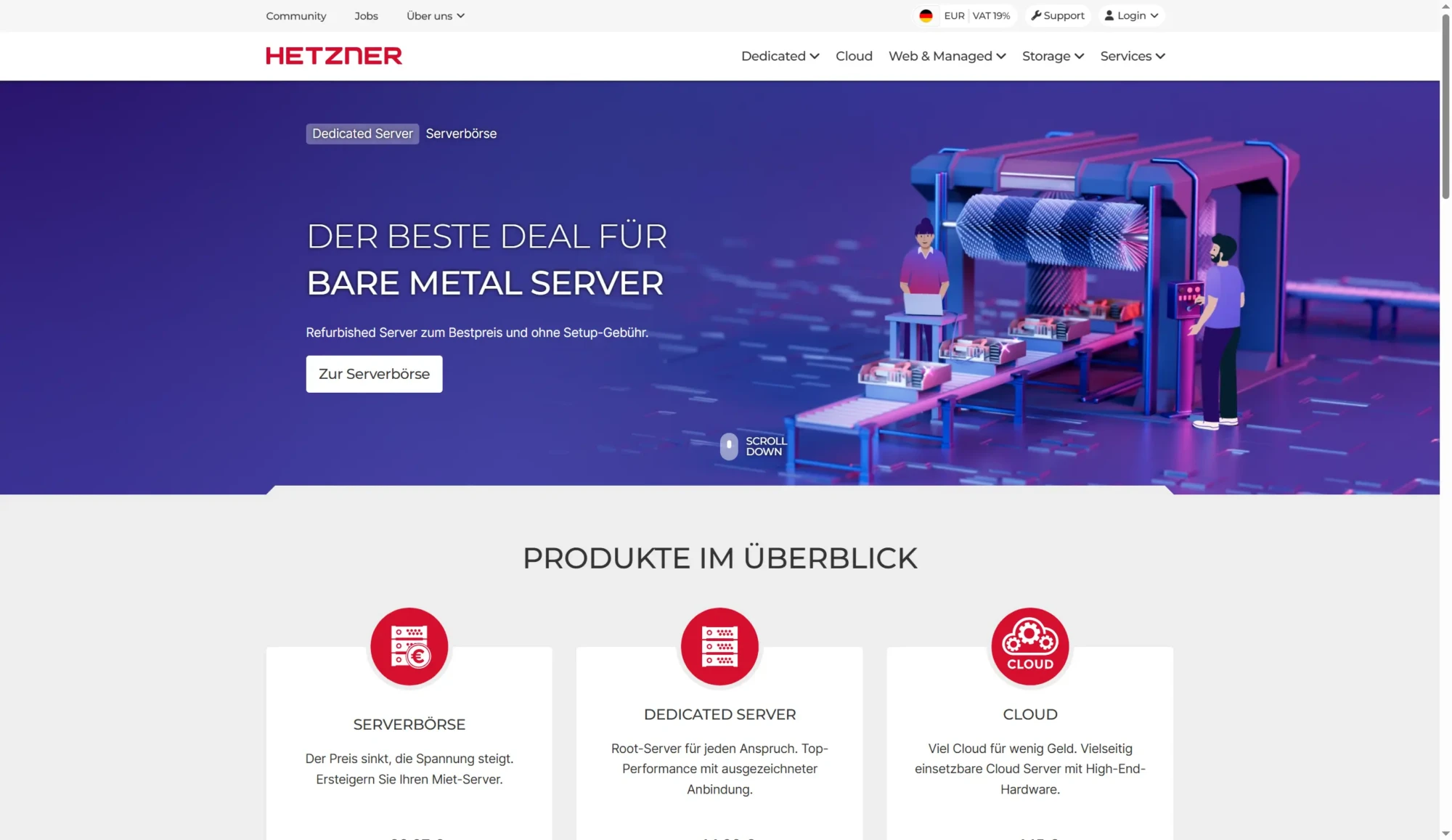
Hetzner is a German cloud provider founded in 1997 and consistently the reference point for price-per-spec in the VPS market. CX-series shared instances start from approximately EUR 3.49/month post-April 2026 price increase for 2 vCPUs and 4 GB RAM with 20 TB included traffic in EU regions. Hetzner announced a 30-35% price increase effective April 1 2026, citing rising hardware and infrastructure costs, affecting both cloud servers and dedicated hardware. Even post-increase, Hetzner remains the best price-per-spec in the European VPS market. Data centres operate in Germany, Finland, the US, and Singapore. The US and Singapore regions carry only 1 TB included traffic versus 20 TB in EU regions.
- • Best price-per-spec in the European VPS market: more RAM and storage than DO or Vultr at the same cost
- • 20 TB included traffic in EU regions: vastly more generous than DigitalOcean or Vultr at this price
- • NVMe SSD with RAID10: fast local storage with redundancy on all plans
- • ISO 27001 certified data centres: EU data protection standards across all locations
- • ARM64 (CAX) instances: Ampere Altra ARM processors for energy-efficient containerised workloads
Hetzner is the best VPS value in Europe by a significant margin, even after the April 2026 price increase. The 20 TB traffic allowance makes it the practical choice for egress-heavy applications on a budget.
OVHcloud
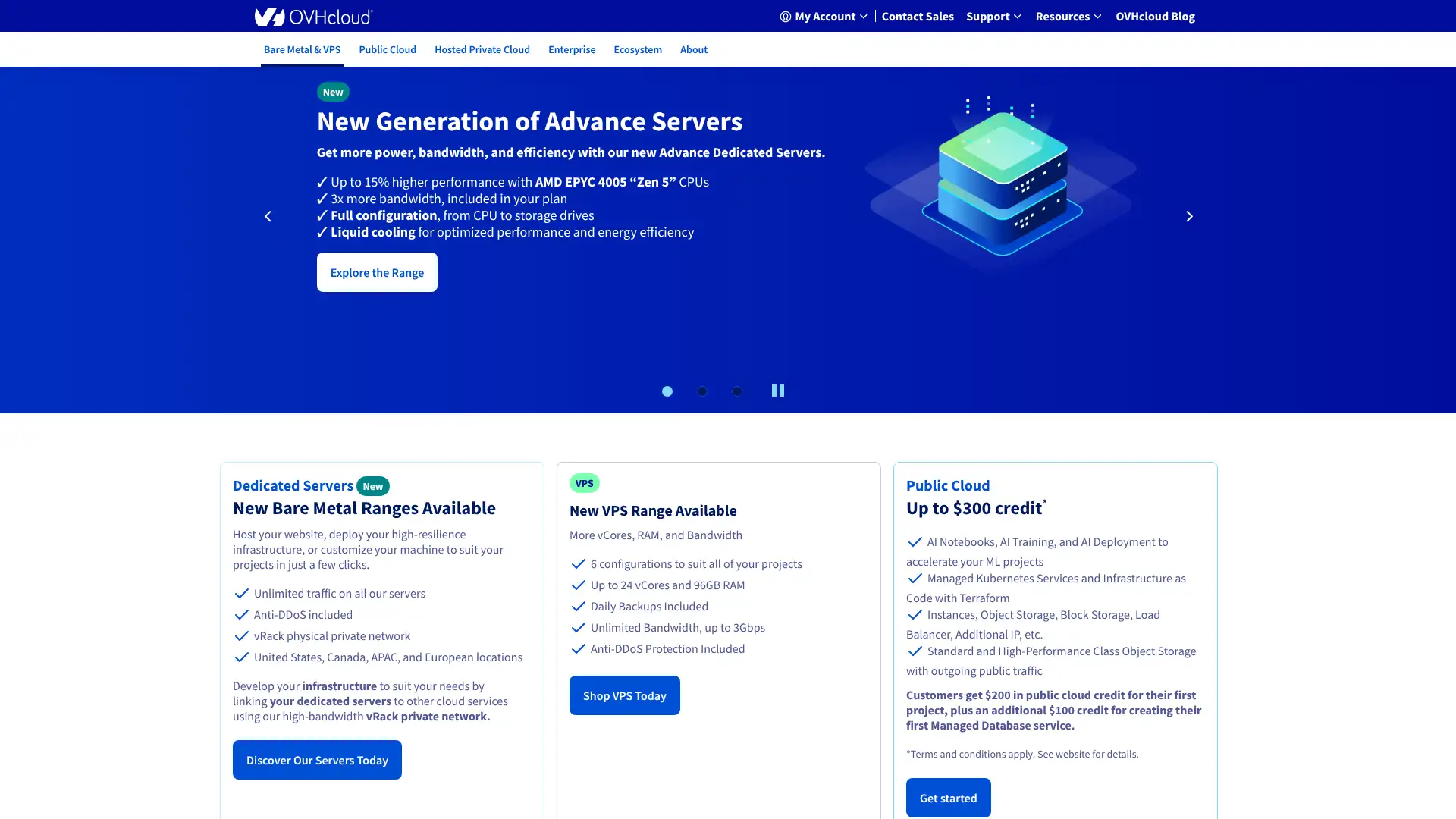
OVHcloud is a French cloud infrastructure company founded in 1999 and one of the largest in Europe. VPS entry pricing starts at approximately $4.20/month for 4 vCPUs, 8 GB RAM, and 75 GB SSD with 400 Mbps bandwidth and unlimited inbound and outbound traffic. OVHcloud's key differentiators are unmetered traffic with no egress fees, strong DDoS protection built into core infrastructure at no extra cost, and ISO 27001/27017/27018 compliance including healthcare data hosting (HDS) certification. The vRack private network connects services across OVHcloud data centres. OVHcloud is particularly suited for bandwidth-intensive workloads where per-GB egress costs from AWS, GCP, or Azure would become substantial.
- • Unlimited inbound and outbound traffic: no egress fees regardless of data volume transferred
- • Built-in DDoS protection: infrastructure-level mitigation included on all plans at no extra cost
- • ISO 27001/27017/27018 compliance: healthcare data hosting (HDS) certification available
- • vRack private network: isolated network connecting services across OVHcloud data centres
- • European data residency: primary infrastructure in France with full EU data protection compliance
OVHcloud is the best VPS for bandwidth-heavy applications where AWS, GCP, or Azure egress costs would be significant. The unlimited traffic model eliminates a common source of cloud cost surprise.
Contabo
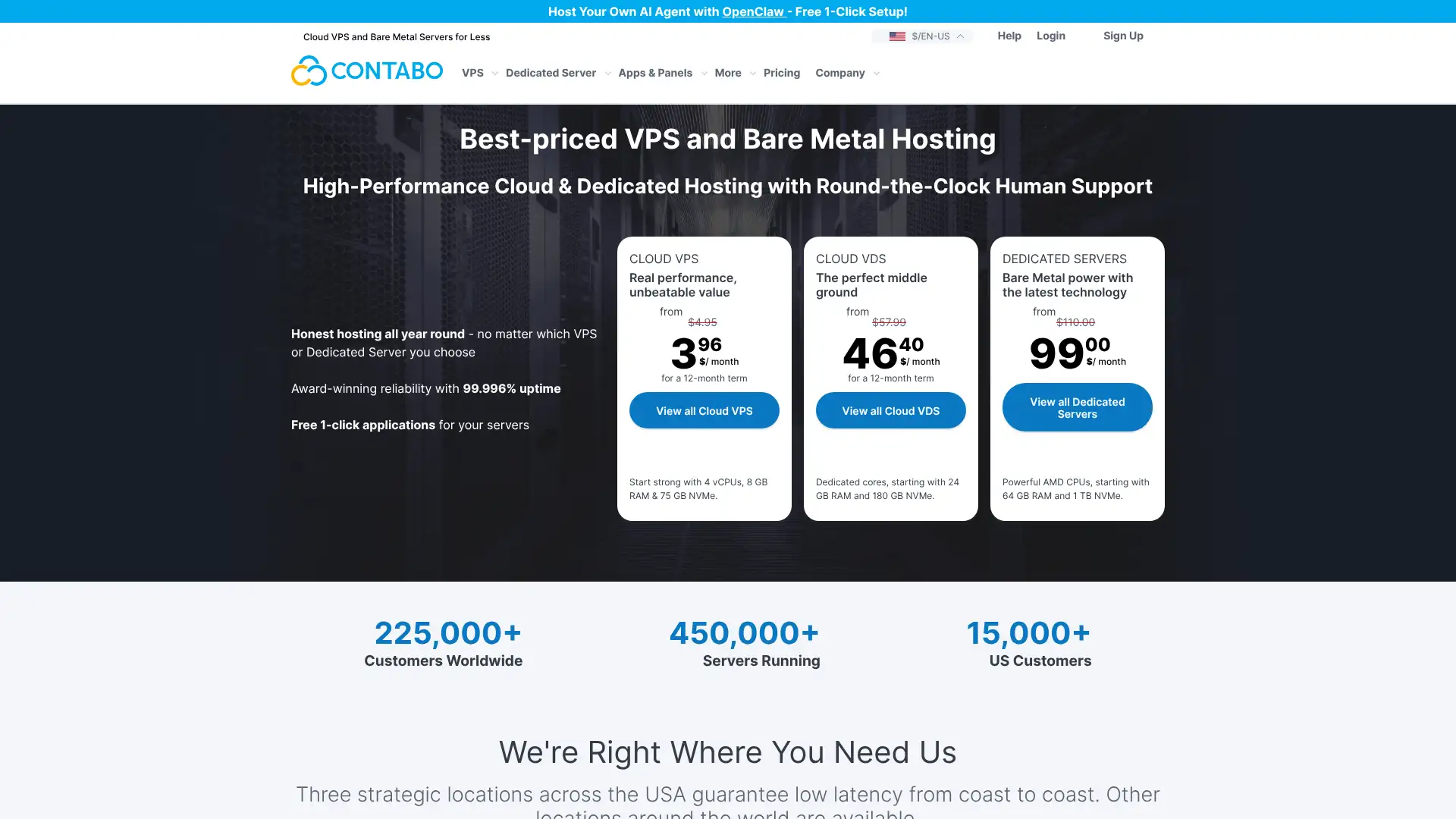
Contabo is a German hosting company offering the highest RAM and storage per dollar of any mainstream VPS provider. Entry cloud VPS pricing starts at approximately $3.96/month for 4 vCPUs, 6 GB RAM, and 100 GB NVMe SSD with unlimited traffic. Contabo achieves low pricing by densely packing virtual cores onto physical processors, meaning single-thread CPU throughput is lower than DigitalOcean, Vultr, or Kamatera at equivalent pricing. Object storage is approximately half the price of comparable offerings from DigitalOcean. Contabo does not offer hourly billing, requiring monthly commitments, and provisioning times for first orders can be slow.
- • Highest RAM per dollar of any mainstream VPS provider reviewed
- • Unlimited traffic on all plans: no metered bandwidth or egress charges
- • Object storage at half the cost of DigitalOcean: practical for large static file or backup workloads
- • Large storage options: hundreds of GB included at entry prices
- • Global data centres: Germany, US, Singapore, and Australia locations
Contabo is the best VPS for workloads needing maximum RAM and storage at minimum cost: in-memory databases, large WordPress installations, or applications with significant data volumes. Not suitable for applications requiring fast single-thread CPU or the ability to rapidly auto-scale.
Scaleway
Scaleway is a French cloud provider founded in 2015 as the cloud arm of Iliad Group, one of France's largest internet service providers. It offers virtual instances, Kubernetes, managed databases, object storage, and serverless functions across data centres in Paris, Amsterdam, and Warsaw. The DEV1-S instance (2 vCPUs, 2 GB RAM) starts at approximately EUR 0.01/hour (around EUR 7/month). Scaleway differentiates with GDPR-native European infrastructure, transparent per-second billing, an active developer community, and competitive pricing relative to OVHcloud. Per-second billing applies to instances with no minimum commitment.

- • Per-second billing: granular cost control with no minimum instance runtime commitment
- • GDPR-native infrastructure: all data centres in EU (Paris, Amsterdam, Warsaw)
- • Kubernetes Kapsule: managed Kubernetes with automatic node lifecycle management
- • Serverless Functions: Python, Node.js, Go, PHP, and Rust function execution without server management
- • Active developer community: well-regarded documentation and developer relations programme
Scaleway is the best European cloud for organisations needing GDPR-native data residency and per-second billing granularity. For global deployments outside the EU, OVHcloud or Hetzner provide better geographic coverage. For the broadest managed services, DigitalOcean is the better pick despite higher cost.
Exoscale
Exoscale is a Swiss-European cloud provider founded in 2011, operating data centres in Zurich, Geneva, Frankfurt, Vienna, Munich, and Sofia. It is built on Apache CloudStack and offers virtual compute, Kubernetes, managed databases, object storage, and DNS services. Exoscale differentiates on Swiss data protection law compliance (stricter than EU GDPR in several respects), predictable per-minute billing, and a focus on financial services and healthcare workloads requiring Swiss data residency. Entry compute instances start at approximately EUR 0.003/hour (around EUR 2/month) for 512 MB RAM.
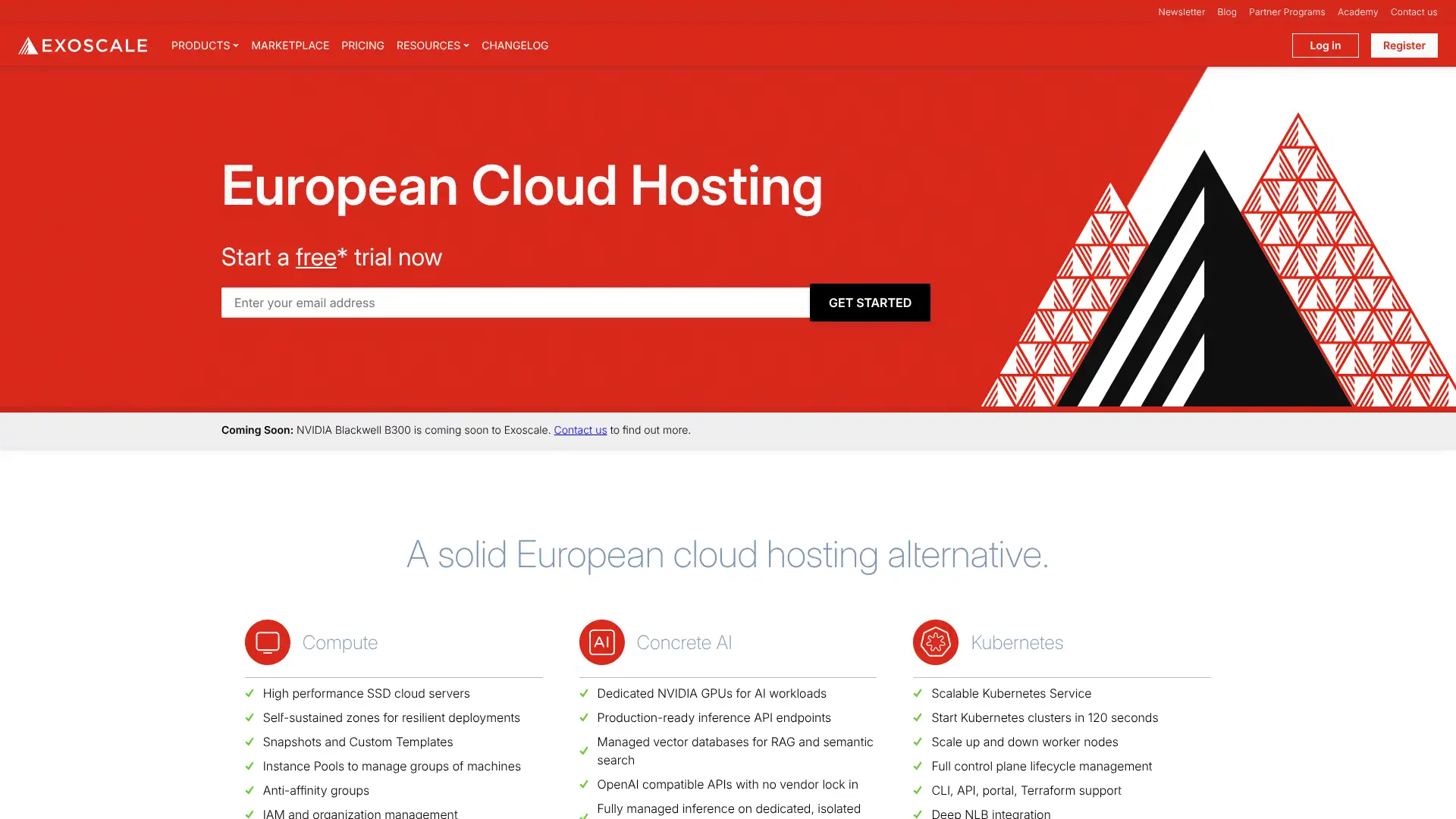
- • Swiss data protection compliance: stricter than EU GDPR in several areas relevant to finance and healthcare
- • 6 European data centres: Zurich, Geneva, Frankfurt, Vienna, Munich, and Sofia
- • Per-minute billing: granular cost control with no minimum commitment on compute instances
- • Managed databases: MySQL, PostgreSQL, Valkey (Redis fork), and Opensearch available
- • No-surprises billing philosophy: all pricing transparent without tiered complexity
Exoscale is the best cloud for organisations needing Swiss data protection law compliance for finance, healthcare, or other regulated workloads. For non-regulated European cloud computing, Hetzner provides better price-per-spec and Scaleway provides broader managed services. Exoscale's per-minute billing and no-surprises philosophy are genuine differentiators for cost-sensitive teams.
Kamatera and UpCloud
Kamatera is a cloud provider with 21 global data centres that differentiates through granular resource customisation: instead of fixed-size plans, users select exact vCPUs, RAM, and SSD via sliders, paying only for what they configure. Entry pricing starts at approximately $4/month. Kamatera offers a 30-day free trial, one of the most generous in the VPS market. UpCloud is a Finnish cloud provider with MaxIOPS storage technology delivering higher IOPS than standard NVMe at the same price, and a 100% uptime SLA, the only VPS provider reviewed to guarantee 100% availability with financial credits. UpCloud entry pricing starts at $5/month for 1 vCPU and 1 GB RAM.
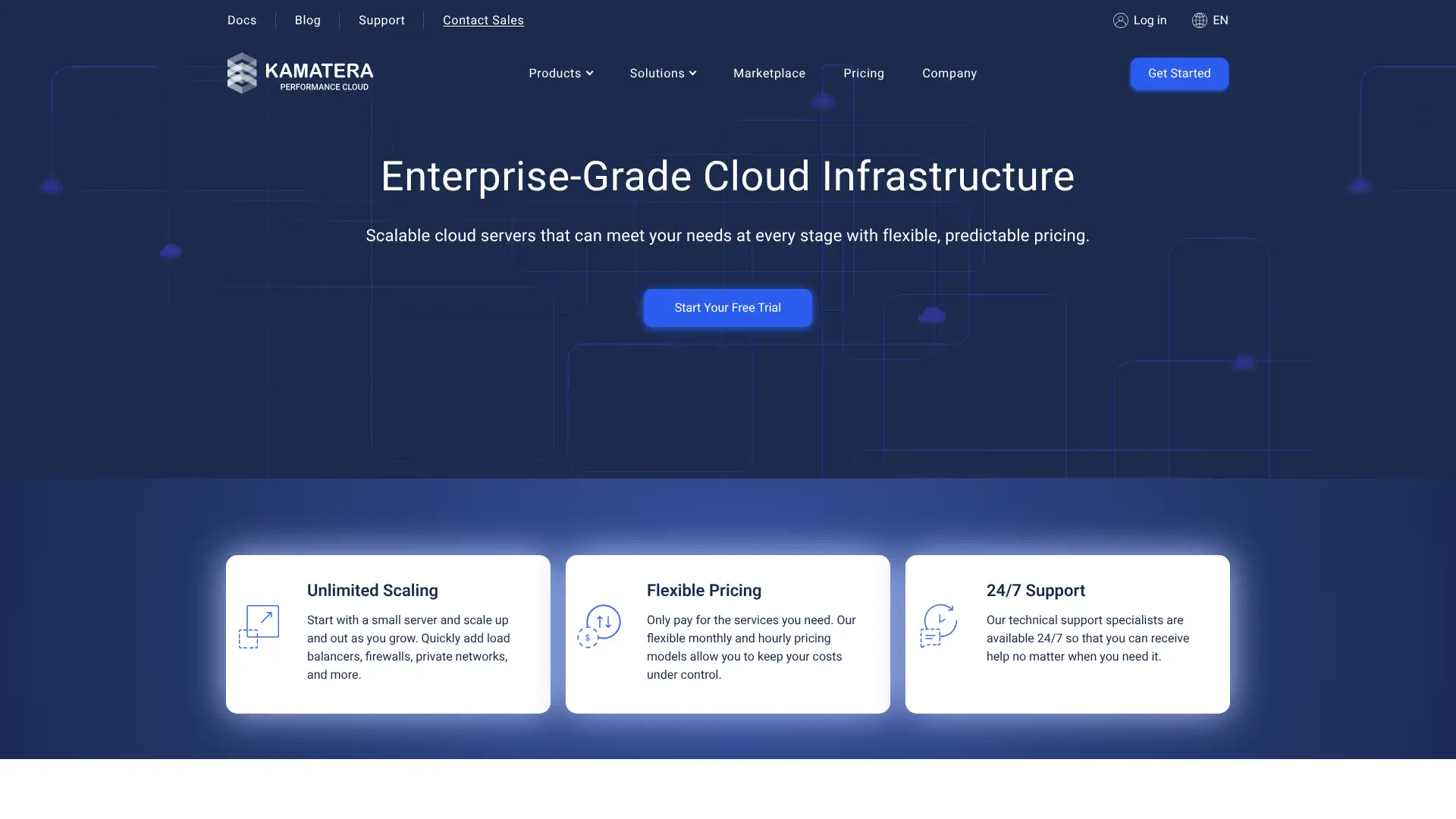
- • Kamatera: granular resource sliders for exact vCPU, RAM, and SSD configuration rather than fixed-size plans
- • Kamatera: 30-day free trial, the most generous trial period of any VPS provider reviewed
- • UpCloud: MaxIOPS storage technology delivers higher IOPS than standard NVMe for database workloads
- • UpCloud: 100% uptime SLA with credits for any downtime, unique in the VPS market
- • UpCloud: data centres in EU, US, APAC, and Middle East with consistent global coverage
Choose Kamatera for custom-configured instances with a 30-day free trial for realistic evaluation. Choose UpCloud for disk I/O-intensive workloads such as high-write databases requiring a 100% uptime guarantee. For general-purpose VPS with the best documentation, DigitalOcean is the broader recommendation.
Cloudflare
Cloudflare operates one of the world's largest edge networks with 330+ Points of Presence across 100+ countries. In independent benchmarks using real-user measurement data, Cloudflare had the lowest TTFB at the 95th percentile for the largest number of ISP networks of any CDN tested. The free plan provides unlimited CDN bandwidth, DDoS protection, SSL termination, and Workers edge compute with 100,000 requests/day. The Pro plan ($20/month) adds WAF, image optimisation, and advanced security. The Business plan ($200/month) adds custom WAF rules and an SLA-backed uptime commitment. Workers enables serverless JavaScript, Python, and WASM execution at 330+ locations with zero cold starts. R2 object storage provides S3-compatible storage with zero egress fees.
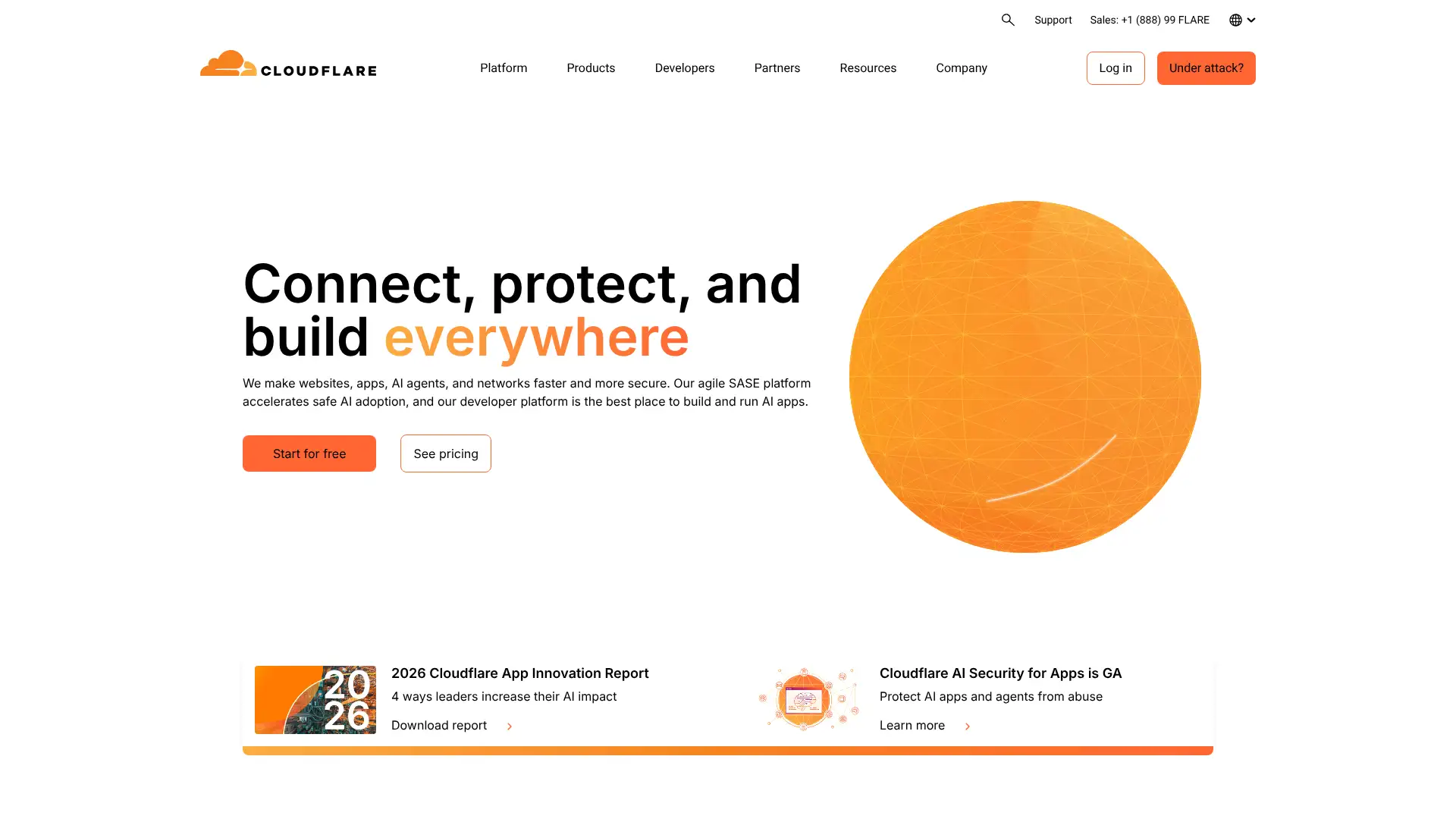
- • 330+ PoPs across 100+ countries: one of the world's largest and most distributed edge networks
- • Cloudflare Workers: serverless JavaScript, Python, and WASM execution at the edge with zero cold starts
- • DDoS mitigation included on free plan: infrastructure-level protection with no extra monthly fee
- • Unlimited bandwidth on all plans: no egress or CDN bandwidth charges on any tier
- • R2 object storage: S3-compatible storage with zero egress fees, much cheaper than AWS S3 at scale
Cloudflare is the best edge and CDN platform for most web applications at any scale. The free plan provides genuine enterprise-quality CDN, DDoS protection, and SSL.

Fastly
Fastly is a developer-first edge cloud platform founded in 2011, differentiated by Instant Purge (150ms globally on average), highly customisable Varnish Configuration Language (VCL) routing, and real-time streaming logs. Fastly's Compute@Edge platform enables custom logic execution at the edge using WebAssembly. Fastly claims 25% faster TTFB than Cloudflare for certain workloads in its own benchmarks. The WAF, powered by Signal Sciences technology acquired by Fastly in 2020, is considered mature for API protection and credential stuffing defence. Fastly is used by Stripe, BuzzFeed, GitHub, and The Guardian. Gartner recognised Fastly as a Customers' Choice in 2024 Cloud Web Application and API Protection.
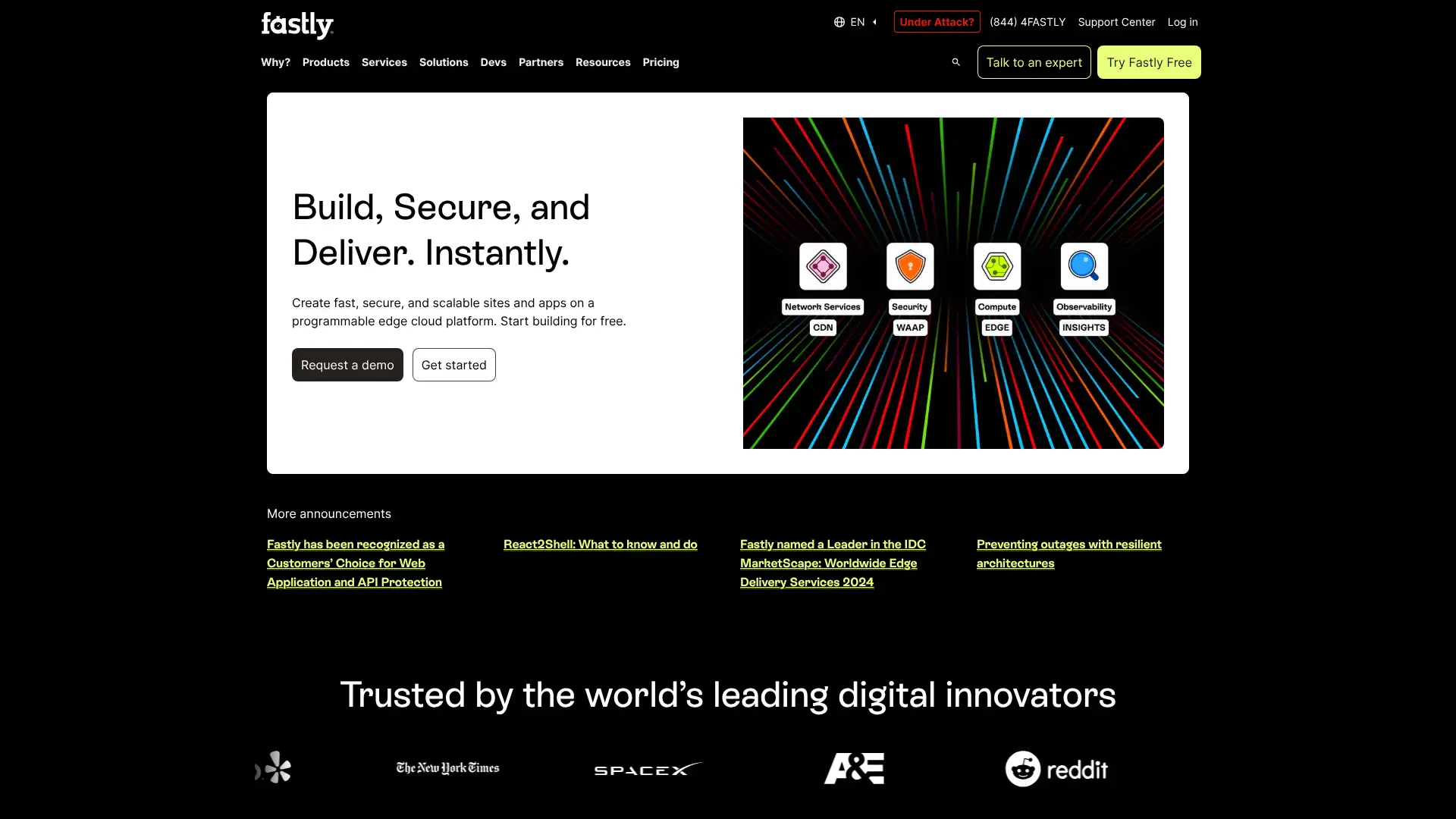
- • Instant Purge: cache invalidation in 150ms globally on average, the fastest in the CDN market
- • Compute@Edge: WebAssembly-based edge compute for custom routing, auth, and data transformation
- • VCL configurability: the most customisable CDN routing configuration of any provider reviewed
- • Signal Sciences WAF: mature API and application protection against credential stuffing and scraping
- • Real-time streaming logs: live log delivery via Kinesis, BigQuery, S3, and other sinks at no extra cost
Fastly is the best CDN for engineering teams that need real-time cache purging for frequently changing content, deep VCL routing customisation, and mature API security. For most web applications without these specific requirements, Cloudflare's free plan provides excellent CDN performance without the configuration complexity.

Akamai
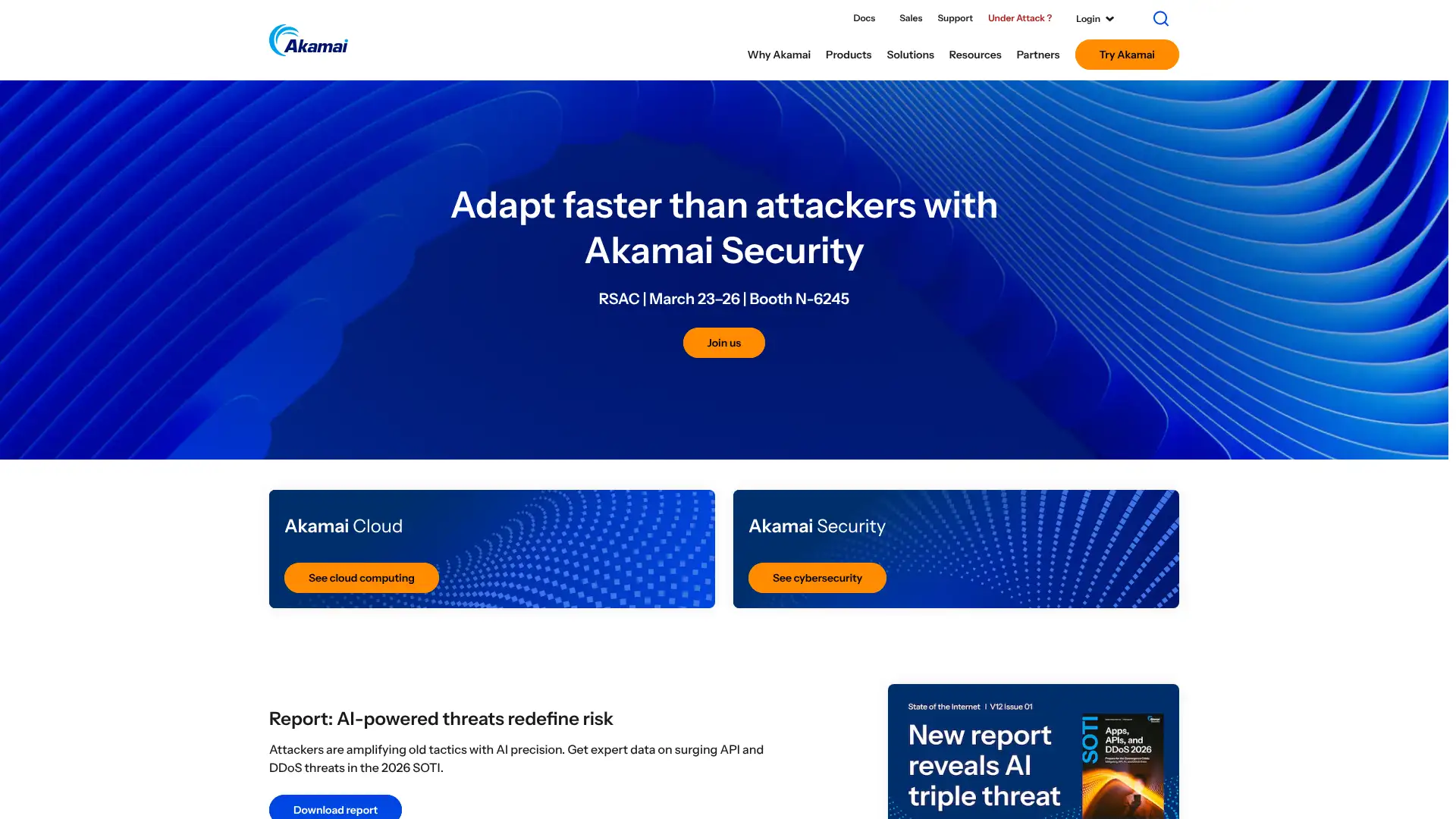
Akamai Technologies is the oldest and largest CDN provider, founded at MIT in 1998. It serves more than 50% of global internet traffic and holds 39.2% global CDN market share. Akamai's enterprise network spans 4,200+ PoPs globally, and it serves over 15,000 enterprise clients with a 92% retention rate. Akamai acquired Linode in 2022 and integrated it as Akamai Cloud. Pricing is enterprise-custom with no public price list: all contracts are negotiated based on traffic volume and service combination. Akamai is the benchmark for enterprise CDN resilience but is typically inaccessible to SMBs by cost and procurement process.
- • 4,200+ PoPs globally: the largest and most distributed CDN network of any provider reviewed
- • Bot management: considered the most mature and accurate bot detection and mitigation available
- • API protection: granular API security covering authentication, rate limiting, and schema validation
- • Private Edge Compute: custom logic execution at specific geographic locations for regulated industries
- • 92% enterprise client retention rate: the strongest customer retention metric in the CDN industry
Akamai is the right CDN for Fortune 500 companies, large media publishers, and financial institutions that need the most extensive global network, enterprise-grade bot management, and telecom-level DDoS resilience. For teams that cannot engage enterprise sales, Cloudflare provides 80-90% of the enterprise CDN capability at accessible self-service
Rackspace
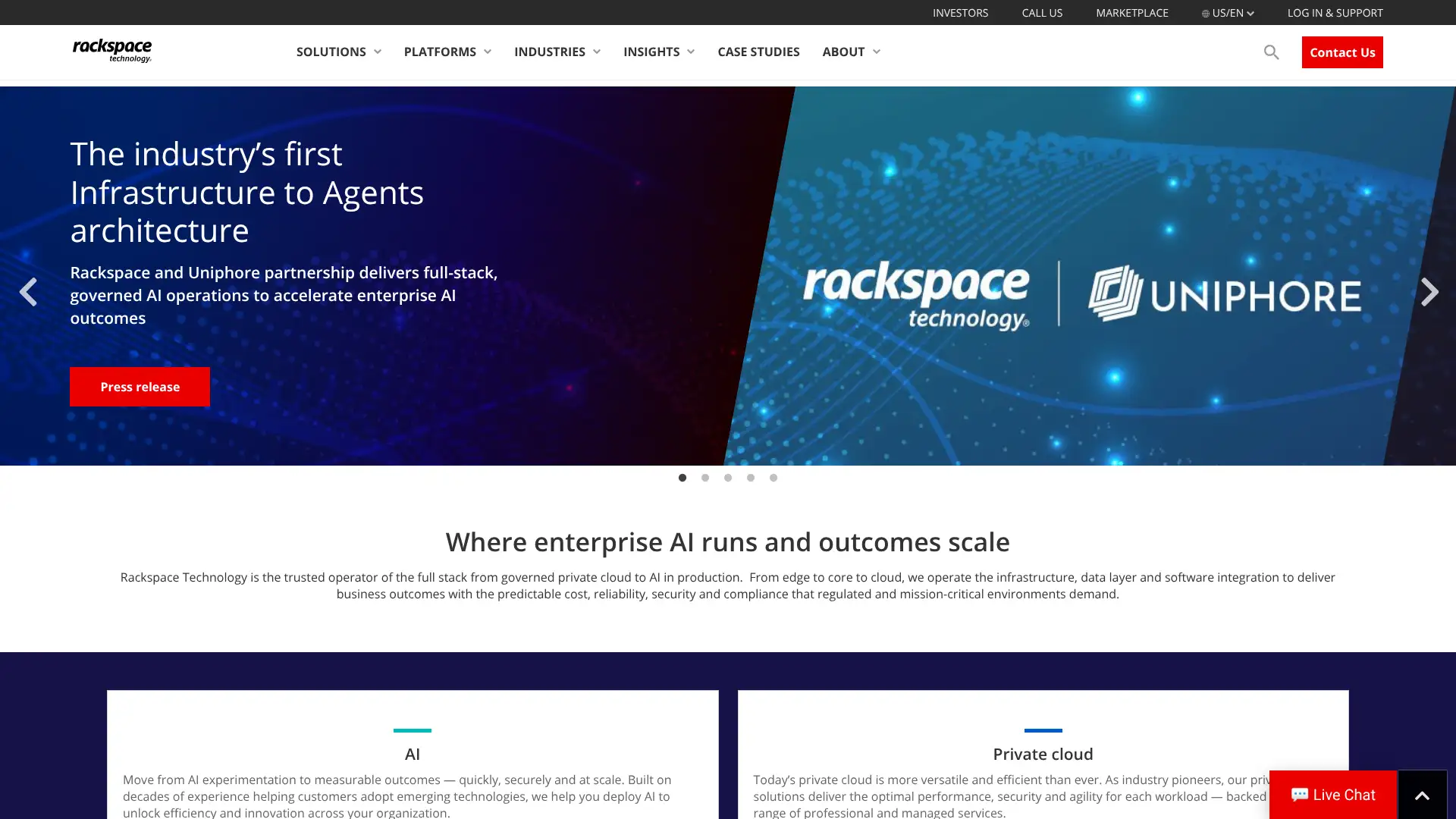
Rackspace Technology is a managed cloud services provider founded in 1998, serving approximately 117,000 customers across 120 countries. Unlike the other providers in this guide, Rackspace does not primarily operate its own cloud infrastructure: it provides managed services layered on top of AWS, Azure, and Google Cloud. Rackspace charges a management service fee on top of underlying cloud infrastructure costs. The model suits enterprises needing cloud capabilities but lacking in-house DevOps expertise to manage hyperscaler environments. Rackspace also offers its own dedicated bare-metal hardware and Rackspace Private Cloud based on VMware. Note: Rackspace filed for bankruptcy in 2023 and emerged under new ownership.
- • Multi-cloud management: single team managing AWS, Azure, and GCP workloads simultaneously
- • 24/7 expert support: dedicated technical engineers available around the clock
- • Compliance expertise: specialised managed compliance for HIPAA, PCI DSS, and SOC 2 workloads
- • Cloud migration services: professional migration from on-premise to cloud environments
- • Rackspace Private Cloud: VMware-based private cloud for workloads that cannot move to public cloud
Rackspace is the right choice for enterprises that need cloud capabilities immediately but do not have the in-house team to manage AWS, Azure, or GCP directly. Note Rackspace emerged from bankruptcy proceedings in 2023 under new ownership, which is worth factoring into long-term vendor evaluation.
phoenixNAP
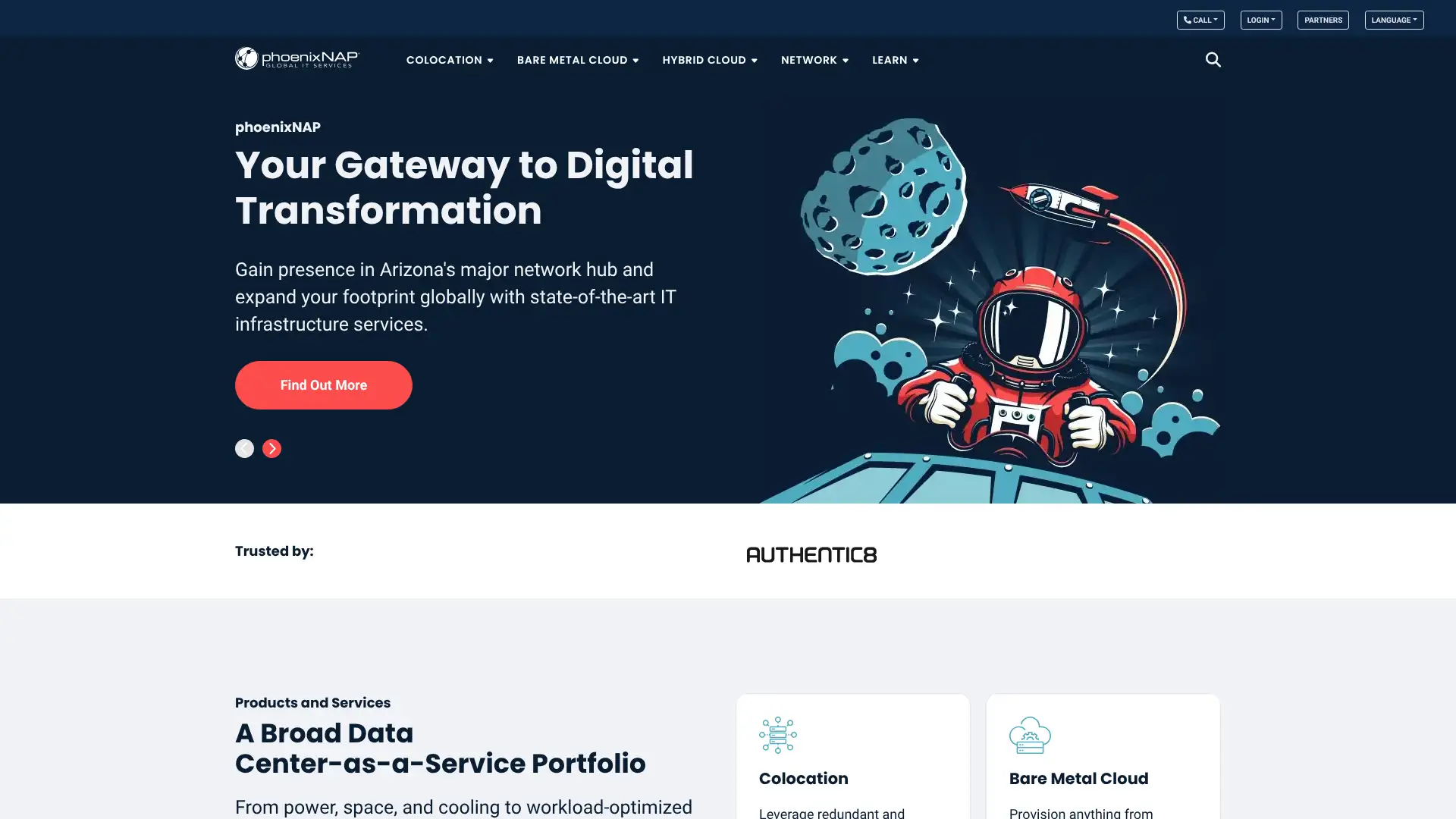
phoenixNAP is a US-based infrastructure provider founded in 2009, operating data centres in Phoenix, Ashburn, Atlanta, Amsterdam, Sydney, Singapore, and Guadalajara. It specialises in bare metal cloud servers, colocation, and enterprise cloud for regulated industries including healthcare, finance, and government. phoenixNAP provides direct connections to AWS Direct Connect and Google Cloud Interconnect from its colocation facilities, enabling hybrid cloud architectures. Its enterprise cloud platform uses VMware by Broadcom technology. Bare metal servers start at approximately $100/month. phoenixNAP holds SOC 2 Type II, HIPAA, PCI DSS, and ISAE 3000 certifications.
- • Direct AWS and GCP interconnects: hybrid cloud connections from colocation facilities
- • VMware by Broadcom enterprise cloud: familiar enterprise virtualisation platform
- • SOC 2 Type II, HIPAA, PCI DSS, ISAE 3000: compliance certifications for regulated industries
- • 7 global data centres: Phoenix, Ashburn, Atlanta, Amsterdam, Sydney, Singapore, and Guadalajara
- • 24/7 remote hands support: on-site technical assistance included in data centre services
phoenixNAP is the right choice for enterprises in regulated industries that need bare metal compute with HIPAA, PCI DSS, and SOC 2 certifications alongside hybrid cloud connectivity to AWS and GCP. For general-purpose cloud compute without compliance requirements, DigitalOcean, Hetzner, or AWS provide more developer-friendly and cost-accessible
Cloudways
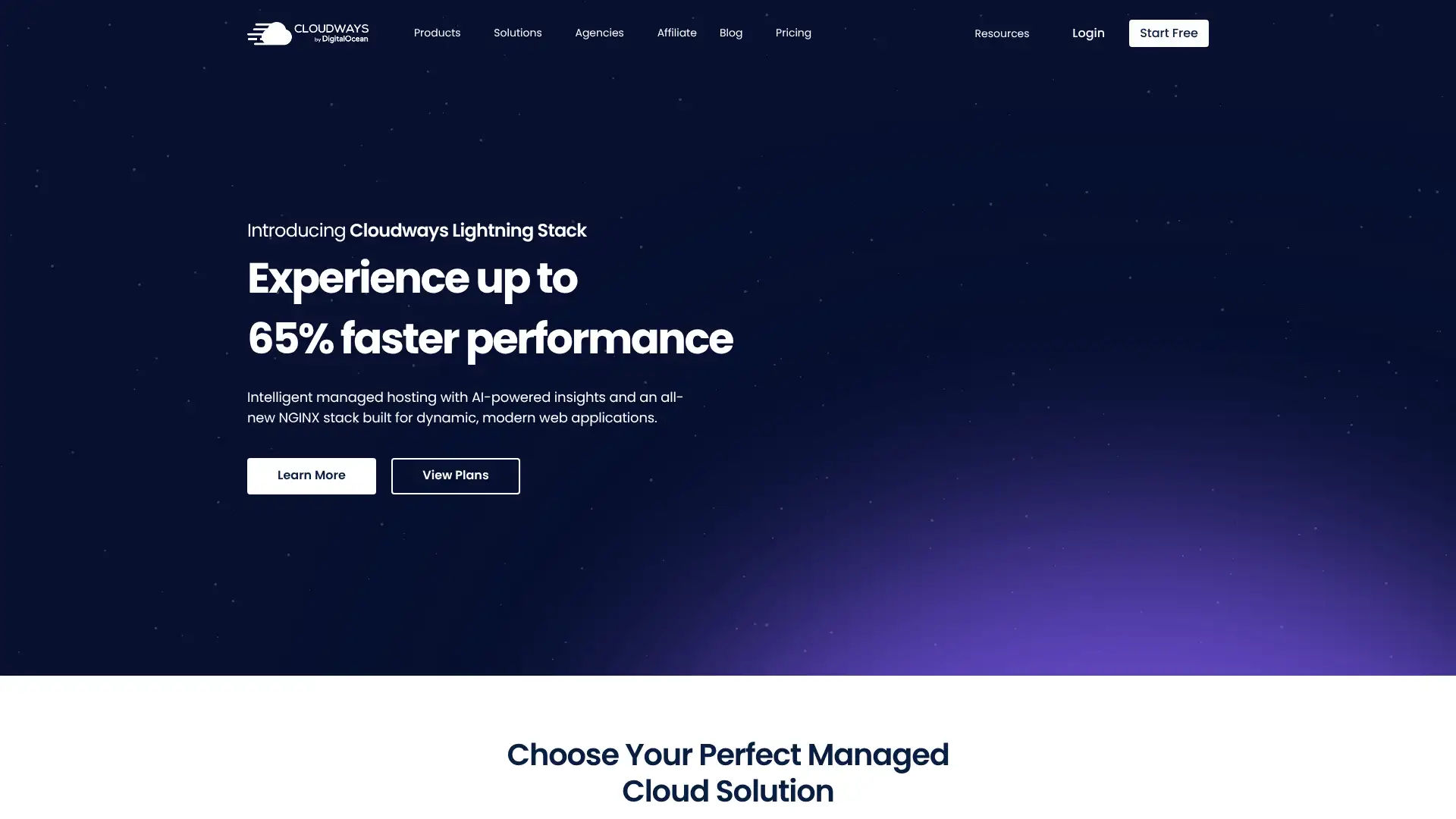
Cloudways is a managed hosting platform layered on top of five major cloud providers: DigitalOcean, Vultr, Linode, AWS, and Google Cloud. Users choose their cloud provider and server size, with Cloudways adding managed security, backups, caching, staging environments, and 24/7 support on top. The key differentiation is unlimited sites per server: a $50/month DigitalOcean 4 GB server can run 5-10 WordPress or PHP sites, making Cloudways the most cost-effective managed option for agencies at approximately $4-6 per site. Object Cache Pro (Redis) is included at no extra cost. Entry pricing starts at $14/month on DigitalOcean 1 GB.
- • Unlimited WordPress and PHP sites per server: the most cost-effective model for agencies at scale
- • 5 cloud provider choices: DigitalOcean, Vultr, Linode, AWS, or Google Cloud under one interface
- • Object Cache Pro (Redis) included: enterprise caching without a third-party plugin cost
- • Hourly billing on server infrastructure: spin up and tear down without long-term commitments
- • Staging environments, backups, and SSL management automated in the managed layer
Cloudways is the best managed platform for agencies and developers comfortable with server decisions who want the lowest per-site cost at scale. Unlimited sites per server make it 60-70% cheaper than Kinsta or WP Engine for high site counts.
Render
Render launched in 2018 as the modern Heroku alternative, combining static sites, web services, background workers, cron jobs, and managed databases from one dashboard. Static sites are free permanently with 100 GB bandwidth and Cloudflare CDN included. Web services start at $7/month for 512 MB RAM. Render uses flat monthly pricing rather than usage-based billing, making costs predictable and eliminating surprise invoices. Cloudflare DDoS protection is enabled by default on all Render deployments. The main limitation is limited geographic coverage: primarily US-West and US-East regions. Infrastructure-as-code via render.yaml blueprints enables reproducible multi-service deployments.
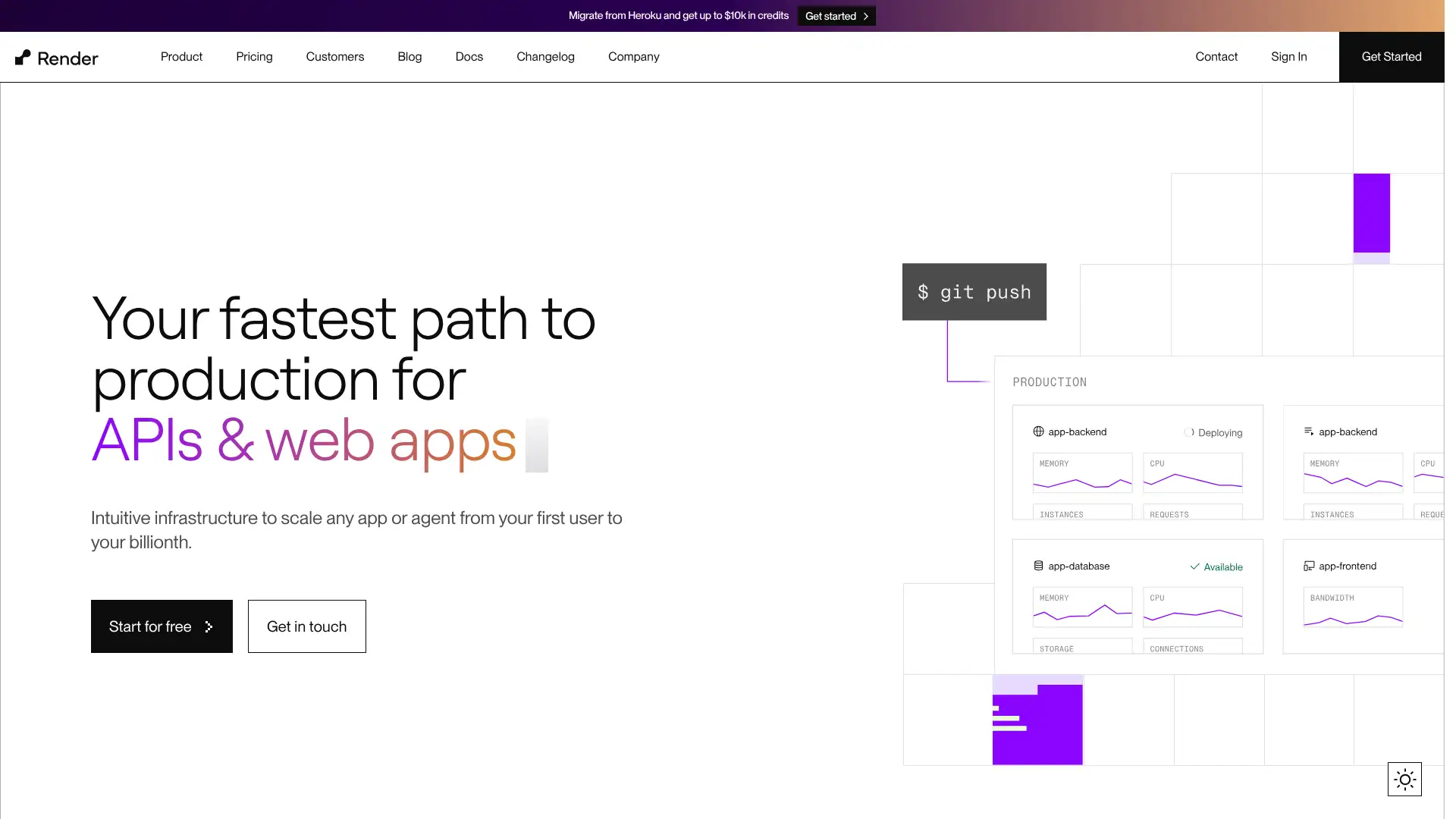
- • Free permanent static hosting: 100 GB bandwidth with Cloudflare CDN included at no cost
- • Background workers and cron jobs: native support without duplicating services or separate tools
- • Cloudflare protection on all deployments: DDoS mitigation included by default at no extra cost
- • Flat monthly pricing: predictable billing without usage-based billing complexity
- • render.yaml blueprints: infrastructure-as-code for reproducible multi-service deployments
Render is the best PaaS for developers who want Heroku-style simplicity with predictable flat-rate pricing, free static hosting, and built-in Cloudflare protection. For complex multi-service architectures, Railway provides a better visual canvas. For globally distributed server workloads, Fly.io provides more edge regions.
Fly.io
Fly.io runs applications in Firecracker micro-VMs distributed across 30+ global regions, placing application logic close to users for low-latency server-rendered applications. Fly's micro-VMs start faster than traditional containers with stronger hardware-level isolation. Entry pricing starts from approximately $1.94/month for the smallest shared CPU instances. Fly is used for Phoenix Elixir applications, globally distributed databases (LiteFS, Tigris), and any application needing server-side logic at geographic proximity to users. As of the 2026 update, Fly.io operates on a usage-based model with a trial credit rather than a permanently free tier. The CLI-first workflow using flyctl requires Docker familiarity.
- • Firecracker micro-VMs: faster cold starts than Docker containers with stronger VM-level isolation
- • 30+ global regions: deploy application instances in specific regions close to user concentrations
- • LiteFS: distributed SQLite at the edge, replicating read replicas to regions near users
- • Multi-region deployments: route users to the nearest available instance automatically
- • Anycast networking: global IP routing to the nearest available application instance
Fly.io is the right choice for applications that specifically need server-side logic running in multiple geographic regions near users: real-time applications, globally distributed databases, and latency-sensitive APIs. For standard web applications without specific geographic proximity requirements, Render or Railway provide simpler deployment experiences.
Railway
Railway launched in 2020 with a clear thesis: modern infrastructure should not require DevOps expertise. It offers the best developer experience of any deployment platform in 2026, with a visual project canvas showing all services and databases, usage-based billing paying only for actual consumption, and one-click database provisioning for PostgreSQL, MySQL, MongoDB, and Redis. The Hobby plan costs $5/month including $5 in compute credits. Additional usage is billed at approximately $0.000463/vCPU-second and $0.000000231/GB-second. For a typical side project, expect $5-20/month total. Documented user migrations from Heroku to Railway consistently show 50-70% cost reductions for equivalent workloads.
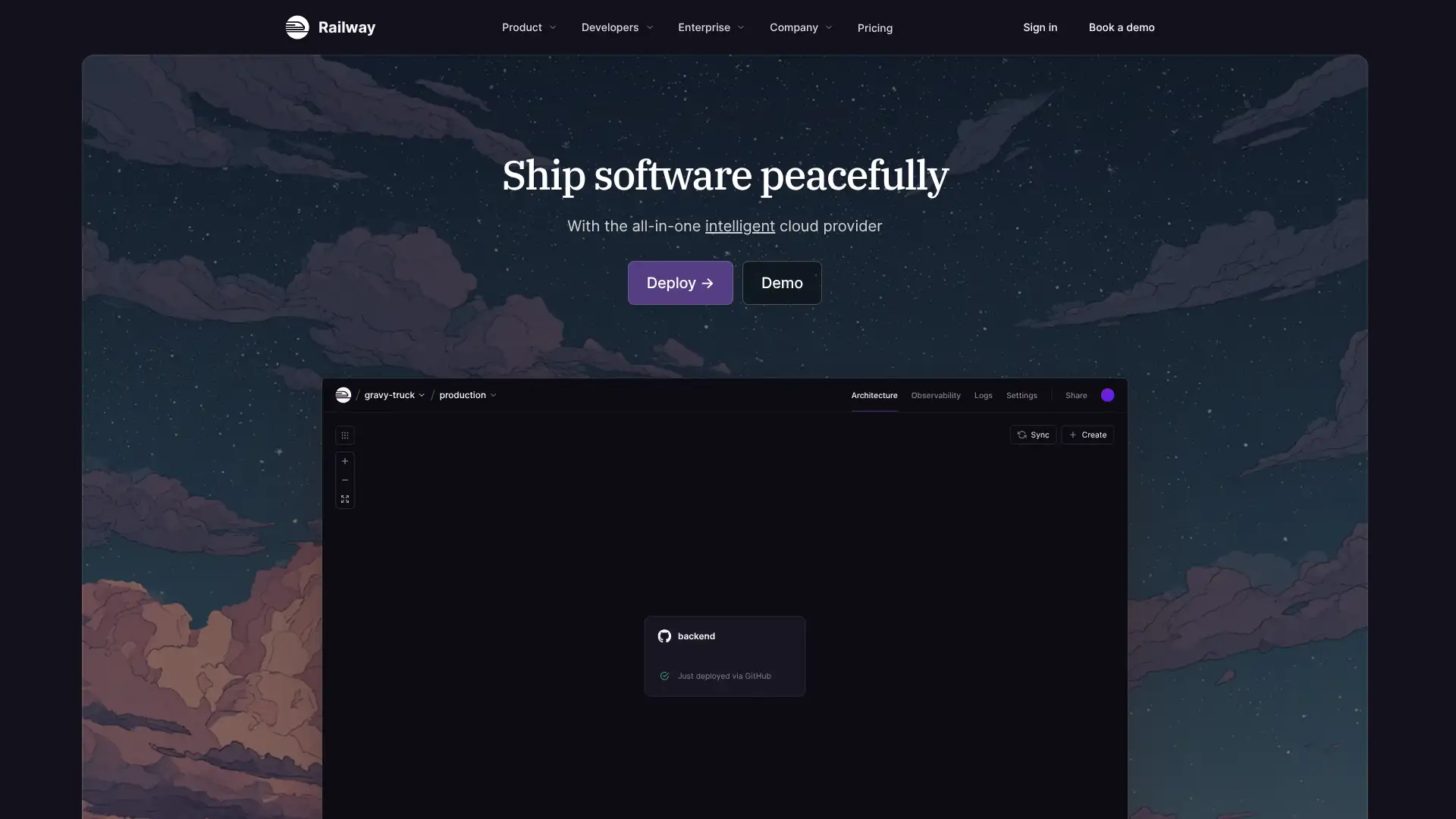
- • Visual project canvas: see all services and databases with connection visualisation in one view
- • One-click database provisioning: PostgreSQL, MySQL, MongoDB, and Redis in seconds
- • Usage-based billing: pay only for actual vCPU-second and memory consumption
- • Template directory: deploy open-source projects in one click with template revenue sharing
- • Private networking: services communicate internally without public internet exposure
Railway is the best starting point for most developers building new full-stack applications in 2026. The visual canvas and one-click database provisioning reduce time from idea to production significantly.
Vercel
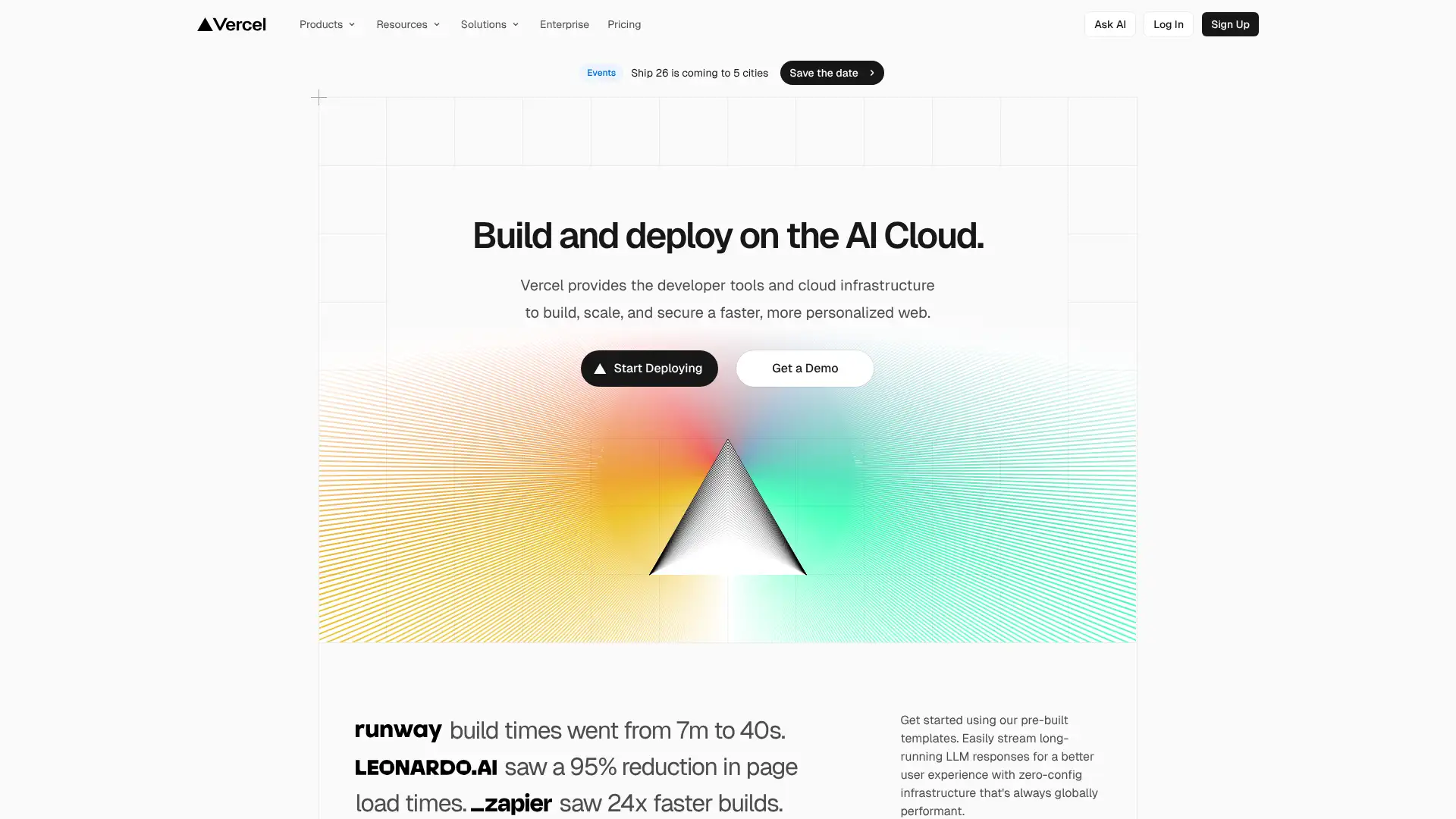
Vercel is the company that created Next.js, giving it first-class support for every Next.js feature: App Router, Server Actions, ISR, Partial Prerendering, and Fluid Compute. All new Next.js features ship on Vercel before adapters become available on other platforms. The free Hobby plan is for personal non-commercial use only. Commercial projects require the Pro plan at $20/user/month. In independent 2026 benchmarks, Vercel provides approximately 70ms TTFB versus Netlify's 90ms. Vercel Firewall (DDoS protection and WAF) was added in 2026. Preview deployments on every pull request provide a unique HTTPS URL for visual review before production merge. In February 2026, Cloudflare announced Vinext achieving 4.4x faster Next.js builds on Cloudflare's network.
- • First-class Next.js support: every App Router feature works on Vercel without adapters or workarounds
- • Fluid Compute: keeps serverless functions warm for concurrent request handling, reducing cold starts
- • Preview deployments on every pull request: unique HTTPS URLs for visual review before production merge
- • Vercel Firewall: DDoS protection and WAF added in 2026 on Pro and Enterprise plans
- • 70ms TTFB: faster first byte than Netlify at approximately 90ms in independent 2026 benchmarks
Vercel is the correct choice for teams building with Next.js who need first-class App Router and Server Actions support. The developer experience is the best in the category.
Netlify
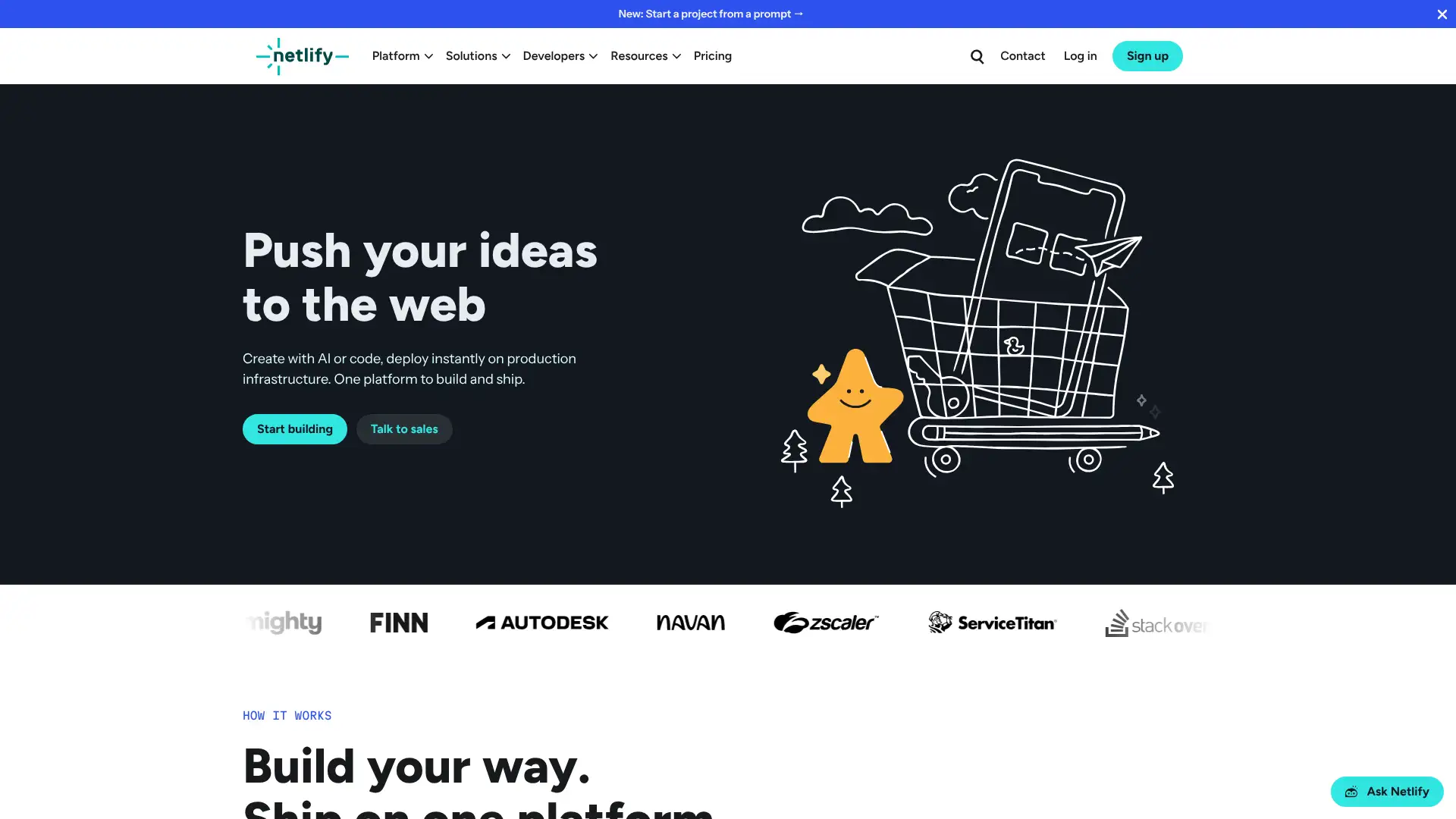
Netlify pioneered JAMstack hosting in 2015 and remains the most framework-agnostic static and serverless hosting platform, working equally well with Hugo, Gatsby, Astro, Eleventy, and any other SSG. It provides built-in form handling and Netlify Identity (user authentication) that eliminate common third-party service dependencies. In September 2025, Netlify switched to credit-based billing and reduced free tier build minutes from 300 to 100 per month. The Pro plan is $19/user/month. Multiple independent 2026 reviews note that Netlify's value proposition has weakened relative to Cloudflare Pages (better performance, unlimited bandwidth) and Vercel (better Next.js support). Netlify's approximately 90ms TTFB is slower than Vercel's 70ms per 2026 benchmarks.
- • Framework-agnostic: works equally well with Hugo, Gatsby, Astro, Eleventy, and any other SSG
- • Built-in form handling: collect form submissions without a backend service or third-party tool
- • Netlify Identity: user authentication and registration without an external auth provider
- • Edge Functions: Deno-based serverless functions at the global edge for dynamic content
- • Deploy previews: every branch and pull request gets a unique deployment URL
Netlify is the strongest argument for Netlify in 2026 is the three features competitors do not replicate cleanly: serverless form submissions requiring no backend, Netlify Identity for passwordless auth, and split testing at the CDN layer without analytics tools. Teams actively using any of these avoid the integration overhead of third-party alternatives.
Platform.sh
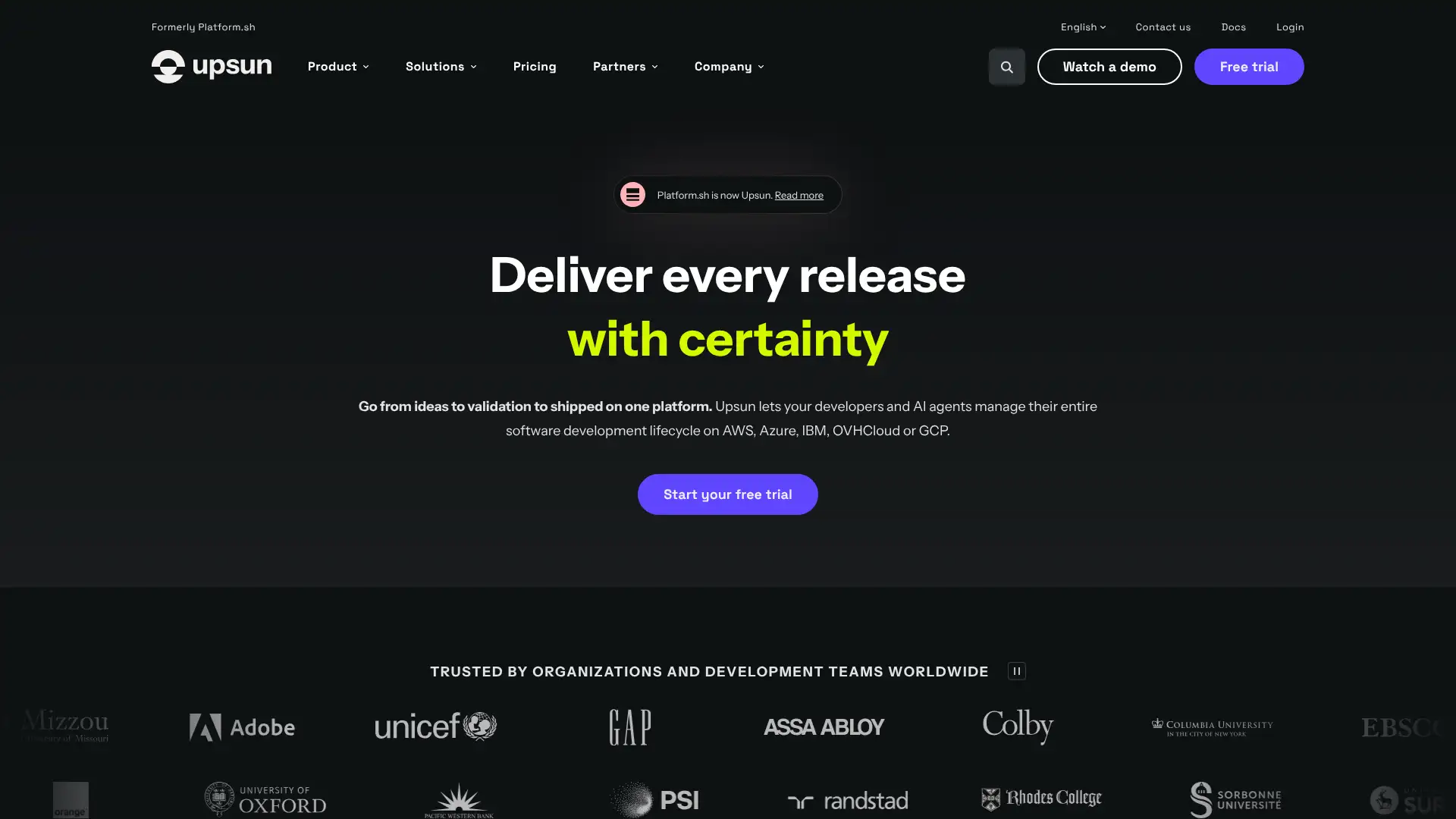
Platform.sh is a continuous deployment PaaS founded in 2014, particularly strong for PHP application hosting (Drupal, Symfony, Laravel, Magento) and multi-application enterprise projects. It uses a git-push deployment model with infrastructure defined in YAML files, providing reproducible environments. Platform.sh automatically spins up complete clones of the production environment for every branch, including databases and services, enabling genuine environment parity across development, staging, and production. Pricing starts at approximately $25/month for the Development plan. Platform.sh was acquired by Idera in 2024. It holds SOC 2 Type II, ISO 27001, and HIPAA certifications for regulated workloads.
- • Git-push deployment with YAML infrastructure definition: reproducible environments for every branch
- • Automatic environment cloning: every branch gets a complete clone including databases and services
- • Multi-application support: host multiple interconnected microservices under one project configuration
- • Strong PHP application support: Drupal, Symfony, Laravel, and Magento first-class citizens
- • SOC 2 Type II, ISO 27001, HIPAA: compliance certifications for regulated workloads
Platform.sh is the right choice for enterprise PHP application teams managing Drupal, Symfony, or Magento projects that need complete environment parity across branches. For non-PHP workloads or teams wanting a simpler git-push experience, Railway or Render provide more accessible entry points.
Latitude.sh
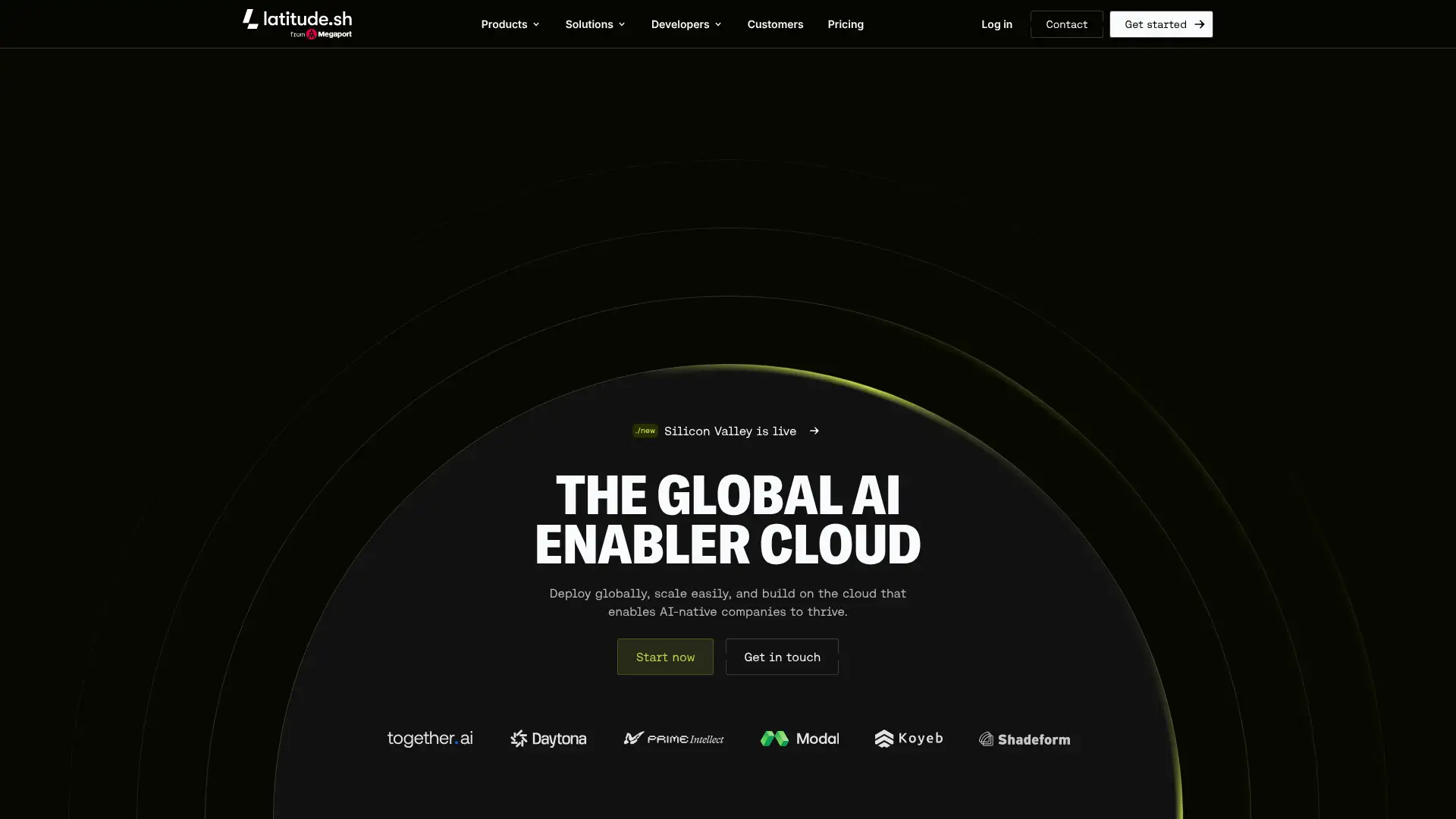
Latitude.sh is a bare metal cloud provider founded in 2021, offering single-tenant physical servers deployable via API and web dashboard workflows that feel like cloud VMs. Latitude targets developers and companies needing the performance of dedicated hardware without traditional data centre procurement complexity. Servers are deployed in minutes via API. Pricing starts at approximately $100-200/month for entry bare metal instances in US data centres. Latitude operates data centres in the Americas, Europe, Asia, and Australia. It is used by gaming companies, AI inference workloads, and teams that have outgrown cloud VM performance limits but want a modern API-first infrastructure experience. No virtual machine layer means no noisy-neighbour CPU contention.
- • API-first deployment: bare metal servers provisioned via REST API like cloud virtual machines
- • Single-tenant physical hardware: no noisy-neighbour CPU contention unlike shared cloud VMs
- • Global locations: Americas, Europe, Asia, and Australia data centres
- • NVMe SSD storage: fast local storage on dedicated hardware
- • Modern developer dashboard: clean web UI for server management without traditional IDC complexity
Latitude.sh is the right choice for teams that have outgrown cloud VM performance limits and need dedicated single-tenant hardware with a modern API-first deployment experience. For teams that can still achieve performance requirements on cloud VMs, Hetzner or OVHcloud provide bare metal options at lower cost with
Alibaba Cloud, Exoscale, Kamatera, and UpCloud: specialist provider reference
This final card is a reference summary for four specialist providers covered earlier in this guide. Alibaba Cloud (Card 06) is the dominant Asia-Pacific cloud with 6% global market share, the most competitive pricing in China, and MLPS 2.0 compliance for mainland China data residency. Exoscale (Card 14) provides Swiss data protection law compliance with per-minute billing for European financial services and healthcare workloads across 6 EU data centres. Kamatera (Card 15) offers custom-resource VPS configured via sliders across 21 global regions, with a 30-day free trial as the most generous trial period reviewed. UpCloud (Card 15) provides Finnish-built cloud with MaxIOPS storage and the only 100% uptime SLA in the VPS market. All four address niches not well served by the larger providers in this guide.
- • Alibaba Cloud: the only practical choice for mainland China data residency and MLPS 2.0 compliance
- • Exoscale: Swiss data protection law compliance stricter than EU GDPR for finance and healthcare
- • Kamatera: 30-day free trial and custom resource sliders for precise infrastructure right-sizing
- • UpCloud: 100% uptime SLA with financial credits and MaxIOPS high-IOPS storage
- • All four: specialist providers addressing specific geographic, compliance, and performance niches
For mainland China operations, Alibaba Cloud. For Swiss-law compliance, Exoscale.