Kitchen Conversion
A kitchen conversion tool instantly converts between common cooking measurements including cups, tablespoons, teaspoons, fluid ounces, milliliters, liters, grams, and pounds. Enter your measurement to convert any recipe ingredient amount from one unit to another.
What Is Kitchen Conversion?
Kitchen conversion is the process of translating a cooking measurement from one unit to another. It is used when following a recipe that uses different units than your measuring tools, when scaling a recipe up or down, or when cooking from an international recipe that uses metric measurements while you have US measuring cups, or vice versa.
Common kitchen conversion scenarios include converting cups to milliliters for a recipe from a British cookbook, converting grams to ounces when your kitchen scale only shows one unit, or calculating how many tablespoons are in a quarter cup when you cannot find your measuring cups. This tool handles all of these instantly and also supports the AI chat for ingredient-specific questions where density matters. For a broader reference covering all US measurement units including length, weight, temperature, and area, use our dedicated US unit converter.
US Cooking Measurements Explained
Cups, Tablespoons, and Teaspoons
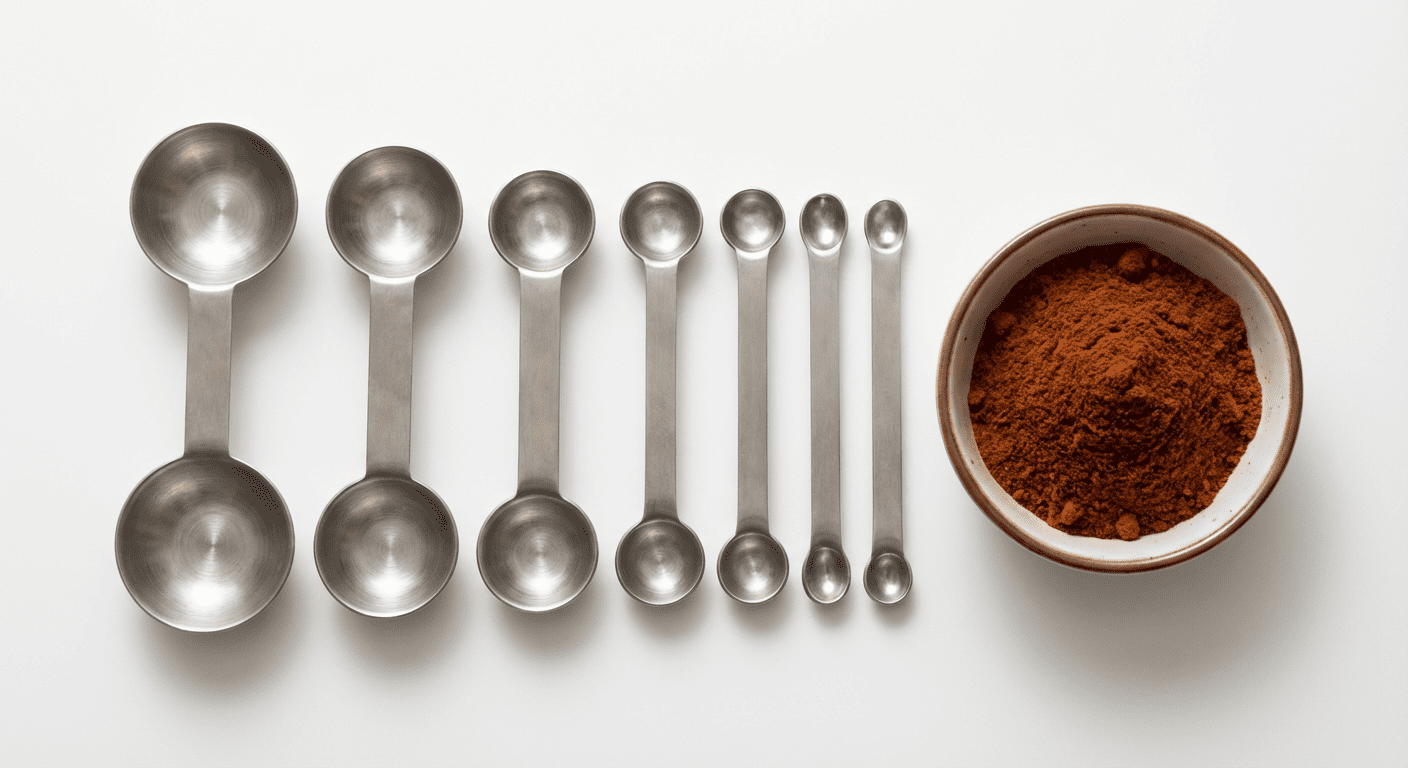
The US customary volume system for cooking is built around a hierarchy of cups, tablespoons, and teaspoons. One cup equals 16 tablespoons, and one tablespoon equals 3 teaspoons. This means one cup equals 48 teaspoons. These relationships are fixed and do not change between liquid and dry measurements when using standard US measuring tools. The cup is the largest common cooking unit, typically used for flour, sugar, liquids, and other bulk ingredients. Tablespoons are used for butter, oils, and condiments, while teaspoons are reserved for spices, baking powder, vanilla extract, and other small quantities.
Fluid Ounces and Milliliters
One US fluid ounce equals approximately 29.574 milliliters. One cup equals 8 fluid ounces or approximately 236.6 milliliters. Fluid ounces are a volume measurement and are different from weight ounces, which measure mass. When a recipe says "8 oz of milk," it is referring to 8 fluid ounces (one cup), not the weight of the milk. However, water weighs almost exactly 1 gram per milliliter, so for water-based liquids, the volume in milliliters is approximately equal to the weight in grams.
Kitchen Conversion Chart
| From | Cups | Tablespoons | Teaspoons | Fluid Oz | mL |
|---|---|---|---|---|---|
| 1 Cup | 1 | 16 | 48 | 8 | 236.6 |
| 1 Tablespoon | 0.0625 | 1 | 3 | 0.5 | 14.79 |
| 1 Teaspoon | 0.0208 | 0.333 | 1 | 0.167 | 4.93 |
| 1 Fluid Ounce | 0.125 | 2 | 6 | 1 | 29.57 |
| 250 mL | 1.057 | 16.91 | 50.72 | 8.45 | 250 |
| 1 Liter | 4.227 | 67.63 | 202.9 | 33.81 | 1000 |
Dry vs Liquid Measurements
Why Dry and Liquid Cups Differ
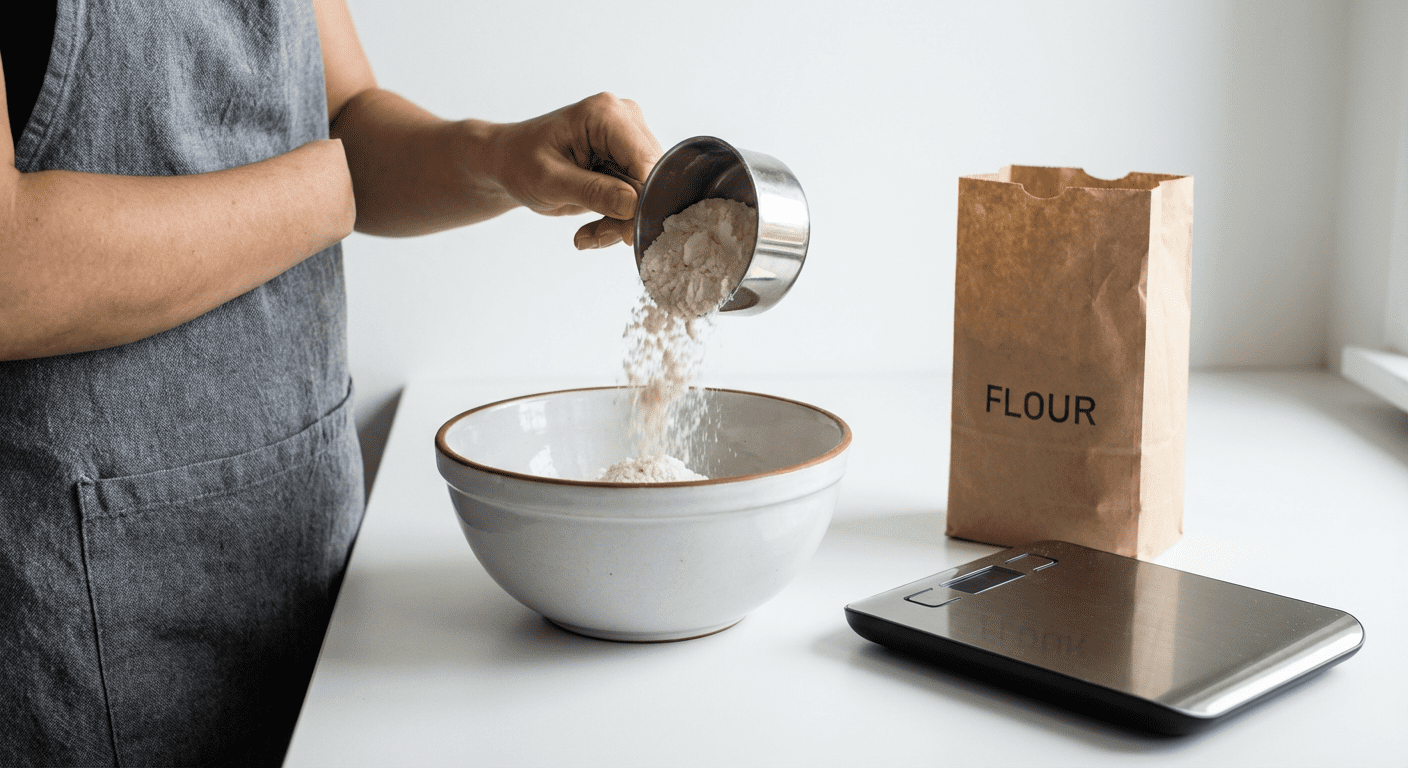
The volume of a US dry cup and a US liquid cup is the same at 236.588 milliliters. However, dry and liquid measuring cups are designed differently for accuracy. Liquid measuring cups have a spout and are meant to be read at eye level with the liquid sitting below the rim. Dry measuring cups are designed to be filled to the top and leveled off, which is how dry ingredients like flour are measured accurately by volume.
The practical difference matters most for flour. One cup of all-purpose flour measured by scooping the cup directly into the flour bag can pack significantly more flour than one cup measured by spooning flour into the cup and leveling it. This can be the difference of 20 to 30 grams per cup, which affects the texture of baked goods. Professional bakers typically weigh ingredients in grams rather than measuring by volume to eliminate this variability entirely.
US vs Metric Cooking Measurements
American recipes use cups, tablespoons, teaspoons, fluid ounces, and pounds. Most other countries, including the UK, Australia, Canada, and most of Europe, use the metric system in their recipes: milliliters, liters, and grams. When cooking from an international recipe, the most important conversions are cup to milliliter (1 cup = 236.6 mL), ounce to gram (1 oz = 28.35 g), and pound to gram (1 lb = 453.6 g).
One note on Australian tablespoons: the Australian tablespoon equals 20 mL, compared to the US tablespoon at 14.79 mL. If you are following an Australian recipe, keep this in mind when converting tablespoons to other units. For oven temperature conversions when following international recipes, use the gas mark converter to translate between Gas Mark, Fahrenheit, and Celsius. For meal planning with converted recipes, the free AI meal planner can help organize your ingredient lists.
Common Recipe Conversions
How Many Tablespoons in a Cup
There are 16 tablespoons in 1 cup. This is one of the most useful kitchen conversions to memorize. For fractions of a cup: 3/4 cup = 12 tablespoons, 2/3 cup = about 10 tablespoons and 2 teaspoons, 1/2 cup = 8 tablespoons, 1/3 cup = about 5 tablespoons and 1 teaspoon, and 1/4 cup = 4 tablespoons.
How Many Teaspoons in a Tablespoon
There are exactly 3 teaspoons in 1 tablespoon. This means 1/2 tablespoon equals 1.5 teaspoons, and 1/4 tablespoon equals 3/4 teaspoon. When a recipe calls for 1/4 tablespoon of a spice and you only have a teaspoon measure, use 3/4 of a teaspoon. One tablespoon equals 14.79 mL, so 1 teaspoon equals approximately 4.93 mL.
How Many Ounces in a Cup
There are 8 fluid ounces in 1 cup. This is a volume measurement, not a weight measurement. One cup of water weighs approximately 8.34 ounces by weight due to water's density, but one cup of flour weighs only about 4.5 ounces because flour is much less dense than water. When a recipe says "8 oz of milk," it means 8 fluid ounces which is 1 cup. When it says "8 oz of flour," it means 8 ounces by weight, which is closer to 1.75 cups of flour.
Frequently Asked Questions
How many mL in a cup?
There are 236.588 milliliters in one US cup, commonly rounded to 236.6 mL or 237 mL for practical purposes. The metric cup used in Australia and Canada is exactly 250 mL, which is slightly larger than the US cup. When following US recipes with metric measuring tools, use 240 mL as a practical approximation for one cup.
How many tablespoons in 1/4 cup?
There are 4 tablespoons in 1/4 cup. Since 1 cup = 16 tablespoons, a quarter of 16 is 4. In milliliters, 1/4 cup equals about 59 mL. If you need to measure 1/4 cup using only a teaspoon measure, use 12 teaspoons (since 1 tablespoon = 3 teaspoons and you need 4 tablespoons).
Is 8 oz a cup?
Yes, 8 fluid ounces equals exactly 1 cup in the US measurement system. However, this only applies to fluid (volume) ounces. If a recipe specifies 8 oz of a dry ingredient like flour or sugar, that is a weight measurement, not a volume measurement. 8 oz of flour by weight is approximately 1.75 cups, and 8 oz of sugar by weight is approximately 1.14 cups.
How to convert grams to cups?
Converting grams to cups requires knowing the density of the ingredient because cups measure volume while grams measure weight. For water: 240 grams = 1 cup. For all-purpose flour: approximately 125 grams = 1 cup. For granulated sugar: approximately 200 grams = 1 cup. For butter: approximately 227 grams = 1 cup. Use the AI chat in the converter above and specify the ingredient for an accurate gram-to-cup conversion.
What is 250 mL in cups?
250 mL equals approximately 1.057 US cups, which is just over 1 cup. For practical cooking purposes, 250 mL can be rounded to 1 cup (236.6 mL) with minimal impact on most recipes. In metric countries, 250 mL is the standard metric cup. This is why metric recipes often call for 250 mL where a US recipe would call for 1 cup.