Gas Mark Converter
A gas mark converter translates oven temperature settings between Gas Mark numbers, Fahrenheit, and Celsius for both gas and electric ovens. Enter a temperature or gas mark number to instantly see the equivalent in all formats for your recipe.
What Is a Gas Mark?
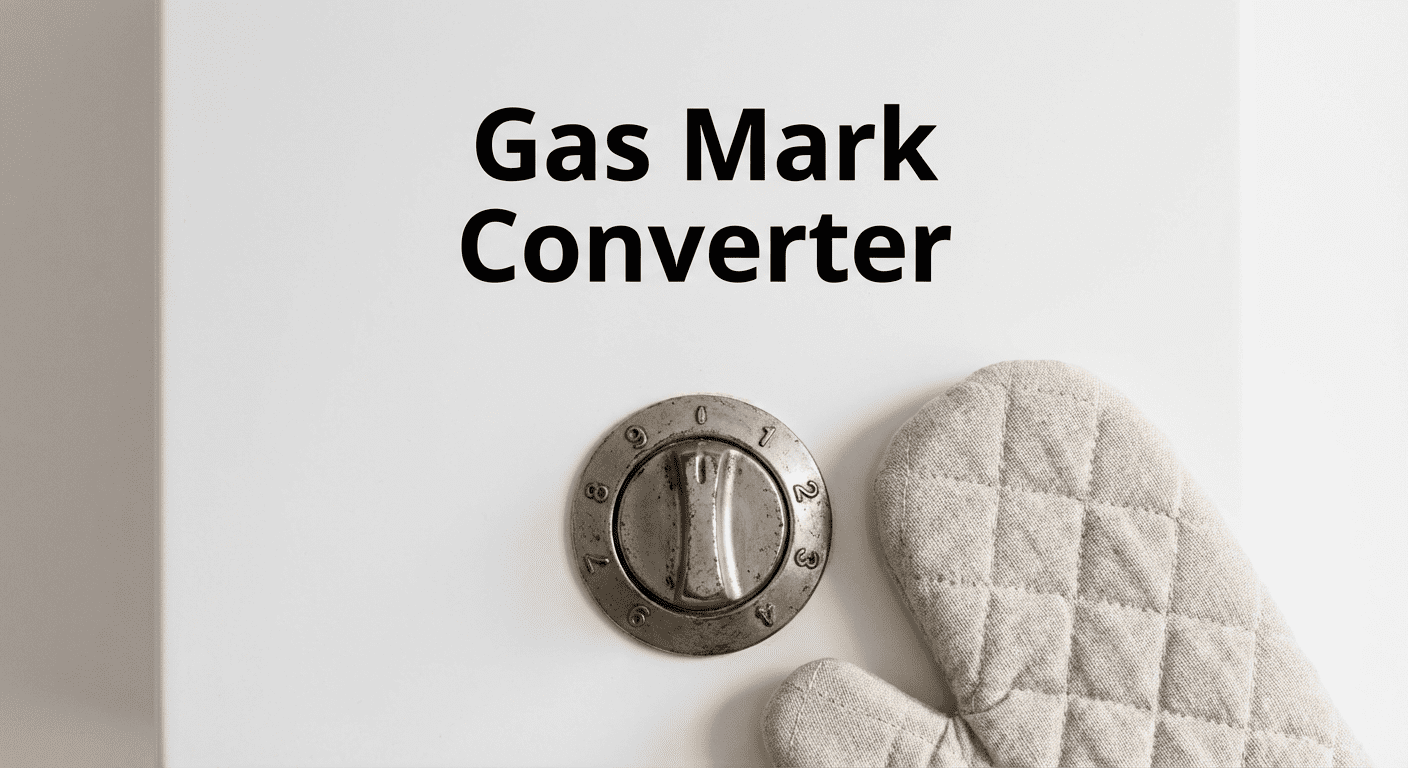
Gas mark is a temperature scale used on gas ovens primarily in the United Kingdom and Ireland. It was developed as a simplified way to describe oven heat without requiring the user to know exact temperatures in Fahrenheit or Celsius. Gas marks run from 1 (very cool, around 275°F) to 9 (very hot, around 475°F), with each increment representing roughly a 25°F or 14°C increase in oven temperature.
The gas mark system is still widely used in British cookbooks, baking magazines, and recipe websites. When following a recipe from the UK and cooking on a US oven or an electric range, you need to convert the gas mark number to Fahrenheit or Celsius to set the correct temperature. This converter handles all three formats instantly.
Gas Mark to Fahrenheit and Celsius Chart
| Gas Mark | Fahrenheit | Celsius | Oven Description | Electric Equivalent |
|---|---|---|---|---|
| Gas Mark 1 | 275°F | 140°C | Very Cool | 250–260°F / 120–130°C |
| Gas Mark 2 | 300°F | 150°C | Cool | 275–280°F / 135–140°C |
| Gas Mark 3 | 325°F | 165°C | Warm | 300–310°F / 150–155°C |
| Gas Mark 4 | 350°F | 180°C | Moderate | 325–330°F / 160–165°C |
| Gas Mark 5 | 375°F | 190°C | Moderately Hot | 350–355°F / 175–180°C |
| Gas Mark 6 | 400°F | 200°C | Hot | 375–380°F / 190–195°C |
| Gas Mark 7 | 425°F | 220°C | Hot | 400–410°F / 205–210°C |
| Gas Mark 8 | 450°F | 230°C | Very Hot | 425–430°F / 220–225°C |
| Gas Mark 9 | 475°F | 240°C | Very Hot | 450–455°F / 230–235°C |
How to Convert Gas to Electric Oven Temperature
Gas Oven vs Electric Oven
Gas ovens and electric ovens heat differently. A gas oven uses a flame that cycles on and off to maintain the set temperature, which creates a slightly more humid, uneven heat environment. Electric ovens use heating elements that maintain more consistent, dry heat. Because of this difference, gas ovens are generally considered to run hotter than their thermostat setting indicates compared to electric ovens at the same temperature reading.
When a British recipe gives a gas mark temperature and you are using an electric oven, the standard recommendation is to reduce the temperature by 10 to 15 degrees Celsius (20 to 25 degrees Fahrenheit) to achieve equivalent results. A fan-assisted electric oven, also called a convection oven, runs even more efficiently and should be set 20°C (about 35°F) lower than the gas mark equivalent.
Temperature Adjustment Tips
When converting from gas to electric, use the following adjustments:
- Standard electric oven — reduce temperature by 10–15°C (20–25°F) compared to the gas mark equivalent in Celsius or Fahrenheit.
- Fan-assisted electric oven (convection) — reduce temperature by 20°C (35°F) from the gas mark equivalent. Cooking times may also be 5–10 minutes shorter.
- Gas to electric range conversion — when physically switching from a gas cooktop to an electric range, expect more precise temperature control on electric but slower response to changes in heat settings.
- Baking in a fan oven — fan ovens distribute heat more evenly, so you can often reduce cooking time by 10 to 15 percent in addition to lowering the temperature.
Common Baking Temperatures
Bread Baking Temperatures
Most bread is baked at high temperatures to develop a crisp crust and fully cook the interior. Standard white bread and sourdough are typically baked at Gas Mark 7 to 8 (425–450°F / 220–230°C). Enriched breads like brioche and milk loaves that contain butter or eggs require a lower temperature of Gas Mark 4 to 5 (350–375°F / 180–190°C) to prevent the sugars and fats from browning too quickly. Flatbreads like naan and pita are cooked at the highest heat, Gas Mark 8 to 9 (450–475°F / 230–240°C).
Cake and Pastry Temperatures
Victoria sponge and layer cakes bake at Gas Mark 4 (350°F / 180°C), the most common baking temperature in British recipes. Delicate items like meringues and custards require Gas Mark 1 to 2 (275–300°F / 140–150°C) to dry out slowly without browning. Shortcrust and flaky pastry cases for pies and tarts bake at Gas Mark 5 to 6 (375–400°F / 190–200°C) to achieve a golden, crisp base. Choux pastry for eclairs and profiteroles needs a hot oven at Gas Mark 6 to 7 (400–425°F / 200–220°C) to puff before the structure sets.
Roasting Temperatures
Roasting temperatures depend heavily on the type of meat and the desired result. Whole chickens roast at Gas Mark 5 to 6 (375–400°F / 190–200°C) for about 20 minutes per pound plus 20 minutes. Beef roasts cooked medium-rare use a high initial heat of Gas Mark 7 (425°F / 220°C) for 15 minutes to sear the surface, then Gas Mark 5 (375°F / 190°C) for the remainder. Vegetables roast well at Gas Mark 6 to 7 (400–425°F / 200–220°C) to caramelize their natural sugars without burning. For slow-roasting tough cuts like pork shoulder or lamb shoulder, Gas Mark 2 to 3 (300–325°F / 150–165°C) over several hours produces tender, shreddable results.
Converting Electric to Gas Range Settings
When a recipe specifies an electric oven temperature and you need to convert it to a gas mark setting, add approximately 10 to 15°C (20 to 25°F) to find the gas equivalent, then match that temperature to the nearest gas mark in the chart above. For example, a recipe calling for 160°C in a fan oven would translate to approximately 175–180°C in a conventional gas oven, which is Gas Mark 4.
When physically converting an electric range to gas, the process involves changing the cooktop appliance and adjusting gas line connections, which requires a licensed gas engineer in most regions. The oven temperature behavior will change: gas ovens provide more moisture and slightly less consistent heat distribution compared to electric. Recipes originally developed for electric ovens may need slightly higher gas mark settings and different baking times. For meal planning help when switching cooking setups, the free AI meal planner can help you adapt your recipes to your new cooking environment.
Frequently Asked Questions
What is Gas Mark 4 in Fahrenheit?
Gas Mark 4 is 350°F (180°C). It is described as a moderate oven and is one of the most commonly used temperatures in British baking recipes. Victoria sponge, most layer cakes, casseroles, and chicken pieces are typically cooked at Gas Mark 4. On an electric oven, set to 325–330°F (160–165°C) for the equivalent result.
Are gas and electric ovens the same temperature?
No. Gas ovens tend to run slightly hotter and more unevenly than electric ovens at the same thermostat setting. The direct flame creates hot spots, especially near the bottom of the oven. Electric ovens provide more consistent, dry heat. When converting between the two, reduce the temperature by 10–15°C (20–25°F) when switching from gas to electric.
How to convert gas mark to Celsius?
Use the standard conversion table: Gas Mark 1 = 140°C, Gas Mark 2 = 150°C, Gas Mark 3 = 165°C, Gas Mark 4 = 180°C, Gas Mark 5 = 190°C, Gas Mark 6 = 200°C, Gas Mark 7 = 220°C, Gas Mark 8 = 230°C, Gas Mark 9 = 240°C. Alternatively, use the converter above — enter the Gas Mark number and select Gas Mark as the from unit.
What gas mark is 180°C?
180°C is Gas Mark 4, also described as a moderate oven (350°F). This is one of the most frequently called-for temperatures in baking and is suitable for cakes, sponges, roasting chicken pieces, and baked pasta dishes.
Do gas ovens cook differently than electric?
Yes. Gas ovens produce a slightly more moist heat because combustion produces water vapor alongside heat. This can be beneficial for bread and roasted meats where surface moisture helps with browning and texture. Electric ovens produce dry heat that is more even and predictable, making them better for delicate pastries and consistent baking results. Fan-assisted electric ovens circulate air for the most even results of all three types.