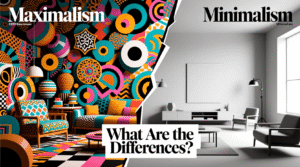
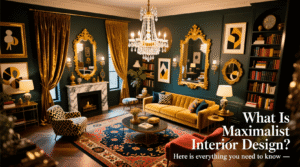
Eclectic maximalist interior design combines the “more is more” philosophy of maximalism with the anything-goes spirit of eclecticism. Its like a room with Moroccan rugs beneath mid-century modern furniture, Victorian portraits hanging next to contemporary abstract art, and jewel-toned velvet cushions piled on a leather sofa.
The style rejects the idea that every piece must match. Instead, it celebrates intentional abundance—where every object has meaning, and the overall effect feels rich rather than cluttered.
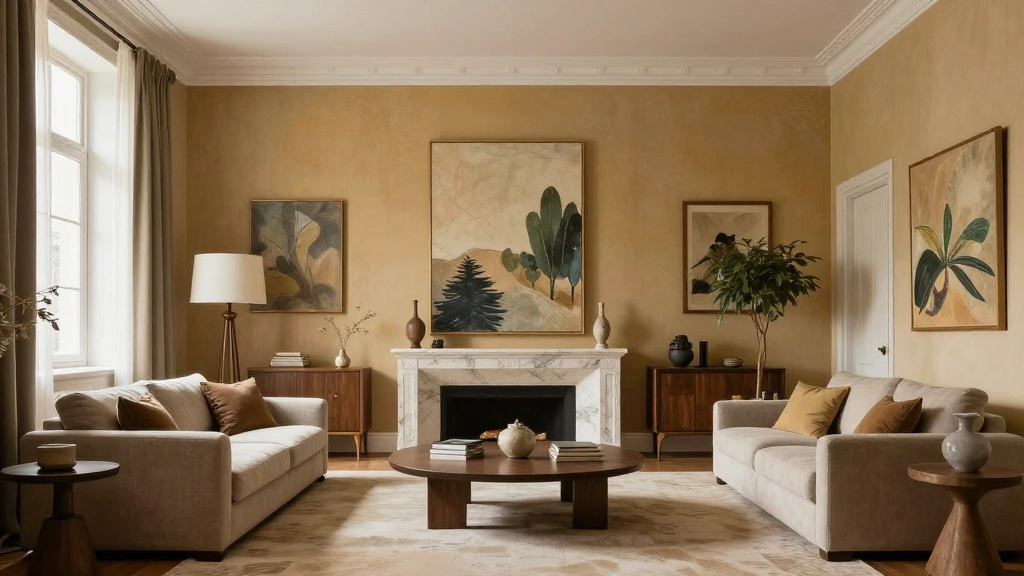
Several characteristics define this approach:
- Deliberate pattern mixing — florals meeting geometrics meeting stripes
- Saturated color palettes — deep emeralds, burnt oranges, cobalt blues
- Layered textures — rough against smooth, matte against shiny
- Global influences — pieces collected from different cultures and eras
- Personal collections — books, art, objects displayed prominently
The key distinction from cluttered or chaotic spaces? Curation. Every maximalist room that works has an underlying structure, even if that structure remains invisible at first glance.
The Philosophy Behind More Is More
Minimalism promised peace through reduction. Eclectic maximalism offers peace through expression. Interior designer Kelly Wearstler describes it as “surrounding yourself with everything you love instead of editing yourself down to someone else’s idea of sophistication.”
This philosophy resonates deeply with people who grew up curating digital identities on social media. Your home becomes another canvas for self-expression, and blank walls feel like missed opportunities.
Maximalist style mixing also carries practical benefits. Rooms designed this way age gracefully because they already embrace imperfection. Add a new find from a weekend flea market? It slides right in. Inherit grandmother’s collection of ceramic cats? They have a home here.
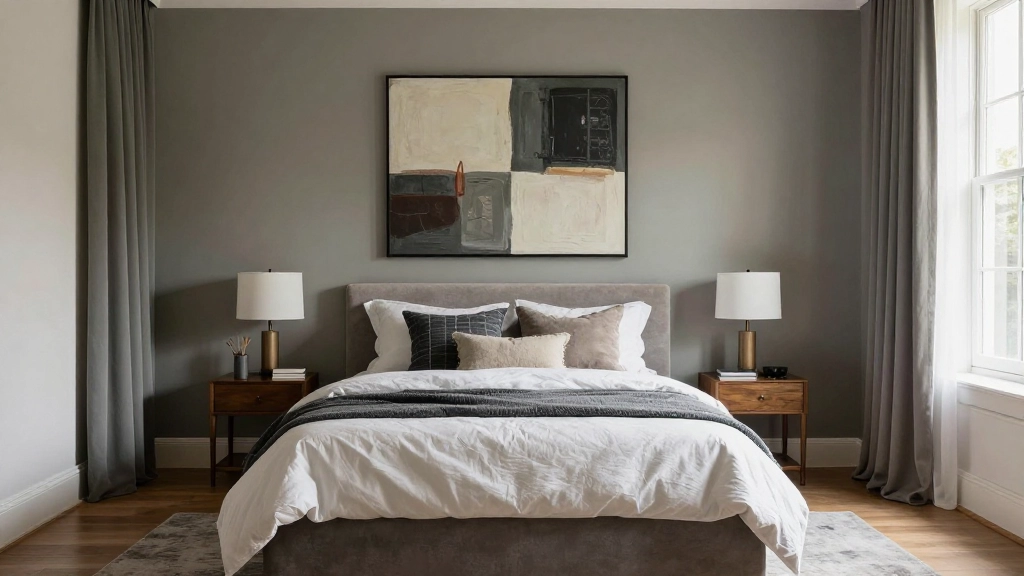
Bold Color Mixing That Actually Works
Color intimidates most people attempting eclectic maximalist interior design. The fear of a room looking like a circus tent keeps many designers playing it safe. But certain principles make bold palettes achievable for anyone.
The 60-30-10 Rule Gets an Update
Traditional design suggests dividing a room into 60% dominant color, 30% secondary color, and 10% accent. For maximalist spaces, think more like 40-25-20-15—four colors instead of three, with more even distribution.
A maximalist living room might feature:
- 40% deep teal (walls and large sofa)
- 25% terracotta (rug and armchair)
- 20% goldenrod (curtains and throw pillows)
- 15% plum (accent pieces and artwork)
Undertones Create Harmony
Colors that share undertones play well together regardless of how different they appear. Warm undertones (yellows, oranges) unite reds, corals, and mustards. Cool undertones (blues, purples) connect teals, lavenders, and forest greens.
Mix warm and cool deliberately. A predominantly warm room with one cool accent color creates focal points. A teal velvet chair in a room of burnt oranges and golds draws the eye exactly where you want it.
Jewel Tones for Depth
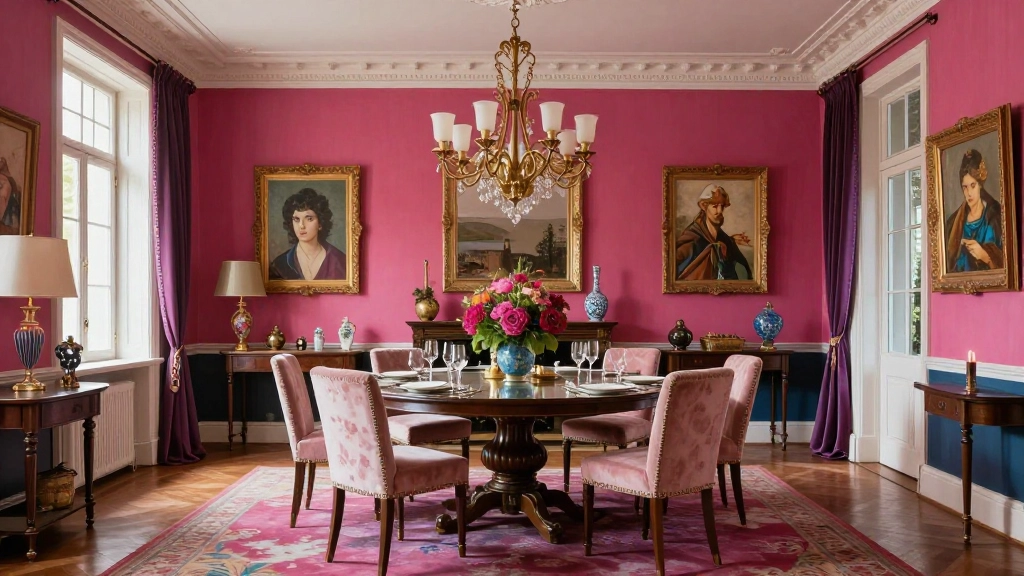
Jewel tones—emerald, sapphire, ruby, amethyst—create the luxurious depth that defines successful maximalist spaces. These saturated colors absorb light rather than reflecting it, making rooms feel intimate rather than overwhelming.
Pair jewel tones with metallics. Gold, brass, and copper warm up deep blues and greens. Silver and chrome create edge against rich purples and burgundies. Our vibrant image generator can help you visualize these bold combinations before committing to paint.
Pattern Layering Without Visual Chaos
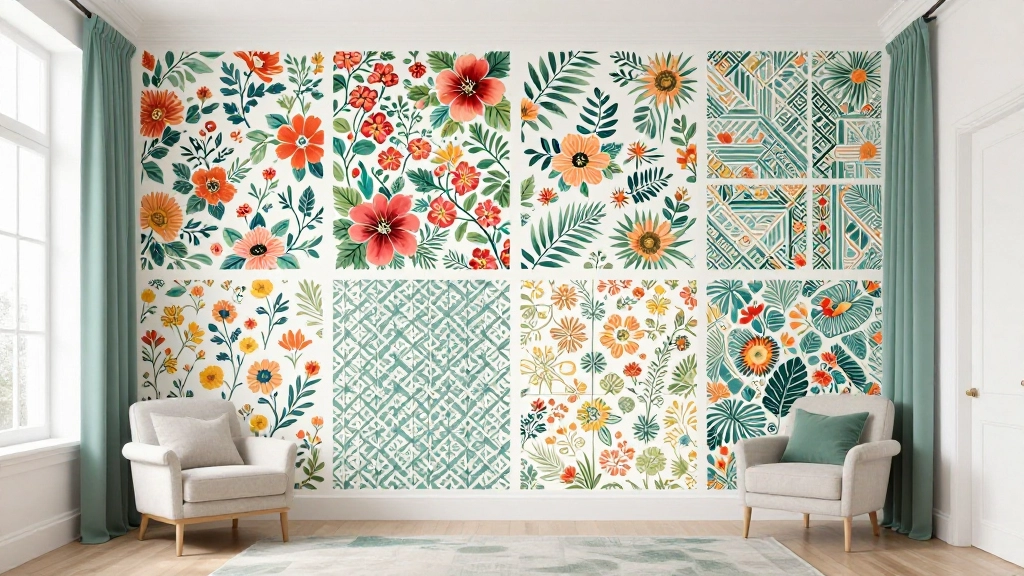
Pattern mixing separates amateur maximalism from the curated abundance found in design magazines. The secret isn’t avoiding conflict—it’s managing scale.
The Scale Strategy
Every pattern has a scale: the size of its repeated elements. Large-scale florals, medium-scale geometrics, and small-scale textures coexist peacefully because the eye processes them at different rates.
Combine at least three different scales in every maximalist room:
- Large scale — oversized botanicals, big abstract shapes, large plaids
- Medium scale — standard florals, geometric prints, ikat patterns
- Small scale — pinstripes, tiny polka dots, subtle textures
Repeating Colors Across Patterns
A striped pillow, a floral curtain, and a geometric rug feel unified when they share even one common color. Pull the teal from the rug into the stripe, echo the stripe’s cream in the floral’s background, and suddenly disparate patterns speak the same language.
Pattern Categories That Play Together
Some pattern families naturally complement each other:
| Pattern Type | Pairs Well With | Use Caution With |
|---|---|---|
| Florals | Stripes, small geometrics | Other florals (same scale) |
| Geometrics | Solids, organics, ikats | Busy geometrics |
| Stripes | Almost everything | Busy plaids |
| Animal prints | Solids, subtle textures | Other animal prints |
| Ethnic/tribal | Solids, natural textures | Competing ethnic prints |
Stripes work as a near-universal bridge pattern. When two prints clash, insert a stripe that shares their colors, and the discord resolves.
Velvet to Rattan Texture mixing
Texture does for touch what color does for sight. Layered decor reaches its full potential only when surfaces vary dramatically—nubby wool against smooth leather, rough brick beside polished marble.
The Texture Spectrum
Arrange textures on a spectrum from roughest to smoothest:
- Raw: exposed brick, unfinished wood, stone
- Rough: rattan, jute, bouclé, chunky knits
- Medium: linen, cotton, matte ceramics
- Smooth: leather, silk, polished wood
- Reflective: mirrors, metallics, lacquer, glass
Successful maximalist rooms include textures from at least three different points on this spectrum. A room with only smooth textures feels cold. A room with only rough textures feels unfinished.
Tactile Focal Points
Create invitation to touch. A tufted velvet sofa begs for contact. A sheepskin throw on a leather chair suggests comfort. Brass drawer pulls on a painted cabinet add warmth to cool surfaces.
The textile art image generator offers inspiration for incorporating woven wall hangings and fabric art into maximalist schemes.
Natural Materials Ground Bold Choices
Wood, stone, and plant fibers anchor even the wildest color and pattern combinations. A sisal rug under a riot of patterned pillows calms the space. Wood furniture frames provide visual rest amid competing textiles.
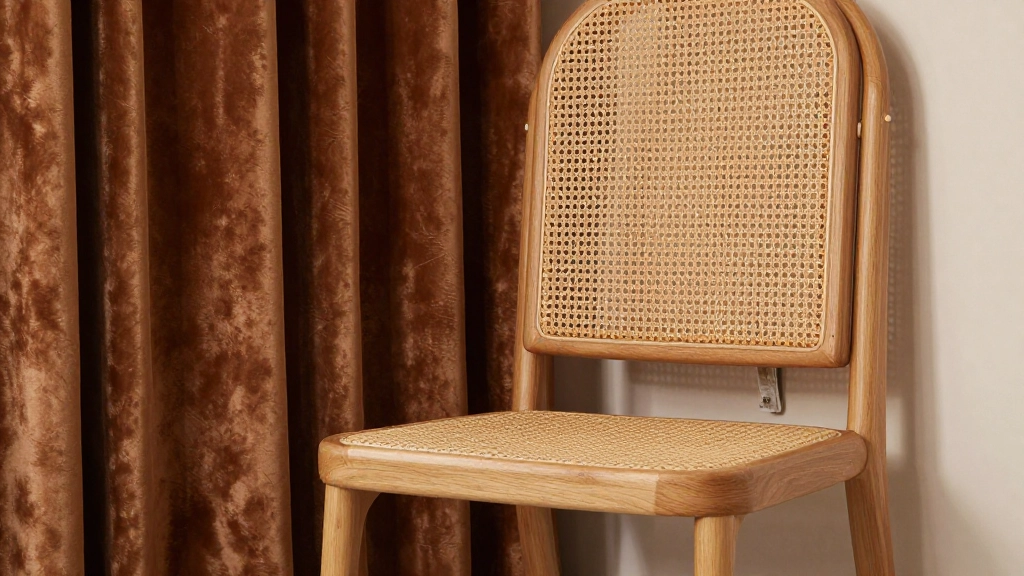
Rattan and wicker having particular success in 2026 maximalist interiors. Their organic texture bridges the gap between bohemian eclecticism and sophisticated maximalism.
Room-by-Room Maximalist Strategies
Each space in your home presents unique opportunities for eclectic maximalist interior design. Here’s how to approach the major rooms.
Living Rooms
The living room offers the most canvas for maximalist expression. Layer rugs—a large neutral base with a smaller patterned rug on top. Mix seating styles: a velvet sofa with rattan armchairs and a leather ottoman.
Gallery walls thrive here. Mix art sizes, frame styles, and mediums. Combine paintings with mirrors, textiles, and sculptural objects. No need for perfect alignment; the visual rhythm matters more than geometric precision.
Coffee table styling presents another layering opportunity. Stack books, add a sculptural object, include something organic (dried flowers, a bowl of stones), and top with a candle or small lamp. Height variation creates visual interest.
Bedrooms
Bedrooms benefit from slightly restrained maximalism. The bed should anchor the room, so invest in quality bedding with pattern and texture. Layer a quilted coverlet over patterned sheets, add Euro shams in a complementary print, and pile on decorative pillows in varying sizes.
Canopy beds or statement headboards work beautifully in maximalist bedrooms, providing vertical visual interest. Surround the bed with collected objects—vintage lamps, stacked books, framed photographs.
Dining Rooms
Maximalist dining rooms embrace the mismatched. Collect different chairs around a single table—each seat becomes a conversation piece. Mix wood tones fearlessly; the variety suggests genuine collection rather than showroom purchase.
Dramatic lighting transforms dining spaces. Crystal chandeliers, sculptural pendants, or clustered vintage fixtures all suit maximalist aesthetics. The dining table itself can feature bold tablecloths, layered runners, and eclectic place settings.
Bathrooms
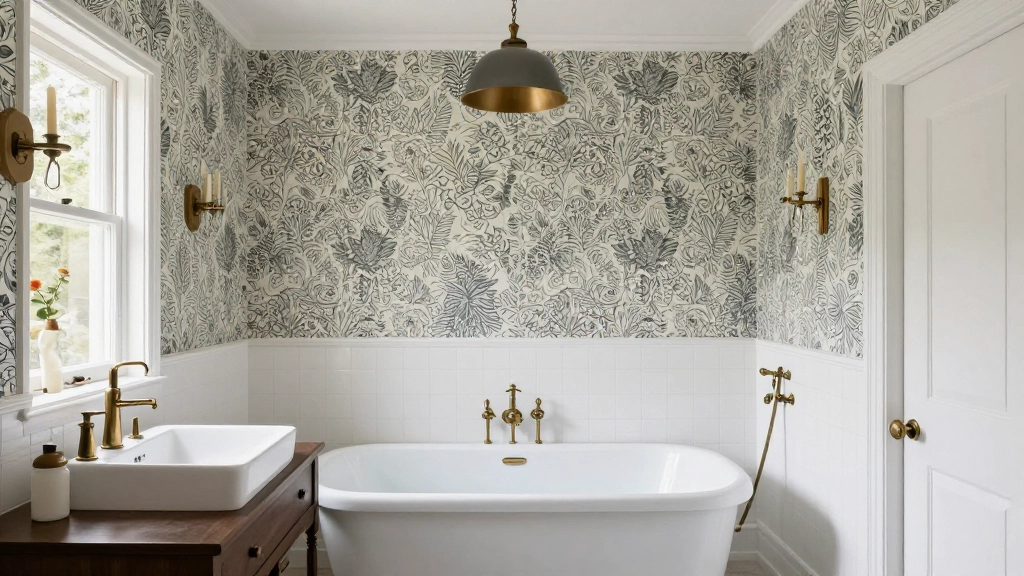
Even small bathrooms accommodate maximalism through wallpaper, tile choices, and accessories. A busy botanical wallpaper with gold fixtures creates instant personality. Patterned floor tiles paired with subway walls offer pattern without overwhelm.
Layer towels in coordinating colors. Display perfume bottles, candles, and decorative objects on open shelving. The bathroom becomes a jewel box rather than a purely functional space.
6 Blunders That Derail Your Maximalist Space
Even with enthusiasm and good intentions, certain missteps undermine maximalist interiors. Here’s what to avoid.
1. Forgetting Negative Space
Maximalism isn’t about filling every square inch. The eye needs resting places—a blank wall section, an uncluttered surface, a solid-colored pillow among patterns. These breathing rooms make the abundance feel intentional rather than accidental.
2. Ignoring Lighting Layers
Single overhead fixtures flatten maximalist rooms. Layer ambient, task, and accent lighting. Table lamps, floor lamps, sconces, and pendants create pools of light and shadow that give depth to collected objects.
3. Skipping the Anchor Piece
Every maximalist room needs at least one substantial anchor—a large sofa, a statement rug, a significant artwork. Without anchors, rooms feel like collections of trinkets rather than curated spaces.
4. Matching Too Much
Matching furniture sets kill maximalist energy. That coordinated bedroom suite from the furniture store? Break it up. Add a vintage dresser, swap nightstands, paint one piece a bold color.
5. Poor Quality Among Quantity
Maximalism requires quality pieces because every object receives attention. One well-made vintage chair outperforms five cheap modern ones. Edit for quality even while embracing quantity.
6. Neglecting Functionality
A maximalist room that doesn’t function fails no matter how beautiful. Traffic paths must remain clear. Seating needs to be comfortable. Storage must exist for items not on display. Style never trumps livability.
Budget-Friendly Maximalism
Eclectic maximalist interior design doesn’t require unlimited funds. Several strategies make the style accessible at any budget.
Thrift Stores and Estate Sales
Maximalism favors vintage and collected pieces over new purchases. Thrift stores, estate sales, and online marketplaces like Chairish and Facebook Marketplace offer character-rich finds at fraction of retail prices.
Look for solid wood furniture with good bones—paint and new hardware transform dated pieces. Brass lamps, ceramic vases, and framed art often cost single digits at estate sales.
DIY and Customization
Transform basic items through paint, fabric, and hardware. A plain IKEA dresser becomes unique with brass pulls and a coat of deep green paint. Curtain panels gain personality with trim tape or pompom fringe.
Frame fabric remnants and calendar pages as instant art. Recover throw pillows in vintage scarves or table linens. These touches cost little but contribute enormously to layered decor.
Strategic Splurges
Save budget for items that matter most: a quality sofa, a well-made rug, and good lighting. These anchors work hard while surrounding collections can rotate and evolve affordably.
For visualizing your space before purchasing, AI tools can help. Our maximalist image generator creates concept images of layered, bold interiors that serve as inspiration boards for your own design journey.
Slow Accumulation
The best maximalist spaces build over time. Rather than purchasing everything at once, add pieces gradually. This approach spreads costs, allows for more thoughtful selection, and results in spaces that feel genuinely collected rather than designed.
Frequently Asked Questions
Can maximalism work in small spaces?
Absolutely. Small spaces actually benefit from maximalism’s embrace of pattern and color. Dark, saturated wall colors make small rooms feel cozy rather than cramped. Mirrors and layered textiles add depth without requiring square footage. The key is vertical storage and multifunctional furniture that maintains flow while accommodating collections.
How do I know when enough is enough?
Step back and assess whether you can easily identify individual pieces or if everything blurs together. If objects lose their identity in visual noise, remove until each item can breathe. The room should feel abundant but not chaotic, collected but not cluttered.
What if my partner prefers minimalism?
Compromise through zoning. Perhaps the living room embraces maximalism while the bedroom stays restrained. Or agree on maximalist principles (collected objects, personal meaning) while maintaining cleaner lines in furniture and fewer patterns. Many couples find that thoughtful maximalism satisfies both the desire for personality and the need for visual calm.
Does maximalism mean buying more stuff?
Not necessarily. Maximalism means displaying and celebrating what you already own rather than hiding it in closets. Many successful maximalists simply bring out collections they’ve tucked away. The philosophy emphasizes curation and arrangement over acquisition.
How do I start without feeling overwhelmed?
Begin with one room or even one corner. Add a patterned throw pillow to a solid sofa. Hang a gallery arrangement on one wall. Layer a smaller rug over a larger one. Small additions build confidence and reveal your preferences before committing to larger changes.
What about resale value?
Paint covers most maximalist choices quickly. Wallpaper removal has become easier with modern materials. And frankly, staged homes with bold color and pattern photograph better than beige boxes. Many realtors now appreciate personality in listings—it helps properties stand out in crowded markets.
Can I mix different era styles together?
Mixing eras defines eclectic maximalism. A Victorian settee beside a 1970s rattan peacock chair near a contemporary sculptural lamp creates the layered, collected look that makes maximalist spaces feel lived-in rather than purchased. The contrast between periods adds richness and suggests history.
Where can I find inspiration for maximalist designs?
Design magazines like Architectural Digest and Elle Decor feature maximalist spaces regularly. Instagram accounts of interior designers specializing in bold aesthetics offer daily inspiration. For generating your own visual concepts, AI image tools like our AI art generator help visualize specific color and pattern combinations.
What’s the difference between maximalism and clutter?
Intent and arrangement. Clutter accumulates without thought; maximalism curates deliberately. Every object in a maximalist room earns its place through beauty, meaning, or function. Arrangement considers balance, grouping, and visual hierarchy. Clutter sits where it lands; maximalism places things with purpose.