The best tools for AI music are very good at creating realistic singing voices, catchy rhythms, and full arrangements that sound professional. This guide breaks down the top options on the market today. We ranked each one based on its cost, the quality of its audio beats, and how natural the vocals sound. If you need to write prompts for any of these tools, a dedicated song prompt generator can help you get better results faster.
How we score and rank AI music generators
- Audio and Vocal Quality (30%) — Instrumental fidelity, vocal realism, stereo separation, production polish, and how close the raw output sounds to a human-produced recording without post-processing
- Creative Control (20%) — Prompt adherence, editing tools, style blending, stem and MIDI export, segment-based generation, and the ability to refine output after the first pass rather than rolling the dice repeatedly
- Value for Money (15%) — Pricing relative to output volume, free tier generosity, credit burn transparency, and whether the real monthly cost matches the advertised plan price
- Licensing and Copyright Safety (15%) — Training data provenance, commercial rights clarity, resolved versus active litigation, and how much legal exposure you carry when shipping the output in paid work
- Output Versatility (10%) — Genre range, vocal versus instrumental support, maximum track length, format options, and whether the tool handles one job or several
- Ease of Use (5%) — Interface design, prompt-to-track speed, learning curve, and how quickly a new user produces usable output
- API and Developer Access (5%) — REST API availability, self-hosting options, serverless billing, and integration into automated workflows
The overall score is a weighted average across all seven dimensions, rounded to one decimal.
Top AI music generators by ranking
| Rank | Generator | Score | Price Range | Main Selling Point |
|---|---|---|---|---|
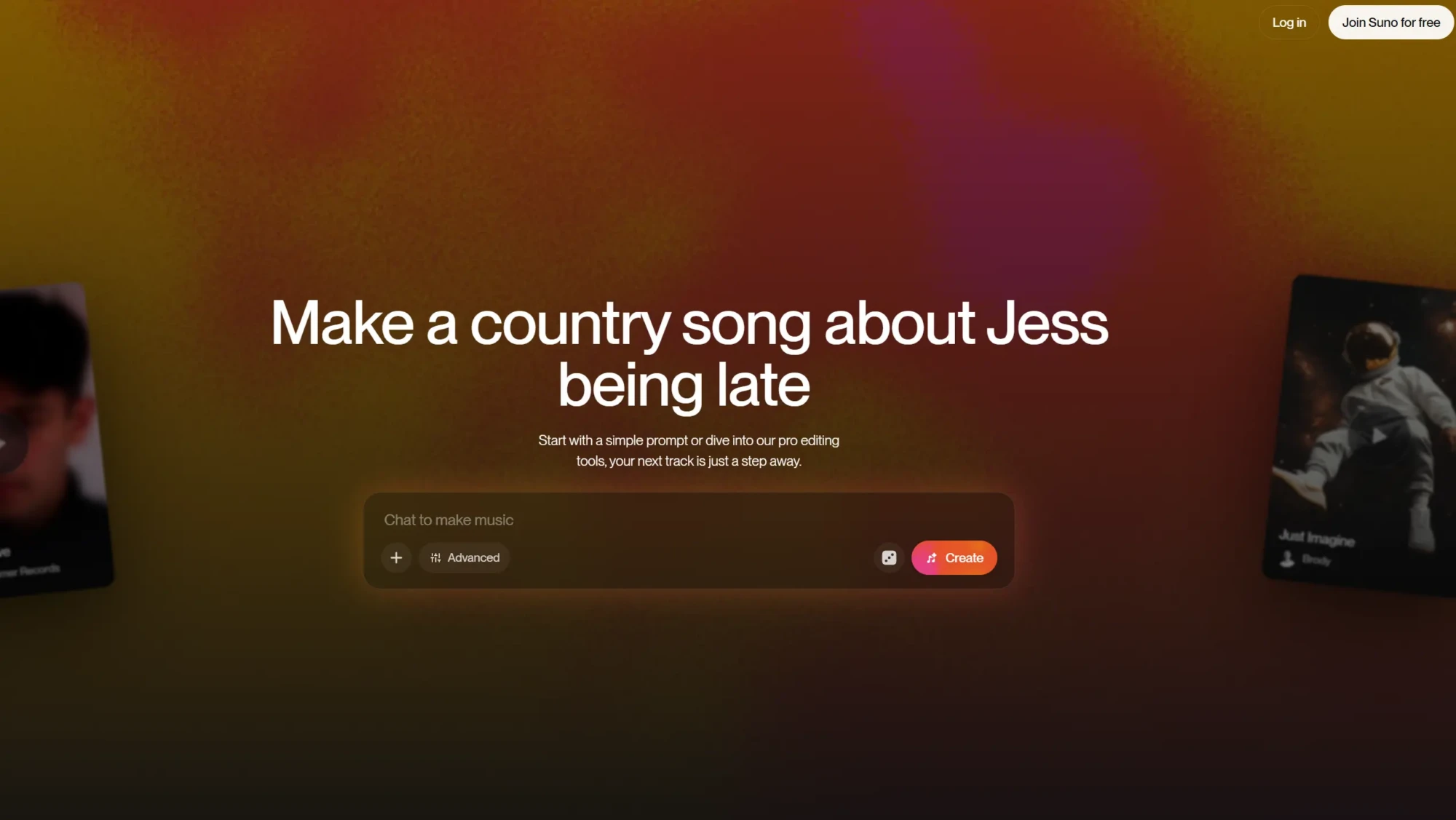
| 1 | Suno | 8.5 | Free – $30/mo | Best vocal realism on any AI music platform, full songs from a text prompt in under a minute |
| 2 | MusicGPT | 8.2 | Free – $32/mo | AI music creation platform with support for android and IOS app for generating complete songs, instrumentals and vocals |
| 3 | Google Lyria 3 | 7.8 | Free trial – $99.99/mo | Exclusively licensed training data, full Gemini API integration for developers |
| 4 | MiniMax Music | 7.4 | Usage-based | All-in-one multimodal stack covering music, speech, image, and video under one billing account |
| 5 | ElevenLabs Music | 7.2 | $5 – $330/mo | Vocal emotion and phrasing inherited from the leading TTS engine |
| 6 | AIVA | 7.1 | Free – ~€49/mo | MIDI and sheet music export for DAW editing, the only generator built for orchestral composers |
| 7 | Meta MusicGen | 7.0 | Free (open source) | Completely free self-hosted instrumental generation, 3.4M runs on Replicate |
| 8 | Stable Audio | 6.9 | Free – $0.20/track | Fastest inference (under 2 seconds per track), open-weight models for commercial use under $1M revenue |
| 9 | Riffusion | 6.3 | Free (open source) | Spectrogram-based generation through Stable Diffusion, real-time music shifting for interactive use |
| 10 | ACE-Step | 6.2 | Free (open source) | Newer text-to-music foundation model, self-hostable with zero per-track cost |
| 11 | Boomy | 6.0 | Free – $29.99/mo | Built-in distribution to Spotify, Apple Music, and 40+ streaming platforms |
| 12 | Soundraw | 5.8 | Free – scales by tier | Perpetual royalty-free license that survives subscription cancellation |
1. Suno — Score 8.5 / 10
| Dimension | Score |
|---|---|
| Audio and Vocal Quality | 9.6 |
| Creative Control | 7.0 |
| Value for Money | 7.5 |
| Licensing and Copyright Safety | 6.5 |
| Output Versatility | 9.5 |
| Ease of Use | 9.5 |
| API and Developer Access | 7.0 |
Suno has over 100 million users, roughly 2 million paid subscribers, and $300M in annual recurring revenue reported in early 2026, the platform has pulled away from every competitor on sheer adoption. A $400M Series D closed at a $5.4B valuation, making it the most heavily capitalized company in the space.
Suno pricing plans
| Plan | Monthly Price | Annual Price | Credits/Month | Songs/Month |
|---|---|---|---|---|
| Free | $0 | — | 50/day | ~10/day |
| Pro | $10 | $8/mo | 2,500 | ~500 |
| Premier | $30 | $24/mo | 10,000 | ~2,000 |
Each song generation costs roughly 5 credits and returns two takes. The catch that trips up new users is that extending a song, regenerating weak sections, and Studio editing actions all consume additional credits.
2. MusicGPT — Score 8.2 / 10
| Dimension | Score |
| Audio and Vocal Quality | 8.3 |
| Creative Control | 8.2 |
| Value for Money | 8.2 |
| Licensing and Copyright Safety | 8.0 |
| Output Versatility | 7.6 |
| Ease of Use | 8.5 |
| API and Developer Access8 | 8.0 |
MusicGPT is an AI music creation platform for generating complete songs, instrumentals, vocals, sound effects, and other audio from text prompts. It also includes tools for remixing, extending and replacing sections, stem separation, and audio editing. MusicGPT uses AI models trained on licensed material and offers commercial usage rights on paid plans.
MusicGPT pricing plans
| Plan | Monthly Price | Annual Price | Generation Scale | Commercial Use |
| Free | $0 | — | Fixed monthly credits | No |
| Plus | From $9.99 | — | Limited production | Yes |
| Pro | From $19.99 | — | High-volume generation | Yes |
| Ultra | From $32.99 | — | Unlimited under Fair Usage | Yes |
The Free plan is intended for testing, learning, and personal experimentation. Plus and Pro are designed for creators who need commercial usage, while Ultra is intended for teams and larger production workflows with unlimited generation subject to fair-use policies.
3. Google Lyria 3 — Score 7.8 / 10
| Dimension | Score |
|---|---|
| Audio and Vocal Quality | 8.5 |
| Creative Control | 7.0 |
| Value for Money | 6.5 |
| Licensing and Copyright Safety | 9.5 |
| Output Versatility | 7.5 |
| Ease of Use | 7.0 |
| API and Developer Access | 9.0 |
Lyria 3 dropped in February 2026 as a 30-second clip model. Lyria 3 Pro followed barely a month later, generating full songs up to 3 minutes with structural awareness for intro, verse, chorus, and outro segments. Both produce 44.1 kHz stereo audio.
Google Lyria model was trained exclusively on licensed data, which eliminates the training-data provenance questions that hang over most competitors. For enterprise teams, agencies, and any use case where a legal department needs to sign off, this is the cleanest option.
To use this AI music generator, you will have to access it through the Gemini ecosystem. You can test the clip model for free in Google AI Studio, but any real production use requires either a Gemini subscription or an API key. In terms of pricing, the Gemini AI Plus tier ($19.99/month) gets you Lyria 3 Clip with 10 tracks per day. Gemini Pro ($29.99/month) opens Lyria 3 Pro at 20 tracks per day. Gemini Ultra ($99.99/month) allows 50 tracks per day.
For developers, the Lyria 2 API charges $0.06 per 30 seconds of generated output. Lyria 3 Pro is priced at roughly $0.08 per full-length song via third-party API providers.
4. MiniMax Music — Scores 7.4 / 10
The music-1.5 model also supports reference audio input, where you provide an existing track and the model generates new music matching its style. Output quality is solid but middle tier, and that is why we gave it a 7.5 audio score. Even though, It handles background scoring and royalty-free beds well, It does not match Suno or Udio on vocal realism for chart-style songs.
| Dimension | Score |
|---|---|
| Audio and Vocal Quality | 7.5 |
| Creative Control | 6.5 |
| Value for Money | 8.5 |
| Licensing and Copyright Safety | 7.0 |
| Output Versatility | 7.5 |
| Ease of Use | 7.5 |
| API and Developer Access | 8.0 |
MiniMax runs two music models. Music-01 generates tracks up to 1 minute with vocals and has logged over 528K runs on Replicate. Music-1.5 extends that to full songs up to 4 minutes with vocal support, at 67K runs.
5. ElevenLabs Music — Score 7.2 / 10
| Dimension | Score |
|---|---|
| Audio and Vocal Quality | 8.5 |
| Creative Control | 7.0 |
| Value for Money | 5.0 |
| Licensing and Copyright Safety | 7.0 |
| Output Versatility | 7.0 |
| Ease of Use | 8.0 |
| API and Developer Access | 7.5 |
ElevenLabs built its reputation on voice cloning and text-to-speech, and that background shows in the vocal output of its music model. Based on its well proven vocal performance, it gers a score of 8.5 in audio and vocal quality dimention. For elevenlabs the emotional range and natural phrasing exceed most competitors on that specific dimension.
Elevenlbans has a score 5.0 for value for money since we thinkg there other cheaper generators that perform way better. For example, for anyone primarily interested in free text-to-speech for narration alongside music, the open-source Chatterbox alternative handles the bulk voiceover work at GPU cost, leaving the ElevenLabs subscription for music-only use.
6. AIVA — Score 7.1 / 10
| Dimension | Score |
|---|---|
| Audio and Vocal Quality | 7.5 |
| Creative Control | 9.0 |
| Value for Money | 7.5 |
| Licensing and Copyright Safety | 8.5 |
| Output Versatility | 5.0 |
| Ease of Use | 8.0 |
| API and Developer Access | 3.0 |
AIVA (Artificial Intelligence Virtual Artist) holds a unique distinction: it is the first AI officially registered as a composer with SACEM, the French music rights society. The platform specializes in orchestral, classical, cinematic, and ambient composition. It does not generate vocals or lyrics, which is why the versatility score sits at 5.0 and caps the overall rating.
Pricing plans for AIVA
| Plan | Price | Downloads/Month | Commercial Use |
|---|---|---|---|
| Free | €0 | 3 | No (AIVA owns copyright) |
| Standard | ~€11/mo (annual) | 15 | YouTube, Twitch, TikTok, Instagram |
| Pro | ~€49/mo | Unlimited | Full commercial, you own copyright |
7. Meta MusicGen —Score 7.0 / 10
MusicGen is the most-run open-source music model on Replicate at 3.4 million runs. It generates instrumental music from text prompts or melody conditioning, and it is completely free under Meta’s open weights license.
| Dimension | Score |
|---|---|
| Audio and Vocal Quality | 7.0 |
| Creative Control | 6.0 |
| Value for Money | 10.0 |
| Licensing and Copyright Safety | 6.0 |
| Output Versatility | 6.5 |
| Ease of Use | 6.5 |
| API and Developer Access | 9.0 |
The model does not generate vocals. Output quality is good for ambient, lo-fi, and atmospheric content but lacks the structured melodic sophistication of commercial generators.
Several community forks extend the base model’s capabilities:
- MusicGen Looper generates fixed-BPM loops from prompts
- MusicGen Remixer remixes existing music into other styles
- MusicGen Stereo Chord generates stereo music by chord progressions and tempo
If you are building a YouTube script generator workflow where you produce daily content, pairing a script tool with self-hosted MusicGen covers both narration planning and background music at near-zero marginal cost.
8. Stable Audio — Score 6.9 / 10
Stability AI’s audio line now includes Stable Audio 2.5 (enterprise-grade, December 2025) and Stable Audio 3.0 (open-weight family, May 2026). The 2.5 model generates stereo tracks up to 3 minutes in under two seconds on a GPU, which is the fastest inference on this list. The 3.0 family includes three open-weight models free to download and build on.
| Dimension | Score |
|---|---|
| Audio and Vocal Quality | 7.5 |
| Creative Control | 7.5 |
| Value for Money | 8.0 |
| Licensing and Copyright Safety | 8.0 |
| Output Versatility | 6.5 |
| Ease of Use | 7.0 |
| API and Developer Access | 8.5 |
Stability AI pursued a licensed-audio training strategy through partnerships with major music rights holders. For businesses generating under $1M in annual revenue, the open-weight models under Stability’s community license are free to use commercially. Above that threshold, an enterprise license is required.
9. Riffusion — Score 6.3 / 10
| Dimension | Score |
|---|---|
| Audio and Vocal Quality | 5.5 |
| Creative Control | 5.0 |
| Value for Money | 10.0 |
| Licensing and Copyright Safety | 6.0 |
| Output Versatility | 5.0 |
| Ease of Use | 6.5 |
| API and Developer Access | 7.5 |
Riffusion takes a genuinely different architectural approach: it generates music through Stable Diffusion by creating spectrograms (visual representations of sound) and converting them back to audio. The audio quality score of 5.5 since the output is best described as experimental and textural. Riffusion produces interesting sonic results that work well for ambient backgrounds, creative projects, and sound design. However, It is not the tool for structured pop songs or polished instrumental tracks.
10. ACE-Step — Score 6.2 / 10
ACE-Step is a newer open-source text-to-music foundation model. It can be self-hosted and it generates instrumental tracks from descriptive text prompts.
| Dimension | Score |
|---|---|
| Audio and Vocal Quality | 6.5 |
| Creative Control | 5.5 |
| Value for Money | 10.0 |
| Licensing and Copyright Safety | 6.0 |
| Output Versatility | 5.5 |
| Ease of Use | 5.5 |
| API and Developer Access | 8.0 |
11. Boomy —Score 6.0 / 10
Boomy is the fastest path from AI-generated music to commercial streaming distribution. Because of this, we gave it a score of 9.0 on ease of use making it the second-highest score for that dimension on this list, behind only Suno. What gives boomy an advantage is that it handles metadata, ISRC codes, and submission to over 40 platforms including Spotify, Apple Music, Amazon Music, and YouTube Music.
| Dimension | Score |
|---|---|
| Audio and Vocal Quality | 6.0 |
| Creative Control | 5.0 |
| Value for Money | 7.5 |
| Licensing and Copyright Safety | 7.5 |
| Output Versatility | 5.5 |
| Ease of Use | 9.0 |
| API and Developer Access | 4.0 |
Pricing plan of boomy
| Plan | Price | Song Saves | Releases | Commercial Use |
|---|---|---|---|---|
| Free | $0 | 25 | 1 (3 songs) | No |
| Creator | $9.99/mo | 500 | 3/mo (15 songs/release) | Non-commercial social/livestream |
| Pro | $29.99/mo | Unlimited | Unlimited | Podcasts, social media, ads |
Boomy tracks are probably best for background music and casual content since it lacks the production depth of the top-tier generators. For boomy, the value proposition is not audio quality; it is the integrated distribution pipeline. If your goal is to get AI-generated tracks onto Spotify with the minimum number of steps, Boomy handles that workflow better than anyone.
It is also worth noting that every Boomy track is uniquely generated, so you will not run into duplicate-content issues on streaming platforms. Your Royalties are split with Boomy, and payouts happen through Stripe and PayPal.
12. Soundraw — Score 5.8 / 10
Soundraw focuses specifically on royalty-free background music for video, podcasts, and ads rather than vocal-heavy song generation. The template-based approach lets you select from over 150 styles, adjust song length, and modify individual sections rather than relying purely on text prompts.
| Dimension | Score |
|---|---|
| Audio and Vocal Quality | 6.5 |
| Creative Control | 6.5 |
| Value for Money | 6.0 |
| Licensing and Copyright Safety | 9.0 |
| Output Versatility | 5.0 |
| Ease of Use | 8.5 |
| API and Developer Access | 4.0 |
Soundraw provides tracks that come with a perpetual, royalty-free license that persists even if you cancel your subscription. Each generation produces a non-repeating track, and stem downloads are available on higher tiers. For content creators who need consistent, safe background music without worrying about copyright claims, this is the cleanest licensing story among background-music-focused tools.
How do the prices compare across all AI music generators?
| Rank | Generator | Score | Free Tier | Cheapest Paid | Top Plan |
|---|---|---|---|---|---|
| 1 | Suno | 8.5 | 50 credits/day (~10 songs) | $10/mo (Pro) | $30/mo (Premier) |
| 2 | Udio | 8.3 | 100 credits/mo | $10/mo (Standard) | $30/mo (Pro) |
| 3 | Google Lyria 3 | 7.8 | AI Studio (limited) | $19.99/mo (Gemini Plus) | $99.99/mo (Gemini Ultra) |
| 4 | MiniMax Music | 7.4 | No | Usage-based | Usage-based |
| 5 | ElevenLabs Music | 7.2 | Limited credits | $5/mo (Starter) | $330/mo (Scale) |
| 6 | AIVA | 7.1 | 3 downloads/mo | ~€11/mo (Standard) | ~€49/mo (Pro) |
| 7 | Meta MusicGen | 7.0 | Unlimited (self-host) | $0 | $0 |
| 8 | Stable Audio | 6.9 | 10 credits at signup | $0.20/track (API) | Enterprise license |
| 9 | Riffusion | 6.3 | Unlimited (self-host) | $0 | $0 |
| 10 | ACE-Step | 6.2 | Unlimited (self-host) | $0 | $0 |
| 11 | Boomy | 6.0 | 25 saves/mo | $9.99/mo (Creator) | $29.99/mo (Pro) |
| 12 | Soundraw | 5.8 | 1 download/mo | $4.99/mo | Scales by tier |
What about copyright risk with AI-generated music?
Copyright exposure varies sharply across these tools, and the licensing dimension scores above reflect those differences directly.
- The three highest-scoring platforms on licensing are Google Lyria 3 (9.5), Soundraw (9.0), and AIVA (8.5). Lyria was trained exclusively on licensed data. Soundraw’s perpetual royalty-free license survives subscription cancellation. AIVA operates within a defined rights framework as a registered SACEM composer.
- Udio (8.5) has the strongest licensing position among vocal generators after settling with Universal Music Group and signing agreements with Warner, Merlin, and Kobalt. Stable Audio (8.0) was trained through licensed partnerships with music rights holders.
- Suno (6.5) remains in active litigation with Sony Music. The platform’s terms assign rights to paying subscribers, but that assignment exists alongside unresolved legal questions about the training data. For low-stakes content (YouTube background music, social media posts, personal projects), the practical risk is minimal. For six-figure client projects or sync licensing, the outstanding lawsuit creates uncertainty that careful teams avoid.
- Meta MusicGen, Riffusion, and ACE-Step all score 6.0 on licensing. These are open-source models whose training data provenance varies, and the copyright status of their output is legally untested at scale.
Across all platforms, a consistent legal reality applies: AI-generated music generally does not qualify for US copyright protection under current law, since copyright requires a human author. You may have a license to use the output commercially, but that is not the same as owning a copyright in the traditional sense.
For anyone exploring AI song generators for the first time, the pragmatic approach is to start with Suno or Udio’s free tiers, test whether the output quality meets your needs, and evaluate the licensing terms against your specific commercial use case before committing to a paid plan.