Three years ago, no student asked permission to use AI on their homework. Now it happens in office hours every week. A sophomore wants to know if running their draft through ChatGPT counts as cheating. They’re not trying to game the system. They just don’t know the rules, because artificial intelligence in education has changed faster than the rules have.

That gap shows up everywhere. MIT redesigned entire assignments in 2023. Stanford launched new guidelines. Harvard created an AI policy committee. But most students still navigate this alone, toggling between ChatGPT and Google Docs, wondering if they’ve crossed some invisible line.
The Tools Students Actually Use
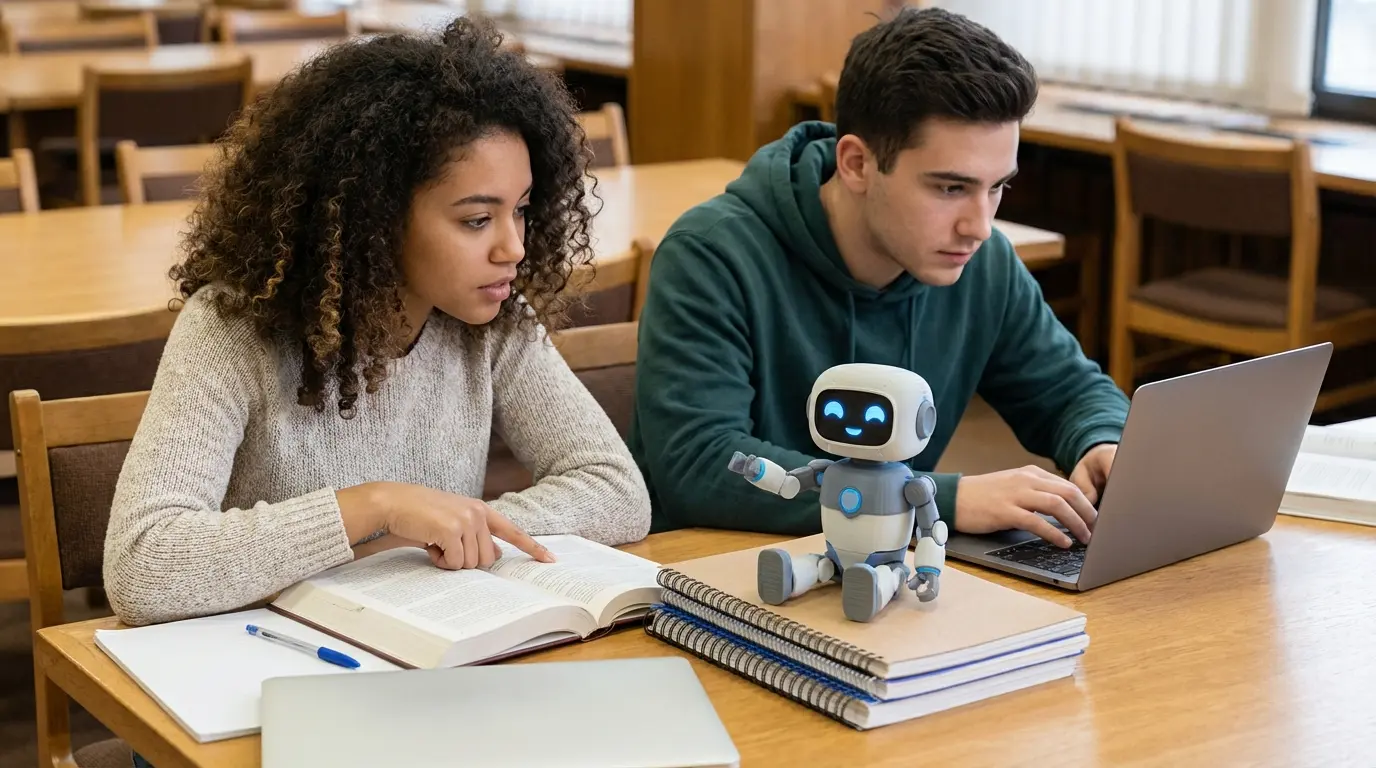
Walk into any campus library and you’ll see it. Laptops open with multiple tabs: Grammarly running in the background, Notion AI reorganizing research notes, Quizlet generating practice questions. These aren’t the AI tools for students that tech blogs write about. They’re what actually gets used between 11 PM problem sets and 8 AM deadlines.
ChatGPT is the big one, no surprise there. OpenAI reported over 100 million weekly active users by late 2023, and students make up a huge chunk of that. But the real shift isn’t ChatGPT on its own. It’s how students stack tools together. They’ll use ChatGPT to break down a complex economics concept, run their draft through Grammarly for clarity, then use Otter.ai to transcribe a lecture they missed. Some even route everything through a cheap essay writing service for structural feedback before final edits, treating AI as one tool in a larger workflow rather than a replacement for thinking.
Funny enough, the most useful AI apps for college students aren’t the flashy ones. There’s Consensus.app for searching academic papers, Elicit for pulling research summaries, and Scholarcy for turning dense journal articles into something a human being can actually process. Using them doesn’t really feel like cutting corners. It feels more like having a research assistant who just never logs off.
What Changed (and What Didn’t)
A study published in the British Journal of Educational Technology found that students using ChatGPT turned in better-looking essays but didn’t actually learn more than those working without AI. They spent less time checking their own work and more time talking to the chatbot. The researchers called it “metacognitive laziness.” Whether AI is helping students learn or just helping them produce better output is still an open question.
The academic integrity concerns are real but sometimes miss the bigger picture. The same research found that students with AI access were more likely to copy and paste what the bot gave them instead of engaging with the material. But students who used AI to ask questions and dig into ideas, not just grab answers, actually did show learning gains. The tool itself isn’t the problem. It’s how students use it.
That said, there’s a real dark side too. Some students submit AI-generated essays wholesale, using “how to use ChatGPT for studying” as a nice way of saying they had it write the whole paper. A lot of universities now use AI detection software, which brings its own problems. Research from the University of Pennsylvania found that these detectors had false positive rates upwards of 5 to 6%. In a class of 700 students, that means roughly 35 could be wrongly accused of cheating.
The line between assistance and replacement gets especially tricky with longer projects. A graduate student using AI to help organize research for custom dissertation writing might generate an outline, run literature searches, and clean up citations. That’s efficiency. But if the AI drafts entire chapters that just get lightly edited? The academic community hasn’t settled on where that falls.
The Productivity Paradox

Here’s what nobody expected: AI tools sometimes make students slower, not faster. At least initially.
Researchers at the MIT Media Lab had students write essays with and without ChatGPT, and tracked their brain activity the whole time. The students who used AI from the start barely engaged. By their third essay, most of them were just feeding the prompt to ChatGPT and calling it done. When asked about their own essays afterward, they couldn’t remember much of what they’d written.
But a different group wrote on their own first, then used AI. Their brain activity actually went up. They already had their own thinking on the page, so when they brought in ChatGPT, they used it to push their ideas further instead of skipping the thinking part altogether. Turns out when you use AI matters a lot more than whether you use it
Common AI Tool Categories Students Use:
| Category | Primary Tools | Actual Use Case |
| Writing Assistance | Grammarly, ChatGPT, Claude | Grammar, clarity, brainstorming |
| Research | Consensus, Elicit, Perplexity | Finding sources, summarizing papers |
| Study Aids | Quizlet AI, Khan Academy | Practice questions, concept review |
| Organization | Notion AI, Mem | Note management, task planning |
| Language Learning | Duolingo Max, Speak | Conversation practice, pronunciation |
The Unspoken Class Divide
A RAND study of U.S. school districts found that by fall 2024, only 39% of high-poverty districts had trained teachers on AI, compared to 67% of low-poverty districts. The gap trickles down to students, too. Wealthier kids are more likely to have access to premium AI subscriptions like ChatGPT Plus or Claude Pro. The free versions work fine, but they’re slower, cap your usage, and skip the advanced features.
That’s a new kind of educational inequality. A student paying $20 a month for ChatGPT Plus gets unlimited GPT- 5 access, faster responses, and plugin features. Their classmate on the free tier runs into usage caps right when finals hit. Both are putting in the work. One just has better tools.
Some universities started providing AI subscriptions through student technology fees, but that’s rare. Most students navigate this alone, which means access to AI homework help increasingly depends on economic background. Not entirely different from SAT prep courses, but newer and less visible.
What Professors Got Wrong
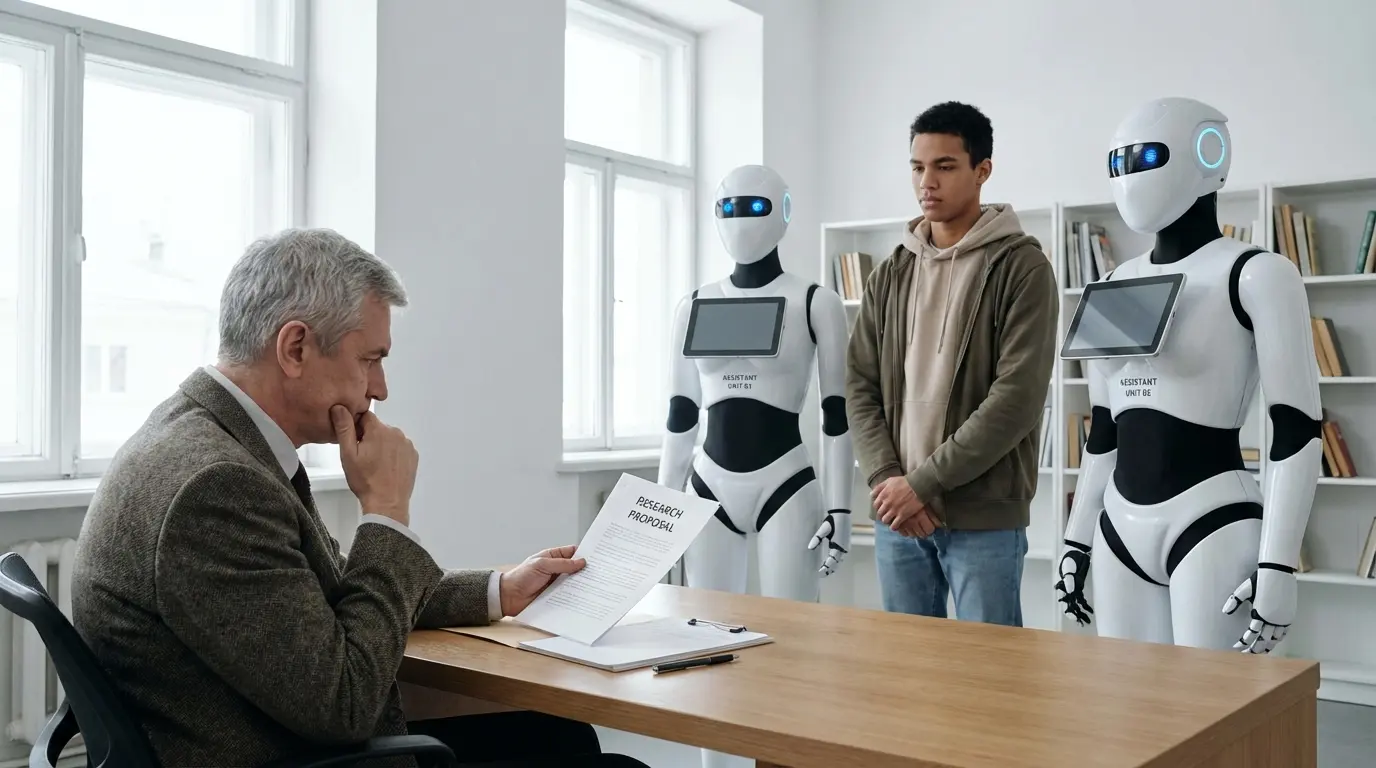
Many faculty assumed students would use AI to avoid thinking. That happens, sure. But more often, students use it to think differently.
Students in CS programs have started calling ChatGPT a “rubber duck that talks back.” In programming, rubber duck debugging means explaining your code to an inanimate object to find errors. AI does the same thing but actually responds. It catches logic problems and suggests alternatives. That’s not cheating. That’s just a better version of what study groups have always done.
The panic around AI tends to miss how students actually learn. A history major doesn’t learn by memorizing dates. They learn by analyzing sources, building arguments, understanding context. If AI handles the memorization part, that might be perfectly fine. It could even free students up for the deeper thinking.
Not everyone buys that argument. Critics say fundamentals matter, that you can’t jump to analysis if you haven’t built the knowledge base first. And they’ve probably got a point. But students are running this experiment whether institutions sign off on it or not.
The Ethics Gap
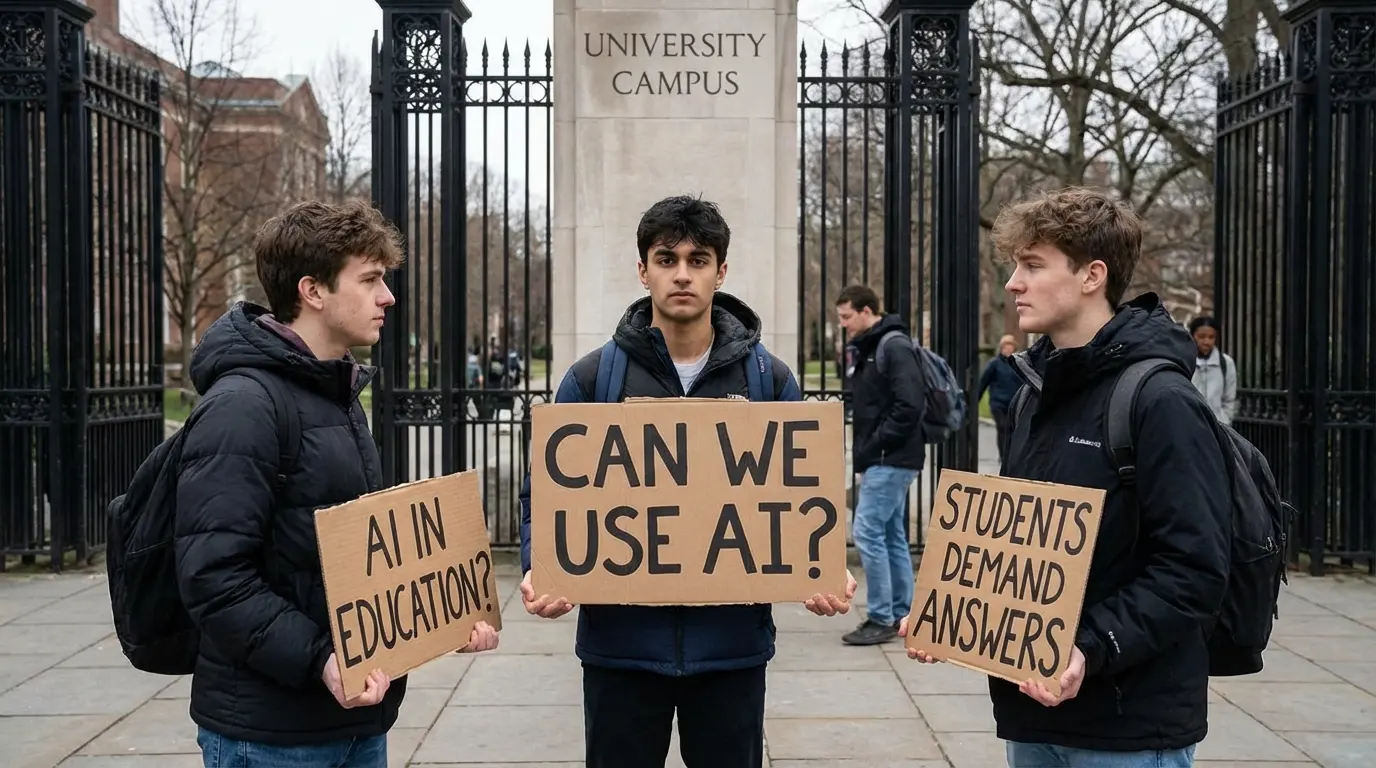
This is where things get really messy. Students know AI use is a grey area, but most universities haven’t given them clear guidance. The Digital Education Council surveyed over 3,800 students across 16 countries in 2024 and found that 86% were already using AI in their studies, but only 5% said they were fully aware of their university’s AI guidelines. Separately, an Inside Higher Ed survey of over 5,000 U.S. undergrads found that nearly a third didn’t know when they were even allowed to use AI for coursework.
Some schools ban it entirely. Some encourage it. Most say something vague like “use responsibly” without defining what that means. So students make judgment calls, often incorrectly.
The result? Massive inconsistency. A student might use AI to outline an essay for English class (professor has no policy), get praised for efficiency in their data science course (professor actively encourages it), then face an academic integrity hearing in political science for the exact same behavior (professor explicitly forbids it). Same student, same tool, three completely different outcomes based on which classroom they’re sitting in.
How Students Navigate the AI Revolution
The most honest answer is: nobody knows. Education historically moves slowly. AI is moving at incomprehensible speed. Something has to give.
Some predictions seem safer than others. AI literacy will probably become a baseline skill, taught alongside writing and research. Universities will develop clearer, more uniform policies once they figure out what those should be. Students who learn to use AI as a thinking partner rather than a replacement will have advantages in workplaces where these tools are standard.
But there’s also a real possibility that this changes what education even is at a basic level. If AI can handle looking things up and doing straightforward analysis, what’s left for students? Maybe it’s creativity, judgment, ethics, working with other people. The stuff AI still isn’t great at. Or maybe we just haven’t figured it out yet.
The students navigating this right now are basically beta testers for the future of learning. Some will figure out how to use these tools effectively and honestly. Others will take shortcuts that ultimately hurt their development. Most will fall somewhere in between, doing their best with incomplete information and evolving rules.
What’s clear is that AI is reshaping student life in ways big and small, helpful and harmful. The question isn’t whether students should use these tools. They already are. It’s whether education can keep up and help them use AI well, not just use it a lot.