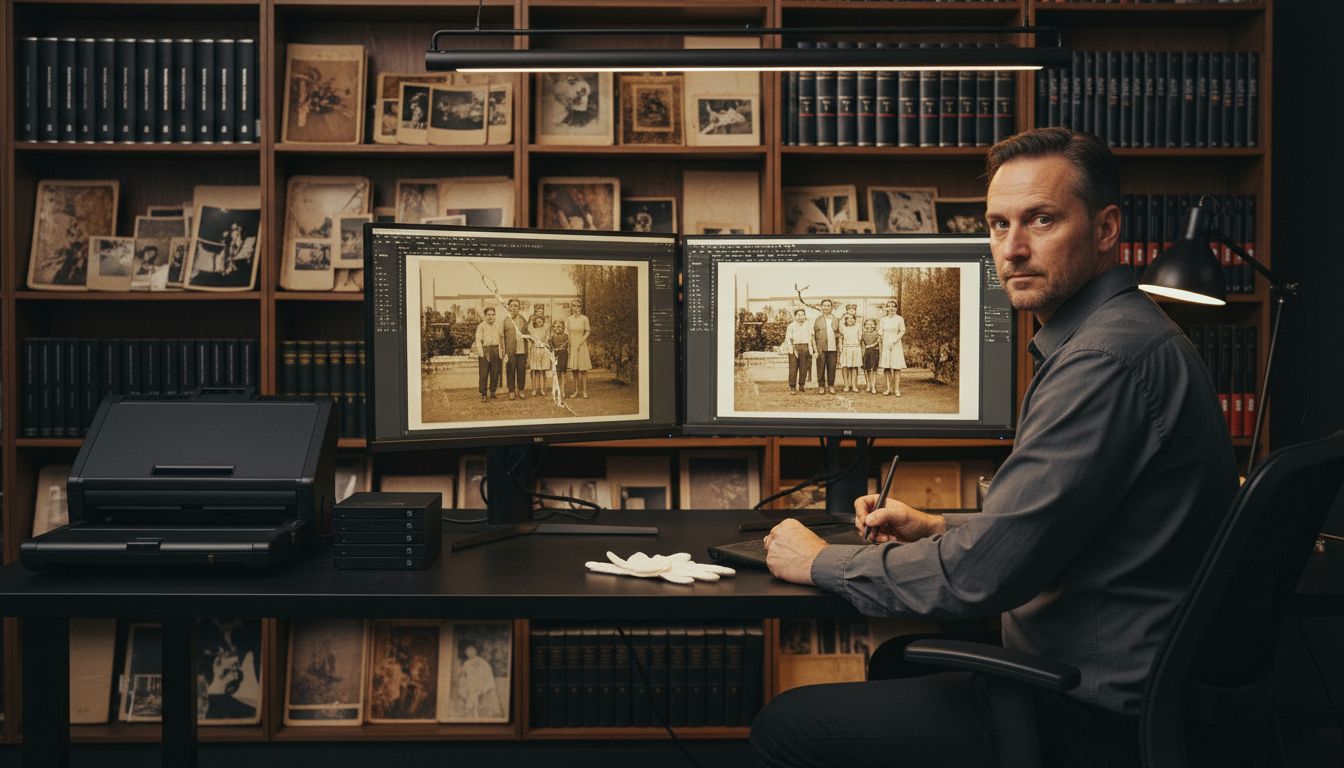
Did you know that over 90 percent of family photographs show signs of damage within just a few decades? Old images often fade, tear, or lose their original colors, putting precious memories at risk. Photo restoration stands out as a crucial way to rescue these irreplaceable pieces of history. Through a mix of artistry and advanced technology, experts can recover even the most damaged photos, making once-lost moments vivid and clear again.
Table of Contents
- Photo Restoration Defined And Core Principles
- Types Of Photo Restoration Methods Explained
- How Digital Photo Restoration Works
- Essential Tools And Techniques Used
- Common Challenges And Best Practices
Key Takeaways
| Point | Details |
|---|---|
| Photo Restoration Defined | Photo restoration is the digital process of recovering and revitalizing damaged photographs, aiming to restore or enhance their original quality. |
| Techniques Used | Restoration techniques range from manual digital editing to advanced AI-powered methods, enabling precise repairs and reconstructions of images. |
| Common Challenges | Restoration faces challenges such as color degradation and physical damage, which require sophisticated techniques and careful methodologies to address. |
| Best Practices | Effective restoration incorporates high-resolution backups, non-destructive editing, and AI technologies to enhance accuracy and efficiency. |
Photo Restoration Defined and Core Principles
Photo restoration is a digital art and science focused on recovering and revitalizing damaged or aging photographs. According to scitepress, this process involves digitally repairing images that have deteriorated due to environmental factors, age, or physical damage, with the ultimate goal of returning the photograph to its original quality or even improving its visual appearance.
At its core, photo restoration is about preserving visual memories and historical artifacts. Bolsa Grande defines it as the practice of restoring photographs impacted by natural, human-induced, or environmental causes. This can include addressing issues like:
- Fading colors
- Scratches and tears
- Water or moisture damage
- Mold and mildew degradation
- Discoloration from aging
- Physical cracking or warping
The restoration process typically involves advanced digital techniques that go beyond simple image editing. Professional restorers use specialized software and intricate techniques to meticulously reconstruct damaged areas, color-correct faded images, and recreate missing sections with remarkable precision. Unlike basic photo editing, restoration requires a deep understanding of photographic history, color theory, and digital image manipulation techniques.
Modern photo restoration has transformed from a manual, time-consuming craft to a sophisticated digital process. Artificial intelligence and machine learning technologies now enable faster, more accurate restoration, allowing even amateur photographers and hobbyists to breathe new life into old, damaged photographs with remarkable results.
Types of Photo Restoration Methods Explained
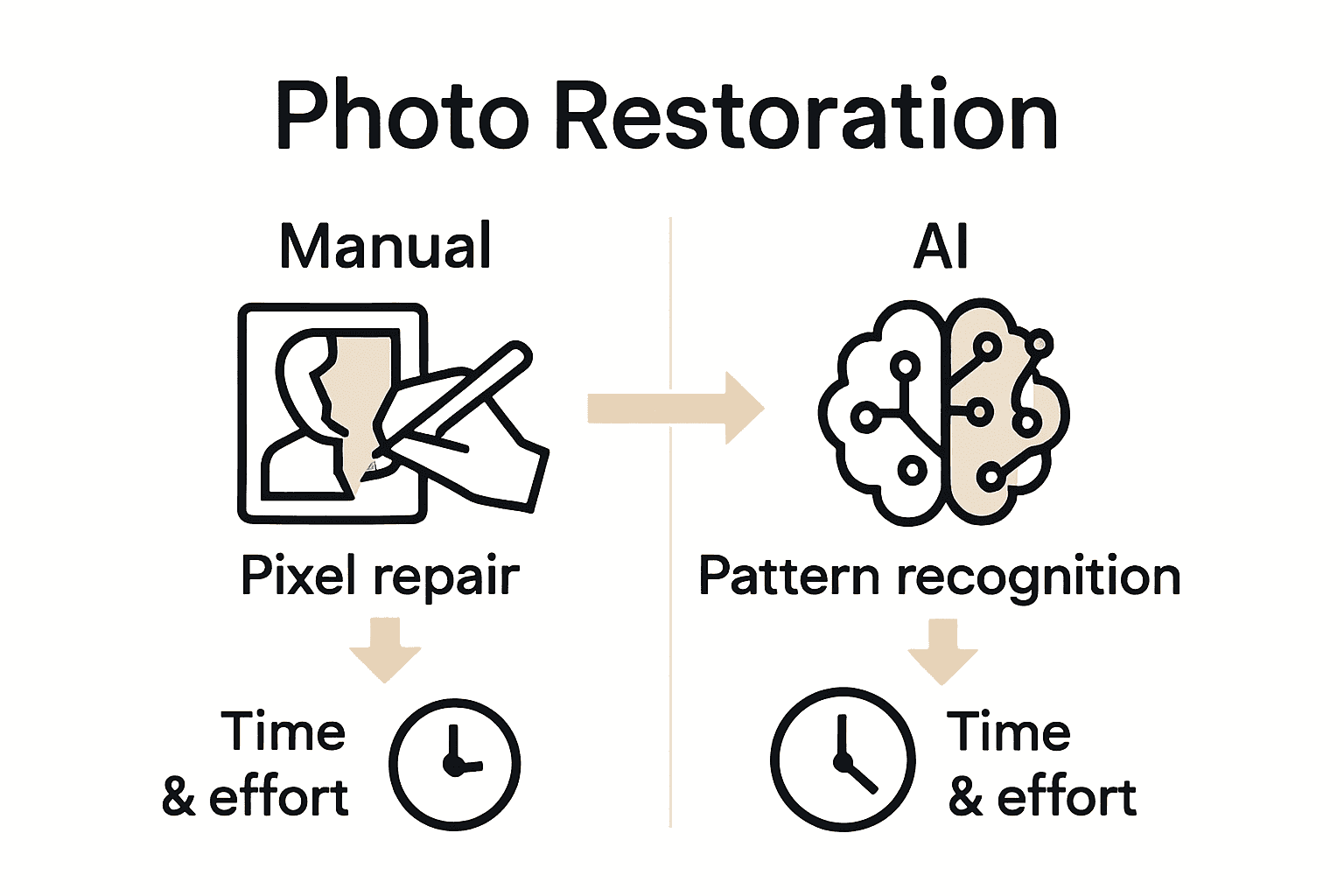
Photo restoration encompasses several sophisticated methods, with digital restoration emerging as the primary approach. According to scitepress, restoration techniques typically involve using image editing software to repair damage and employing machine learning models trained to address various types of photographic deterioration.
Manual Digital Restoration Techniques
Traditional digital restoration involves hands-on editing strategies:
- Pixel-Level Repair: Manually fixing individual pixels
- Color Correction: Adjusting color balance and saturation
- Scratch Removal: Eliminating physical damage traces
- Contrast Enhancement: Improving image clarity and definition
Advanced Machine Learning Approaches
PMC research highlights that deep learning-based restoration has revolutionized image recovery. These innovative methods excel at:
- Generating missing image details
- Addressing large-area defects
- Performing high-resolution reconstructions
- Automatically detecting and repairing complex damage patterns
Modern AI-powered restoration tools leverage neural networks trained on millions of images, enabling unprecedented accuracy in photo reconstruction. These algorithms can predict and recreate missing sections, seamlessly blend repaired areas, and restore photographs with minimal human intervention.
The evolution of photo restoration methods reflects a fascinating intersection of artistic skill and technological innovation, transforming how we preserve and revitalize visual memories.
How Digital Photo Restoration Works
Digital photo restoration is a meticulous process that transforms damaged photographs into pristine visual memories. According to IEEE Spectrum, the journey begins with creating a high-resolution scan of the original damaged image, which serves as the foundational template for subsequent restoration techniques.
Initial Preparation Steps
The restoration workflow typically involves several critical initial stages:
- High-Resolution Scanning
- Use professional-grade scanners
- Capture maximum image detail
- Select lossless file formats
- Ensure optimal resolution (minimum 600 DPI)
- Image Preservation
- Create multiple backup copies
- Work on duplicate files
- Maintain original image integrity
- Store originals in archival conditions
Restoration Techniques
Photo Panda highlights that the restoration process involves sophisticated editing strategies including color correction, dust and scratch removal, and comprehensive repair of physical damages like tears and creases. Modern digital restoration leverages advanced software tools that enable pixel-level manipulation, allowing professionals to:
- Reconstruct missing image sections
- Adjust color balance
- Eliminate physical damage traces
- Enhance overall image clarity
Advanced machine learning algorithms now play a crucial role in modern restoration, using neural networks trained on millions of images to predict and reconstruct damaged areas with remarkable accuracy. These AI-powered tools can analyze image patterns, understand contextual details, and seamlessly fill in missing or degraded sections, transforming seemingly irreparable photographs into vibrant, detailed memories.
Essential Tools and Techniques Used
Digital photo restoration requires a sophisticated arsenal of tools and techniques that transform damaged images into visual masterpieces. Photo Panda highlights that essential equipment includes high-resolution scanners and advanced photo editing software like Adobe Photoshop and GIMP, which provide powerful features for comprehensive image repair.
Software and Digital Tools
Key digital restoration tools include:
- Adobe Photoshop: Professional-grade editing software
- GIMP: Open-source alternative with robust restoration features
- Affinity Photo: Cost-effective professional editing platform
- AI Restoration Applications: Machine learning-powered repair tools
- AI image generator
Advanced Restoration Techniques
According to AMT Lab, cutting-edge restoration now incorporates innovative techniques such as:
- Laser Ablation: Minimally invasive cleaning method
- Focus Stacking: Enhanced detail preservation
- Neural Network Reconstruction: AI-powered image repair
- Color Spectrum Analysis: Precise color restoration
Professional restorers leverage a combination of manual skills and technological tools. Healing brushes, patch tools, and advanced color correction algorithms allow for pixel-level manipulation. These techniques enable professionals to:
- Reconstruct missing image sections
- Remove dust and scratches
- Correct color degradation
- Enhance overall image clarity
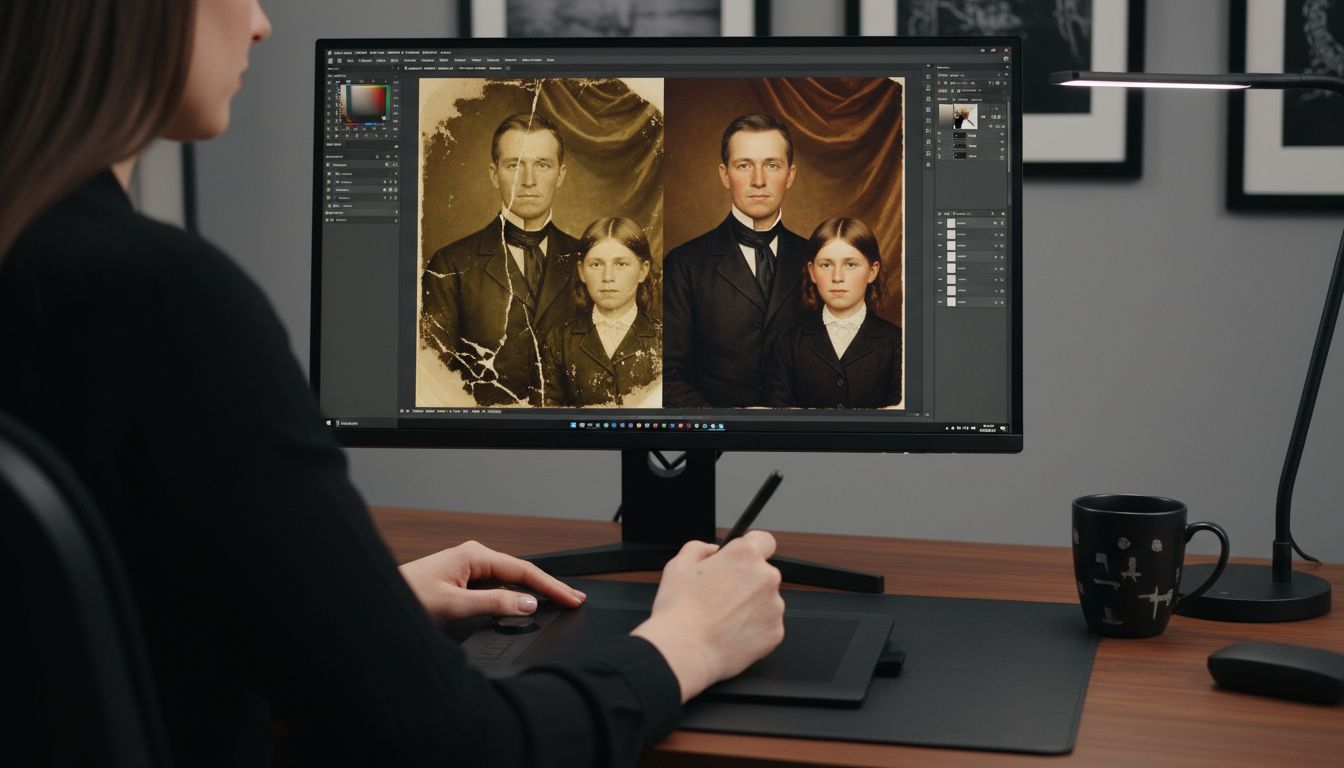
The convergence of artistic expertise and technological innovation has transformed photo restoration from a labor-intensive process to a precise, efficient art form capable of breathing new life into historical and personal photographic memories.
Common Challenges and Best Practices
Photo restoration is a complex process fraught with unique challenges that test the skills of even experienced professionals. Old Photo Restoration identifies several critical issues, including faded colors, large tears, missing sections, and extensive water damage that can seemingly render a photograph beyond recovery.
Primary Restoration Challenges
Restorationists frequently encounter multiple complex problems:
- Color Degradation: Significant fading and color shift
- Physical Damage: Tears, creases, and structural deterioration
- Environmental Wear: Moisture, mold, and chemical breakdown
- Missing Sections: Large areas of image loss
Strategic Best Practices
According to JJCIT, addressing restoration challenges requires sophisticated methodological approaches that consider computational limitations and domain-specific complexities. Effective restoration strategies include:
- Creating high-resolution digital backups
- Working on duplicate files
- Using non-destructive editing techniques
- Employing multiple restoration tools
Artificial intelligence has revolutionized photo restoration by enabling intelligent content reconstruction. Modern AI algorithms can now analyze contextual image details, predict missing sections, and restore photographs with remarkable precision. These advanced techniques allow professionals to:
- Intelligently reconstruct missing image content
- Correct color fading automatically
- Preserve original image characteristics
- Minimize manual intervention
Successful photo restoration demands a delicate balance between technological innovation and preservationist principles, transforming damaged memories into vivid, historically accurate visual narratives.
Here’s a summary of core photo restoration challenges and best practices:
| Challenge | Impact on Photos | Best Practice |
|---|---|---|
| Color Degradation | Faded colors, discoloration | Color correction, AI enhancement |
| Physical Damage | Tears, creases, cracks | Pixel-level repair, use duplicates |
| Environmental Wear | Mold, moisture, warping | Non-destructive editing, backups |
| Missing Sections | Lost image areas | AI reconstruction, manual retouch |
Revive Your Cherished Memories with AI-Powered Photo Restoration
If you have ever faced the frustration of faded colors, tears, or missing parts in your treasured photographs the detailed insights in “What Is Photo Restoration? Complete Expert Overview” highlight exactly why advanced digital techniques matter. The challenge of bringing old photos back to life requires precision and tools that can handle color degradation, physical damage, and missing sections with care and accuracy.

Experience the power of modern AI-driven restoration yourself for free at AIFREEFOREVER. Our platform offers user-friendly, no-cost photo restoration tools that use sophisticated algorithms to reconstruct damaged areas and enhance colors effortlessly. There is no need to register or pay, making it easier than ever to preserve your visual history and relive those precious moments in their full brilliance. Start now and turn your damaged photos into vibrant memories today by visiting AIFREEFOREVER. Your restored memories await.
Frequently Asked Questions
What is photo restoration?
Photo restoration is the process of recovering and revitalizing damaged or aging photographs using digital techniques to return them to their original quality or improve their appearance.
What are the common types of damage that photo restoration can address?
Common types of damage include fading colors, scratches and tears, water or moisture damage, mold degradation, discoloration from aging, and physical cracking or warping.
What tools and software are commonly used for photo restoration?
Essential tools for photo restoration include high-resolution scanners and advanced editing software such as Adobe Photoshop, GIMP, and AI-powered restoration applications.
How does artificial intelligence enhance the photo restoration process?
Artificial intelligence enhances photo restoration by predicting and reconstructing missing details, seamlessly blending repaired areas, and allowing for high-resolution reconstructions with minimal human intervention.