Viking names come from Old Norse, the language of Scandinavia during the Viking Age from the late 8th to the 11th century. These names were built from real words, family lines, and compound forms that carried clear meanings, such as strength, battle, gods, wolves, or ships. In sagas and historical records, a name was a direct marker of identity, ancestry, and status.
This list brings together 70 viking names from saga literature and recorded history, including names tied to rulers, warriors, explorers, and legendary figures. You will see names such as Erik, Leif, Ragnar, Harald, Bjorn, and Freydis, along with older forms that appear in Old Norse sources.
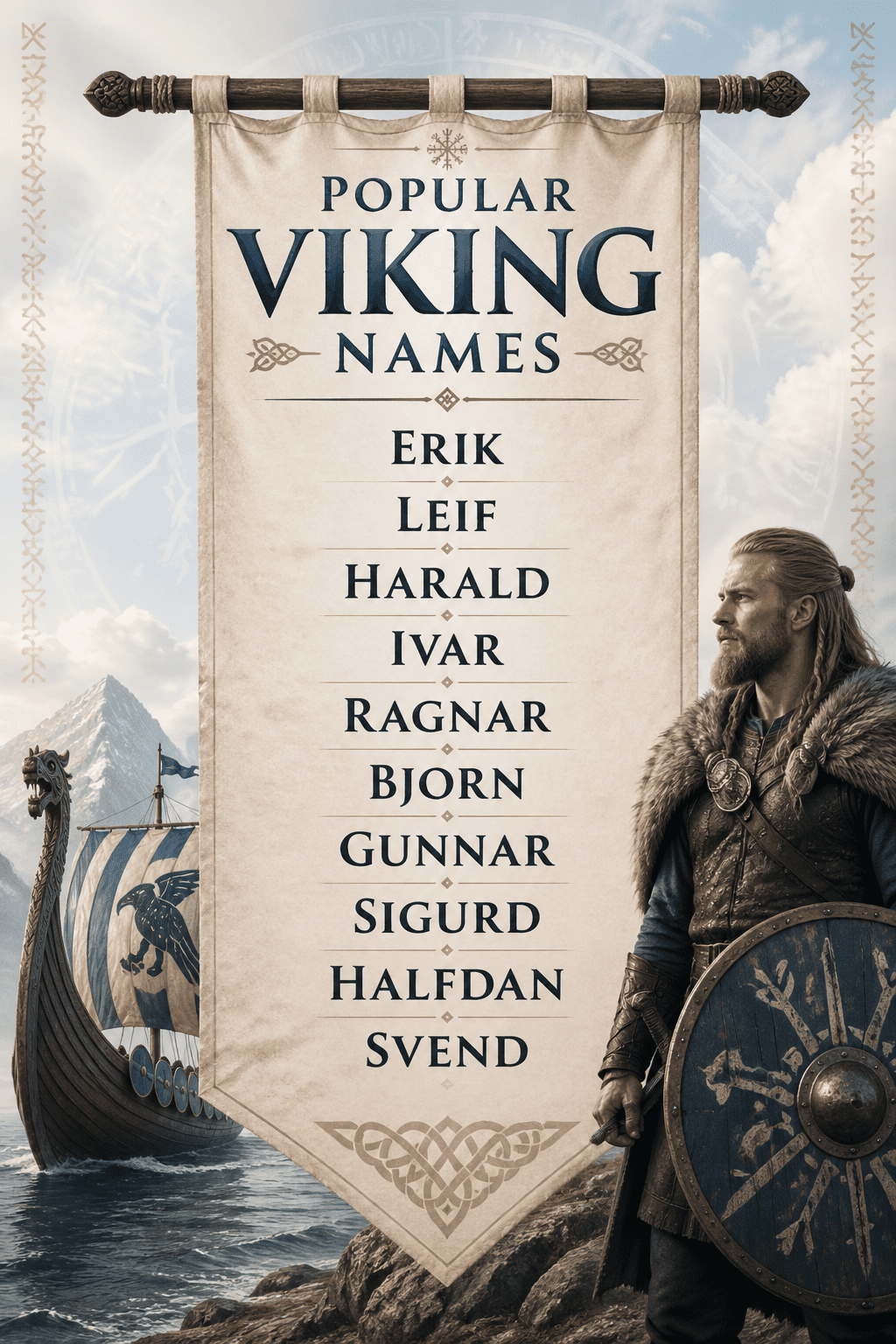
Popular Viking Names for Quick Reference
- Ragnar Lodbrok
- Erik the Red
- Leif Erikson
- Harald Hardrada
- Ivar the Boneless
- Bjorn Ironside
- Gudrun Osvifsdottir
- Freydis Eiriksdottir
- Sigurd Snake-in-the-Eye
- Aslaug
- Knut the Great
- Floki Vilgerdarson
- Helga the Fair
- Sven Forkbeard
[cfury_download slug=”70-viking-names-from-sagas-and-historical-records-bgxhbi” label=”Download 70 Viking Names From Sagas And Historical Records.pdf”]
67 viking names and their Old Norse meanings
This list groups 70 Viking names by origin and style, so you can scan sagas, historical records, and later cultural references in one place. It brings together Old Norse names, legendary warrior names, royal names, and rare finds, with a balance of classic choices and less familiar entries. Each name was chosen for its documented use, clear historical ties, or lasting cultural presence, giving you a focused set of viking names with real context.
| # | Name | Category | Meaning and Origin |
|---|---|---|---|
| 1 | Ragnar | Hero | Old Norse, “counsel of the gods” |
| 2 | Leif | Explorer | Old Norse, “heir” or “descendant” |
| 3 | Erik | King | Old Norse, “eternal ruler” |
| 4 | Harald | King | Old Norse, “army ruler” |
| 5 | Ivar | Warrior | Old Norse, “yew warrior” |
| 6 | Bjorn | Warrior | Old Norse, “bear” |
| 7 | Sigurd | Hero | Old Norse, “victory guardian” |
| 8 | Gudrun | Heroine | Old Norse, “secret rune” |
| 9 | Freydis | Heroine | Old Norse, linked to Freyja |
| 10 | Floki | Explorer | Old Norse nickname, “trickster” |
| 11 | Halfdan | King | Old Norse, “half Dane” |
| 12 | Knut | King | Old Norse, “knot” |
| 13 | Olaf | King | Old Norse, “ancestor’s relic” |
| 14 | Torstein | Warrior | Old Norse, “Thor’s stone” |
| 15 | Aslaug | Heroine | Old Norse, “god betrothed” |
| 16 | Ulf | Warrior | Old Norse, “wolf” |
| 17 | Gunnar | Warrior | Old Norse, “battle warrior” |
| 18 | Hrolf | King | Old Norse, “famous wolf” |
| 19 | Rollo | Warlord | Latinized Norse name, “famous land” |
| 20 | Rurik | King | Old Norse, “famous ruler” |
| 21 | Ingrid | Heroine | Old Norse, “Ing’s beauty” |
| 22 | Hilda | Heroine | Old Norse, “battle” |
| 23 | Sven | Warrior | Old Norse, “young man” |
| 24 | Styrbjorn | Warrior | Old Norse, “steer bear” |
| 25 | Harald Hardrada | King | Historical epithet, “hard ruler” |
| 26 | Skarde | Warrior | Old Norse, “scarred” |
| 27 | Eirik Bloodaxe | King | Historical epithet, “bloodaxe” |
| 28 | Kjartan | Hero | Old Norse, origin uncertain |
| 29 | Hakon | King | Old Norse, “high son” |
| 30 | Sigrid | Heroine | Old Norse, “victory beauty” |
| 31 | Thora | Heroine | Old Norse, feminine form of Thor |
| 32 | Ragnvald | Jarl | Old Norse, “ruler’s counsel” |
| 33 | Thorfinn | Explorer | Old Norse, “Thor’s Finn” |
| 34 | Bjarki | Hero | Old Norse, “little bear” |
| 35 | Aud | Heroine | Old Norse, “wealth” |
| 36 | Ketil | Warrior | Old Norse, “cauldron” or “helmet” |
| 37 | Orm | Warrior | Old Norse, “snake” or “dragon” |
| 38 | Thorkell | Warrior | Old Norse, “Thor’s helmet” |
| 39 | Einar | Warrior | Old Norse, “one warrior” |
| 40 | Svala | Heroine | Old Norse, “swallow bird” |
| 41 | Gisl | Hero | Old Norse, “hostage” or “beam” |
| 42 | Bolli | Hero | Old Norse nickname, “ball” |
| 43 | Hallgerd | Heroine | Old Norse, “rock spear” |
| 44 | Thorvald | Explorer | Old Norse, “Thor’s ruler” |
| 45 | Valgard | Jarl | Old Norse, “chosen guardian” |
| 46 | Sigtrygg | Warrior | Old Norse, “victory peace” |
| 47 | Gudmund | King | Old Norse, “god protection” |
| 48 | Arinbjorn | Warrior | Old Norse, “eagle bear” |
| 49 | Hallbjorn | Warrior | Old Norse, “rock bear” |
| 50 | Helgi | Hero | Old Norse, “holy” |
| 51 | Thorir | Warrior | Old Norse, “Thor’s warrior” |
| 52 | Brynhild | Heroine | Old Norse, “armored battle” |
| 53 | Ragnhild | Heroine | Old Norse, “battle counsel” |
| 54 | Jorund | King | Old Norse, origin uncertain |
| 55 | Hervor | Heroine | Old Norse, “army defender” |
| 56 | Sigvat | Skald | Old Norse, “victory oath” |
| 57 | Tosti | Jarl | Old Norse, diminutive of Thorstein |
| 58 | Audun | Explorer | Old Norse, “wealthy one” |
| 59 | Skuli | Jarl | Old Norse, “shelter” or “cloud” |
| 60 | Vigdis | Heroine | Old Norse, “battle goddess” |
| 61 | Thorhalla | Heroine | Old Norse, “Thor’s hall” |
| 62 | Geirmund | Warrior | Old Norse, “spear protector” |
| 63 | Asgrim | Hero | Old Norse, “god mask” |
| 64 | Hrafn | Warrior | Old Norse, “raven” |
| 65 | Yngvar | Explorer | Old Norse, “Ing’s warrior” |
| 66 | Solveig | Heroine | Old Norse, “sun strength” |
| 67 | Torhild | Heroine | Old Norse, “Thor’s battle” |
If you’re choosing from these viking names, the next step is usually deciding whether you want a historically grounded name, a name with a clear meaning, or one that still feels easy to use today. That choice matters because some names from saga literature are tied to old Norse grammar, while others became famous through kings, warriors, or later literary retellings.
How Do Viking Names Work?
Old Norse naming was practical. A name could honor a god, point to an animal or trait, or fit a family pattern through patronymics, where a child’s last element showed whose child they were. That means some viking names feel familiar now, while others look unusual because their original forms were shaped by Old Norse spelling and pronunciation.
- Meaning matters: Many viking names are built from concrete ideas like strength, battle, wolves, or protection, so the meaning is often as important as the sound.
- Spelling shifts: Saga sources and historical records use older forms, so modern spellings may differ from the versions you see in translations.
- Gender can be flexible in form: Some elements appear in both male and female names, but the full name usually signals the gendered tradition.
- Family naming was common: In Norse culture, a surname often changed from one generation to the next instead of staying fixed like a modern last name.
- Famous sources shape popularity: Names tied to Ragnar Lothbrok, Leif Erikson, Harald Hardrada, or Freydís Eiríksdóttir often feel more familiar because history and saga literature kept them alive.
How Do You Pick Viking Names?
If you want a name for a baby, character, pet, or username, start by deciding how close to history you want to stay. A name from the sagas can be accurate and striking, but a simpler modern form may be easier to pronounce and use every day.
- Choose the source: Decide whether you want a name from historical records, saga literature, or modern Norse-inspired usage.
- Check the meaning: Make sure the meaning matches the tone you want, especially if you are using the name for a character or brand.
- Say it out loud: Some viking names look strong on the page but are harder to say naturally in conversation.
- Match the setting: A very old form can fit historical fiction, while a smoother version may work better for everyday use.
- Avoid forced “Viking” styling: Adding random extra letters or rune-like spellings can make a name look less authentic, not more.
If you want the name to feel credible, the safest approach is to treat the table as a starting point and then check how the name appears in sagas, chronicles, or Old Norse references before you commit to it.
Frequently Asked Questions
What makes a name a true Viking name?
A true Viking name is typically rooted in Old Norse language, mythology, or the naming patterns found in sagas and historical records. Many names reflect strength, nature, ancestry, or the gods, and were commonly used across Scandinavia during the Viking Age.
Are names from Viking sagas historically accurate?
Many names found in Viking sagas are based on real people and authentic naming traditions, but sagas also include legendary and mythological elements. As a result, some names are historically documented while others are preserved through folklore and literary tradition.
How were Viking names traditionally chosen?
Viking names were often chosen to honor relatives, reflect desired traits, or draw inspiration from gods, animals, and natural forces. Some names were also linked to family lineages or included descriptive elements that conveyed bravery, wisdom, or power.
Can modern parents use Viking names today?
Yes, many Viking names are still usable today and have appealing meanings, strong sounds, and deep cultural roots. It is helpful to check pronunciation, spelling variants, and historical context before choosing a name for modern use.
What are examples of well-known Viking names?
Well-known Viking names include Erik, Leif, Bjorn, Ivar, Gudrun, Freydis, and Ragnar. These names appear in sagas, chronicles, and other historical sources, making them among the most recognizable names from the Viking Age.
- [cfury_download slug=”70-viking-names-from-sagas-and-historical-records-bgxhbi” label=”PDF list”]
- [cfury_download slug=”70-viking-names-from-sagas-and-historical-records-bgxhbi-image” label=”Hero image”]
- [cfury_download slug=”70-viking-names-from-sagas-and-historical-records-bgxhbi-table” label=”Excel table”]