Twitter threads (now X threads) have become one of the most powerful organic marketing tools on social media. A single well-crafted thread can generate thousands of impressions, hundreds of new followers, and direct traffic to your business—all without spending a dollar on ads.
According to Buffer’s social media research, threads receive 63% more impressions and 54% more engagement than standalone tweets. For businesses looking to establish authority and grow their audience, this format delivers results.
Here’s what you’ll discover in this guide: the exact thread structures that perform best, how to write hooks that stop the scroll, and the posting strategies that turn casual readers into paying customers.
Table of Contents
- What Are Twitter/X Threads?
- Why Threads Outperform Single Tweets for Business
- 12 Thread Structures That Drive Business Results
- How to Write Hooks That Stop the Scroll
- Optimal Thread Length for Maximum Engagement
- When to Post Threads for Maximum Reach
- 6 Thread Mistakes That Kill Your Engagement
- Tools to Create Threads Faster
- Measuring Thread Performance
- FAQ

What Are Twitter/X Threads?
A Twitter thread is a series of connected tweets posted by the same account. Each tweet in the sequence links to the next, creating a longer-form narrative that readers can follow from start to finish. The platform automatically numbers them and displays them as a cohesive piece of content.
The format works particularly well for business content because it allows you to share detailed information—tutorials, case studies, product breakdowns, industry insights—without forcing readers to leave the platform. People can consume your content right in their feed, and the algorithm rewards that engagement by showing your thread to more users.
X (formerly Twitter) introduced several thread-specific features in recent years. You can now add thread labels, schedule entire threads in advance, and even edit individual tweets within a thread after publishing. These updates have made the format more accessible and flexible for brands.
Why Threads Outperform Single Tweets for Business
Single tweets have their place, but threads create something different: sustained attention. When someone clicks “Show this thread,” they’re making a micro-commitment to consume your content. That commitment translates to deeper engagement and better business outcomes.
Research from Sprout Social found that accounts posting regular threads see 3.2x higher follower growth compared to those posting only standalone content. The reasons come down to how the algorithm evaluates engagement signals.
Each time someone engages with any tweet in your thread—likes it, replies, bookmarks it, or simply pauses to read—that counts as a separate engagement signal. A 10-tweet thread gives you 10 opportunities to trigger the algorithm’s distribution system. One viral tweet in your thread can pull the entire sequence into thousands of new timelines.
From a branding perspective, threads position you as an authority. Anyone can fire off a quick opinion. Taking the time to structure a thoughtful, comprehensive thread signals expertise and builds trust with potential customers.
12 Thread Structures That Drive Business Results
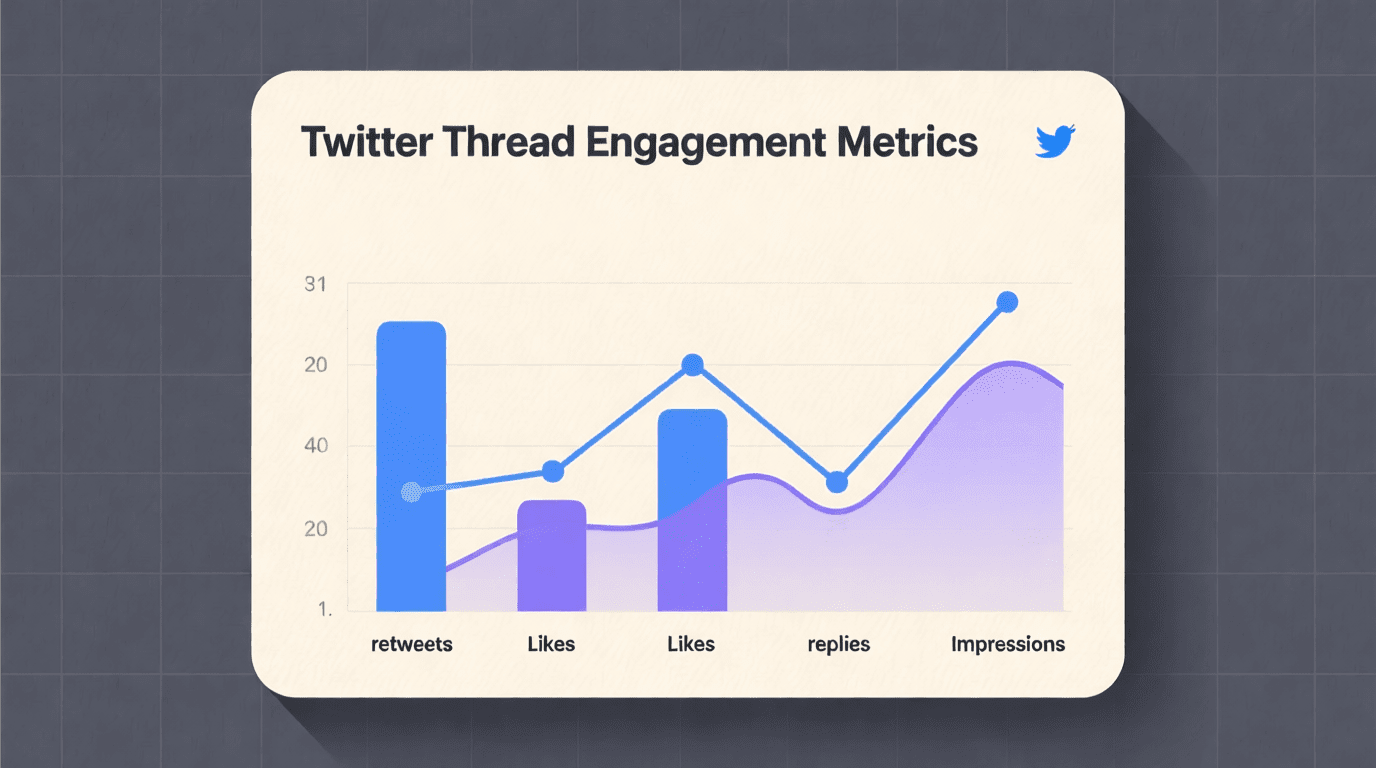
Not all threads perform equally. After analyzing thousands of high-performing business threads, certain structures consistently outperform others. Use these templates as starting points, then adapt them to your industry and voice.
1. The Step-by-Step Tutorial
Walk readers through a specific process related to your expertise. Each tweet covers one step, making the information digestible and actionable. This structure works exceptionally well for service businesses demonstrating their methodology.
Example format: “How to [achieve specific result] in [timeframe]: A step-by-step breakdown 🧵”
2. The Listicle Thread
Compile valuable resources, tips, or examples around a central theme. Numbers in the hook perform well because they set clear expectations. Readers know exactly what they’re getting before they commit to reading.
Example format: “[Number] [tools/tips/strategies] that will help you [achieve result]”
3. The Case Study Breakdown
Analyze a real success story—yours or someone else’s—and extract lessons. Specificity matters here. Include actual numbers, timelines, and concrete details rather than vague generalizations.
Example format: “How [company/person] achieved [impressive result]. Here’s what they did differently:”
4. The Myth-Busting Thread
Challenge common misconceptions in your industry. This structure generates engagement because people love to share content that makes them feel informed. The controversy also tends to spark conversation in the replies.
Example format: “[Number] myths about [topic] that are costing you [time/money/results]”
5. The Behind-the-Scenes Reveal
Show the inner workings of your business, process, or decision-making. Transparency builds trust, and people are naturally curious about what happens backstage. This works especially well for product-based businesses.
Example format: “Here’s exactly how we [process] at [company]. No gatekeeping:”
6. The Curated Collection
Gather and organize valuable resources on a specific topic. You’re providing value by doing the research others don’t have time for. Add your own commentary to each item to distinguish this from a simple link dump.
Example format: “[Number] free resources I wish I had when starting [topic/industry]”
7. The Before/After Transformation
Document a journey from problem to solution. This narrative arc keeps readers engaged because they want to see the outcome. Include specific metrics wherever possible.
Example format: “Six months ago, [problem]. Today, [result]. Here’s what changed:”
8. The Contrarian Take
Present a perspective that goes against popular opinion in your space. Back it up with evidence and reasoning. This structure generates significant engagement but requires confidence and solid arguments.
Example format: “Unpopular opinion: [conventional wisdom] is wrong. Here’s why:”
9. The Framework Thread
Introduce a mental model or decision-making framework. People love shareable frameworks because they simplify complex thinking. Give your framework a memorable name.
Example format: “The [Name] Framework: How to [achieve result] in [number] simple steps”
10. The Prediction Thread
Share your informed predictions about where your industry is heading. Position yourself as a forward-thinker who sees around corners. Reference data and trends to support your claims.
Example format: “[Number] predictions for [industry] in [year]. Here’s what smart [professionals] are preparing for:”
11. The Lessons Learned Thread
Share personal experiences and the wisdom you’ve extracted from them. Vulnerability resonates. Don’t be afraid to share failures alongside successes.
Example format: “[Number] lessons from [number] years of [experience]. Some of these cost me dearly:”
12. The Q&A Thread
Answer common questions from your audience or customers. This positions you as the go-to expert while addressing real concerns your target market has. You can collect questions in advance or anticipate them based on experience.
Example format: “I get asked about [topic] constantly. Here are my honest answers to the [number] most common questions:”
How to Write Great hooks for Twitter threads
Your opening tweet determines whether anyone reads the rest. In a feed full of content competing for attention, you have roughly 2-3 seconds to convince someone your thread is worth their time. The hook carries all that weight.
Strong hooks share common characteristics. They create curiosity without clickbait. They promise specific value. They feel fresh rather than recycled. And they speak directly to what the reader wants.
Here are hook formulas that consistently perform:
The specific number hook: “I spent 47 hours analyzing our competitors’ marketing. Here are 9 tactics nobody talks about.”
The time-based hook: “In 2019, I was broke. In 2026, our business hit $2M. Here’s the exact playbook I followed.”
The surprising statement hook: “The best marketing advice I ever received? Stop marketing. Here’s what to do instead.”
The direct address hook: “If you’re struggling to get clients in 2026, you’re probably making these mistakes.”
The credibility hook: “After 500+ client projects, I’ve noticed a pattern. The successful ones all do this differently.”
Notice what these hooks have in common: specificity. Vague promises get scrolled past. Concrete details and numbers signal that real value awaits.
If you find yourself staring at a blank screen trying to craft the perfect hook, a Twitter thread generator can help you brainstorm opening lines and overcome that initial creative block.

Optimal Thread Length for Twitter Threads
The question of thread length sparks debate among marketers. Some argue shorter threads respect readers’ time. Others insist longer threads signal more value. The data offers a clearer picture.
Analysis of high-performing threads across various industries shows that 7-15 tweets hits the sweet spot for most business content. Shorter than 7 tweets often feels incomplete—like you’re artificially stretching a single tweet. Longer than 15 risks losing readers before the payoff.
That said, length should follow substance. A 20-tweet thread packed with valuable insights will outperform a 10-tweet thread filled with fluff every time. The goal isn’t hitting a specific number. The goal is delivering complete, actionable value with zero filler.
Consider your content type when deciding length:
Quick tips or simple lists: 5-8 tweets works well. Get in, deliver value, get out.
Step-by-step tutorials: 8-12 tweets typically allows enough space to explain each step properly.
In-depth case studies or analyses: 12-20 tweets may be necessary to tell the full story with adequate detail.
The final tweet matters as much as the first. End with a clear call-to-action, whether that’s following for more content, visiting your website, or engaging in the replies. Don’t let your thread fade out—give readers a specific next step.
When to Post Threads for Maximum Reach
Timing affects reach more than most people realize. Post when your target audience is actively scrolling, and you give your thread the best chance to gain initial momentum. That early engagement tells the algorithm your content deserves wider distribution.
Data from Hootsuite’s social media research suggests these windows tend to perform well for B2B audiences:
- Tuesday through Thursday, 9-11 AM (your audience’s timezone)
- Tuesday and Wednesday, 8-9 PM for secondary evening engagement
- Sunday evening around 7-9 PM, when people prepare for the week ahead
B2C audiences show different patterns, with slightly higher weekend engagement and more activity during lunch breaks (12-1 PM).
These benchmarks provide starting points, but your specific audience may differ. Use X Analytics to identify when your followers are most active, then test different posting times over several weeks. Track which time slots consistently generate stronger early engagement.
Consistency matters more than chasing perfect timing. A thread posted at a “suboptimal” time by an account with an engaged following will outperform a thread posted at the “perfect” time by an account that posts sporadically.
6 Thread Mistakes That Kill Your Engagement
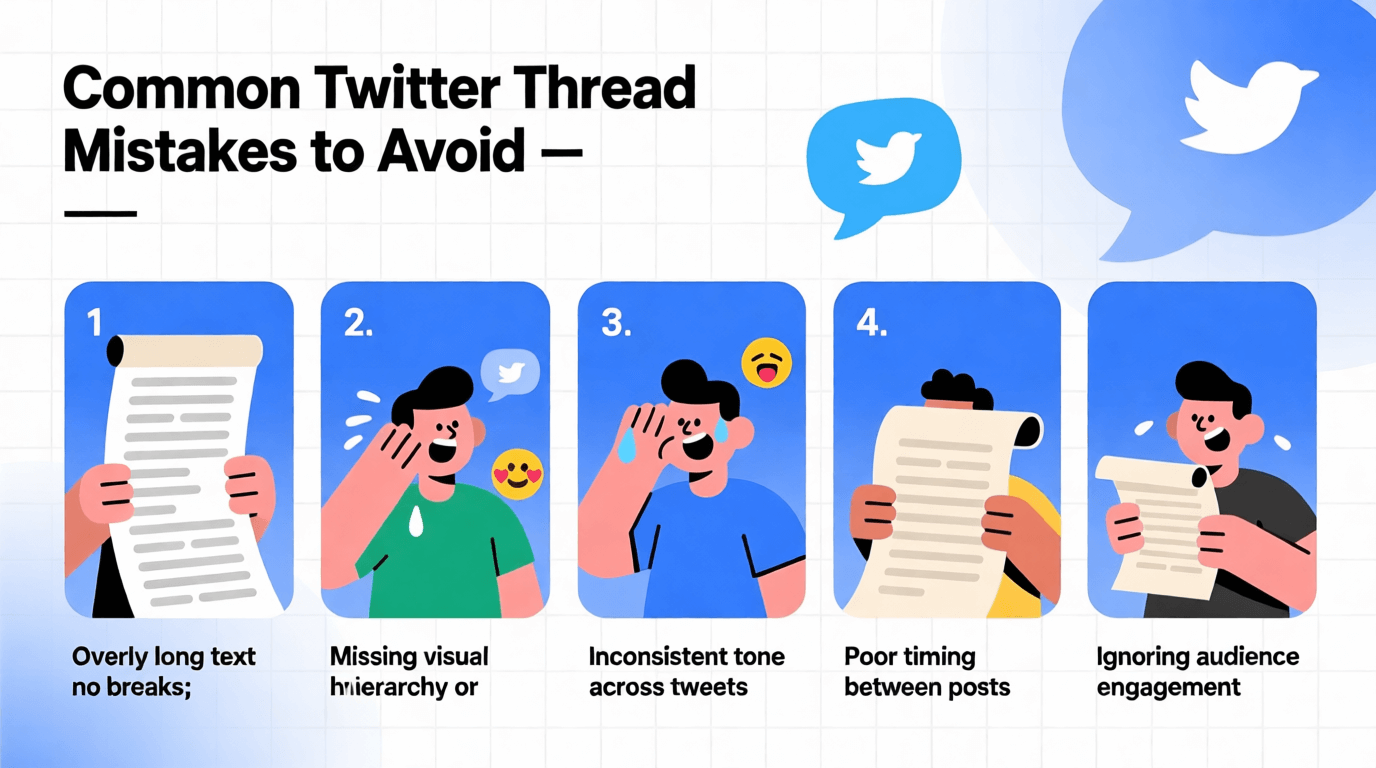
Knowing what not to do saves you from spinning your wheels on strategies that don’t work. These mistakes plague business threads across industries, and avoiding them puts you ahead of most competition.
1. Burying the Value
Some creators hide their best insights at the end, thinking readers need a buildup. Instead, readers drop off before reaching the good stuff. Lead with value. Give away your best material early, then expand on it throughout the thread.
2. Writing Wall-of-Text Tweets
Each tweet should be scannable. Use line breaks, vary sentence length, and limit each tweet to one main idea. Dense paragraphs feel exhausting in a fast-scrolling feed.
3. Excessive Self-Promotion
Threads work for business growth when the value comes first. If every other tweet pushes your product or service, readers tune out. Save the promotional ask for the end—and make it proportional to the value you’ve delivered.
4. Generic Hooks
“Here’s what I learned about marketing 🧵” doesn’t cut it. Vague hooks compete against thousands of similar-sounding threads. Specificity wins attention.
5. Inconsistent Posting
One viral thread won’t build your business. Sustainable growth comes from regular thread output—weekly at minimum. The algorithm favors accounts that show up consistently.
6. Ignoring the Replies
Thread success extends beyond the initial post. Engaging with replies signals to the algorithm that your thread generates conversation, which extends its reach. Set aside time after posting to respond thoughtfully to comments.
Tools to Create Threads Faster
Writing quality threads takes time. These tools streamline different parts of the process, from ideation to publishing.
For Drafting and Ideation:
When you’re stuck on what to write about or need help structuring your thoughts, an AI Twitter thread generator can produce draft threads based on your topic. This jumpstarts the creative process—you’ll still want to edit and add your voice, but having a starting structure saves significant time.
Similarly, a content topics generator helps when you’re planning your content calendar and need fresh angle ideas for your niche.
For Writing and Editing:
If your threads need to sound more polished or conversational, tools like a text humanizer can help refine AI-generated drafts. For threads repurposed from longer content, an article rewriter adapts your existing material into thread-friendly format.
For Scheduling and Analytics:
Built-in X scheduling handles basic needs, but third-party tools like Buffer, Hypefury, or Typefully offer additional features: optimal timing suggestions, performance analytics across threads, and the ability to queue multiple threads in advance.
For Visuals:
Threads with images generally outperform text-only threads. Simple graphics, charts, or screenshots break up the text and make individual tweets more shareable. Canva remains popular for quick thread graphics, while screenshot tools capture data or examples you’re referencing.
Frequently Asked Questions
How often should I post threads for business growth?
Aim for at least 2-3 threads per week when you’re actively trying to grow. Quality matters more than quantity, so don’t sacrifice substance to hit a number. That said, consistency trains both the algorithm and your audience to expect valuable content from you regularly.
Should I use hashtags in my threads?
Hashtag effectiveness has declined on X in recent years. One or two relevant hashtags in your opening tweet won’t hurt, but stuffing hashtags throughout your thread looks spammy and rarely improves discoverability. Your hook and content quality matter far more than hashtag strategy.
How do I convert thread readers into customers?
The path from thread to customer isn’t always direct. Focus on building trust and authority through consistent valuable content. Include clear calls-to-action in your threads—visit your site, join your newsletter, book a call—but make sure the value you provide justifies the ask. Over time, readers who trust your expertise will seek out your paid offerings.
Can I repurpose threads on other platforms?
Absolutely. Threads translate well into LinkedIn carousels, blog posts, newsletter content, and even short-form video scripts. Some creators start with threads, then expand successful ones into longer content elsewhere. Working with a LinkedIn post generator can help adapt your thread content for that platform’s audience expectations.
What if my thread doesn’t perform well?
Not every thread will go viral, and that’s normal. Analyze what might have underperformed: Was the hook strong enough? Did you post at a low-engagement time? Was the topic too niche or too broad? Use underperforming threads as learning opportunities. Sometimes great threads simply don’t catch the algorithm at the right moment—consider reposting valuable threads a few weeks later with a fresh hook.
How long does it take to write a good thread?
A well-researched, well-structured thread typically takes 1-2 hours to create. That includes ideation, drafting, editing, and formatting. Using AI tools for initial drafts can cut that time significantly, leaving you more time for adding personal insights and refining the final product.
Should I add images to every tweet in a thread?
Not necessarily every tweet, but strategic visuals improve performance. Consider adding an eye-catching image to your opening tweet, relevant screenshots or graphics to support key points, and a clear visual CTA at the end. Too many images can feel cluttered—balance visual interest with readability.
Putting It All Together
Twitter threads remain one of the highest-ROI activities for business growth on social media. They cost nothing but time, yet they can establish your authority, grow your audience, and drive real business results.
Start with a single thread structure from this guide. Pick one that matches content you already have—maybe a process you’ve refined, lessons from a recent project, or answers to questions customers frequently ask. Draft your hook, outline your main points, and publish.
Then pay attention to what resonates. Your audience will tell you through their engagement which topics and formats they want more of. Double down on what works, refine what doesn’t, and keep showing up.
If you want to accelerate your thread creation process, try our free Twitter thread generator to get started with AI-powered drafts you can customize and make your own.