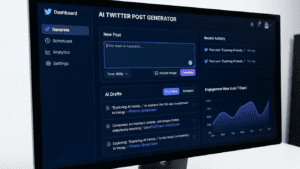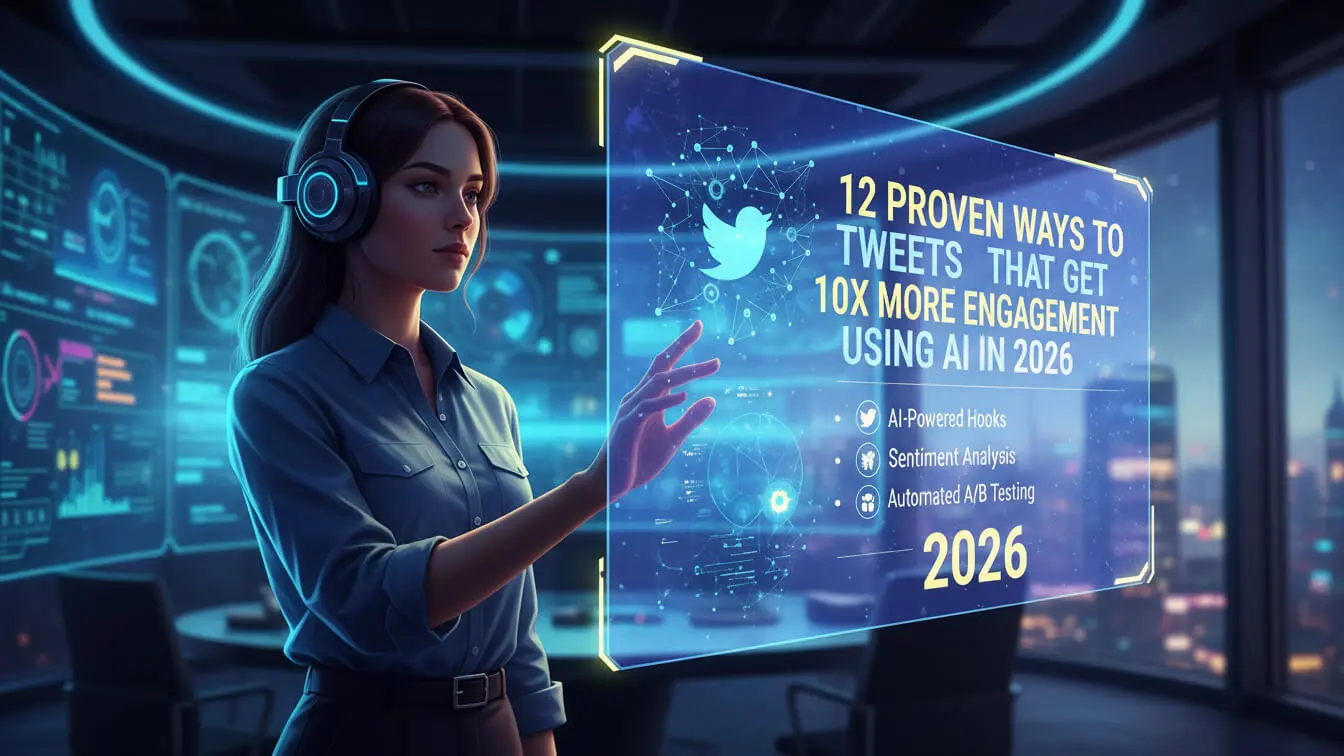
Getting noticed on X (formerly Twitter) feels harder than ever. With over 500 million monthly active users competing for attention, your carefully crafted tweets often disappear into the void within seconds. But here’s what most people don’t realize: the accounts consistently going viral aren’t necessarily better writers—they’re using AI to optimize every word they post.
According to Sprout Social’s latest research, the average engagement rate on X hovers around just 0.05%. That means for every 2,000 people who see your tweet, only one person interacts with it. The good news? Strategic AI-assisted tweeting can push that number dramatically higher.
This guide breaks down exactly how to leverage artificial intelligence to write engaging tweets that stop the scroll, spark conversations, and multiply your reach without spending hours staring at a blank screen.
Table of Contents
- Why AI-Powered Tweet Writing Actually Works
- Master the Art of Scroll-Stopping Hooks
- Find Your Perfect Tweet Length
- Tap Into Emotional Triggers That Drive Shares
- Build Thread Strategies That Keep Readers Hooked
- Optimize Your Posting Schedule
- Use Hashtags Without Looking Desperate
- Craft Calls-to-Action That Actually Convert
- Pair Text With Visuals Strategically
- A/B Test Your Way to Better Performance
- Sidestep Common AI Tweet Mistakes
- Make AI Content Sound Authentically Human
- Frequently Asked Questions

1. Do AI Tweets Work?
Before diving into tactics, let’s address the elephant in the room: can AI really help you write better tweets? The short answer is yes, but not in the way most people expect.
AI doesn’t replace your voice or creativity. Instead, it analyzes patterns from millions of high-performing posts to identify what makes content resonate. Think of it as having a data scientist and copywriter combined into one assistant who works around the clock.
A Hootsuite analysis found that accounts using AI-assisted content creation saw an average engagement increase of 47% within three months. The improvement comes from three key areas: better hook writing, optimized structure, and consistent posting frequency.
Using a Twitter thread generator takes the guesswork out of creating multi-part content that keeps audiences clicking through to the end. Rather than manually crafting each segment, you provide your main idea and let the AI structure it for maximum retention.
The most successful creators treat AI as a collaborative partner. They input their raw thoughts, expertise, and personality—then let the technology polish the delivery. This approach maintains authenticity while leveraging data-driven optimization that would take humans years to learn through trial and error.
2. Master the Art of Scroll-Stopping Hooks
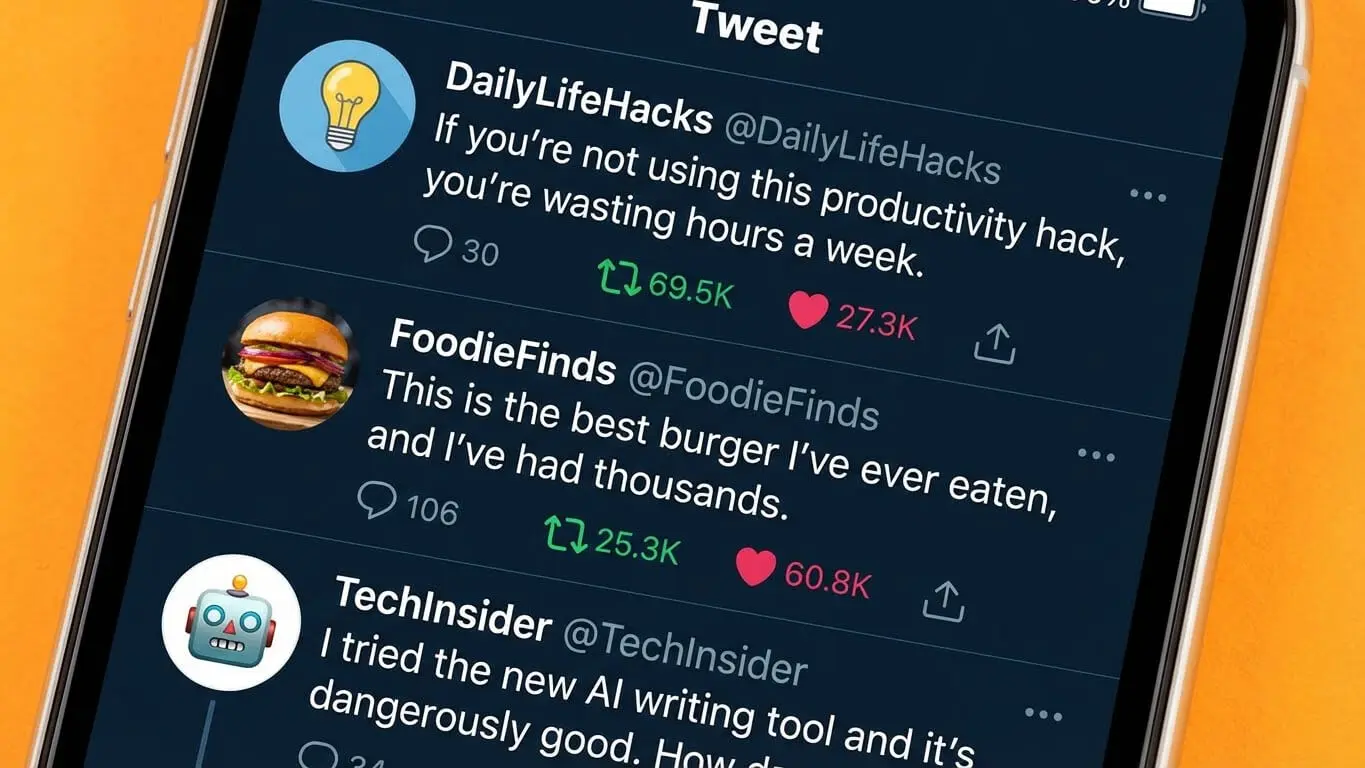
Your first line determines whether anyone reads the rest of your tweet. On X, you have roughly 0.3 seconds to capture attention before thumbs keep scrolling. AI excels at generating hooks because it can analyze thousands of viral openings and identify patterns invisible to human observation.
Here are hook formulas that consistently outperform generic openings:
The Contrarian Statement: “Everything you’ve been told about [topic] is wrong.” This pattern works because it challenges existing beliefs and creates cognitive dissonance that demands resolution.
The Specific Number: “I analyzed 847 viral tweets and found this one pattern.” Specific numbers feel more credible than rounded figures and suggest rigorous research.
The Personal Confession: “I spent 6 months doing [thing] the wrong way. Here’s what I learned.” Vulnerability combined with promised insights creates irresistible curiosity.
The Before/After: “3 years ago I had 200 followers. Today I have 400K. The difference? These 5 tweaks.” Transformation stories instantly communicate value.
An AI hook generator can produce dozens of variations based on your content, allowing you to pick the strongest option rather than going with your first instinct. Testing multiple hooks against each other reveals what resonates specifically with your audience.
3. Find Your Perfect Tweet Length
The debate over ideal tweet length never ends, but data tells a clearer story than opinions. Research from Buffer’s content team indicates that tweets between 71-100 characters see the highest engagement rates for standard posts. However, this varies significantly by content type and audience.
For educational or value-packed content, longer tweets (200-280 characters) tend to perform better because they deliver complete thoughts without requiring users to click for more. For conversational or humorous content, shorter punchy tweets often win.
AI tools analyze your historical performance to recommend optimal lengths for different post types. They can also help compress wordy drafts into tighter versions that preserve meaning while improving readability.
Length strategies based on tweet purpose:
- Quick takes and opinions: Keep these under 100 characters. Brevity signals confidence.
- How-to advice: Use 150-200 characters to provide actionable value without overwhelming.
- Thread starters: Go longer (200-280 characters) since you’re setting up a narrative that continues.
- Engagement bait: Shorter works better. Questions under 80 characters invite more responses.
The free AI text tools available today can automatically adjust your content length while maintaining your core message. This saves time and ensures you’re not leaving engagement on the table due to unnecessary padding or truncation.
4. Tap Into Emotional Triggers That Drive Shares
People share content that makes them feel something. Tweets that generate emotional responses see 2-3x more retweets than purely informational posts, according to analysis by X’s own research team.
The emotions most likely to trigger sharing include:
- Surprise: Unexpected facts, counterintuitive insights, or plot twists in stories make people want to share the revelation with others.
- Amusement: Humor remains the most shareable emotion. People share funny content to spread joy and position themselves as entertaining curators.
- Inspiration: Success stories and motivational content gets shared because it reflects aspirational values people want associated with their identity.
- Outrage: Controversial takes spread fast, though this carries reputation risks. Use sparingly and authentically.
- Nostalgia: References to shared cultural memories create instant connection and discussion.
AI can identify which emotional angles fit your content and suggest language that amplifies those feelings. For example, a basic tip like “Wake up earlier to be more productive” becomes emotionally charged as “The 5 AM decision that changed my entire career trajectory.”
Tools like the catchy title generator apply similar emotional optimization principles to help you craft headlines that resonate on a deeper level than surface-level information.

5. Build Thread Strategies That Keep Readers Hooked
Twitter threads have become the platform’s most powerful content format. A well-structured thread can generate 10-50x the engagement of a standalone tweet because it keeps users on the platform longer—something the algorithm rewards heavily.
The anatomy of a viral thread follows a predictable structure:
- Opening tweet: Hook with a bold promise or intriguing statement. End with “A thread 🧵” or similar signal.
- Tweets 2-3: Establish credibility and context. Why should readers trust you on this topic?
- Body (tweets 4-8): Deliver on your promise with specific, actionable insights. Each tweet should provide standalone value while building toward a larger point.
- Penultimate tweet: Summarize key takeaways or add a surprising bonus insight.
- Final tweet: Call to action—request follows, retweets, or invite discussion.
Using a Twitter thread creator streamlines this process significantly. Input your main topic and key points, and AI structures everything into a cohesive narrative with proper pacing and cliffhangers between tweets.
One often-overlooked thread technique: leave slight gaps between ideas. When every tweet feels complete, readers have natural exit points. Instead, end tweets with partial thoughts that require clicking to the next for resolution. This dramatically improves thread completion rates.
6. Optimize Your Posting Schedule
Even perfect content fails when posted at the wrong time. The X algorithm favors recent content, meaning tweets posted during low-activity hours get buried before your audience ever wakes up.
General best practices based on Sprout Social’s research suggest posting between 9 AM – 12 PM on weekdays for business audiences, and 8 PM – 10 PM for consumer-focused content. However, these benchmarks vary dramatically based on your specific follower demographics.
AI scheduling tools analyze your account’s historical data to identify when YOUR followers are most active and engaged. This personalized approach outperforms generic timing advice because it accounts for time zones, industry, and audience behavior patterns unique to your community.
Beyond timing individual posts, consider your overall cadence. The most successful accounts post 3-5 times daily without overwhelming followers. AI can help maintain this consistency by generating content batches that you schedule throughout the week.
The content topics generator becomes invaluable here. Rather than struggling to come up with daily content ideas, you generate weeks of topic suggestions in minutes, then use AI to develop each into polished tweets.

7. Use Hashtags Without Looking Desperate
Hashtags on X occupy a strange middle ground. Used well, they expand reach to relevant audiences. Overused, they make your content look spammy and desperate. The platform’s own guidance suggests 1-2 relevant hashtags maximum per tweet.
Strategic hashtag selection focuses on four things:
- Relevance over reach: A niche hashtag with 10,000 engaged followers beats a generic one with millions where your content drowns.
- Community tags: Many industries and interest groups have established hashtags where members actively engage. Find these through competitor analysis.
- Event-based tags: Trending topics and live events offer temporary but massive visibility windows.
- Branded tags: Create unique hashtags for campaigns or recurring content series to build searchable archives.
AI tools can analyze trending topics and suggest hashtags likely to gain traction over the coming hours. This predictive capability lets you ride waves early rather than jumping on after trends peak.
Importantly, hashtags should feel natural within your tweet. The days of stacking hashtags at the end of posts are over. Weave them into sentences where they serve dual purpose as both content and discovery tool.
8. Craft Calls-to-Action That Actually Convert
Every tweet should have a purpose, whether that’s driving website visits, building followers, or sparking conversation. Vague hopes don’t translate to action—specific asks do.
Effective CTAs tips:
- Ask for one thing: Multiple requests confuse and paralyze. Pick the single most important action.
- Make it easy: “Reply with your biggest challenge” beats “Click this link, fill out the form, and join our community.”
- Create urgency: Time-limited offers or exclusive opportunities motivate immediate action.
- Explain the benefit: “Follow for daily marketing tips” works better than just “Follow me.”
AI helps generate CTA variations that you can test against each other. What works for one audience might fail with another, so having multiple options ready speeds up the optimization process.
The video hook generator applies similar CTA principles to video content, helping you craft endings that drive viewers toward desired actions rather than letting them passively scroll away.

9. Pair Text With Visuals Strategically
Tweets with images receive 150% more retweets than text-only posts, according to Buffer’s research. But not all visuals perform equally. The type of image matters as much as including one at all.
High-performing visual content includes:
- Screenshots: Data, testimonials, or interesting finds work well because they feel like evidence rather than polished marketing.
- Infographics: Complex information becomes shareable when visualized clearly.
- Memes: When appropriate to your brand, timely memes can drive massive engagement.
- Behind-the-scenes: Authentic glimpses into your process or workplace humanize your account.
- Faces: Posts featuring people consistently outperform abstract imagery.
AI image generators can create custom visuals that match your tweet content perfectly. Rather than hunting through stock photo libraries, describe what you need and generate options in seconds.
The AI art generator opens creative possibilities that would otherwise require graphic design skills or expensive outsourcing. Custom illustrations, stylized graphics, and unique visual concepts become accessible to everyone.
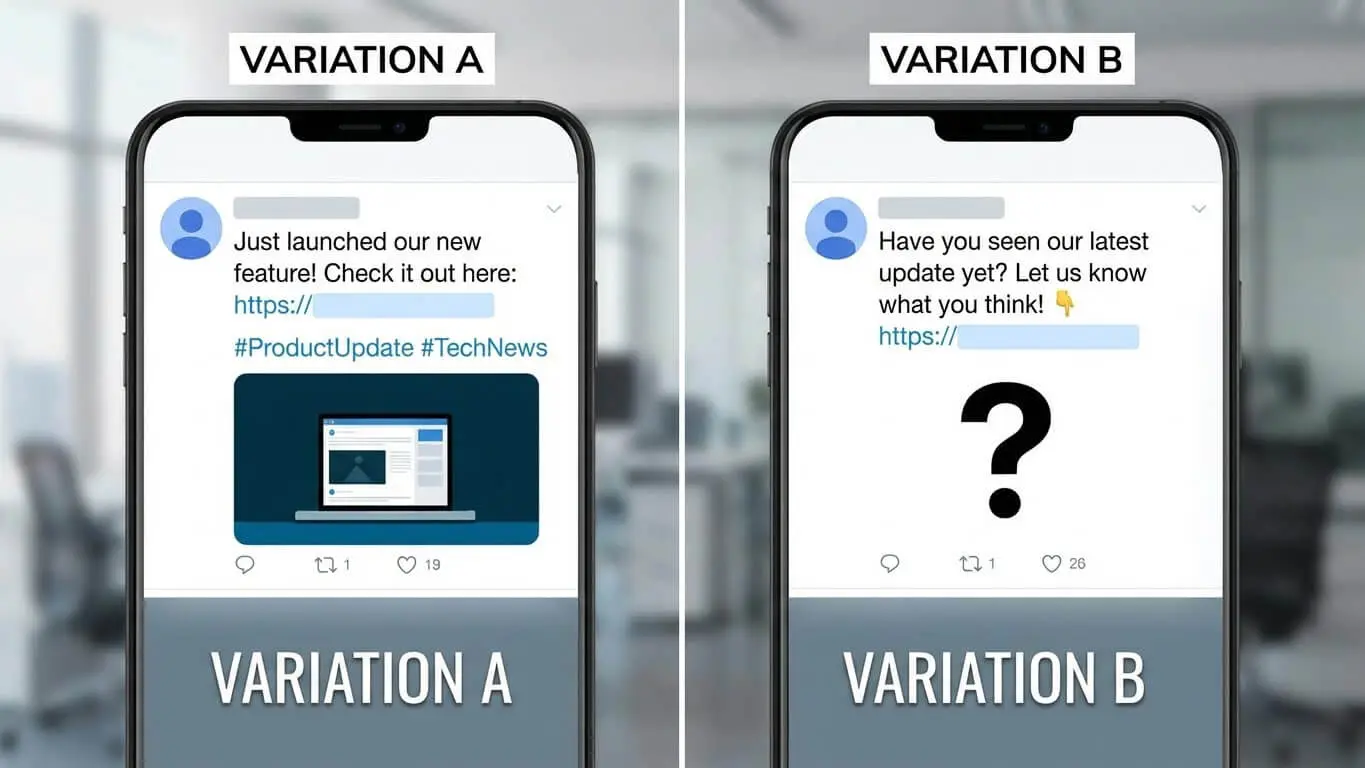
10. A/B Test Your Way to Better Performance
Assumptions about what works are usually wrong. The only reliable way to improve is systematic testing that compares options against real audience behavior.
Elements worth testing include:
Hook variations: Try different opening lines for similar content.
Tone: Casual vs. professional, serious vs. playful.
Structure: Listicles vs. stories, short vs. long form.
Visual types: Photos vs. graphics vs. text-only.
Posting times: Morning vs. evening, weekday vs. weekend.
Article rewriter help generate test variations by rephrasing your content in different ways while preserving the core message.
11. Sidestep Common AI Tweet Mistakes
AI-assisted tweeting comes with pitfalls that can undermine your efforts if you’re not careful. Awareness of these issues helps you avoid them.
- Generic outputs: AI without specific guidance produces bland content that sounds like everyone else. Always provide context about your voice, audience, and unique perspective.
- Over-reliance on templates: Using the same structures repeatedly makes your content predictable and boring. Vary formats even when AI suggests familiar approaches.
- Factual errors: AI can confidently state incorrect information. Always verify claims, statistics, and references before posting.
- Missing nuance: AI struggles with sarcasm, cultural references, and industry-specific humor. Human review catches tone-deaf outputs.
- Obvious AI tells: Phrases like “dive into,” “unlock your potential,” and “game-changer” signal AI-generated content. Edit these out.
The free AI detector helps identify content that reads too machine-like. Run your drafts through detection tools and revise sections that flag as obviously artificial.
Successful AI users develop editing workflows that humanize outputs while preserving the structural and strategic benefits. Treat AI drafts as starting points, not finished products.
12. Make AI Content Sound Authentically Human
The ultimate goal isn’t hiding AI usage—it’s creating content that resonates as genuine and human regardless of how it was produced. Several techniques achieve this.
- Add personal anecdotes: AI can’t know your experiences. Weave in specific stories, lessons learned, and personal opinions that only you could share.
- Include imperfections: Perfect grammar and structure sometimes reads as robotic. Intentional sentence fragments, casual language, and conversational asides add humanity.
- Reference current events: Connecting content to timely happenings shows real awareness that AI lacks.
- Respond authentically: Engagement with replies matters as much as original posts. No AI can replicate genuine conversation.
- Show vulnerability: Admitting uncertainty, sharing failures, and acknowledging limitations builds trust that polished AI outputs often undermine.
The AI text humanizer specifically addresses this challenge by adjusting AI-generated content to sound more natural and conversational.

Bringing It All Together
Writing tweets that consistently outperform requires both art and science. The art comes from your unique voice, insights, and authentic connection with your audience. The science comes from data-driven optimization that AI makes accessible to everyone.
Start by implementing one or two strategies from this guide. Master those before adding more complexity. Track your results, learn what resonates with your specific audience, and continuously refine your approach.
The accounts dominating X in 2026 aren’t necessarily the most creative or knowledgeable—they’re the ones who’ve systematized their process for consistent quality output. AI tools level the playing field, giving solo creators access to optimization capabilities that previously required entire marketing teams.
Your next viral tweet might be one AI-assisted draft away. The key is starting, testing, learning, and iterating. Every post teaches you something about what works.
Explore the complete collection of free social media AI tools to find options that fit your specific workflow and content needs.
Frequently Asked Questions
Can AI really help me get more engagement on Twitter?
Yes, when used strategically. AI analyzes patterns from high-performing content and helps you apply those insights to your own posts. Studies show accounts using AI-assisted content creation see engagement increases of 30-50% on average. The key is treating AI as a tool that enhances your unique voice rather than replacing it entirely.
How often should I post on X to maximize engagement?
Most successful accounts post 3-5 times daily. Consistency matters more than volume—irregular posting hurts algorithmic visibility. AI tools help maintain this cadence by streamlining content creation so you’re not constantly scrambling for ideas.
What’s the best time to post tweets for maximum reach?
General best practices suggest 9 AM – 12 PM on weekdays for business audiences. However, your optimal times depend on your specific follower base. Use analytics to identify when your audience is most active rather than following generic advice.
How long should my tweets be for best engagement?
It depends on content type. Quick takes work best under 100 characters, while educational content performs better at 150-200 characters. Threads can use the full character limit since you’re building narrative. Test different lengths with your audience to find your sweet spot.
Do hashtags still work on Twitter in 2026?
Yes, but quality over quantity. Use 1-2 highly relevant hashtags maximum per tweet. Niche community tags often outperform broad popular ones. Avoid stacking hashtags at the end—weave them naturally into your content instead.
How do I make AI-generated tweets sound more human?
Add personal anecdotes and specific experiences. Include intentional imperfections like casual language and sentence fragments. Reference current events. Edit out obvious AI phrases like “dive into” or “unlock your potential.” Use AI humanizer tools to adjust tone before posting.
What’s the biggest mistake people make with AI tweet writing?
Publishing AI outputs without editing. Raw AI content often sounds generic and lacks the personality that makes accounts memorable. Always review, customize, and add your unique perspective before posting. Treat AI drafts as starting points, not finished products.
How do I write Twitter threads that keep people reading?
Structure matters enormously. Open with a compelling hook, establish credibility early, deliver value in the body, and end with a clear call-to-action. Leave slight cliffhangers between tweets so readers feel compelled to continue rather than exiting at natural break points.
Should I use images with every tweet?
Not necessarily every tweet, but visual content does receive significantly more engagement. Tweets with images get 150% more retweets on average. Use visuals strategically—screenshots, infographics, and authentic photos tend to perform best.
How can I tell if my AI-generated content sounds too robotic?
Run your content through AI detection tools before posting. Read it aloud—awkward phrasing becomes obvious when spoken. Look for overused AI phrases and replace them with your natural voice. Ask trusted followers for honest feedback on whether your content sounds authentic.