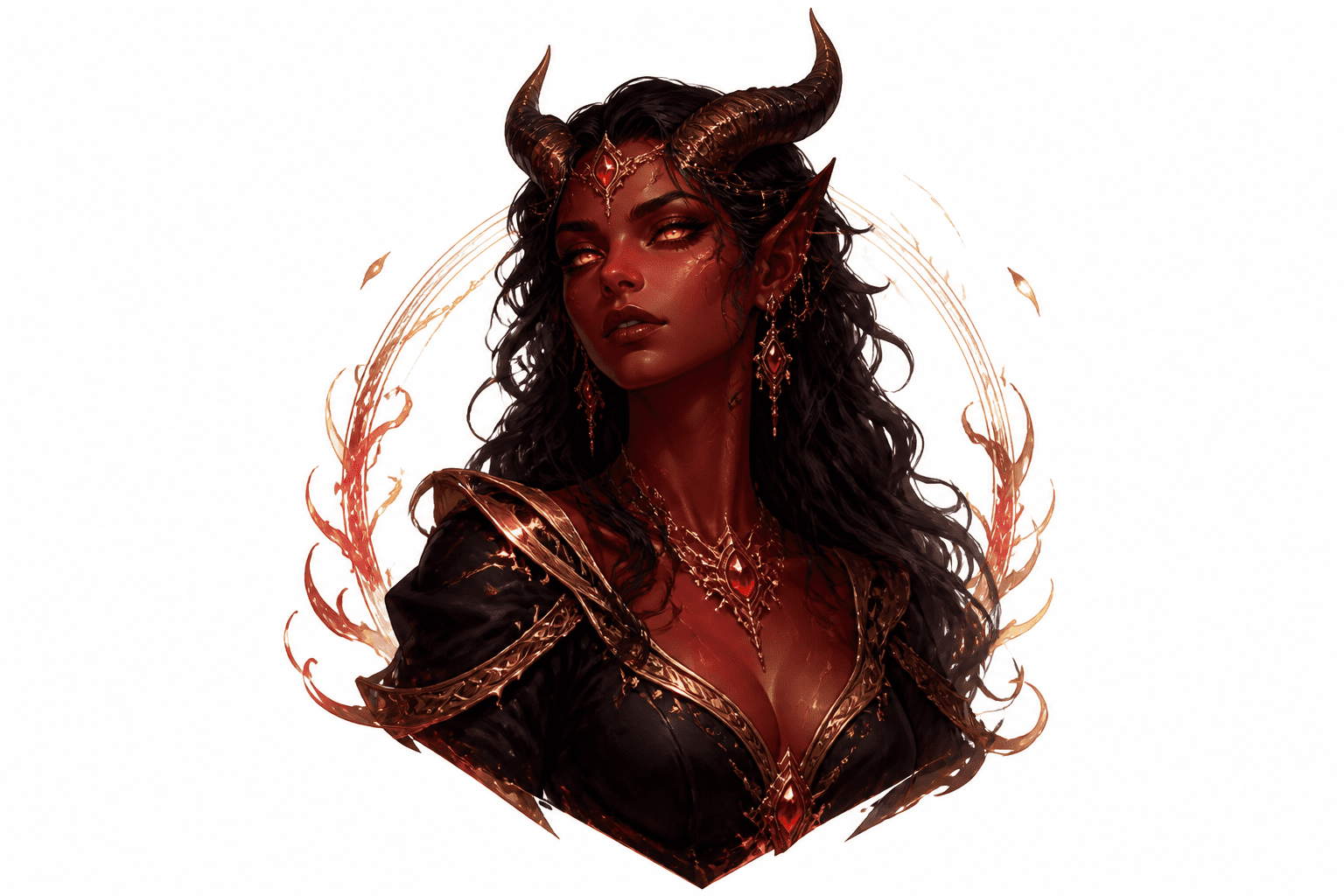
Tiefling names draw from infernal heritage, and they sit at the center of how tiefling identity works in fantasy worlds. A tiefling name can sound harsh, elegant, or ancient, and it often reflects bloodline, ambition, and moral path. Some names come from human languages, while others use dark, invented sounds built to feel otherworldly.
In Dungeons & Dragons and similar settings, tiefling names serve two clear roles. A personal name marks the individual, while a family name, title, or chosen name signals allegiance, reputation, or rebellion. That structure gives you room to name a noble hero, a cunning villain, or a troubled outsider with the same worldbuilding logic. Names such as Asmodeus, Zariel, Mephistopheles, Lilith, and Pazuzu show the infernal and mythic roots that shape the style, and this article gives you 90 tiefling names arranged for both heroes and villains.
Top Tiefling Names for Heroes and Villains
- Ashen Vex
- Nyx Emberfall
- Kael Thorn
- Seraphine Night
- Darian Bloodveil
- Lilith Rune
- Malrik Shade
- Vesper Dusk
- Zyra Inferno
- Orin Blackflame
- Selene Hellsong
- Riven Soulfire
- Azrael Crimson
- Thalia Void
[cfury_download slug=”90-tiefling-names-for-heroes-and-villains-bmw795″ label=”Download 90 Tiefling Names For Heroes And Villains.pdf”]
This set of 90 tiefling names is grouped by origin and theme, so you can move from infernal roots to fantasy-inspired picks without guessing. We compiled it from mythic sources, Dungeons & Dragons style naming, and cultural references, then balanced familiar choices with rarer ones. You will find hero names, villain names, dark and noble picks, and standout sections for female, male, and unisex tiefling names, all arranged for quick comparison.
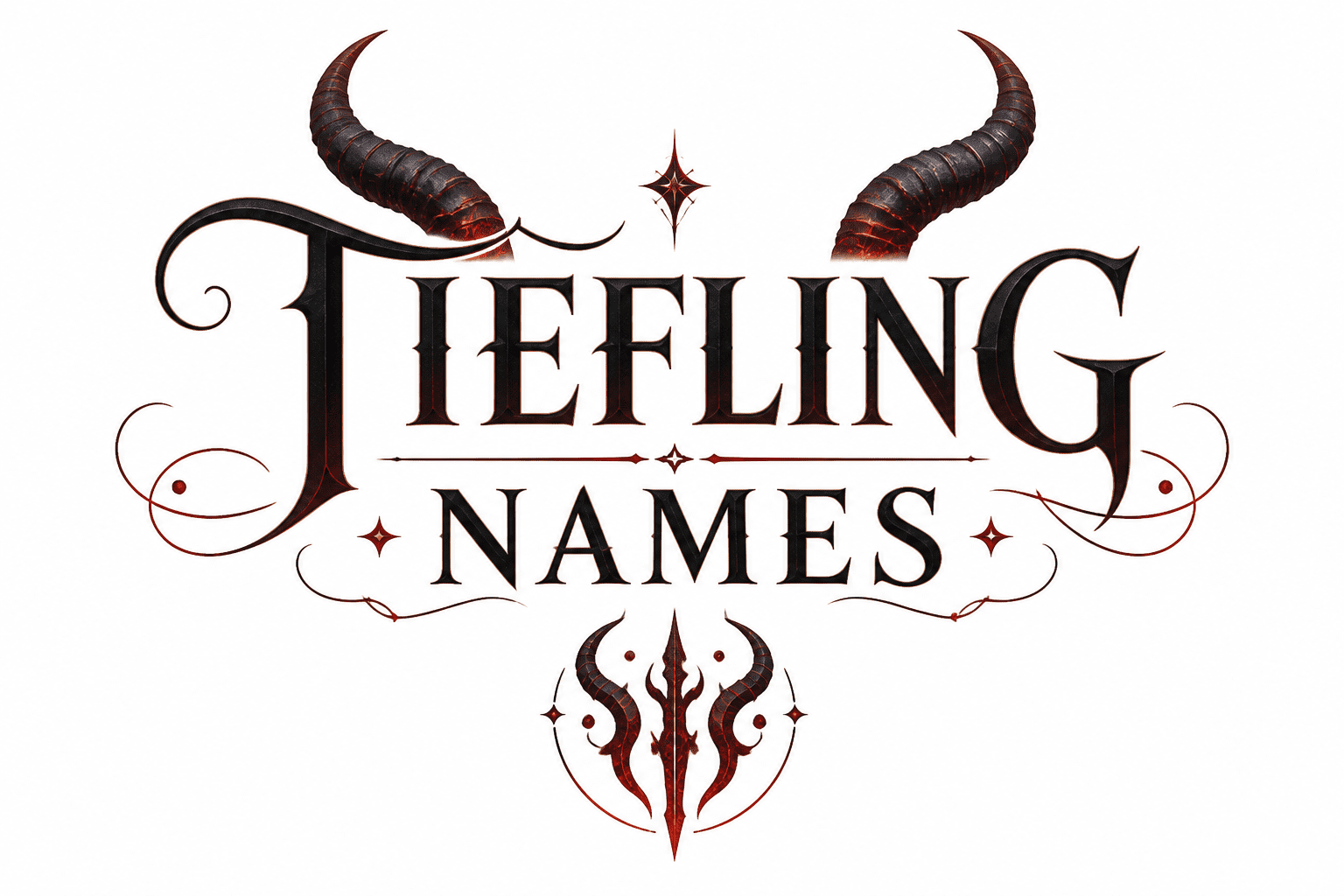
84 tiefling names Table
| # | Name | Category | Meaning and Origin |
|---|---|---|---|
| 1 | Azrael | Archangel | Angel of death, from Hebrew tradition |
| 2 | Ravanna | Infernal | Invented dark name with a harsh, noble sound |
| 3 | Kaelthas | Fantasy Hero | High fantasy style, likely sun or fire inspired |
| 4 | Morrigan | Mythology | Irish war goddess and fate figure |
| 5 | Lucien | Classic | Light, from Latin roots |
| 6 | Nyxara | Night Fantasy | Night inspired original name |
| 7 | Belial | Demonology | Wickedness, from biblical demon lore |
| 8 | Sable | Dark Nature | Black fur or color, elegant and shadowy |
| 9 | Asmodeus | Demon King | Famous demon prince from Jewish lore |
| 10 | Veyra | Modern Fantasy | Invented name with sharp, magical feel |
| 11 | Malachar | Dark Fantasy | Original villain name with ancient tone |
| 12 | Seraphine | Celestial | Burning one, linked to seraph angels |
| 13 | Thorne | Nature Dark | Sharp plant image, strong and dangerous |
| 14 | Orion | Mythology | Great hunter, from Greek myth and stars |
| 15 | Vesper | Twilight | Evening star or dusk, from Latin |
| 16 | Draziel | Fantasy Hero | Angel style name with a fierce ending |
| 17 | Velkan | Warrior | Strong invented name with heavy sound |
| 18 | Lilith | Mythology | Night figure from Jewish legend |
| 19 | Cassian | Classic | Empty or hollow, from Latin family name |
| 20 | Zyra | Modern Fantasy | Short invented name with bright force |
| 21 | Mortivar | Villain | Death inspired original villain name |
| 22 | Elara | Celestial | Mythic moon name and Jupiter moon |
| 23 | Draven | Dark Hero | Modern dark name, used in fiction |
| 24 | Naelith | Fantasy Hero | Graceful invented name with elven feel |
| 25 | Rhea | Mythology | Greek mother goddess and Titaness |
| 26 | Vale | Minimalist | Valley or farewell, soft and moody |
| 27 | Infernus | Infernal | From Latin for hellish or fiery |
| 28 | Caelum | Celestial | Sky or heaven, from Latin |
| 29 | Nymera | Dark Fantasy | Invented name with a shadowed elegance |
| 30 | Torin | Warrior | Chief or thunder hill, Irish roots |
| 31 | Selene | Mythology | Greek moon goddess |
| 32 | Varkos | Villain | Hard sounding invented name for a foe |
| 33 | Amara | Classic | Eternal or unfading, used across cultures |
| 34 | Zephiel | Angelic | Wind inspired angel style name |
| 35 | Rogue | Modern | Rebel or outlaw, bold and direct |
| 36 | Korvyn | Dark Hero | Invented gritty name with sharp consonants |
| 37 | Aurelia | Classic | Golden, from Latin |
| 38 | Garron | Warrior | Strong invented name with rugged tone |
| 39 | Morwen | Mythology | Welsh inspired name meaning maiden |
| 40 | Talon | Nature Dark | Bird claw, fierce and predatory |
| 41 | Vhalia | Fantasy Hero | Original heroic name with soft power |
| 42 | Riven | Dark Hero | Torn apart, from English word roots |
| 43 | Isolde | Legendary | Famous tragic heroine from medieval romance |
| 44 | Nox | Night Fantasy | Night, from Latin |
| 45 | Marrow | Macabre | Inner bone, eerie and memorable |
| 46 | Thalor | Fantasy Hero | Invented heroic name with ancient feel |
| 47 | Vex | Villain | Annoy or torment, short and sharp |
| 48 | Ophelia | Classic | Help, from Greek literary tradition |
| 49 | Korza | Modern Fantasy | Invented name with edgy, compact sound |
| 50 | Faust | Legendary | Pact with the devil, from German legend |
| 51 | Lyra | Celestial | Lyre constellation and musical theme |
| 52 | Brimstone | Infernal | Sulfur and fire, strongly hellish |
| 53 | Althea | Classic | Healer or wholesome, from Greek |
| 54 | Mortis | Demonology | Death, from Latin |
| 55 | Serik | Warrior | Invented name with a stern edge |
| 56 | Virel | Modern Fantasy | Original name with smooth, secretive tone |
| 57 | Hecate | Mythology | Greek goddess of magic and crossroads |
| 58 | Kharon | Mythology | Ferryman of the underworld in Greek myth |
| 59 | Eidolon | Spirit | Image, phantom, or ghostly double |
| 60 | Valara | Fantasy Hero | Invented heroic name with regal sound |
| 61 | Obsidian | Dark Nature | Volcanic black glass, sleek and dangerous |
| 62 | Theron | Classic | Hunter, from Greek roots |
| 63 | Mirage | Mystic | Illusion or vision, dreamy and uncertain |
| 64 | Damien | Villain | Popular dark name with demonic association |
| 65 | Valeria | Classic | Strong, from Latin |
| 66 | Onyx | Dark Nature | Black gemstone, polished and intense |
| 67 | Kaivor | Warrior | Invented name with forceful rhythm |
| 68 | Nyssara | Modern Fantasy | Original name with elegant, dark tone |
| 69 | Adriel | Angelic | Flock of God, Hebrew origin |
| 70 | Raze | Villain | Destroy completely, harsh and modern |
| 71 | Ember | Fire | Glowing coal, warm and dangerous |
| 72 | Solstice | Celestial | Sun turning point, cosmic and rare |
| 73 | Vael | Minimalist | Short invented name with sleek fantasy style |
| 74 | Morcant | Dark Hero | Original name with ancient, stern sound |
| 75 | Nyra | Modern Fantasy | Brief invented name with sharp elegance |
| 76 | Strix | Night Fantasy | Owl or night creature, from Latin |
| 77 | Azula | Fire | Blue fire inspired, vivid and strong |
| 78 | Corvin | Dark Hero | Raven linked name with dark prestige |
| 79 | Sabriel | Fantasy Hero | Angel style literary fantasy name |
| 80 | Vespera | Twilight | Evening related feminine form of Vesper |
| 81 | Malrik | Villain | Invented villain name with severe sound |
| 82 | Ardyn | Modern | Invented name, sleek and adaptable |
| 83 | Lenora | Classic | Light, from Greek and Latin forms |
| 84 | Kyros | Warrior | Invented strong name with commanding tone |
Now that you have the list, the next step is making the tiefling names feel right for the character you are actually building. A name can signal nobility, danger, wit, devotion, or rebellion, so it helps to match it to your character’s role and backstory instead of choosing by sound alone.
How Do You Choose Tiefling Names?
If your character is a hero, lean toward tiefling names that feel steady, elegant, or resilient. If your character is a villain, sharper sounds and harsher rhythms can fit better. It also helps to think about who named them. A tiefling raised in a temple may have a very different name from one who chose a name for themself after leaving home.
- Match the role: Noble or protective characters often suit smoother names, while darker or more secretive figures can carry harder consonants.
- Think about origin: A name given by family, adopted later, or tied to a pact can say a lot about your character before they speak.
- Check pronunciation: If you will say the name often at the table or in writing, choose one that is easy to repeat without stumbling.
- Avoid overcomplication: Very long names can look impressive, but shorter tiefling names are often easier to remember and use in dialogue.
- Use contrast wisely: A gentle name on a feared warlock, or a severe name on a kind protector, can make the character more memorable.
What Do Tiefling Names Mean?
In fantasy settings, tiefling names often reflect a character’s relationship to identity rather than a single real-world naming tradition. In Dungeons & Dragons, tieflings are commonly portrayed as people who may carry an inherited infernal legacy, but the names themselves are usually chosen for story effect, not by a fixed rule. That gives you room to use names that sound ancient, ceremonial, improvised, or even self-made.
For extra flavor, you can build tiefling names around a theme:
- Virtue names: Good for characters who reject expectations and want their name to reflect a chosen path.
- Infernal echo: Names with sharp vowels or sibilant sounds can hint at a darker heritage without saying it outright.
- Street name: A nickname or shortened name works well for a rogue, rebel, or urban wanderer.
- Formal title: Useful for a courtier, priest, or heir who needs a name that sounds ceremonial in public.
If you are naming a tiefling for a campaign, a novel, or a character sheet, it can help to decide whether the name should be admired, feared, or simply remembered. That single choice often does more for the character than a complicated spelling ever will.
Frequently Asked Questions
What makes a good tiefling name for a hero or villain?
A strong tiefling name usually reflects the character’s tone, background, and role in the story. Heroic names often sound bold, noble, or ancient, while villain names may feel sharp, ominous, or infernal. Names with memorable syllables and a distinct fantasy sound help them stand out in roleplay, novels, and games.
Should tiefling names sound infernal?
Not always. Some tieflings use names that clearly evoke fiendish heritage, while others choose names inspired by culture, faith, personal history, or aspiration. A tiefling hero may prefer a softer or more hopeful name, while a villain might embrace harsher, more demonic-sounding choices.
Can tiefling names be used for both players and NPCs?
Yes. Tiefling names work well for player characters, enemies, allies, merchants, and major story figures. A versatile name list helps with quick character creation, and many names can be adapted depending on whether the character is a noble protector, a clever rogue, or a formidable antagonist.
How do tieflings choose their names in fantasy settings?
In many fantasy worlds, tieflings may choose their own names to define their identity rather than inherit a family name. Some adopt names from a culture they admire, some reclaim a name with meaning, and others take titles that signal power, mystery, or redemption. This makes tiefling naming highly flexible for worldbuilding.
What are some tips for picking a memorable tiefling name?
Look for names that are easy to pronounce, fit the character’s alignment, and match the setting’s style. Consider whether the name should feel regal, eerie, elegant, or rebellious. The most memorable tiefling names often balance uniqueness with clarity, making them easy to remember in campaigns and stories.
- [cfury_download slug=”90-tiefling-names-for-heroes-and-villains-bmw795″ label=”PDF list”]
- [cfury_download slug=”90-tiefling-names-for-heroes-and-villains-bmw795-image” label=”Hero image”]
- [cfury_download slug=”90-tiefling-names-for-heroes-and-villains-bmw795-table” label=”Excel table”]