AI text to speech (TTS) technology converts written text into spoken audio using artificial intelligence. Old speech synthesis systems stitched together pre-recorded clips. Modern TTS uses neural networks trained on thousands of hours of human speech. The result is audio that captures natural pauses, emotional inflection, and realistic pronunciation patterns.
These AI voice generators can produce speech in dozens of languages. They can clone existing voices from short audio samples. They can even add emotional expressions like excitement, sadness, or urgency. Content creators use text to speech AI for YouTube videos, podcasts, audiobooks, tallking avatars and customer service applications. The technology has advanced so much that listeners often cannot tell the difference between AI narration and a human voice actor.
This article explores top ai text to speech tools, their features, pricing, and best use cases to help you choose the right tool for your project.
Table of Contents
- What Is AI Text to Speech?
- How Does AI Voice Generation Work?
- 16 Best AI Text to Speech Tools in 2026
- Top Use Cases for AI Voice Over Technology
- How to Choose the Right TTS Tool
- Frequently Asked Questions
How Does AI Voice Generation Work?
Modern AI text to speech systems follow a multi-step process. They convert text into natural-sounding audio. First, the system analyzes the input text for linguistic elements. It looks at punctuation, sentence structure, and context. This helps determine appropriate pacing, emphasis, and intonation.
Next, the AI breaks down the text into phonetic components. It considers rhythm, accent, and dialect. Neural networks then synthesize these elements into speech waveforms. This generates modulated audio that mimics human vocal patterns. Finally, post-processing applies noise reduction and audio enhancements. Then it delivers the final output.
The most advanced TTS models use transformer architectures. These are similar to large language models. This includes those from ElevenLabs and MiniMax. This allows them to understand context. They can deliver speech with appropriate emotional nuance. This makes AI voiceover content sound genuinely human.
Best AI Text to Speech tools
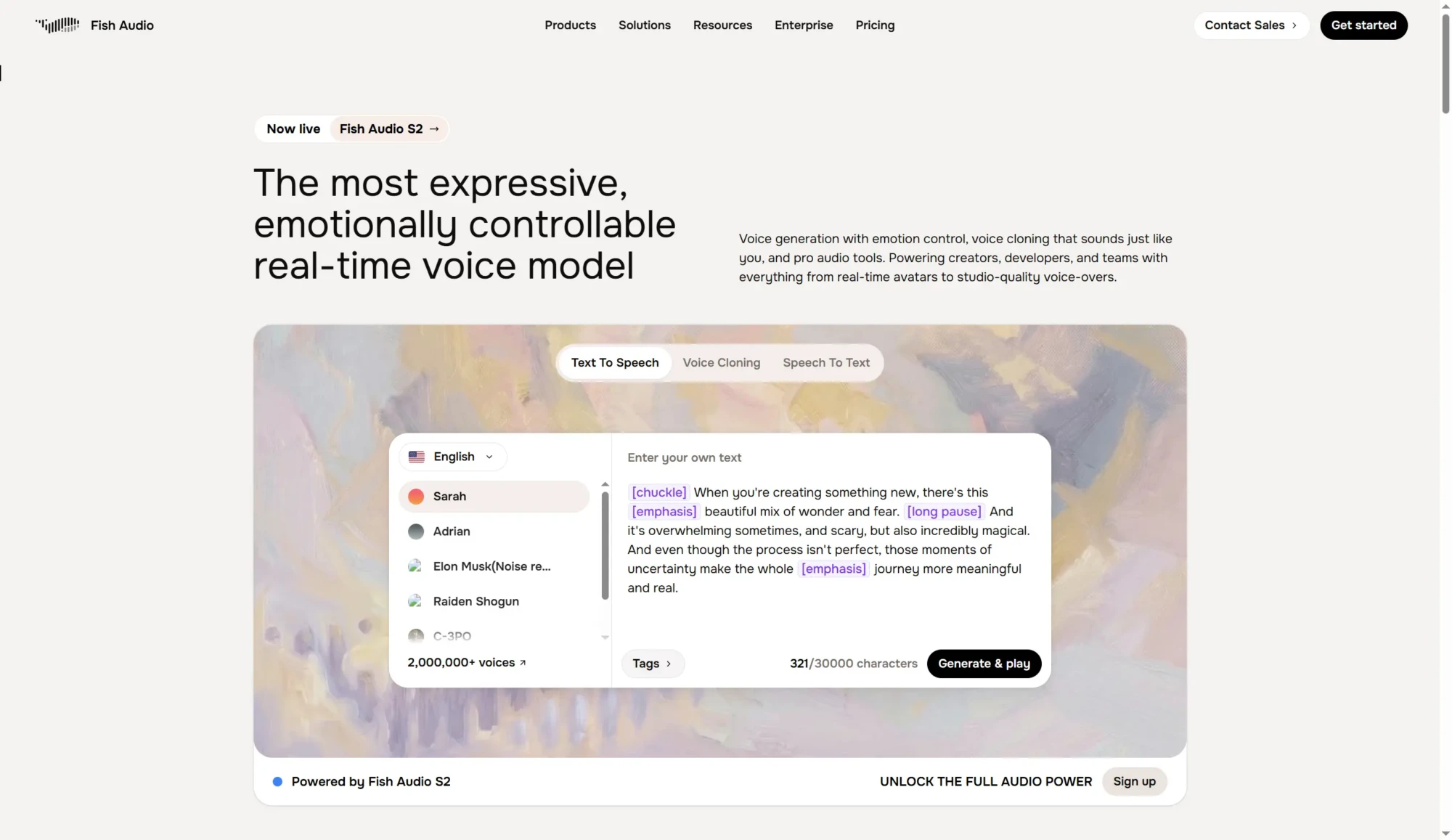
1. Fish Audio TTS
Official Website: fish.audio
Fish Audio is a developer-first TTS platform that sets itself apart on expressiveness through its open-weights S2 model. Where most TTS tools offer a small set of fixed emotion styles, S2 lets you apply nuance at the word level using inline tags, a level of control that closed-model platforms including ElevenLabs don’t currently offer. 200ms time-to-first-audio, 80+ language support, voice cloning from a 15-second sample, and 2M+ community voice models.
Fish Audio TTS API pricing starts at ~$15/1M characters, well below comparable platforms. Free to start; plans from $11/month.
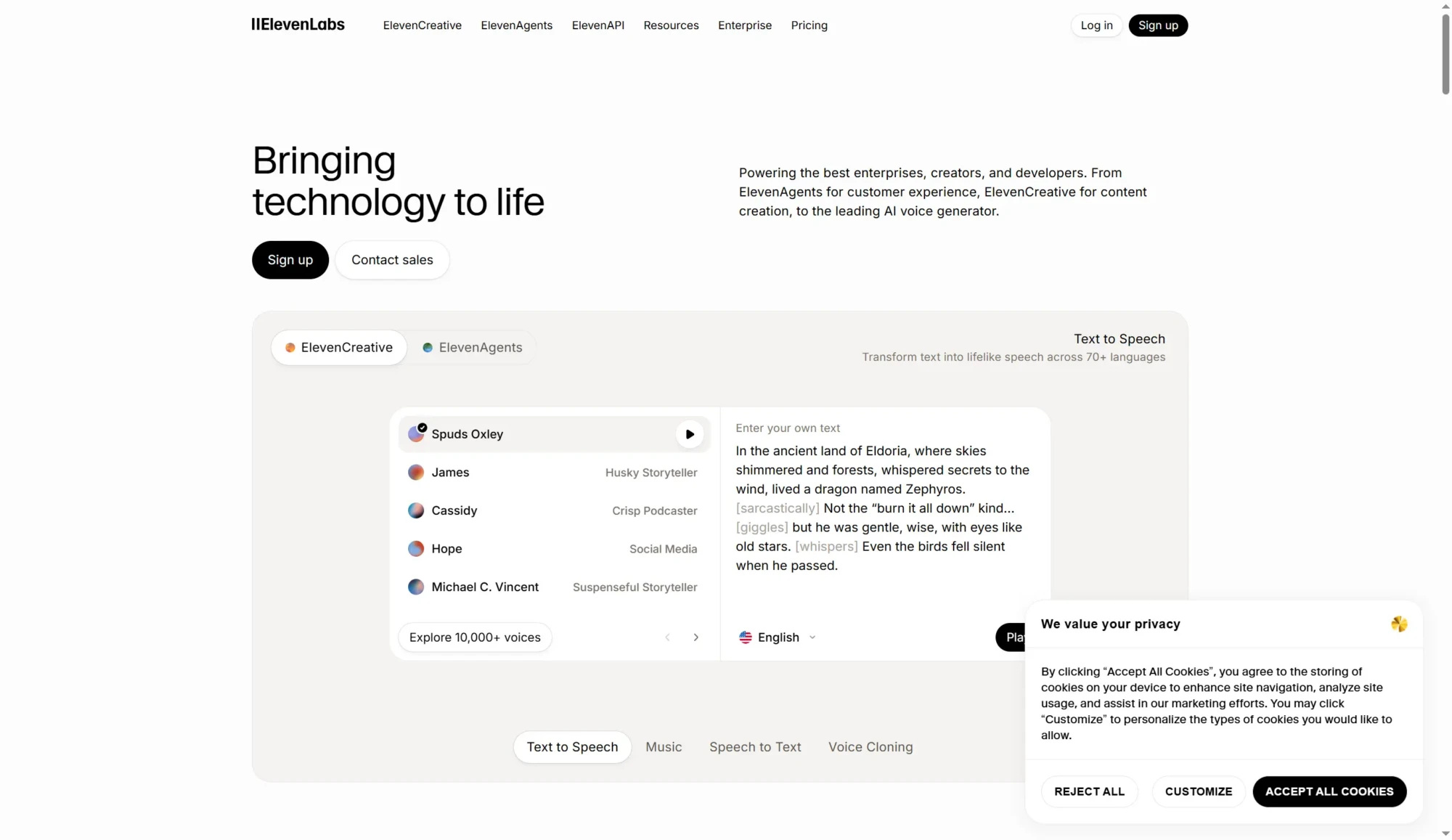
2. ElevenLabs
Official Website: elevenlabs.io
ElevenLabs is one of the most popular AI voice generator platforms. The company’s Eleven v3 model delivers exceptional voice quality. It has broad dynamic range and emotional control through inline audio tags. Users can generate lifelike speech in over 70 languages with native-level pronunciation.
The platform supports real-time audio streaming. Latency is as low as 75ms on Flash models. This makes it suitable for interactive applications. Voice cloning requires just a few minutes of audio. The system can replicate the voice, emotional tone, and speaking style. ElevenLabs offers both a web interface and comprehensive API access for developers building voice-enabled applications.
Pricing starts with a free tier. It offers 10,000 characters monthly. The Starter plan costs $5 per month. Creator and Pro plans offer increased character limits. They also include advanced features like voice cloning and commercial usage rights.
3. MiniMax Speech-02
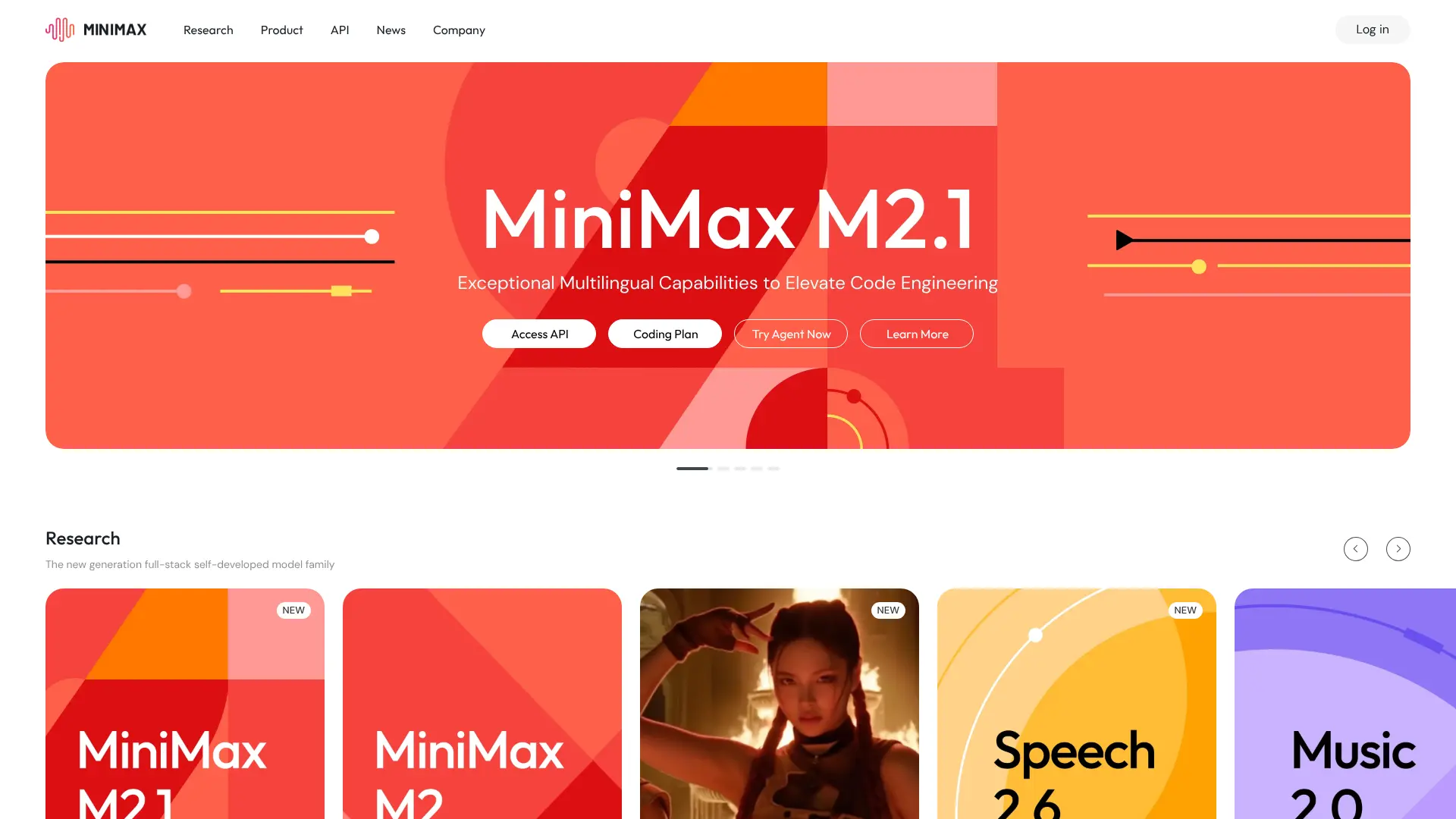
Official Website: minimax.io
MiniMax Speech-02 has earned top rankings on both Artificial Analysis Speech Arena and Hugging Face TTS Arena. It outperforms competitors including OpenAI and ElevenLabs in user-perceived audio quality. The model uses an autoregressive transformer architecture. It is designed for high-fidelity voice cloning with zero-shot capabilities.
The platform supports over 30 languages with native pronunciations. It offers both HD and Turbo variants. Speech-02 HD prioritizes audio quality for content like audiobooks and podcasts. Speech-02 Turbo delivers sub-second streaming latency for real-time voice agents and chatbots. Users can process up to 200,000 characters in a single input for long-form content creation.
MiniMax provides an extensive voice library with over 300 authentic voices. The platform supports advanced features like voice mixing and emotion control. It offers multiple output formats including FLAC, WAV, and MP3.
4. Murf AI
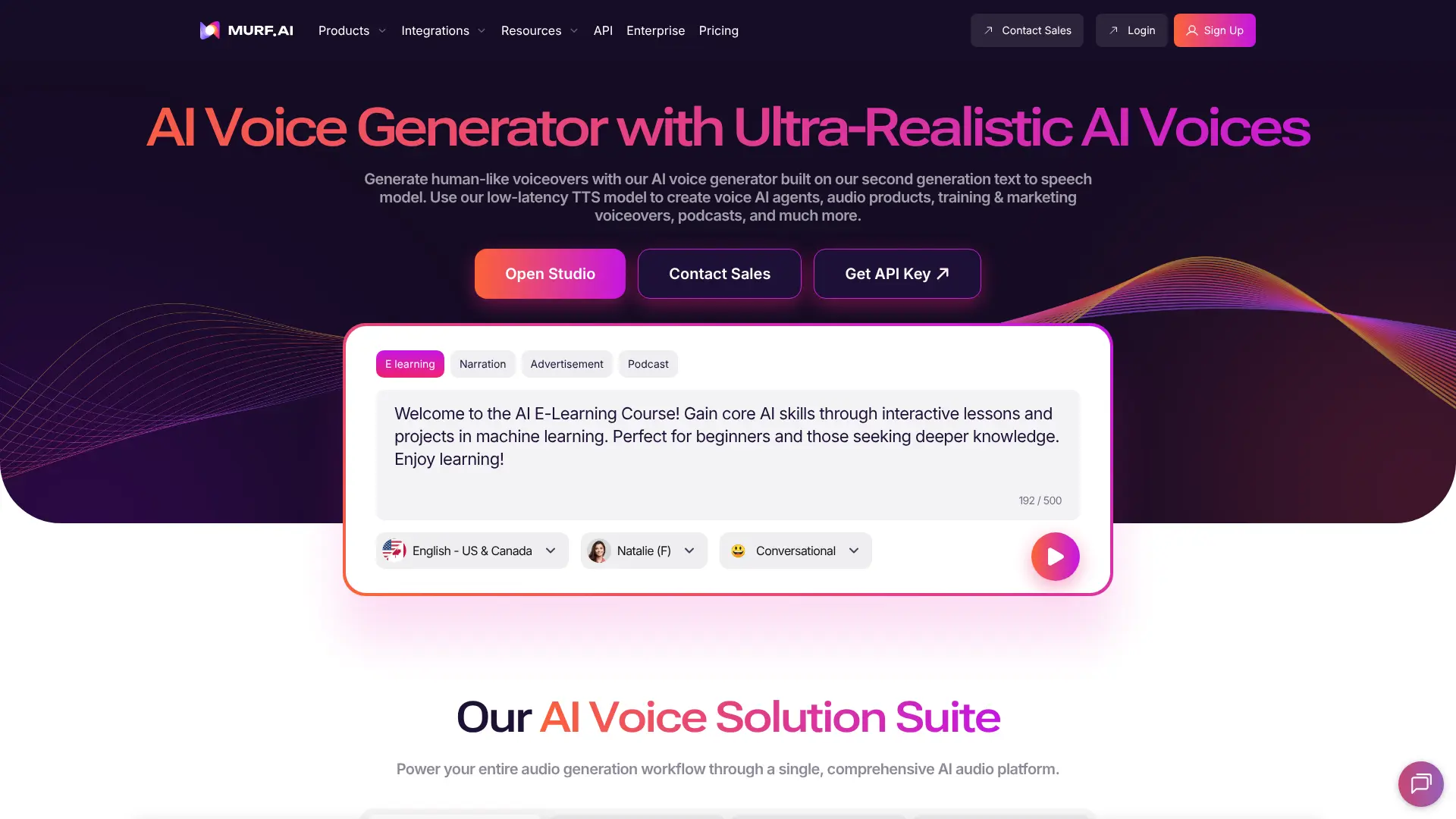
Official Website: murf.ai
Murf AI delivers enterprise-scale voice infrastructure. It has over 200 ultra-realistic voices across 20+ languages. The platform’s Speech Gen 2 model achieves 99.38% pronunciation accuracy. It produces voices indistinguishable from human speech. Murf Falcon, their newest model, offers latency under 130ms for real-time voice agent applications.
The Murf Studio interface allows users to adjust pitch, speed, pauses, emphasis, and word-level pronunciation. Content creators can upload scripts, PDFs, or documents. The platform converts them to professional audio. The platform integrates with popular tools like Canva, Google Slides, PowerPoint, and Adobe Audition.
Murf offers a free tier with limited features. Paid plans start at $19 per month for individuals. Business plans include team collaboration features. They also include voice cloning capabilities and priority support.
5. Play.ht
Official Website: play.ht
Play.ht (now PlayAI) provides access to over 800 AI voices across 142 languages and accents. The platform uses state-of-the-art neural networks. It generates ultra-realistic speech for high-stakes applications. These include podcast narration, e-learning, and commercial voiceovers.
The service offers both Dialog and Mini models. The Dialog model excels at conversational tone and emotion. It is great for narrations and podcasts. The Mini model provides lightweight, real-time multilingual text to speech. It is designed for conversational AI applications. Users can clone voices, create custom voice blends, and control speech parameters through SSML tags.
Play.ht provides WordPress integration and embeddable audio players for websites. Plans range from Personal at $29 per month. Business and Enterprise tiers offer increased generation limits and commercial licensing.
6. OpenAI TTS
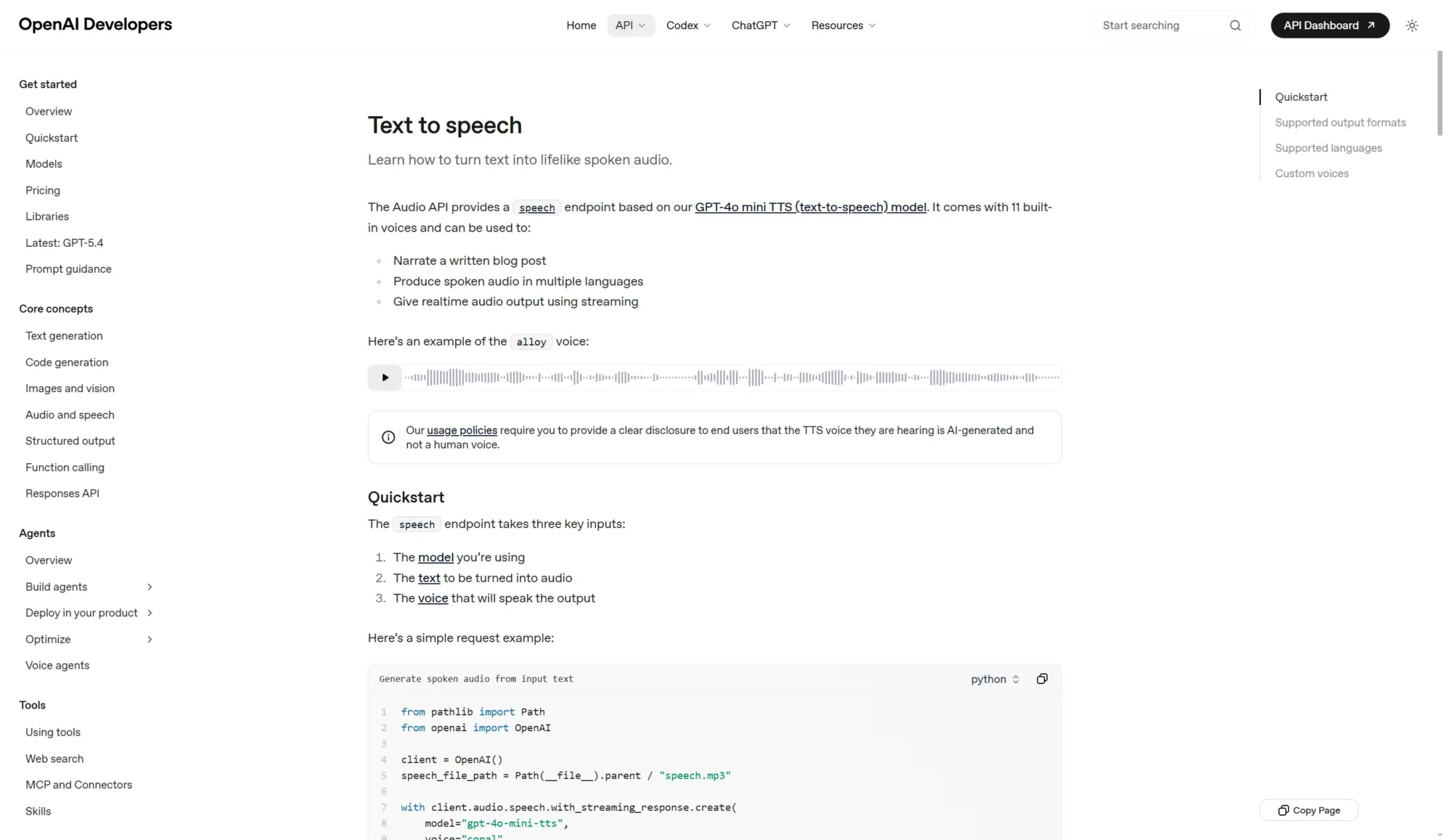
Official Website: platform.openai.com
OpenAI’s text to speech API uses the gpt-4o-mini-tts model. It generates natural-sounding speech with a unique feature called steerability. Developers can prompt the model on what to say and how to say it. They can use instructions like “speak in a calm, friendly tone” or “talk like an enthusiastic sports commentator.”
The platform offers 13 built-in voices optimized for English. Marin and cedar are recommended for best quality. OpenAI supports real-time streaming for low-latency applications. It integrates seamlessly with other OpenAI services. The system follows Whisper’s language support. It covers most major world languages.
Pricing follows a pay-per-character model. This is consistent with other OpenAI API services. The integration is attractive for teams already using GPT models for text generation. It provides a unified platform for both capabilities.
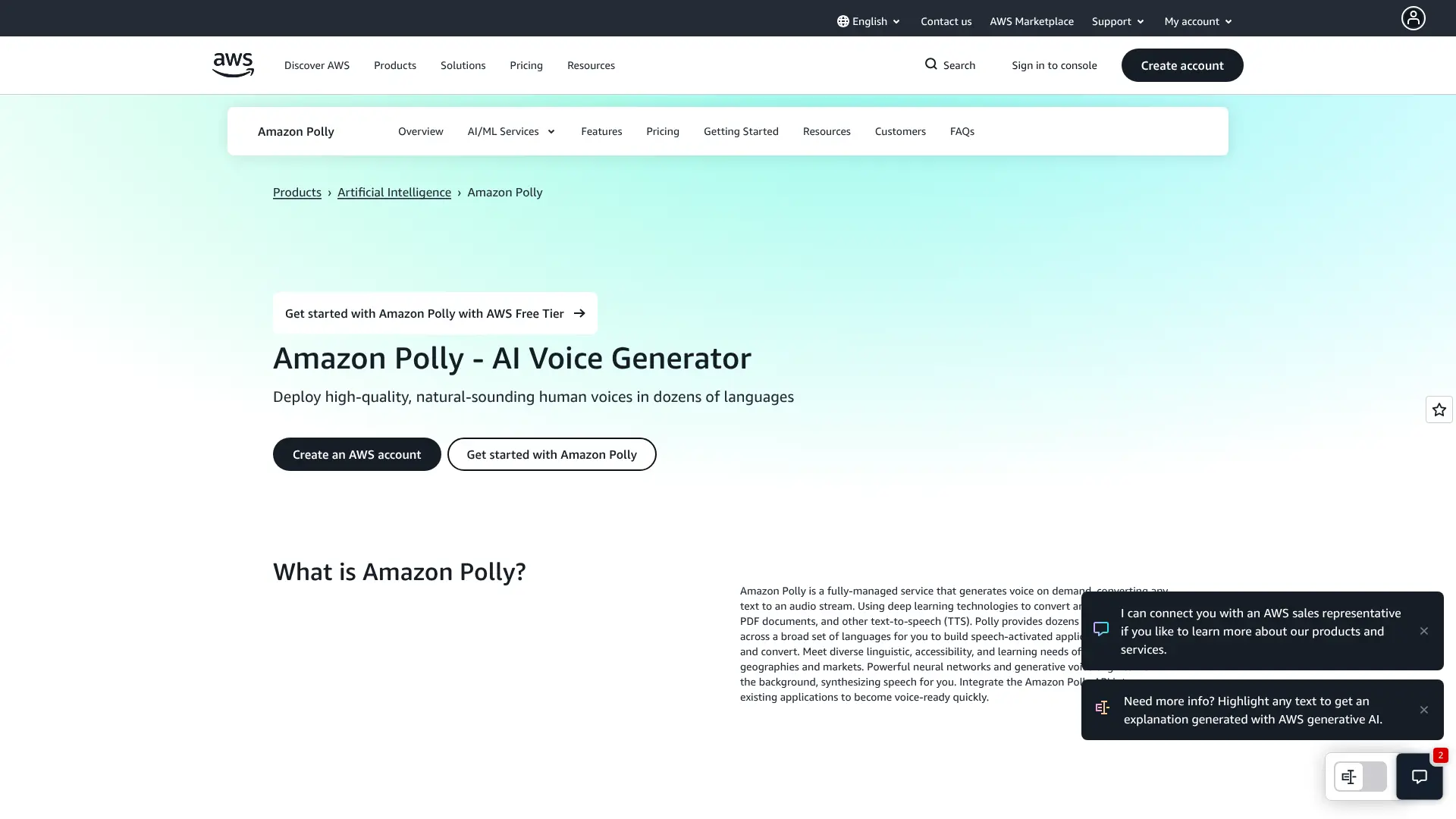
7. Amazon Polly
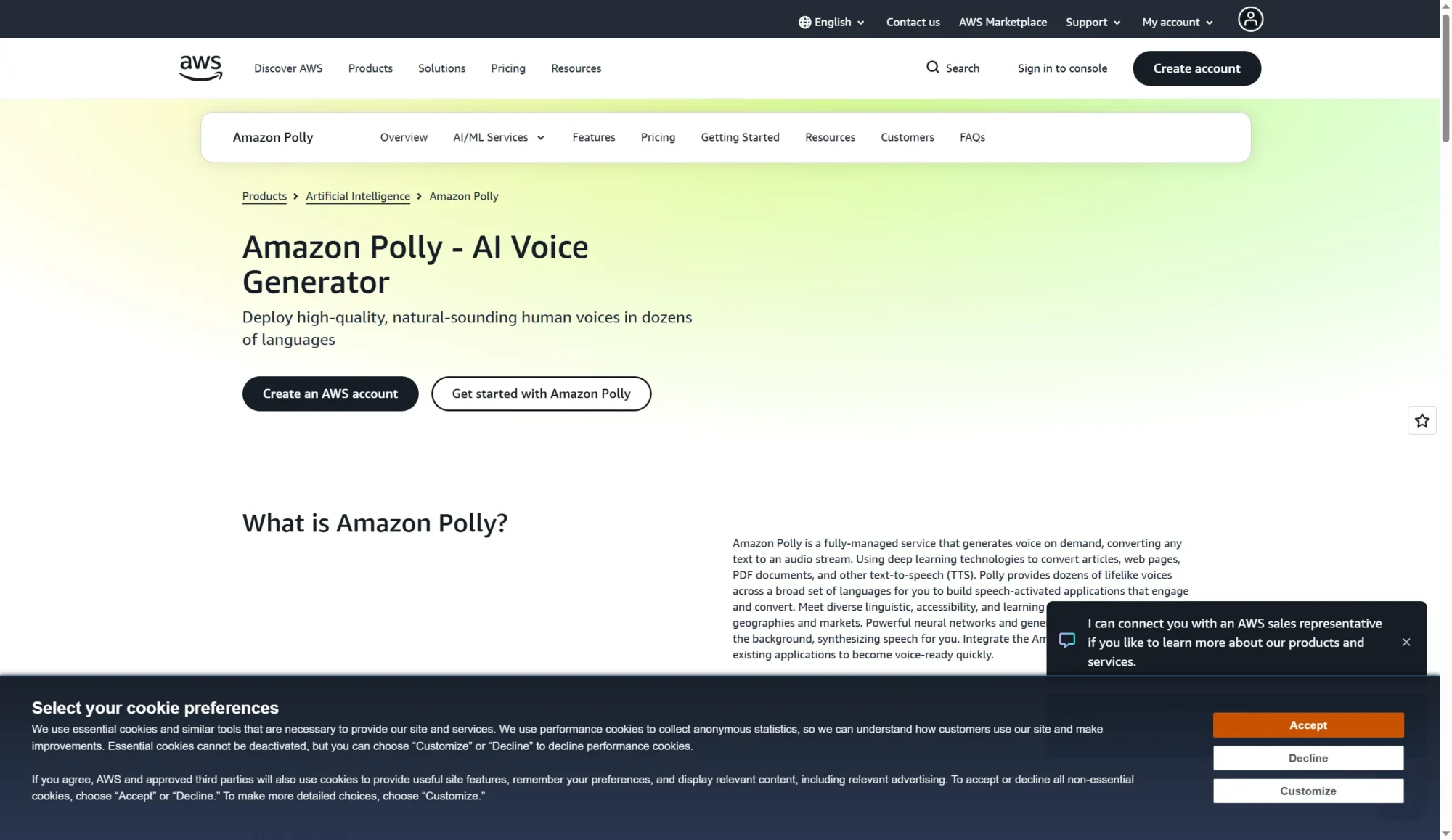
Official Website: aws.amazon.com/polly
Amazon Polly is a fully managed cloud service. It converts text to lifelike audio using deep learning technologies. The platform provides dozens of voices across many languages. It integrates tightly with the AWS ecosystem for scalable deployments.
Polly offers multiple voice engines. These include a billion-parameter transformer. It creates synthetic speech similar to human voice. The service supports SSML for fine-tuned control. You can adjust pronunciation, volume, speed, and pitch. Speech marking provides metadata for precise synchronization with visual content.
New AWS customers receive up to $200 in free tier credits. Standard pricing runs $4 per million characters for neural voices. Polly works well for developers building voice-enabled applications within AWS infrastructure. The interface requires more technical expertise than consumer-focused alternatives.
8. Google Cloud Text-to-Speech
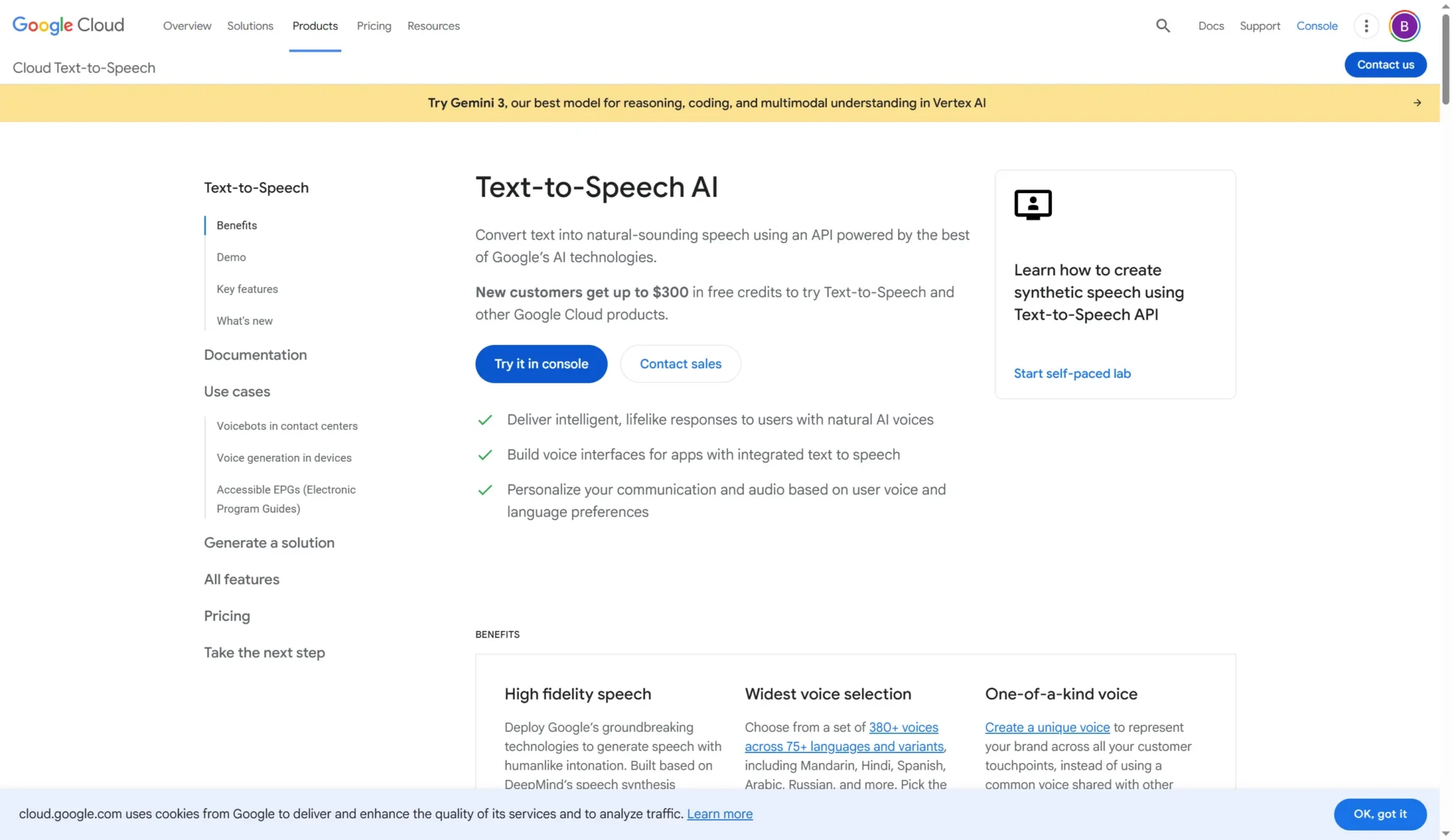
Official Website: cloud.google.com/text-to-speech
Google Cloud Text-to-Speech uses WaveNet technology. This was developed by DeepMind to generate human-like voices. The service offers over 90 voices across multiple languages and dialects. This makes it a strong choice for applications needing broad international language coverage.
The API supports SSML for customizing pitch, speaking rate, and pronunciation. Developers can create applications with lifelike voice interactions. These work for virtual assistants, accessibility tools, and content narration. Google provides comprehensive documentation and SDKs for multiple programming languages.
Pricing starts at $4 per million characters for standard voices. WaveNet voices cost $16 per million. Google offers 4 million characters free per month. This makes it accessible for testing and smaller projects.
9. Microsoft Azure Neural TTS
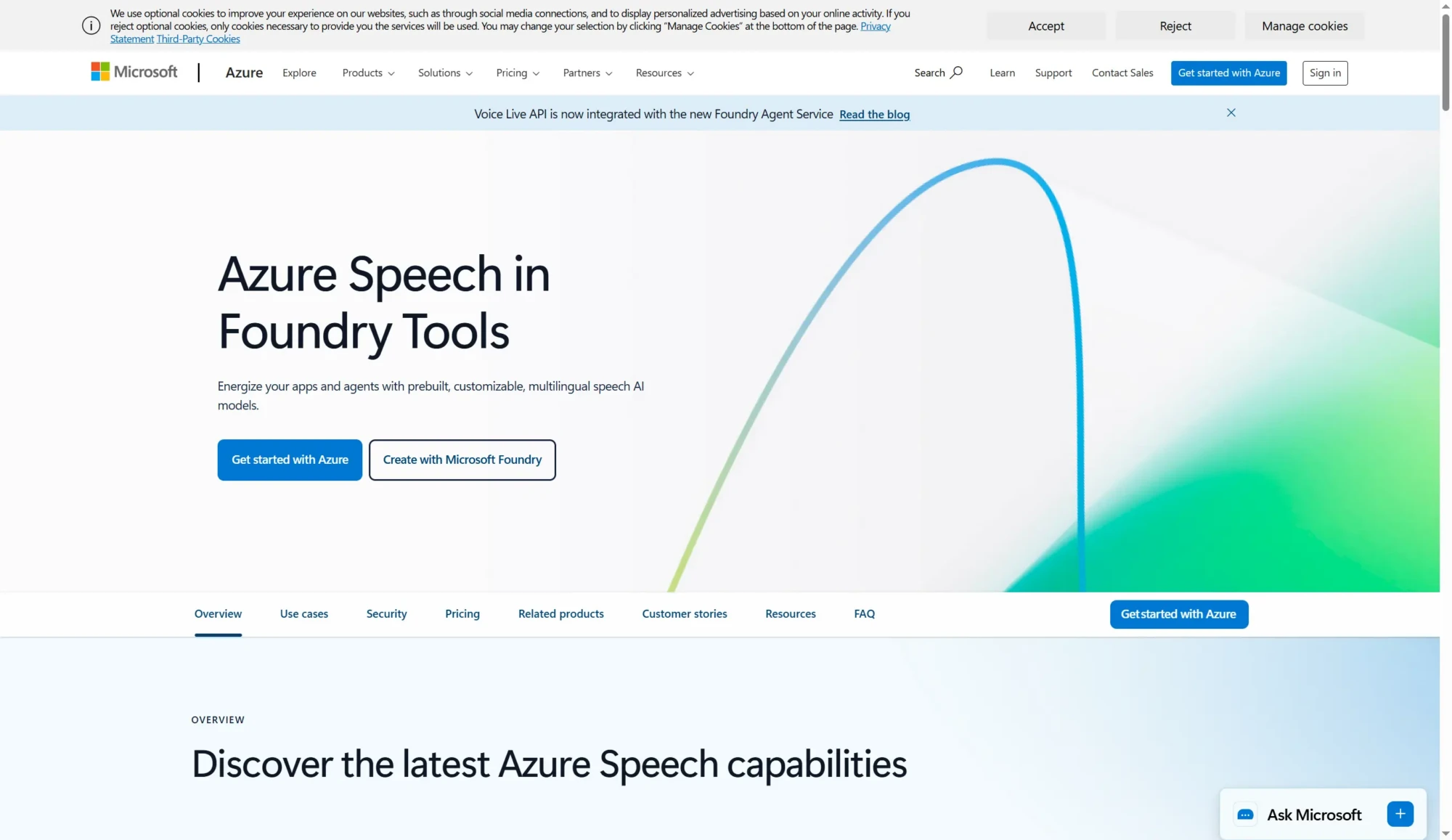
Official Website: azure.microsoft.com
Microsoft Azure offers enterprise-grade TTS. It supports 140+ languages and 400+ voices. This includes bilingual and regional variants. The platform’s standout feature is Custom Neural Voice. This allows organizations to train bespoke AI voice models. They can use their own audio recordings for branded spokesperson or character voices.
Azure TTS supports both cloud API deployment and containerized on-premises installation. This makes it suitable for industries with strict data governance requirements. The service includes speaking styles like “cheerful,” “angry,” “narration,” and “newsreader.” These help with expressive content creation.
Pricing includes 500,000 free characters per month on the free tier. After that, it costs $16 per million characters for neural voices. Enterprise security certifications and compliance features make Azure a preferred choice for large organizations.
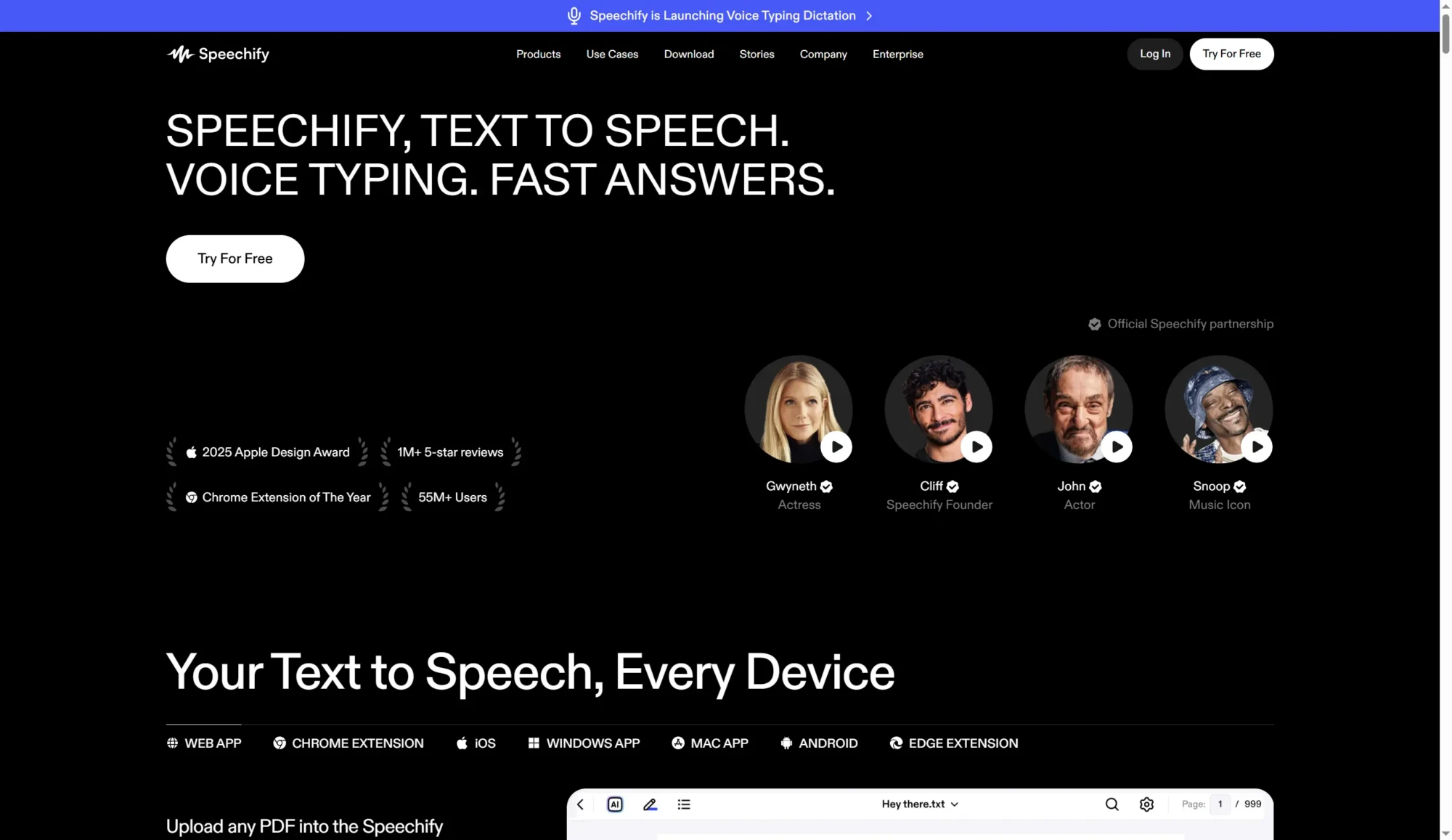
10. Speechify
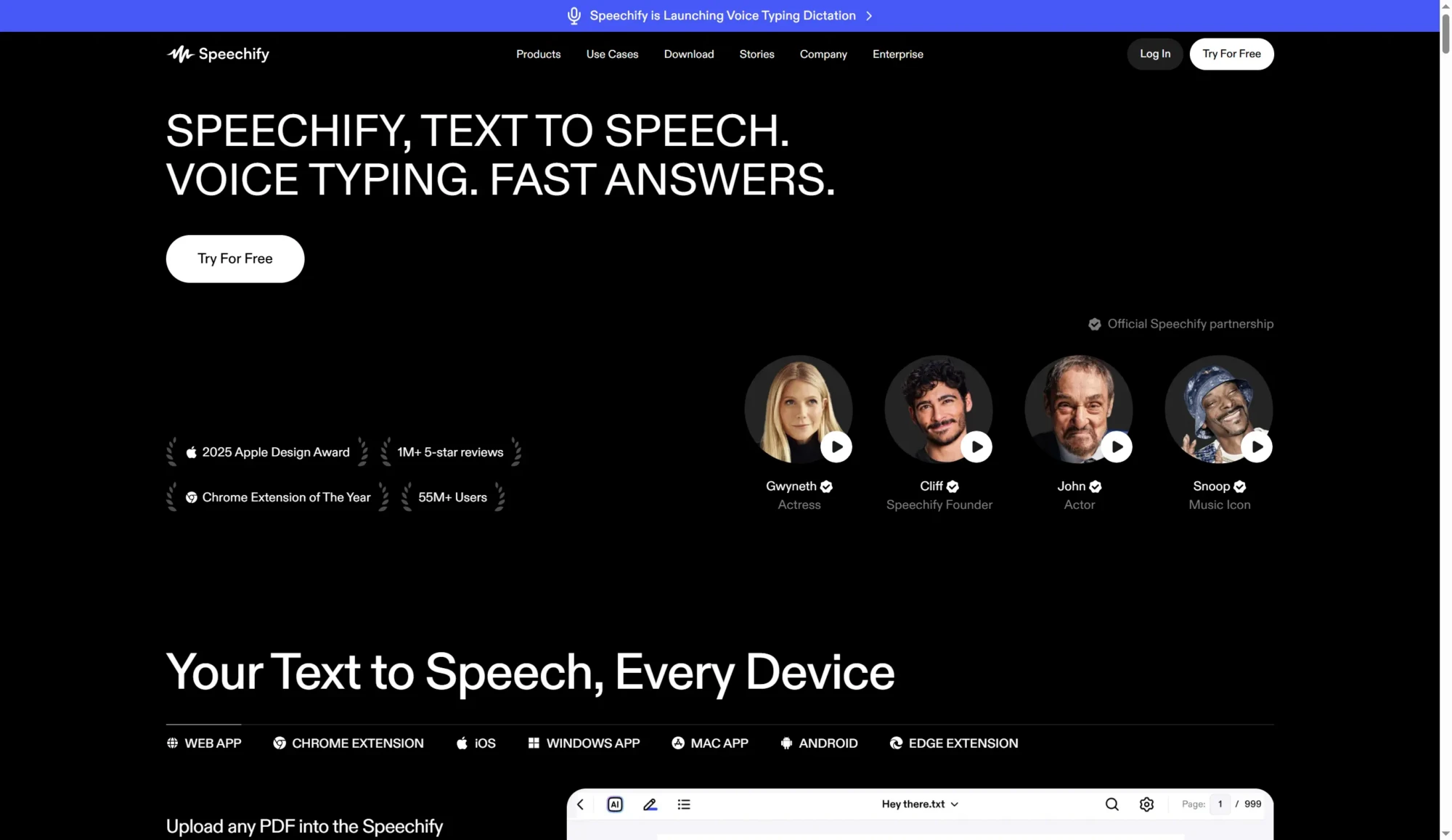
Official Website: speechify.com
Speechify began as a reading assistance tool. It has evolved into a comprehensive voice platform. It has over 1,000 natural-sounding voices in 60+ languages. The platform earned Apple’s 2025 Design Award. It was recognized for making content more accessible to people with visual impairments or reading difficulties.
The Speechify Studio provides advanced tools. These include AI Voice Generator, AI Voice Cloning, AI Dubbing, and Voice Changer. Celebrity voices from figures like Snoop Dogg, Mr. Beast, and Gwyneth Paltrow are available for select applications. Users can convert any text source into spoken audio. Sources include PDFs, emails, web pages, and ebooks.
Speechify offers browser extensions, mobile apps, and desktop software. This gives users cross-platform access. Plans range from free basic access to premium subscriptions. Premium plans include expanded features and commercial usage rights.
11. WellSaid Labs
Official Website: wellsaidlabs.com
WellSaid Labs focuses on enterprise-grade voice synthesis. It has some of the most realistic AI voices available. The platform works with professional voice actors to create AI models. This ensures high quality and ethical sourcing of voice data.
The service is particularly popular for corporate training content, marketing videos, and educational materials. These need broadcast-quality output. WellSaid provides consistent voice quality across large content libraries. This makes it ideal for organizations producing hundreds of lessons or modules.
Pricing starts at $49 per month with higher tiers for teams and enterprises. This costs more than alternatives. WellSaid’s focus on premium voice quality justifies the cost. It is designed for professional applications and organizations prioritizing audio excellence.
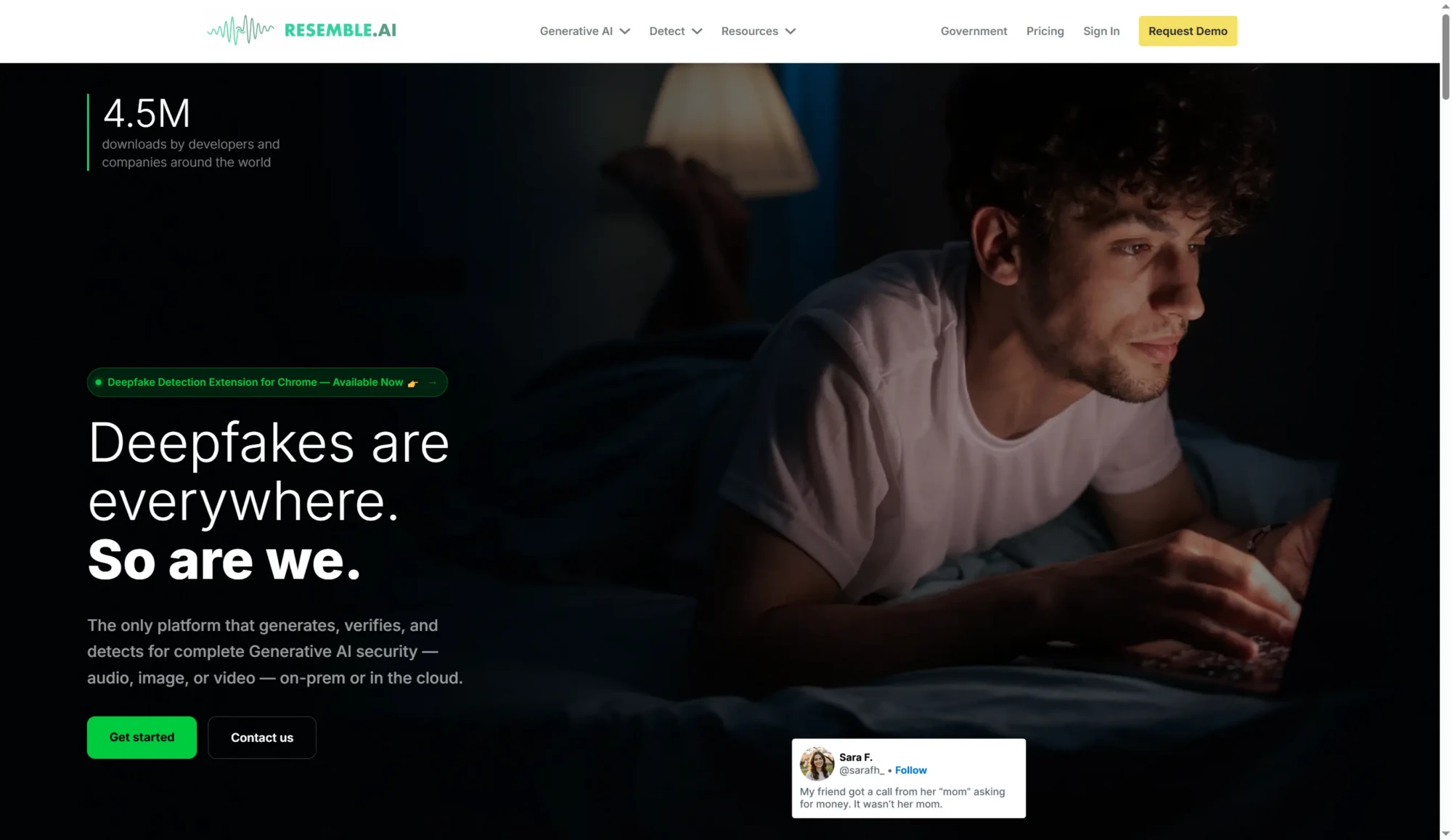
12. Resemble AI
Official Website: resemble.ai
Resemble AI specializes in voice cloning and customization. It is for content creators seeking scalable voiceover production. The platform offers emotion control and rapid voice generation. This makes it suitable for YouTube creators, podcast producers, and game developers. These users need dynamic character voices.
The company developed Chatterbox as an open-source option. It is covered separately below. The company also provides enterprise solutions through its paid platform. Features include real-time voice generation, multilingual support, and API access for custom integrations.
Resemble emphasizes ethical AI practices. It requires consent verification for voice cloning. This prevents misuse. The platform has partnered with entertainment studios and media companies. These partnerships support localized content production.
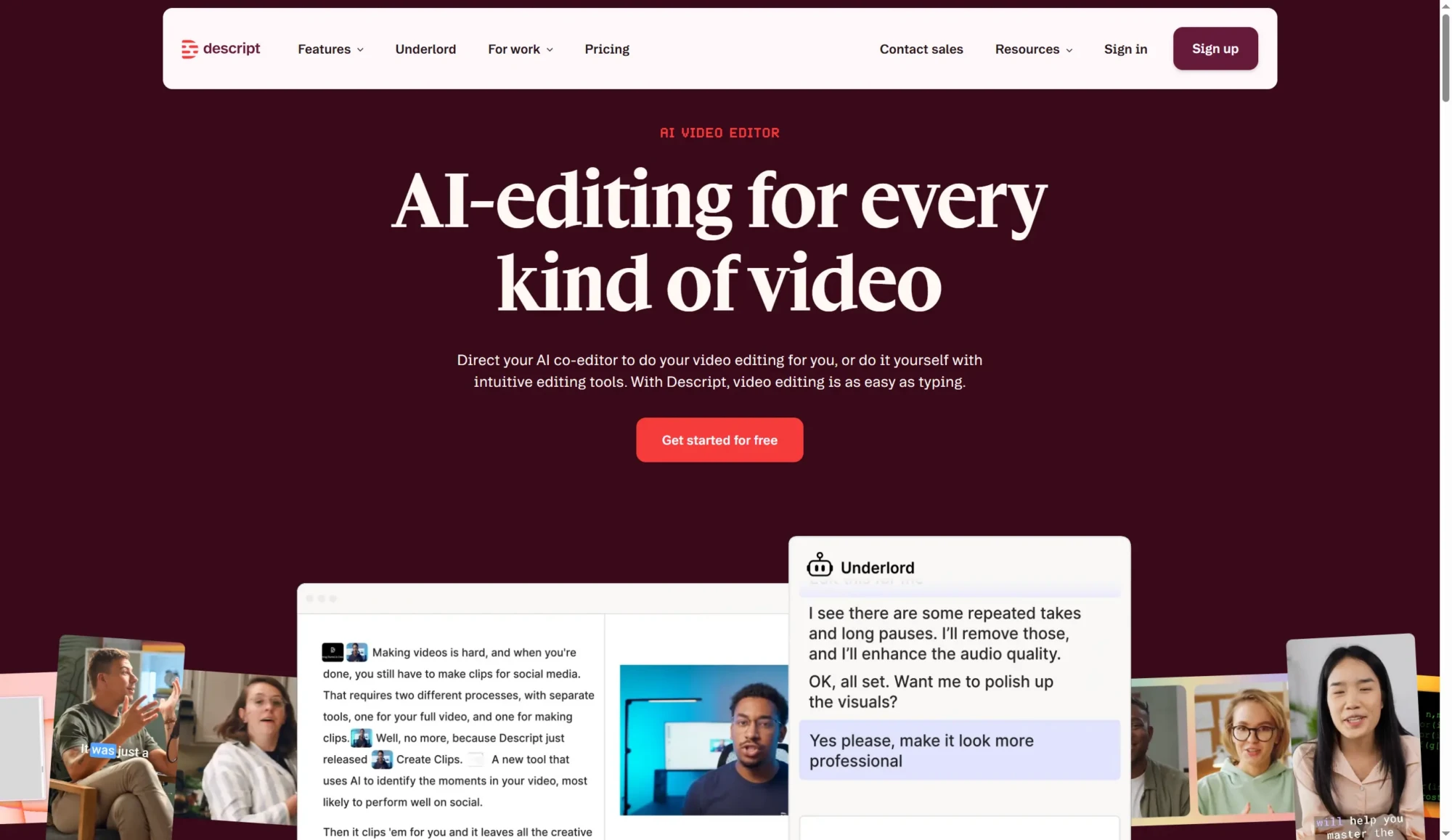
13. Descript Overdub
Official Website: descript.com
Descript takes a unique approach. It integrates voice cloning directly into a video and podcast editing platform. The Overdub feature allows users to record a 90-second script. They can create an AI clone of their voice. Then they can generate new audio simply by typing text.
This integration makes Descript ideal for podcasters and video editors. They need to fix mistakes, add missing sentences, or extend recordings. They can do this without re-recording. The platform includes transcription, video editing, and audio enhancement tools. It has these alongside the voice generation capabilities.
Descript offers a free tier with limited Overdub minutes. Creator plans cost $15 per month. Pro plans cost $30 per month. These plans provide expanded voice generation and advanced editing features. The platform requires spoken consent for voice cloning. This makes it one of the more ethically implemented tools available.
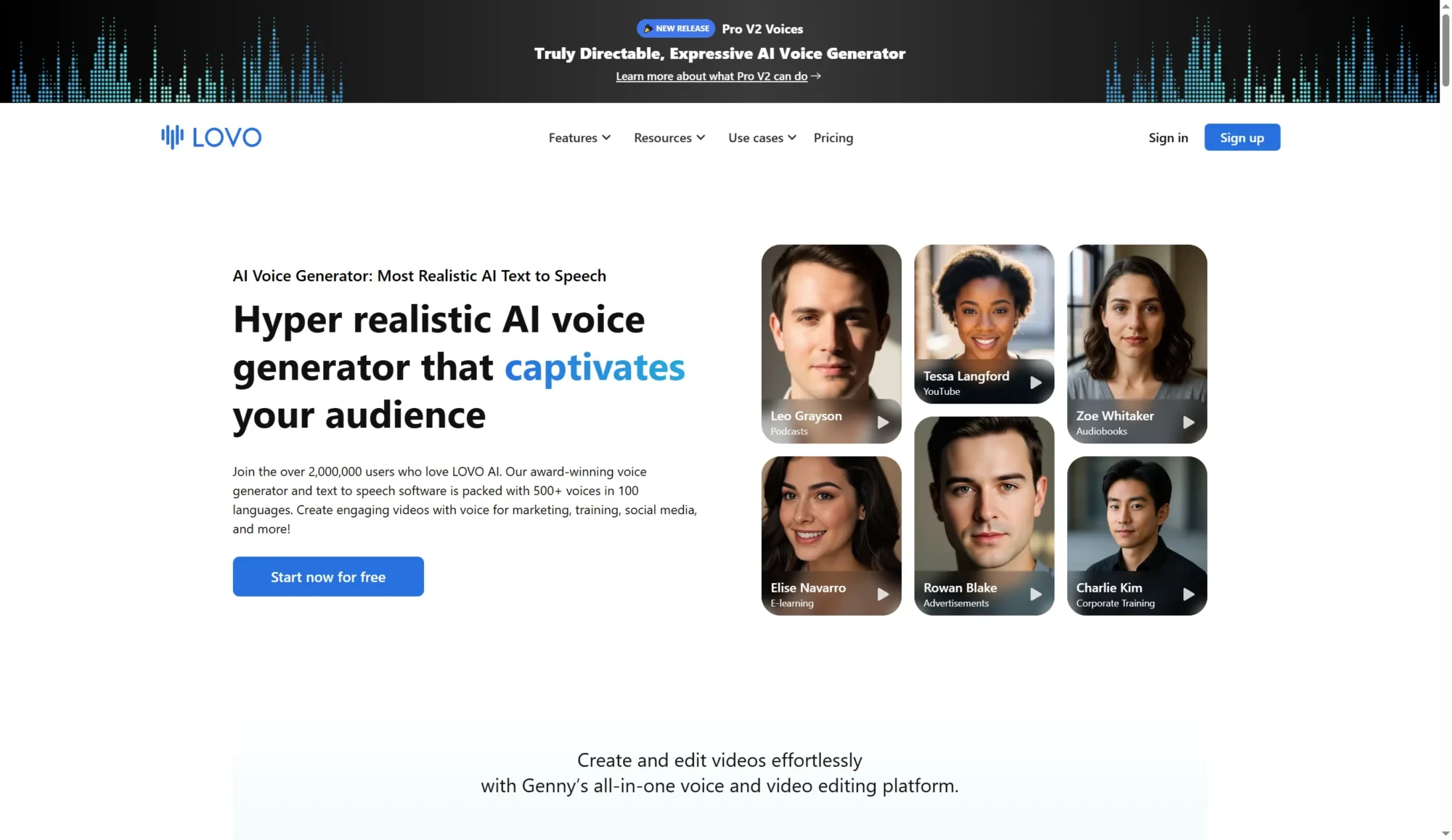
14. LOVO AI
Official Website: lovo.ai
LOVO AI provides over 500 voices in 100+ languages. This is through its Genny platform, an all-in-one voice and video editing tool. The platform allows users to express different emotions. These include sadness, anger, and happiness. This creates more engaging and dynamic content.
LOVO supports SSML for precise speech delivery control. This includes emphasis, pauses, and intonation. The voice cloning capability requires only 10 seconds of audio to create a custom voice. The platform integrates with content creation workflows through a robust API.
Pricing includes a free tier with limited features. Paid plans offer expanded voice access, longer generation limits, and commercial licensing. LOVO works well for content creators producing marketing videos, explainer content, and educational materials.
15. Chatterbox by Resemble AI
Official Website: github.com/resemble-ai/chatterbox
Chatterbox is a family of open-source text to speech models. It was released by Resemble AI. The Chatterbox-Turbo variant uses a 350M parameter architecture. It is optimized for low-latency voice agents. It delivers high-quality speech with minimal compute requirements.
The model supports 23 languages. These include English, French, German, Spanish, Chinese, Japanese, Korean, and Arabic. Paralinguistic tags enable natural speech elements like coughs, laughs, and chuckles. Voice cloning works from just a few seconds of reference audio.
Every audio file generated includes imperceptible neural watermarks. These survive compression and editing while maintaining detection accuracy. As open-source software, Chatterbox can be self-hosted. This works for projects requiring data privacy or custom modifications.
16. Coqui TTS (XTTS)
Official Website: github.com/idiap/coqui-ai-TTS
Coqui TTS is an open-source deep learning toolkit. It was originally developed by former Mozilla machine learning experts. The company behind it shut down in late 2023. The community has maintained and improved the project. The XTTS-v2 model supports 17 languages. It can clone voices from just 6 seconds of audio.
The platform offers emotion and style transfer. It also offers cross-language voice cloning. It provides real-time synthesis with latency under 150ms on consumer GPUs. Coqui TTS is valuable for researchers, developers, and organizations. These users require local deployment without cloud dependencies.
Coqui TTS is free and open-source software under community maintenance. It requires more technical expertise than commercial alternatives. It offers unmatched flexibility for custom voice AI projects.
Top Use Cases for AI Voice Over Technology
AI text to speech has expanded far beyond basic screen readers. Here are the most common applications driving adoption in 2026:
Audiobook Production: Publishers use AI narration to convert backlist titles into audio format. This costs a fraction of traditional production costs. A single narrator voice can generate an entire book in hours. Traditional recording takes weeks of sessions.
Podcast Creation: Content creators produce consistent, professional-sounding narration. They can do this without scheduling studio time. AI voices handle intro segments, sponsor reads, and even full episodes. This works for shows focused on news or research content.
Video Narration: YouTube creators, marketers, and educators add voiceovers to videos quickly. The technology supports multiple languages. This helps create localized versions of the same content.
E-Learning Content: Training departments generate course narration in multiple languages. They can do this without hiring voice talent for each version. Updates happen instantly when course content changes.
Accessibility Tools: Screen readers and assistive technology use TTS. This makes digital content accessible to visually impaired users and people with reading difficulties.
Gaming NPCs: Game developers create dynamic character dialogue. It responds to player actions. AI voices reduce production bottlenecks. They enable more expansive narrative content.
IVR Systems: Customer service phone trees use natural-sounding AI voices. This replaces robotic prompts. It improves caller experience and reduces frustration.
Marketing Videos: Brands produce promotional content with consistent voice branding. This works across campaigns without relying on talent availability.
How to Choose the Right TTS Tool
Selecting the best AI voice generator depends on your specific needs. Consider these factors when evaluating options:
Voice Quality: Listen to samples carefully. Some platforms excel at conversational speech. Others perform better for long-form narration. Test with your actual content before committing.
Language Support: If you need multilingual content, verify platform support. Make sure it covers all required languages with native-quality pronunciation. You want more than just English voices speaking other languages.
Latency Requirements: Real-time applications like chatbots and voice agents need sub-200ms response times. Content production workflows can tolerate longer processing. They can wait for higher quality output.
Integration Needs: Developers building custom applications should evaluate API documentation, SDK availability, and technical support. Non-technical users may prefer platforms with intuitive web interfaces.
Pricing Structure: Compare per-character costs against subscription models. High-volume users often benefit from enterprise agreements. Occasional users may prefer pay-as-you-go pricing.
Commercial Rights: Verify licensing terms for your intended use. Some free tiers restrict commercial applications. Voice cloning features may have additional requirements.
Frequently Asked Questions
Is text to speech AI?
Yes, modern text to speech systems use artificial intelligence. They use neural networks trained on human speech data. These AI models analyze text context. They generate audio that mimics natural human speech patterns. This includes appropriate pauses, emphasis, and emotional expression.
Is text to speech generative AI?
Text to speech is a form of generative AI. It creates new audio content that did not previously exist. The AI generates speech waveforms based on learned patterns. It does not play back pre-recorded clips. This makes each output unique.
Does speech to text use AI?
Yes, speech to text uses AI. It is also called automatic speech recognition or ASR. It transcribes spoken words into written text. Many platforms like OpenAI Whisper, Google, and Amazon offer both speech-to-text and text-to-speech. These use different AI models.
How do I make text to speech AI?
Most users access text to speech through commercial platforms. These include ElevenLabs, Murf AI, or Play.ht. Simply create an account, paste your text, select a voice, and generate audio. Developers can integrate TTS through APIs. Technical users can run open-source models like Coqui TTS locally.
What is the best free text to speech AI?
Several platforms offer generous free tiers. ElevenLabs provides 10,000 characters monthly. Google Cloud and Azure offer millions of free characters. For fully free, self-hosted options, open-source tools like Coqui TTS and Chatterbox work well. They provide high-quality voice generation without usage limits.
Can AI text to speech clone my voice?
Yes, many platforms offer voice cloning. These include ElevenLabs, Descript Overdub, Play.ht, and LOVO AI. Most require between 10 seconds and a few minutes of clear audio. Ethical platforms require consent verification before allowing voice cloning.
Which TTS has the most realistic voices?
MiniMax Speech-02 HD, ElevenLabs Eleven v3, and WellSaid Labs score highest for voice realism. This is based on benchmark rankings and user evaluations. The best choice depends on your specific language, use case, and integration requirements.
Can I use AI voices commercially?
Most paid TTS plans include commercial usage rights. Terms vary though. Free tiers often restrict commercial use. Always check licensing terms. For voice cloning, ensure you have proper consent for the voice being replicated.
How much does AI text to speech cost?
Pricing varies widely. Consumer tools like Speechify and Murf start around $19-29 per month. Enterprise solutions can cost hundreds or thousands monthly. This includes WellSaid Labs and custom Azure deployments. API pricing typically runs $4-16 per million characters. The cost depends on voice quality tier.
What languages do AI voice generators support?
Coverage varies by platform. MiniMax supports 30+ languages. ElevenLabs covers 70+ languages. Enterprise platforms like Google Cloud and Azure offer 100+ language options. Quality varies, so test specific languages before committing to a platform for non-English content.