How Does AI Voice Cloning Work?
Voice cloning systems typically follow a multi-step process. First, audio samples are collected and preprocessed to remove background noise. Neural networks then analyze these samples to extract voice characteristics including pitch patterns, speaking rhythm, and acoustic features. The AI model learns to map text inputs to the specific voice patterns, creating a digital model capable of synthesizing new speech that sounds like the original speaker. Advanced systems use techniques like generative adversarial networks (GANs), transformer architectures, and diffusion models to achieve increasingly natural-sounding results.
When Did AI Voice Cloning Start?
Top voice cloning AI tools
Here are the leading AI voice cloning platforms, covering both commercial services and open-source solutions:
1. ElevenLabs
 Website: https://elevenlabs.io
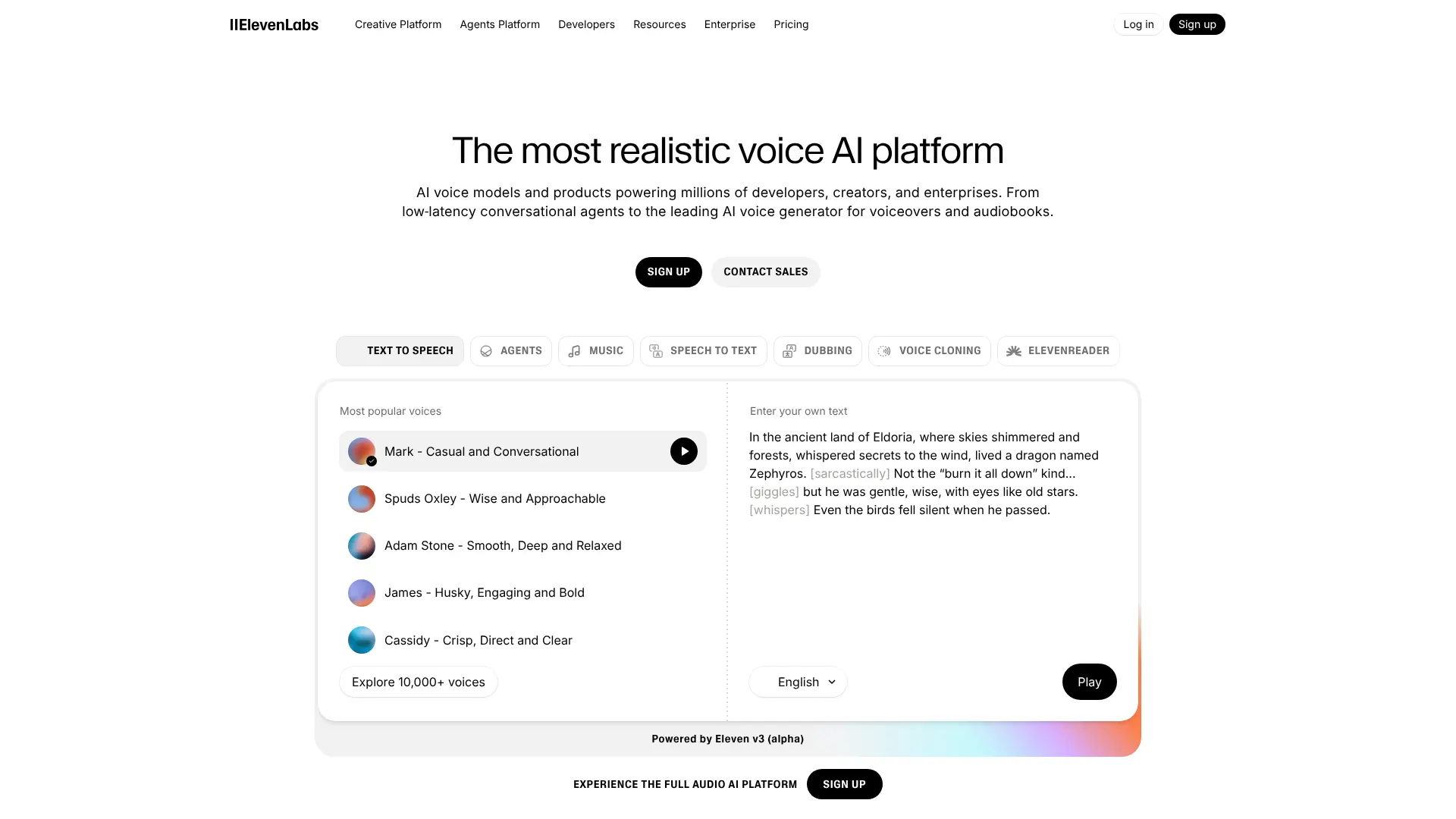
ElevenLabs is widely regarded as the industry leader in AI voice synthesis, offering the most natural-sounding voices available in 2026. The platform supports 32+ languages and provides both instant voice cloning (requiring 1-5 minutes of audio) and professional voice cloning for broadcast-quality output. Their technology excels at capturing emotional nuance, pitch, and speaking style. Key features include real-time voice generation, multilingual voice cloning where a cloned English voice can speak other languages naturally, and enterprise-grade security with SOC 2, HIPAA, and GDPR compliance. Pricing ranges from free trial to enterprise plans, with creator plans starting around $5-22/month.
2. Fish Audio
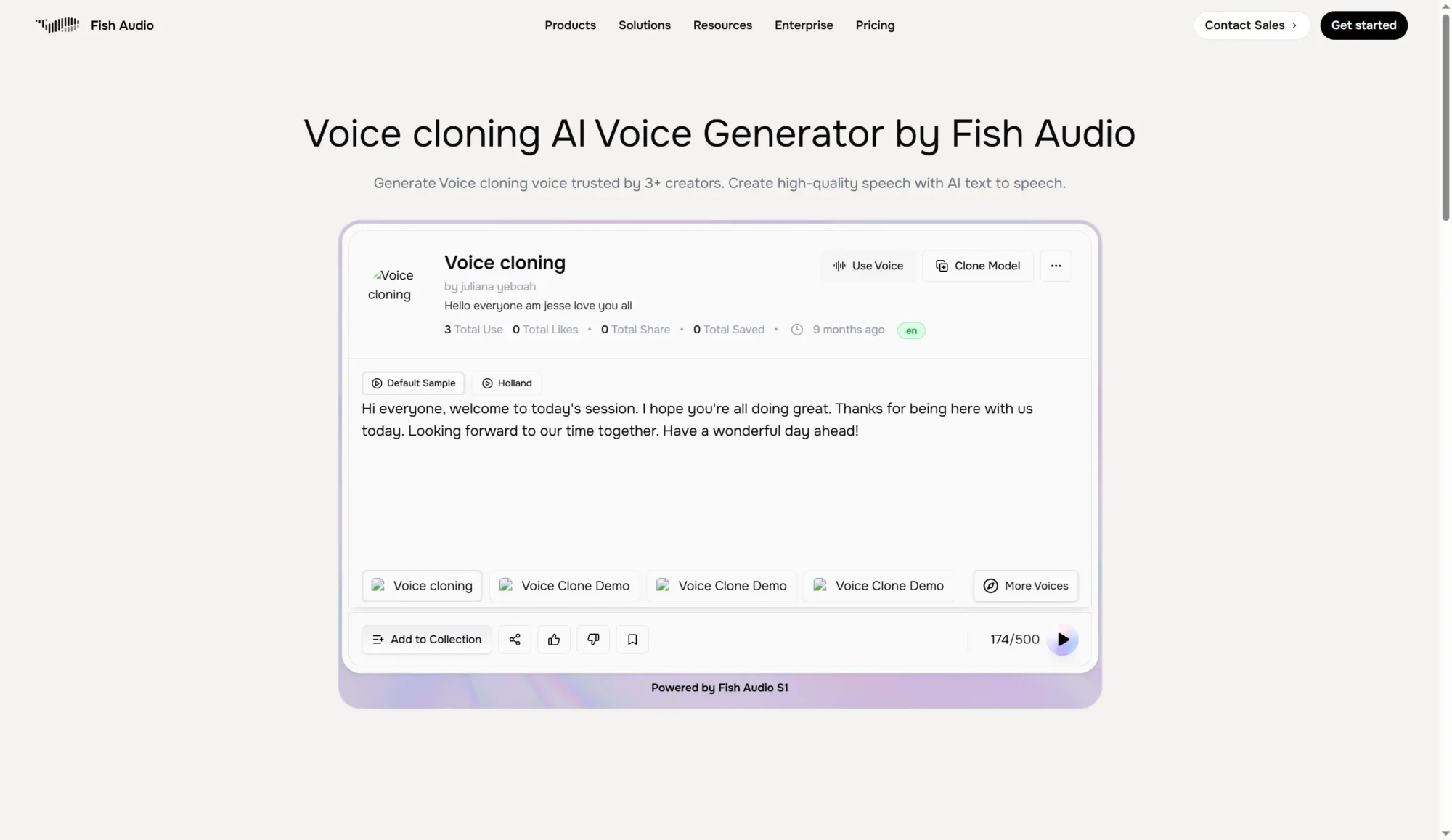
Website: https://fish.audio
Fish Audio is one of the most expressive voice cloning and TTS platforms available, powered by its open-weights S2 model. While tools like ElevenLabs rely on fixed emotion style presets, Fish Audio’s S2 applies fine-grained control at the word level through inline tags, producing noticeably more nuanced and expressive output. Clone any voice from a 15 second sample with cross-lingual output across 80+ languages, with over 2M community voice models to draw from.
API pricing at ~$15/1M characters is roughly 10x less than ElevenLabs.
Free to start; paid plans from $11/month.
3. Resemble AI
 Website: https://resemble.ai
Resemble AI specializes in enterprise-grade voice cloning with a strong focus on security and ethical AI practices. Their Rapid Voice Clone 2.0 can create high-quality clones from just 10-20 seconds of audio, while professional cloning offers near-perfect replicas. Unique features include built-in audio watermarking (PerTh), real-time deepfake detection, speech-to-speech conversion, and support for 149+ languages. The platform offers self-hosting options for organizations with strict data control requirements. Resemble AI also maintains Chatterbox, a popular open-source speech model. Enterprise custom pricing applies.
4. Respeecher
 Website: https://respeecher.com
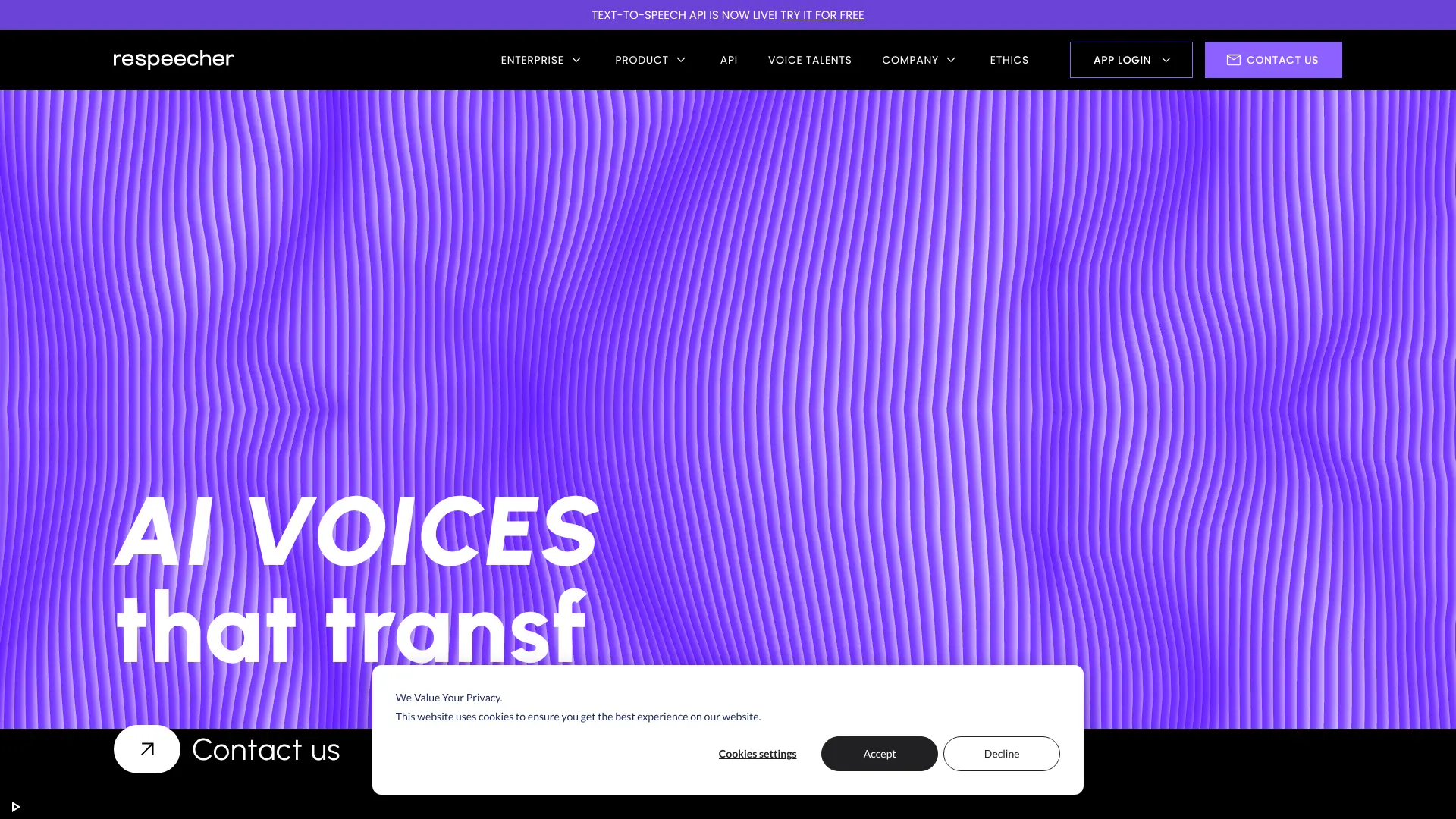
Respeecher is a premium Hollywood-grade voice cloning platform that won an Emmy Award for their work on ‘In Event of Moon Disaster.’ Their speech-to-speech technology preserves all emotional nuances from the performer while changing the voice itself—making it the choice for high-profile film and TV productions like The Mandalorian (recreating young Luke Skywalker’s voice). The platform focuses on ethical use, requiring explicit consent from voice owners. Respeecher offers a Voice Marketplace with licensed voices and custom enterprise solutions. Pricing is project-based for studios, with subscription options for individual creators.
5. Murf AI
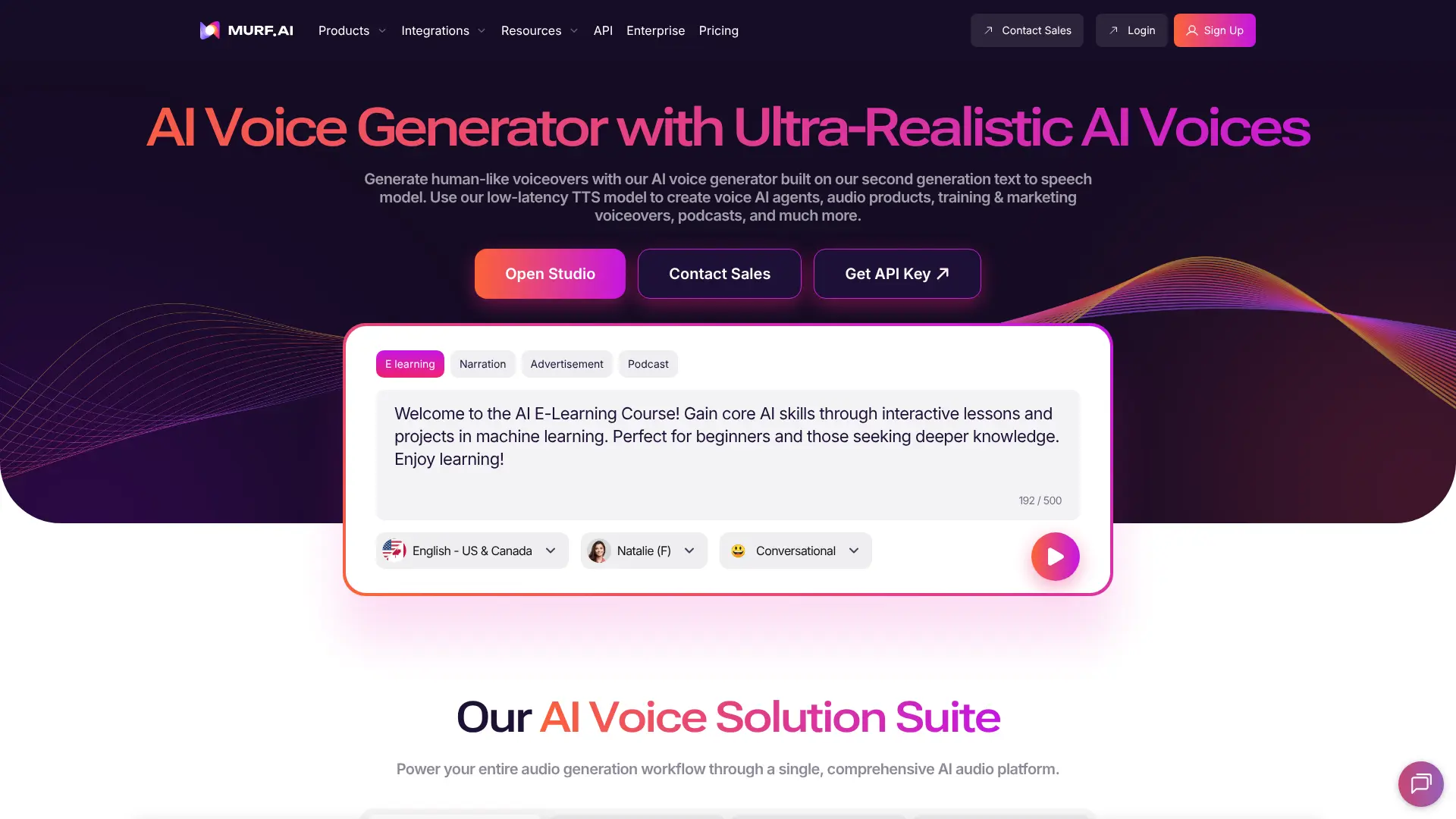 Website: https://murf.ai
Murf AI offers a professional-grade voice cloning platform focused on e-learning, marketing, and enterprise applications. Their Voice Cloning 2.0 can create clones from just 2 minutes of audio (previously 10 minutes), with full clones requiring about 90 minutes of recordings and 4 weeks processing time. The platform provides 200+ AI voices across 20+ languages with extensive customization options including pitch, speed, emphasis, and emotional tone control. Murf integrates with Google Slides, Canva, and Adobe tools. Pricing starts at $29/month for Creator plans with voice cloning available on higher tiers.
6. Speechify
 Website: https://speechify.com
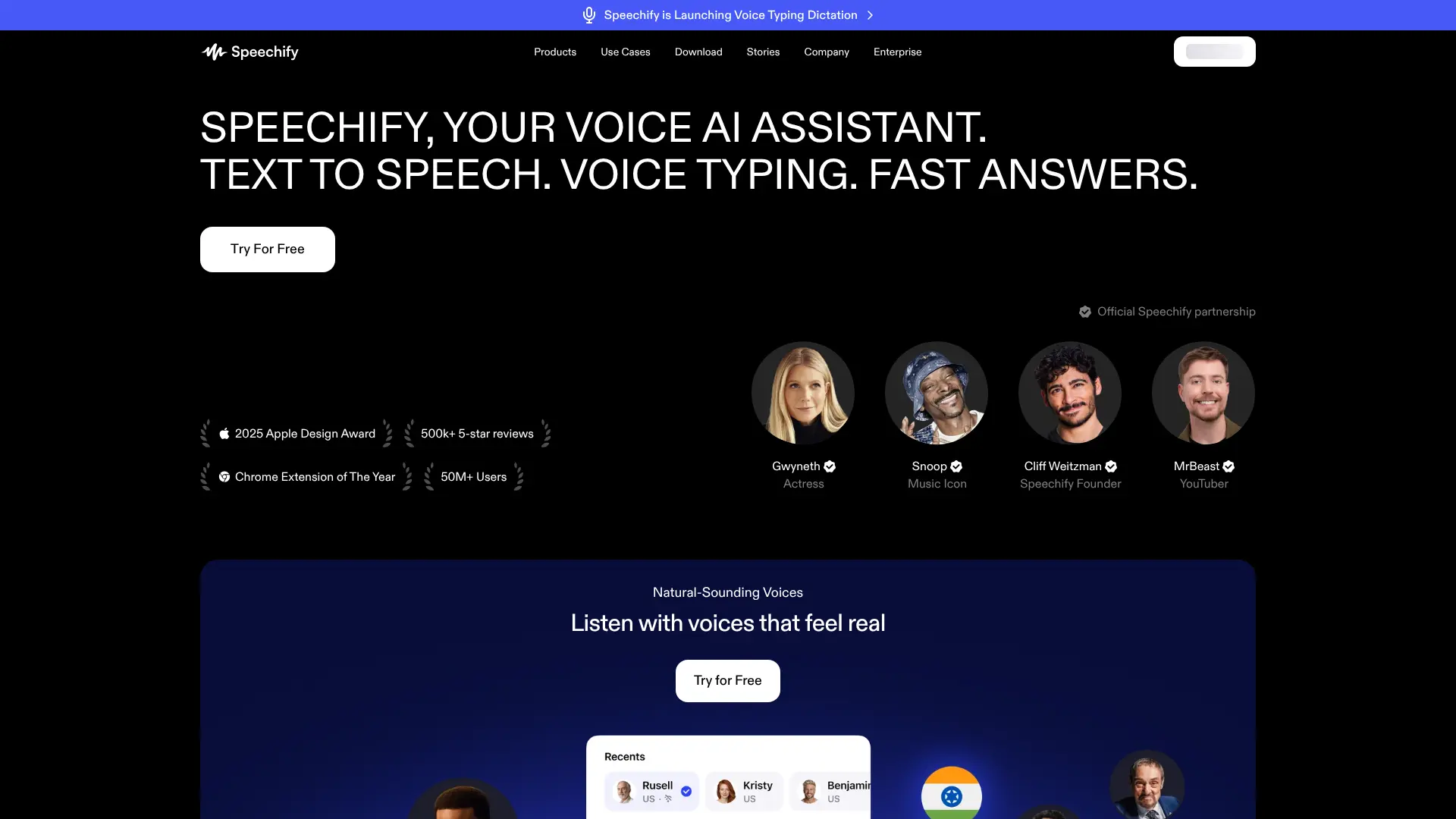
Speechify, the world’s leading text-to-speech platform with over 50 million users, offers instant voice cloning from just 20-30 seconds of audio. Winner of Apple’s 2025 Design Award, Speechify provides 1,000+ lifelike AI voices across 60+ languages. Their voice cloning technology enables users to create personal voice replicas for listening to documents, creating audiobooks, and generating voiceovers. The platform includes advanced features like emotional tuning, speed control, and SSML support. Celebrity voices include Snoop Dogg and Gwyneth Paltrow. Free tier available with premium plans for advanced features.
7. LOVO AI (Genny)
 Website: https://lovo.ai
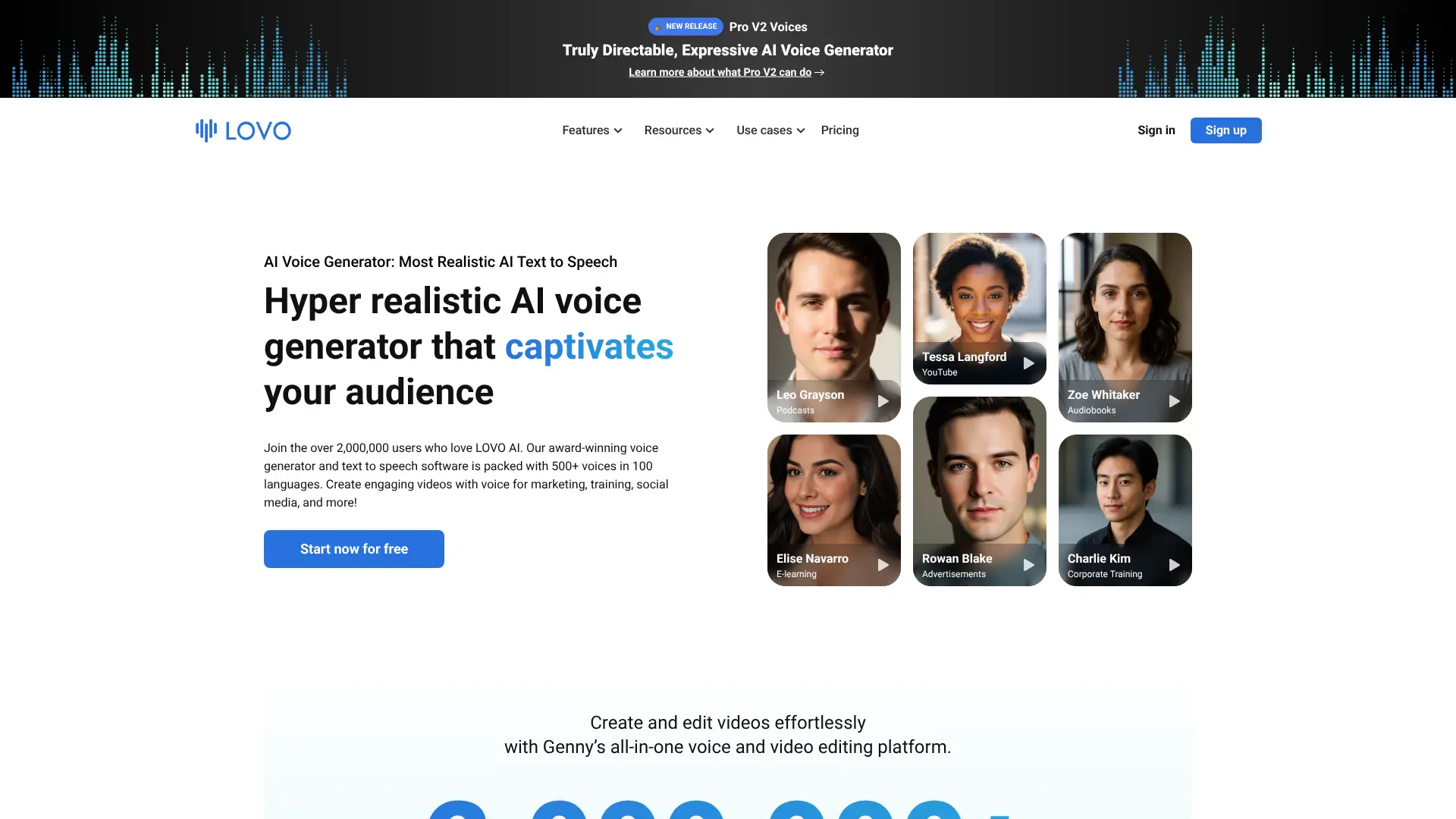
LOVO AI’s Genny platform is an all-in-one creative studio combining text-to-speech, voice cloning, video editing, AI writing, and subtitle generation. Voice cloning requires just 60 seconds of clean audio, producing instant custom voices that can express 30+ different emotions across 100+ languages. The platform is particularly strong for video creators, offering synchronized audio-video editing and AI art generation. Pro plans ($24/month) include up to 5 voice clones with unlimited generations. Enterprise plans offer additional training and security features.
8. Coqui TTS / XTTS-v2 (Open Source)
 GitHub: https://github.com/coqui-ai/TTS Coqui TTS remains one of the most technically advanced open-source text-to-speech frameworks. The XTTS-v2 model supports voice cloning with just 6 seconds of audio across 17 languages, with emotion and style transfer capabilities. While Coqui AI as a company shut down in late 2024/early 2025, the open-source project continues through community maintenance. XTTS-v2 achieves streaming latency under 200ms and is available under the Coqui Public Model License (non-commercial). GPU with 4GB+ VRAM recommended. Installation via pip: coqui-tts package.
9. RVC (Retrieval-based Voice Conversion) (Open Source)
GitHub: https://github.com/RVC-Project RVC is a popular open-source speech-to-speech voice conversion tool that maintains modulation, timbre, and emotional attributes while changing the voice identity. Unlike TTS systems, RVC preserves the original performance’s emotional tone, making it ideal for singing voice conversion and real-time voice changing. The technology enables low-latency real-time conversion and has gained popularity for creating AI song covers. Models are saved as .pth files and can be trained on consumer GPUs. RVC integrates with streaming tools like OBS Studio and Voicemeeter for live applications.
10. So-VITS-SVC (Open Source)
 GitHub: https://github.com/svc-develop-team/so-vits-svc So-VITS-SVC (SoftVC VITS Singing Voice Conversion) is an open-source framework specialized for singing voice conversion. It uses the SoftVC content encoder to extract speech features and feeds them directly into VITS, preserving pitch and intonation while changing the voice. The project was originally developed for fictional character voices and has spawned multiple forks including so-vits-svc-fork (with real-time support) and GPT-SoVITS (requiring just 1 minute of training data). Note: The original repository is archived, but community forks remain actively maintained. Requires Python 3.8+ and GPU for training.
11. Musicfy
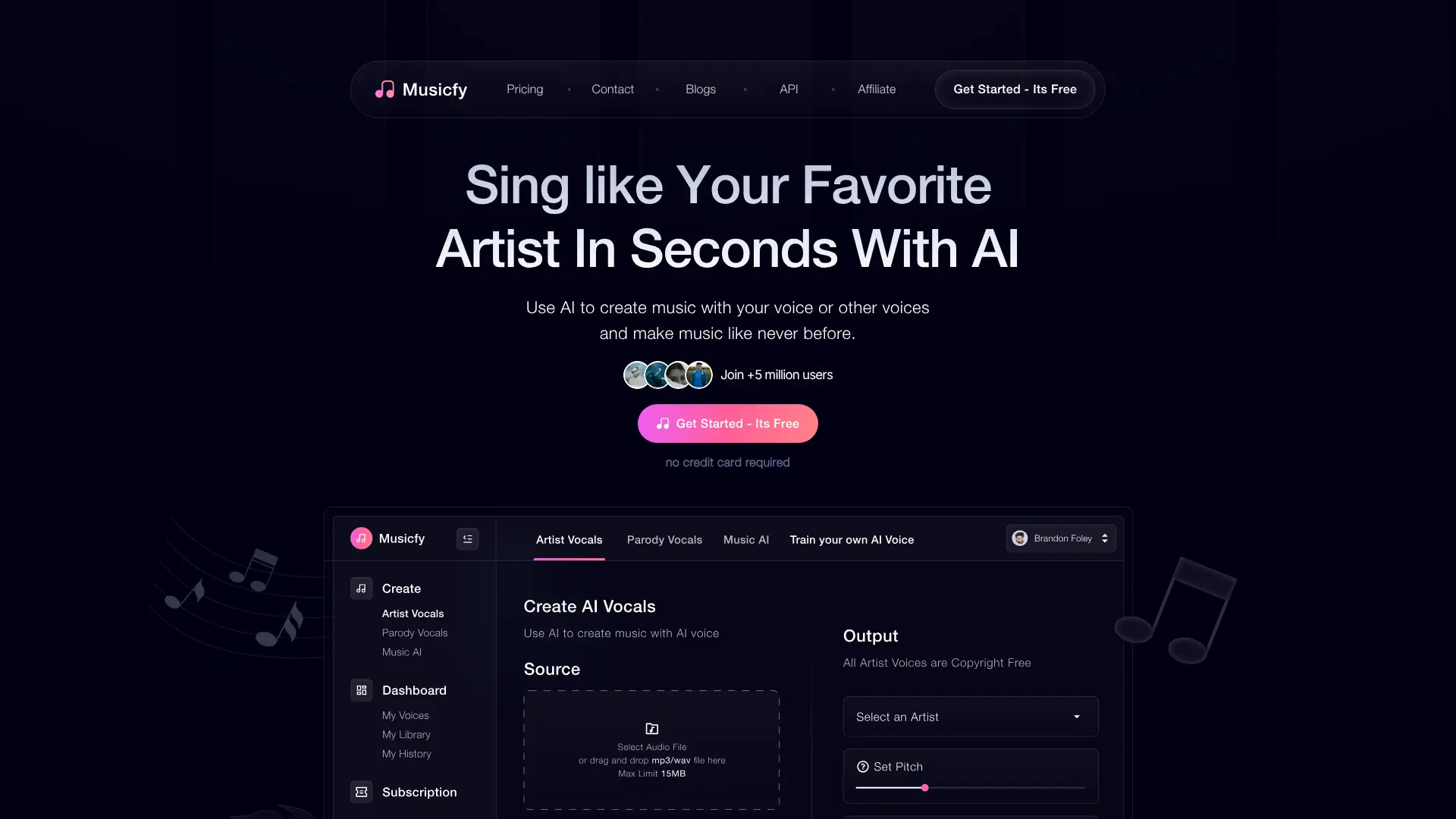 Website: https://musicfy.lol
Musicfy is an AI music creation platform with over one million users, specializing in voice conversion for music production. The platform offers 100,000+ voice models for creating AI covers, custom voice cloning from short audio samples, text-to-music generation, and voice-to-instrument conversion. Musicians can clone their own voice and use it to sing any text, enabling rapid prototyping of vocal ideas. All generated content using Musicfy’s royalty-free voices is commercially licensable. Free tier includes 3 voice clones; Starter plan at $9.99/month offers unlimited generations.
12. Descript (Overdub)
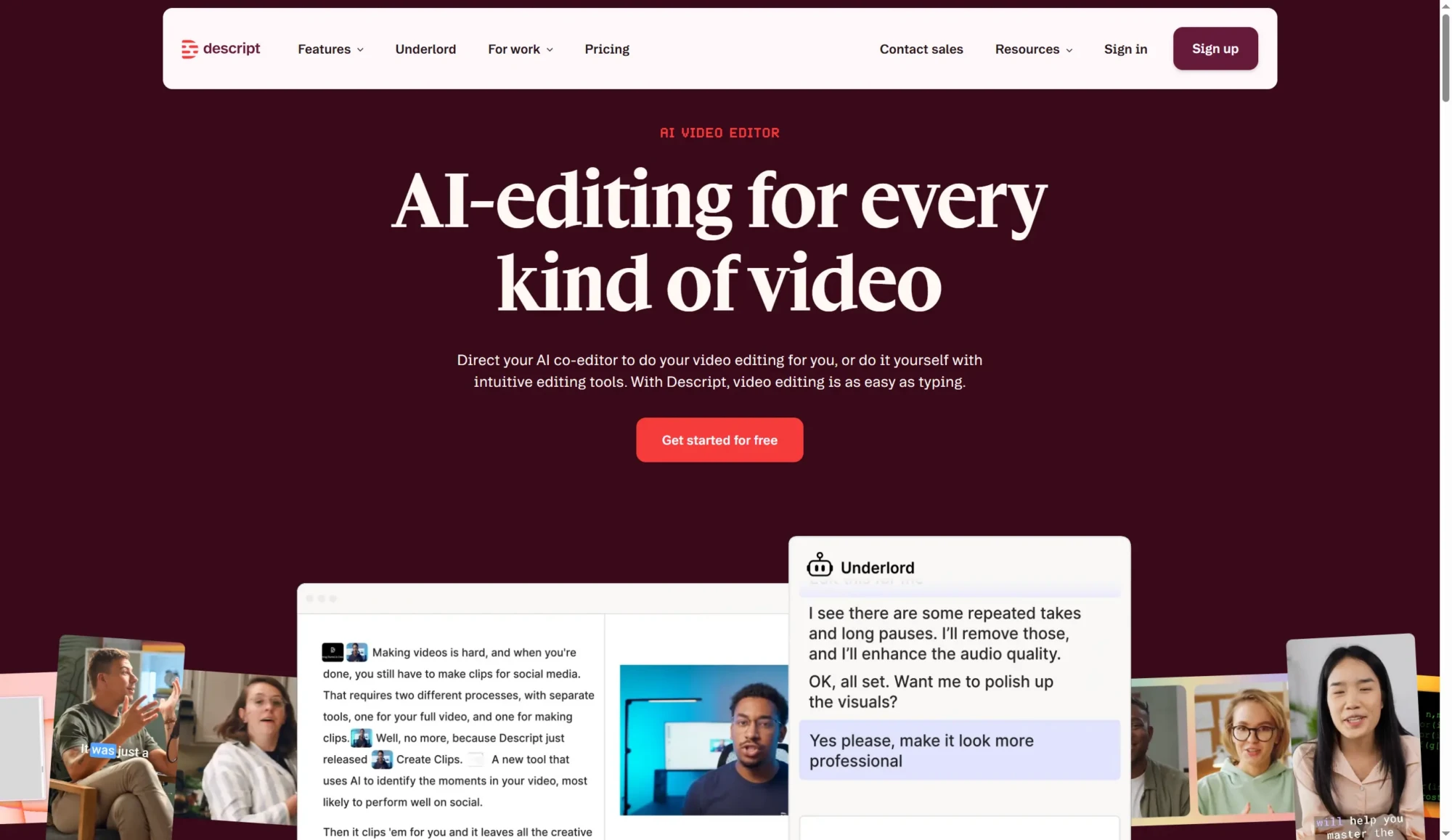
Website: https://descript.com
Descript’s Overdub feature integrates voice cloning directly into their popular video and podcast editing platform. This unique approach allows creators to edit audio by editing text—type corrections and the AI generates new audio in your cloned voice seamlessly matching existing recordings. The platform requires 10-30 minutes of clear audio to create a voice model, with processing taking 24-48 hours. Overdub is particularly valuable for podcasters and video creators who need quick fixes without re-recording. Plans range from free (limited vocabulary) to Pro at $24/month with unlimited vocabulary.
Top Use Cases for Voice Cloning AI
Personalized Audiobooks
Authors can narrate their own books without extensive recording sessions. Voice cloning enables consistent narration across lengthy works, with the ability to make updates or corrections without re-recording entire chapters. Publishers can also offer audiobooks in the author’s voice even if they’re unavailable for traditional recording.
Brand Voice Creation
Companies can develop distinctive brand voices for consistent messaging across advertising, customer service, IVR systems, and internal communications. Once created, a brand voice can be used infinitely across markets and languages, maintaining brand identity while scaling global operations.
Voice Preservation
Individuals facing voice loss due to conditions like ALS, Parkinson’s, or cancer can preserve their voice before it changes. Voice banking allows patients to continue communicating in their own voice through assistive technology, maintaining their identity and emotional connection with loved ones.
Content Localization & Dubbing
Film studios, streaming platforms, and content creators can dub content into multiple languages while preserving the original actor’s voice characteristics. Cross-language voice cloning maintains speaker identity across languages, making global content distribution more efficient and authentic.
Gaming Character Voices
Game developers can create extensive dialogue for NPCs without proportionally expensive voice acting sessions. AI voice cloning enables dynamic, personalized character interactions and allows for post-release content updates without scheduling actors for additional recording sessions.
Virtual Assistants & Conversational AI
Companies deploy AI assistants with natural, human-like voices for customer support, sales calls, and interactive services. Custom voice models create more engaging experiences compared to generic TTS voices, improving user satisfaction and trust in AI-powered interactions.
Accessibility Tools
Voice cloning enhances screen readers and accessibility tools with more natural voices. Educational content can be delivered in familiar, engaging voices. Text-to-speech applications become more pleasant and less fatiguing for users who rely on them daily.
AI Voice Cloning Regulation in 2026
The regulatory landscape for AI voice cloning has evolved significantly, with new laws emerging to address privacy, consent, and misuse concerns:
United States
Tennessee ELVIS Act (2024): The first state law explicitly protecting voice rights from AI cloning, criminalizing unauthorized digital replication of voices with civil remedies for infringement. FCC AI Robocall Rules (2024): Declared AI-generated robocalls illegal without proper consent, with voice cloning for impersonation explicitly prohibited. State Biometric Laws: Illinois BIPA and similar state laws may regulate voiceprints as biometric data, requiring consent for collection and use. Various states are considering or have enacted specific AI disclosure requirements for synthetic media.
European Union
The EU AI Act classifies certain voice cloning applications as high-risk AI systems, requiring transparency, documentation, and human oversight. GDPR implications treat voice data as personal biometric information requiring explicit consent. Deepfake disclosure requirements mandate clear labeling of AI-generated content in political and commercial contexts.
Industry Self-Regulation
Leading platforms like Resemble AI, ElevenLabs, and others have implemented consent verification, audio watermarking, and deepfake detection systems. The SAG-AFTRA union reached agreements with companies like Replica Studios (before its 2025 closure) establishing frameworks for voice actor licensing and compensation. Best practices include obtaining explicit permission before cloning voices, implementing watermarking for content provenance, and refusing to clone public figures without authorization.
Legal Considerations related to voice cloning
The legal landscape continues evolving. Right of publicity laws protect against unauthorized commercial use of someone’s voice. Copyright law doesn’t directly protect voices, but voice performances in recordings are protected. Contract law governs agreements between voice owners and cloning services. When using voice cloning technology commercially, always obtain documented consent, understand the licensing terms of your chosen platform, and consult legal counsel for high-stakes applications.