ChatGPT now has over 700 million weekly active users and a good chunk of them are generating text that ends up in essays, blog posts, emails, and freelance submissions. The problem is that most of it gets passed off as human-written without anyone knowing the difference.

How to Verify with AI Detection Tools
Manual detection gets you far but tools give you the data to back it up. AI detectors work by analysing patterns in text — specifically perplexity (how predictable the word choices are) and burstiness (how much sentence structure varies). Human writing scores high on both metrics because people are naturally unpredictable. AI text is more uniform and statistically consistent, which is exactly what these tools measure.
For quick checks, you can run suspicious text through a chat gpt checker to get an instant probability score. This is especially useful if you are already noticing a few of the signs above and want confirmation before making a judgment call.
Use AI content detectors
PlagiarismCheck— detects content from ChatGPT,, Claude, and Gemini while also running a plagiarism scan in the same pass. If you want a single tool that handles both checks, their AI detector covers it.
GPTZero — one of the first dedicated AI detectors, now used by over 4 million users and integrated into learning management systems like Canvas. Strong choice for educators.
Copyleaks — a Cornell University study ranked it among the most accurate detectors for LLM-generated text. Enterprise-grade with API access and support for 30+ languages.
Originality.ai — built specifically for content publishers and SEO teams. Paid only, but the accuracy on GPT-4 and Claude output is consistently high in independent benchmarks.
No single tool is perfect. Detection accuracy improves with longer text samples (aim for 150+ words) and drops significantly on content that has been manually edited after generation. The best approach is to cross-reference tool results with the manual signs covered above.
If you need something fast and free, our AI detector tool lets you paste any text and get an instant analysis with no signup or credit card. It works well as a first pass before running content through more comprehensive tools when the stakes are higher.
7 Signs Something Was Written by ChatGPT
1. The Grammar Is Suspiciously Perfect
Real people make small mistakes when they write. They start sentences with “And” or “But,” use fragments on purpose, bend grammar rules for tone. ChatGPT almost never does any of this. Every sentence comes out structurally complete, every comma lands in the right spot, and the whole thing reads like it was run through a style guide three times before anyone saw it.
That level of polish sounds like a good thing until you realize it strips away voice entirely. If you are reading something that feels technically flawless but weirdly empty, that contrast alone is worth paying attention to.
2. Every Sentence Sounds the Same
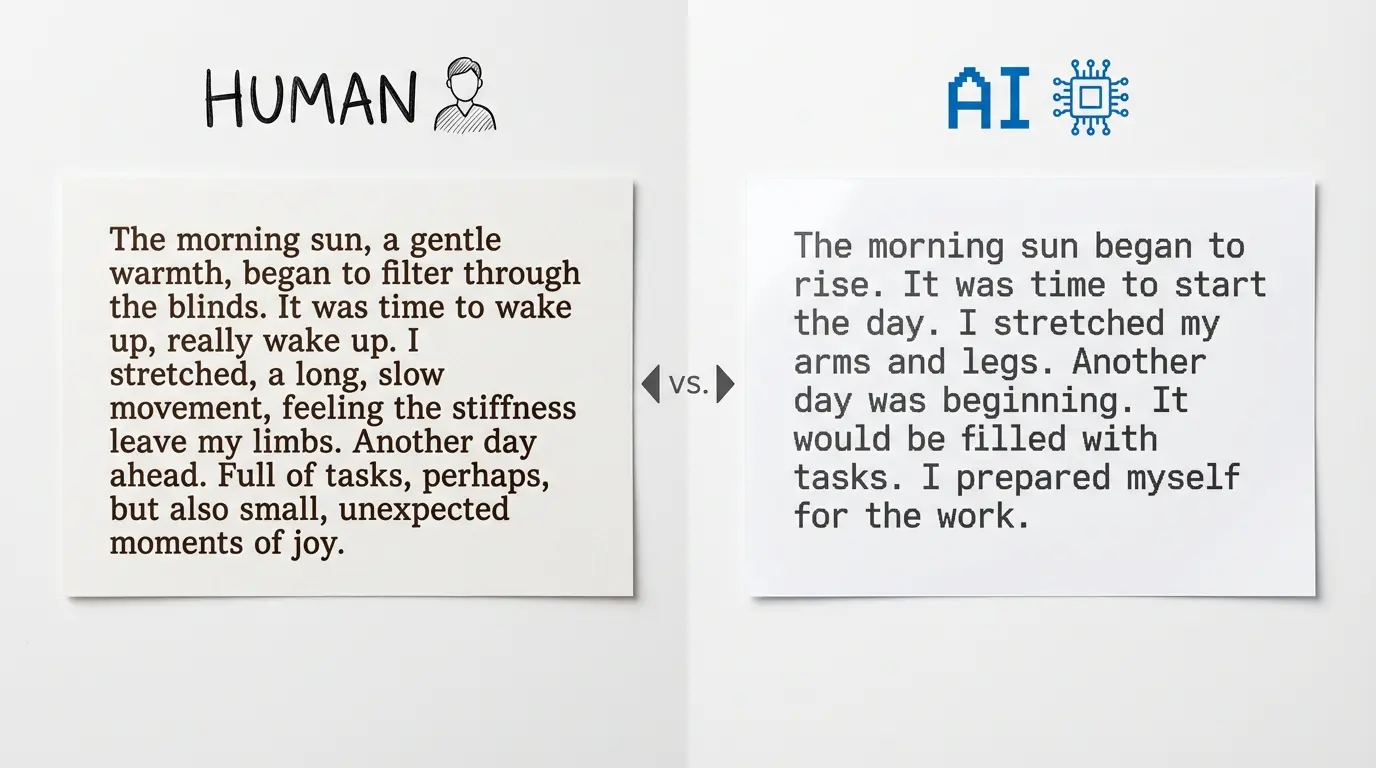
ChatGPT has a rhythm problem. It tends to produce sentences that hover around the same length and follow the same subject-verb-object pattern one after another. Human writing naturally varies — a short punchy line after a longer thought, a question dropped in the middle of a paragraph, a half-finished idea that picks back up two sentences later.
A 2024 study from the University of Tübingen found that people could only correctly identify AI-generated text about 50% of the time, essentially a coin flip. But when researchers pointed out structural patterns like uniform sentence length, detection accuracy jumped significantly. Once you know to look for it, the rhythm gives it away fast.
3. It Uses the Same Words Over and Over
ChatGPT has a vocabulary problem that has become something of a running joke online. Certain words show up in AI-generated text at rates far higher than normal human writing. Paul Graham pointed out on X that the word “delve” has become a near-certain indicator of ChatGPT output, and he is not wrong.
Here are some of the biggest offenders:
- Delve — used roughly 10-20x more often than in typical human writing
- Landscape — as in “the ever-evolving landscape of” anything
- Tapestry — used to describe complexity in a way no one actually talks
- Moreover, Furthermore, Additionally — stacked as transition words between nearly every paragraph
- It is important to note that — filler that adds nothing
- In today’s fast-paced world — the classic ChatGPT opening line
One of these in isolation means nothing. Three or four clustered together in a short piece is a strong signal. Research from a 2024 paper published in Scientific Reports confirmed that certain words saw massive usage spikes in academic papers after ChatGPT’s release, with “delve” increasing by over 25x in some fields.
4. It Sounds Smart but Says Nothing Specific
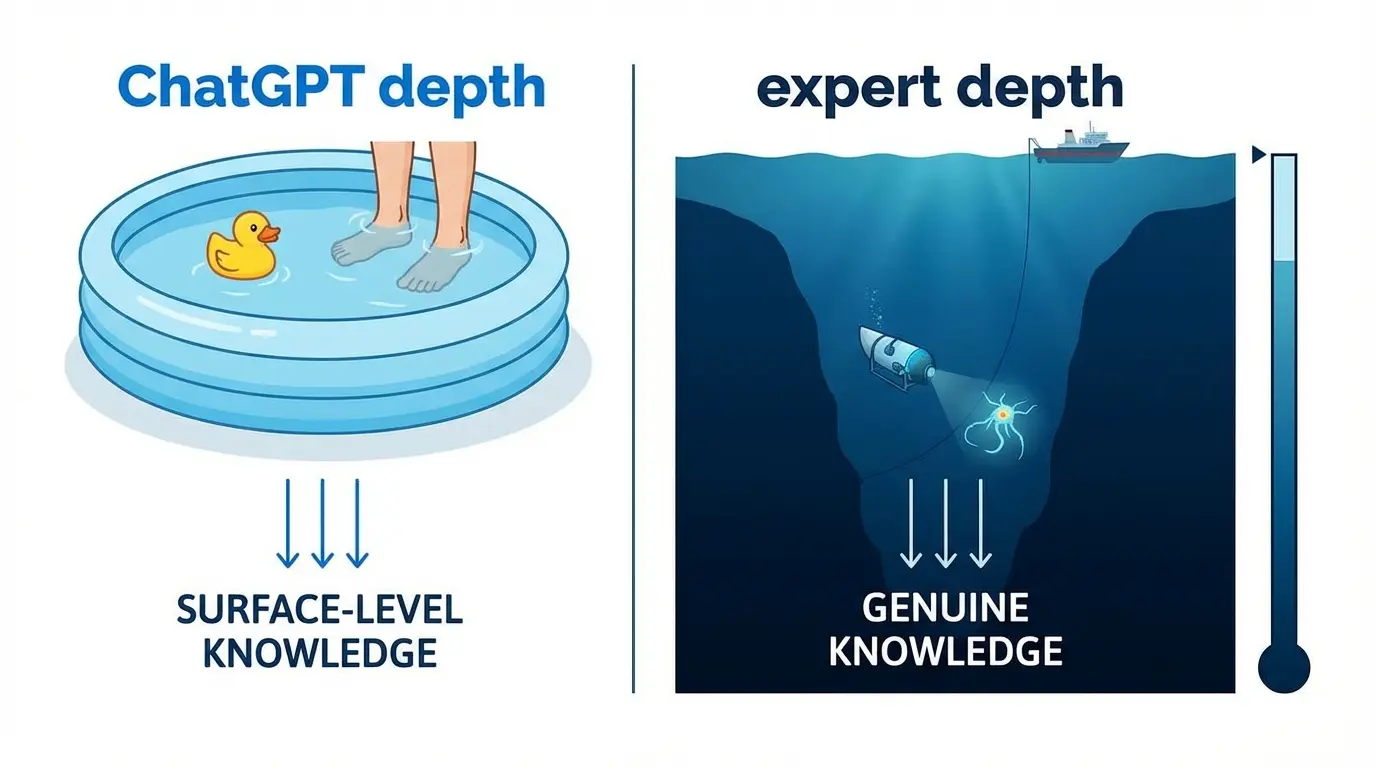
This is one of the most reliable tells. ChatGPT can produce text that covers all the right talking points of a topic without ever saying anything concrete. Ask it about improving SEO and it will tell you to “create high-quality content” and “build authoritative backlinks.” Ask it about leadership and you will get something about “fostering a culture of innovation.” These statements are technically accurate and completely useless at the same time.
Human experts do the opposite. They share specific numbers, name tools they actually use, reference a project they worked on, or challenge a popular assumption with evidence. If a piece of writing hits every expected subtopic but never gets specific about any of them, that is a pattern worth flagging.
5. It Refuses to Take a Position
ChatGPT is trained to be helpful and inoffensive, which means it hedges constantly. You will see phrases like “it depends on your specific needs,” “there are pros and cons to both approaches,” and “ultimately, the best choice varies from person to person.” It reads like a politician answering a debate question — technically responsive without actually committing to anything.
Real writers with real expertise take sides. They say one tool is better than another and explain why. They call an approach outdated. They make recommendations. If you are reading something that covers a controversial or opinionated topic and manages to remain perfectly neutral throughout, that diplomatic fence-sitting is a red flag.
6. The Formatting Does the Heavy Lifting
ChatGPT defaults to bullet points, numbered lists, and neatly labeled sections almost every time. It does this regardless of whether the content actually benefits from that structure. An email that should be three flowing paragraphs comes out as a bulleted list. An essay that calls for argument and narrative gets chopped into formatted sections with bold headers.
Human writers match their formatting to the situation. Sometimes prose is the right call. Sometimes a list makes sense. ChatGPT does not make that judgment — it just formats everything the same way. If a piece of writing looks like it was structured by a template rather than by a person thinking about the best way to communicate an idea, that uniformity is telling.
7. The Sources Are Missing or Fake
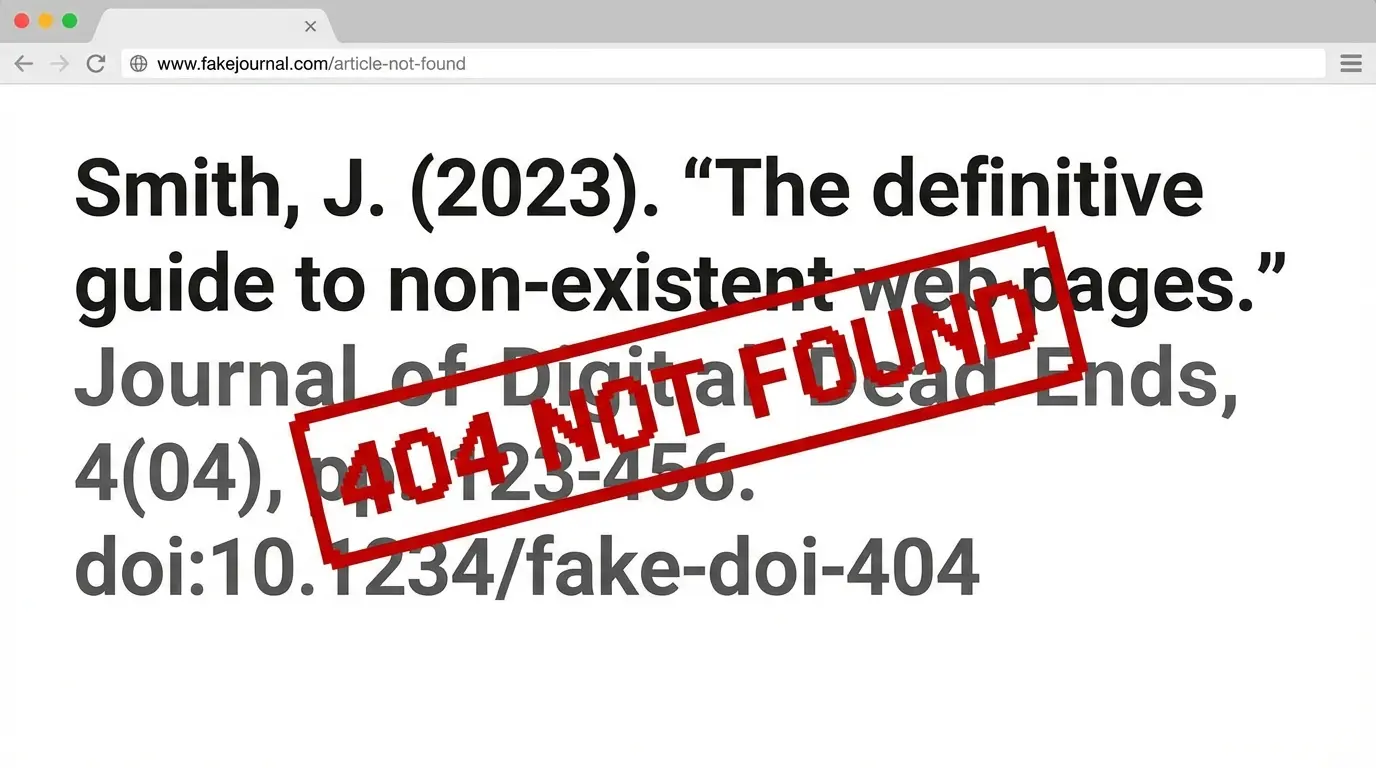
ChatGPT makes broad claims that sound correct but cannot be traced back to any specific study, article, or dataset. And when it does try to cite sources, it sometimes fabricates them entirely — a problem known as hallucination. Stanford HAI research found that major language models hallucinate legal citations between 69% and 88% of the time when asked for case references.
If you are reviewing a text that makes several factual-sounding claims with zero attribution, or if the citations it does include lead to pages that do not exist, you are almost certainly looking at AI-generated content.