People who negotiate their salary get 18.83% more than those who accept the first offer, according to this salary negotiation tudy. Yet more than half of job seekers still walk away without asking for a single penny more. The real question is not whether you should negotiate but how much you should actually request without pricing yourself out or selling yourself short.
The answer for how mcuh you should ask for salary during an interview depends on these 5 things: your research, the market rate for your role, your experience level, the company’s budget, and your walk-away number. This guide breaks down exactly how to calculate what to ask for, when to bring it up, and how to handle the conversation without making it awkward or killing your chances at landing the job.

Table of Contents
- What Is the Right Salary Number to Ask For
- How to Research Market Rates Before Your Interview
- When to Bring Up Salary in the Interview Process
- Should You Give a Range or a Specific Number
- How to Answer “What Are Your Salary Expectations”
- Proven Strategies That Actually Work in 2025
- Biggest Mistakes People Make When Discussing Salary
- What to Do When They Can’t Meet Your Number
- Frequently Asked Questions
What Is the Right Salary Number to Ask For in an interview
You need three figures before you walk into any salary conversation: the market rate, your minimum acceptable salary, and your target number.
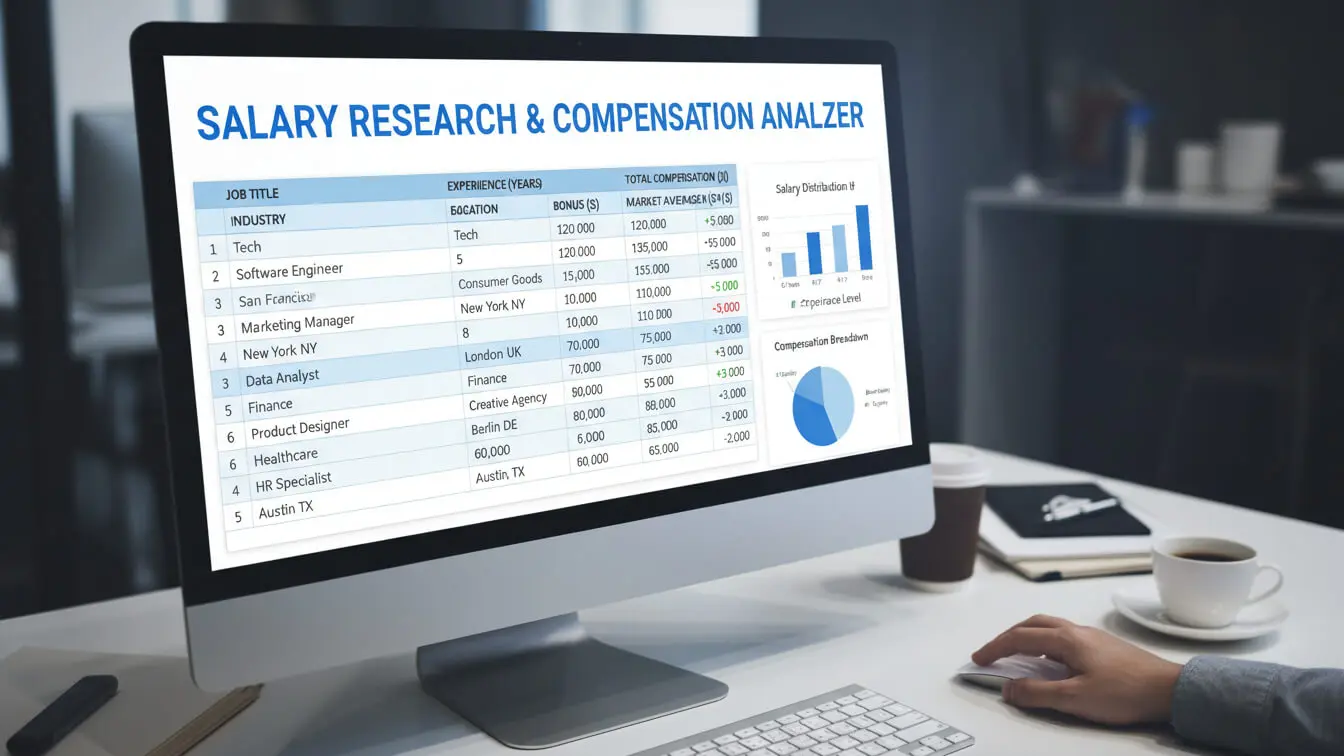
Start by finding the market rate for your specific job title in your location. A software engineer in San Francisco earns a different salary than one in smaller cities because of cost of living differences. Industry data from Indeed shows that cross-referencing job descriptions with specialized skills helps justify a bump above the standard rate.
Your minimum acceptable salary is your walk-away point. Calculate your bills, savings goals, and lifestyle costs to get this number. This becomes the lowest offer you would accept without feeling bitter or underpaid. Everything below this line is a no-go.
Your target number should be 10 to 20% above your minimum. This gives you room to negotiate down while still landing on a salary you feel good about. Research from 2025 reveals that employers plan salary increases of 3.7 to 4% on average, but individual negotiators can push past these averages.
Should You Give a Range or a Specific Number
Always give a range instead of a single number. A range shows flexibility while keeping you in control of the conversation. Coursera’s negotiation research recommends keeping your range tight, around $10,000 or less. Examples include $62,000 to $72,000 or $83,500 to $89,500.
The bottom of your range should be the lowest number you feel is fair. Employers often aim for the lower end when you provide a range, so never put a number at the bottom that you would resent accepting.
Your range gives you room to adjust based on the full compensation package. If they come in at the lower end but offer strong benefits, equity, or flexible work arrangements, you might accept. If they hit the lower end with weak benefits, you can push back.
Breaking Down the Math
Suppose the market rate for your role is $75,000 in your city. Your minimum based on bills and savings is $68,000. Your target should be around $78,000 to $82,000, giving you space to settle at $75,000 if the company negotiates down.
The anchoring effect works in salary talks. Research from the University of Idaho tested this on 200 students acting as hiring managers. Candidates who asked for $100,000 received offers averaging $35,383, compared to $32,463 in the control group. Going higher first pulls the final number up.
Never anchor too low by accident. If you throw out a number that is way below market rate, the employer will take it and run. You cannot easily walk that back once it is on the table.
How to Research Market Rates Before Your Interview
Solid salary data beats guessing every time. You need to know what other people in your role actually make, not what you think they make or what sounds fair. Glassdoor, PayScale, and Salary.com give you real salary reports filtered by job title, location, experience, and company size.
Pay transparency laws are changing the game. States like California, Colorado, New York, and Illinois now require companies to post salary ranges in job listings. Colorado’s transparency policy led to a 3.6% increase on average in posted salaries after going into effect. Even if you are not in a state with these laws, you can search for roles in transparent states to get concrete data.
LinkedIn offers another layer of research. Look at job posts for similar roles and check the salary ranges companies list. You can also reach out to people working in your target role and ask about their compensation journey. Most people will share ranges if you approach them professionally.

Finding Company-Specific Data
Company culture around pay matters. Some companies pay at the high end of market rates to attract top talent. Others pay at the low end and make up for it with benefits or equity. Glassdoor reviews from current and former employees often mention salary satisfaction and whether the company pays competitively.
Check if the company has raised funding recently or reported strong earnings. Companies with fresh capital or growing revenue have more room to negotiate up. Startups might offer lower base salary but compensate with equity. Established corporations tend to have fixed salary bands with less wiggle room.
Industry benchmarks shift based on demand. Tech roles, healthcare positions, and specialized trades command higher pay in 2025 because of skill shortages. Robert Half’s 2026 Salary Guide breaks down hundreds of positions across industries, factoring in remote work and location.
When to Bring Up Salary in the Interview Process
Timing can make or break your negotiation. Bring up salary too early and you look like you only care about the money. Wait too long and you waste everyone’s time if the numbers do not match up.
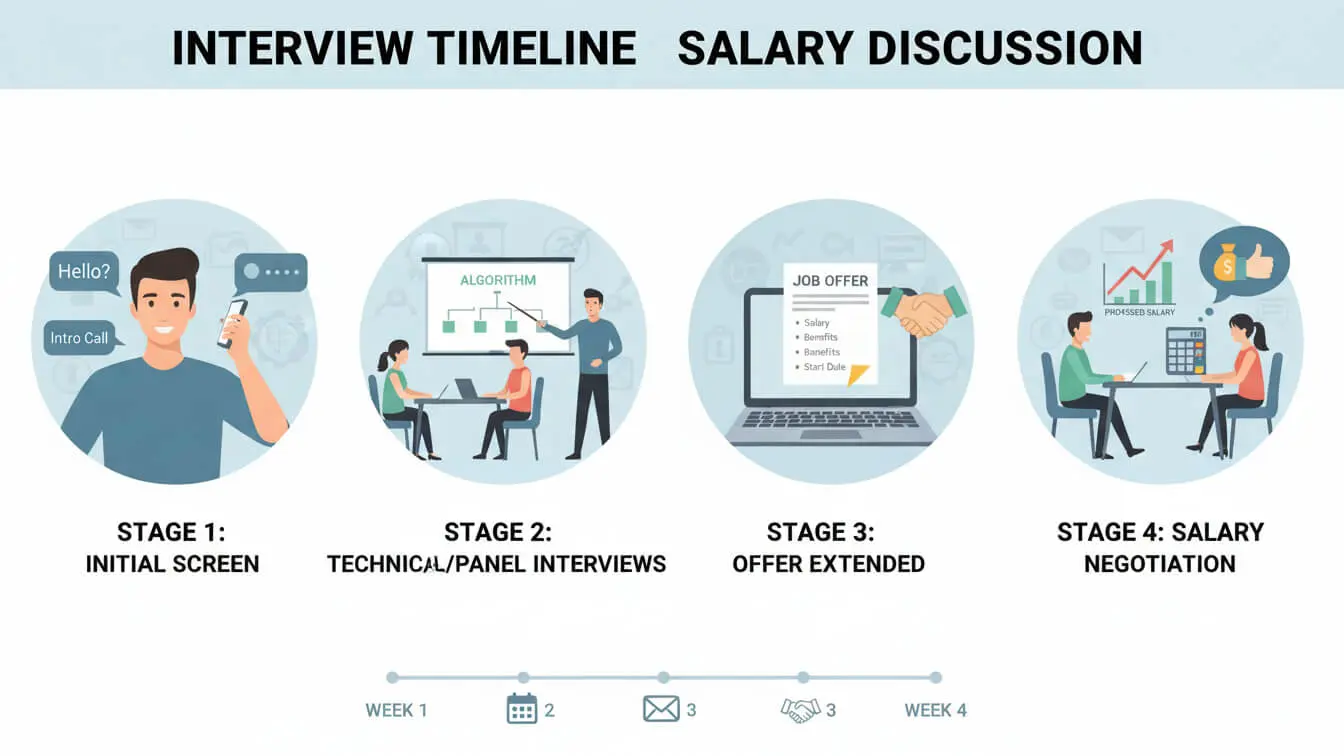
If a recruiter reaches out to you first, ask about salary range right away. Career experts recommend making it clear that salary is a key factor in your decision-making process. An experienced recruiter will check if your expectations align with the budgeted range before moving forward.
During application or phone screening, you can ask for the range if the recruiter brings up compensation first. You might say something like “Could you share the salary range for this position to ensure it aligns with my expectations?” This keeps things professional without seeming pushy.
After the first interview, it is fair to ask about salary if no one has mentioned it yet. Show your interest in the role first, then express that you want to make sure expectations align before committing to more interviews. Only 13% of hiring managers disclose salary in phone or video interviews, so you might need to bring it up yourself.
The Sweet Spot for Negotiation
The best moment to discuss specific numbers happens after the employer shows strong interest in hiring you. When they ask about your start date or request references, you know an offer is coming soon. This is when you have the most leverage to talk numbers.
Experts at Robert Half confirm that rushing the money talk is still a mistake. Avoid mentioning pay in your cover letter or during the first phone call. Focus on showing why you should be considered for the role first.
By the second interview, you can bring up salary more directly if it has not come up yet. Frame it around your excitement for the role and the value you bring before mentioning the range you find acceptable. You want them to see you as someone interested in more than just a paycheck.
When You Have to Give a Number First
Some companies ask for salary expectations right in the application just to check if you fit their budget. If you must go first, offer a range that works for you rather than locking into a specific number.
In your first interview, try to deflect politely by saying “I would rather get a better feel for the job and company first, but could you share what salary range you have in mind?” This puts the ball back in their court while showing you are still interested.
If they push for a number, provide your researched range with confidence. You might say “Based on my experience and the market rate for this role, I am looking at a range between $74,000 and $84,000.” Anchor it to data, not just what you want.
How to Answer “What Are Your Salary Expectations” Question
This question trips up more candidates than any other interview question. The wrong answer can price you out or leave money on the table. The right answer positions you as informed, flexible, and worth the investment.
Indeed’s interview research shows that employers ask about salary to check budget fit, gauge how you value your skills, and test your negotiation ability. A prepared answer showcases your value and professionalism.
You can handle this question three ways: deflect early to gather more info, discuss total compensation instead of just base salary, or provide a tight range with justification.

1. Deflect Early
If you are early in the interview process and the job scope is still unclear, deflecting keeps your options open while showing engagement. You might say “I am excited about this opportunity and would love to learn more about the role and responsibilities first. Once I have a better sense of the full scope, I will be happy to discuss compensation. What salary range does the company have budgeted for this position?”
This flips the question back to them without seeming evasive. You are asking for information, not avoiding the topic.
2. Discuss Total Compensation
Salary is not the only piece that matters. Bringing up the full compensation package shows you are open to negotiation and value more than just base pay. You could say “I am looking for a total compensation package that reflects my experience and the value I bring. Beyond base salary, I am interested in learning about bonuses, equity, health benefits, and professional development opportunities. Could you share what the complete package looks like for this role?”
This nudges the employer to sweeten the deal if their initial budget falls short of your target salary. Research shows this tactic works well when you know they want you but might be salary-constrained.
3. Provide a Justified Range
If you have done your research and know the market rate, give them a range backed by data. You might say “Based on my research of similar roles in this market and my five years of experience in this field, I am looking for a salary between $78,000 and $88,000. This aligns with the current market rate for someone with my skill set and track record.”
Grounding your number in research makes it harder for them to low-ball you. You are not just throwing out a wish, you are stating what the market pays.
Proven Strategies That Actually Work in 2025
Analysis of every major salary negotiation study from 2024-2025 reveals five strategies that consistently deliver results. These tactics are backed by hard data from Harvard Business School, the National Bureau of Economic Research, and hundreds of real negotiations.
People who negotiate get what they asked for 66% of the time, yet 55% of workers still do not even try. The gap between those who negotiate and those who do not is staggering. Even a modest 5% increase compounds to major lifetime earnings over a career.

Use the Anchoring Effect
The first number mentioned in a negotiation becomes the anchor that pulls the final number toward it. When you state a higher number first, the employer’s counteroffer stays higher than if you had started lower.
Research from the University of Idaho proved this. Candidates who asked for $100,000 received offers averaging $2,920 more than those who did not anchor high. The difference came entirely from setting a higher starting point.
Never be afraid to ask for more than you think they will pay. The worst they can do is say no and offer less. They will not pull the offer just because you asked for more. UCLA research shows that 94% of negotiated offers remain intact, proving hesitation is based on fear, not reality.
Have Competing Offers
Multiple offers give you the most leverage in any negotiation. When employers know other companies want you, they understand they might lose you if they do not make a strong offer.
Financial planning experts confirm that having competing offers is your best negotiation tool in 2025. Be transparent with recruiters about other opportunities and acceptance timelines. This speeds up interviews and decisions while maximizing your power.
You do not need to share exact numbers from other offers, but mentioning that you are considering multiple opportunities changes the dynamic. The company knows they need to make a competitive offer to win you.
Use Pay Transparency Data
States with pay transparency laws have changed how negotiations work. Colorado’s transparency policy increased posted salaries by 3.6% on average after implementation. This data gives negotiators concrete salary ranges to reference.
Research salary ranges from companies in transparent states even if you are not applying there. This gives you solid, recent data to reference in negotiations. When you can say “Similar roles in companies with transparent pay scales show a range of $85,000 to $95,000,” you are negotiating with facts, not wishes.
Gender differences in negotiation outcomes disappear when objective salary information is available. Negotiation research shows that when everyone has access to data, the playing field levels out.

Ask for Slightly More Than Your Goal
One fundamental rule of salary negotiation is giving the employer a number slightly higher than your actual goal. When they negotiate down, you still land on a salary you feel comfortable accepting.
If your target is $80,000, ask for $85,000 to $88,000. This gives them room to feel like they negotiated you down while you still hit your number. Indeed’s negotiation experts confirm this strategy works because both sides walk away feeling like they got something.
If you provide a salary range, the employer will likely aim for the lower end. Make sure the lowest number in your range is still an amount you find fair.
Show Your Value With Evidence
The strongest salary negotiations are built on evidence, not just asking for more money. HR professionals recommend providing one to two solid examples of why the company should invest more in you.
Point to specific accomplishments from your past roles. You might say “In my last position, I increased lead generation by 15% in six months, which resulted in $150,000 in new business. I can bring that same approach to this role and expect similar results.”
Tie your ask to company performance and your potential contributions. Employers want to know what they get for the higher salary. Show them the return on investment of hiring you at your requested rate.
Biggest Mistakes People Make When Discussing Salary
Most salary negotiations fail because of simple mistakes that are easy to avoid. Research on business graduates shows that the biggest mistake is not negotiating at all. More than half of candidates still accept the first offer without asking for anything more.
Pew Research found that 38% of workers did not negotiate because they lacked confidence, including 42% of women and 33% of men. Among those aged 18 to 29, 46% said they did not feel comfortable asking for higher pay.

Accepting the First Offer
Companies expect you to negotiate. The first offer is rarely their best offer. They build in room to go higher, assuming you will ask. When you accept immediately without any discussion, you leave that extra money on the table.
Harvard Business School research shows that even a simple reminder that negotiation is normal significantly increases both negotiation attempts and compensation gains. Just knowing it is expected makes people more likely to ask.
Even if you love the offer, take 24 hours to think it over. During that time, research the market rate one more time and prepare a polite counter. You might discover they can do better, or you might confirm the offer is already strong. Either way, you did your due diligence.
Bringing Up Salary Too Early
Mentioning pay in your cover letter or during the first phone screening makes you look like you only care about money. At this stage, the company wants to know if you fit the role and bring value to their team.
Robert Half confirms that bringing up salary too soon is still a major misstep. Focus on showing your skills and what you can contribute before turning the conversation to compensation.
Wait until the second interview at minimum, or better yet, let them bring it up first. When they ask about salary, you know they are serious about potentially hiring you.
Not Doing Your Research
Walking into a salary conversation without knowing the market rate is like showing up to a test without studying. You have no idea if their offer is fair, low, or actually generous for your role and location.
Websites like Glassdoor, PayScale, Salary.com, and LinkedIn give you free data filtered by job title, experience, and location. The Robert Half Salary Guide breaks down salary ranges for hundreds of positions, factoring in hybrid and remote arrangements.
Without research, you might accidentally ask for too little and lock yourself into an underpaid position. Or you might ask for way too much and price yourself out of a job you would have loved.

Using Weak Language
Apologetic language kills your negotiation power. Saying things like “I was hoping maybe you could possibly consider offering a bit more” makes you sound unsure of your value.
Experts warn that weak language undermines otherwise strong arguments for fair compensation. State your request clearly and confidently. “Based on my research and experience, I am looking for a salary in the range of $80,000 to $85,000.”
Confidence does not mean being aggressive or demanding. It means knowing your worth and stating it clearly without apologizing for asking.
Overlooking Total Compensation
Base salary is just one piece of your compensation. Benefits like health insurance, retirement matching, stock options, vacation time, and professional development budgets all add value to your total package.
Research shows that non-cash benefits may equal or exceed a direct pay increase in value. Ignoring these pieces means you might reject a strong overall offer because the base salary looked low.
Compensation trends for 2025 reveal that employers expect healthcare costs to rise by 6.7%, making strong health benefits more valuable. Nearly 70% of employers now offer voluntary benefits like wellness stipends and family leave.
What to Do When They Can’t Meet Your Number
Sometimes the company genuinely cannot pay what you want. Their budget is fixed, or the salary band for the role has a hard cap. This does not mean the negotiation is over. You still have options to increase the total value of the package.
Coursera’s negotiation research recommends exploring alternatives outside of base salary when the company’s budget is firm. These add-ons can offset the salary difference and sometimes end up being more valuable than extra cash.

Negotiate Extra Vacation Days
If the company offers a set number of vacation days each year, ask if they can increase the amount to offset the salary difference. An extra week of paid time off has real value, especially if you prioritize work-life balance.
Companies sometimes have more flexibility with time off than with salary. It does not hit their payroll budget as hard, so they might be willing to add a few extra days.
Ask About Signing Bonuses
Signing bonuses jumped from 20% of offers in Q1 2025 to 42% in Q2 2025. Employers increasingly offer lump sum cash when basic salary budgets are stretched thin.
A signing bonus puts money in your pocket right away without permanently raising the company’s salary expense. If they cannot move on base pay, a $5,000 or $10,000 signing bonus might be possible.
Explore Stock Options or Equity
For startups and tech companies, equity is often part of the compensation package. Business graduate research shows that equity offers significant long-term upside, though it requires careful review of vesting schedules and company performance.
If the base salary is lower than you want, ask about increasing your equity stake. This can pay off big if the company grows, though it carries more risk than guaranteed salary.

Request Remote Work or Flexible Hours
Remote work saves you commuting time and costs. If they cannot pay more, ask if you can work from home two or three days a week. The time and money you save on commuting adds real value to your life.
The 2025 job market shows candidates increasingly factor in remote work perks alongside base pay. Companies understand this matters and might have flexibility here even when salary budgets are tight.
Ask for Professional Development Funding
Training budgets, conference attendance, and certification programs increase your long-term earning potential. If the company cannot raise your salary now, ask them to invest in your professional growth.
Career development funding is becoming more common as companies compete for talent. This investment in you pays off for both sides, making it easier for employers to say yes.
Negotiate a Six-Month Review
If they truly cannot move on salary right now, ask for a formal salary review in six months instead of waiting a full year. This gets you back to the negotiation table faster and shows you are committed to proving your value.
Make sure this gets written into your offer letter. Without documentation, a promised future review might never happen.

Frequently Asked Questions
What percentage should I ask for when negotiating salary?
You can typically ask for 10 to 20% above the initial offer when negotiating. Research shows that people who negotiate receive an average increase of 18.83% from their original offers. Some negotiators secure increases up to 100%, though this is rare. The percentage you request depends on how much room exists between the offer and market rate for your role.
Is it okay to negotiate salary even if the offer seems fair?
Yes, you should negotiate even when the offer seems fair. Companies build room into their initial offers expecting candidates to negotiate. UCLA research confirms that 94% of negotiated offers remain intact, meaning you will not lose the job by asking for more. Even a modest 5% increase compounds to significant lifetime earnings.
How do I answer when asked about my current salary?
In many places it is illegal for employers to ask about your current salary. Indeed recommends saying “I prefer to focus on the value I can bring to this role rather than my previous compensation. What is your ideal salary range for this position?” This redirects the conversation without revealing your current pay.
Should I negotiate over email or phone?
Negotiate over phone or video call rather than email. Experts confirm that speaking allows you to have a back-and-forth conversation, express gratitude, and clearly communicate your requirements. Email works for initial questions about salary range but save the actual negotiation for a conversation where you can read tone and respond in real time.
What if the employer seems surprised or reacts negatively to my request?
Stay confident and calm if they react negatively. Career coaches suggest meeting their reaction with open-ended questions to get more information and keep the conversation going. Ask things like “What is the budget for this position based on?” or “Is there flexibility in other areas of the compensation package?” This keeps the dialogue open instead of shutting down.
When is the best time during the hiring process to discuss salary?
The optimal moment to discuss salary happens after the employer shows strong interest, such as asking about your availability to start or requesting references. Research indicates this suggests an offer might be coming, making it the right time to align on compensation. If you are speaking with a recruiter, you can ask about salary range upfront before even applying.
How much higher than the offer should I counter?
Counter with a number 10 to 15% above the initial offer or at the top of your researched market range. This gives the employer room to negotiate down while you still land on a number you want. Negotiation experts recommend asking for slightly more than your goal so when they negotiate down, you still hit your target salary.
Can I negotiate salary if I do not have another job offer?
Yes, you can negotiate without competing offers, though multiple offers give you more leverage. Financial planners confirm that having competing offers is your best tool in 2025, but you can still negotiate based on market research, your experience, and the value you bring to the role. Ground your request in data rather than relying solely on competing offers.
What should I do if the company says their offer is final?
When salary is truly fixed, shift to negotiating other parts of the compensation package. Research shows you can explore extra vacation days, signing bonuses, stock options, remote work flexibility, or professional development funding. These alternatives can significantly enhance your total compensation even when base salary cannot move.
Is it better to give a salary range or a specific number?
Always provide a range instead of a specific number. Coursera research recommends keeping your range tight, around $10,000 or less. A range shows flexibility while still giving you control. Make sure the bottom of your range is the lowest number you find fair since employers typically aim for the lower end.
How do I know if I am being underpaid in my current role?
Compare your salary to market rates using Glassdoor, PayScale, Salary.com, and LinkedIn salary data for your specific role, location, and experience level. Salary research shows that the average pay raise is 3%, while a good raise ranges from 4.5 to 5%. If your compensation is significantly below market rate and you have not received a raise in over a year, you are likely being underpaid.