If you’re looking for Midwestern affordability with exceptional quality of life, Minnesota might surprise you. While the Twin Cities metro area charges premium prices, you can find dozens of smaller cities across the Land of 10,000 Lakes with housing costs 20-40% below national averages. According to RentCafe, Minnesota’s overall cost of living runs 4% below the national average, and housing costs are 15% lower than typical U.S. rates.
This guide shows you the 10 cheapest places to live in Minnesota. You’ll find cities where median home prices are under $200,000 and rents are well below $1,000 per month. You can enjoy strong schools, safe communities, and the outdoor recreation that makes Minnesota famous.
What Are the Cheapest Places to Live in Minnesota?
Minnesota’s most affordable cities are in the southern, western, and northern parts of the state. These areas have agriculture, manufacturing, and regional healthcare systems that drive local economies. According to HomeSnacks, the cheapest places combine low housing costs with median incomes that make homeownership very achievable for you.
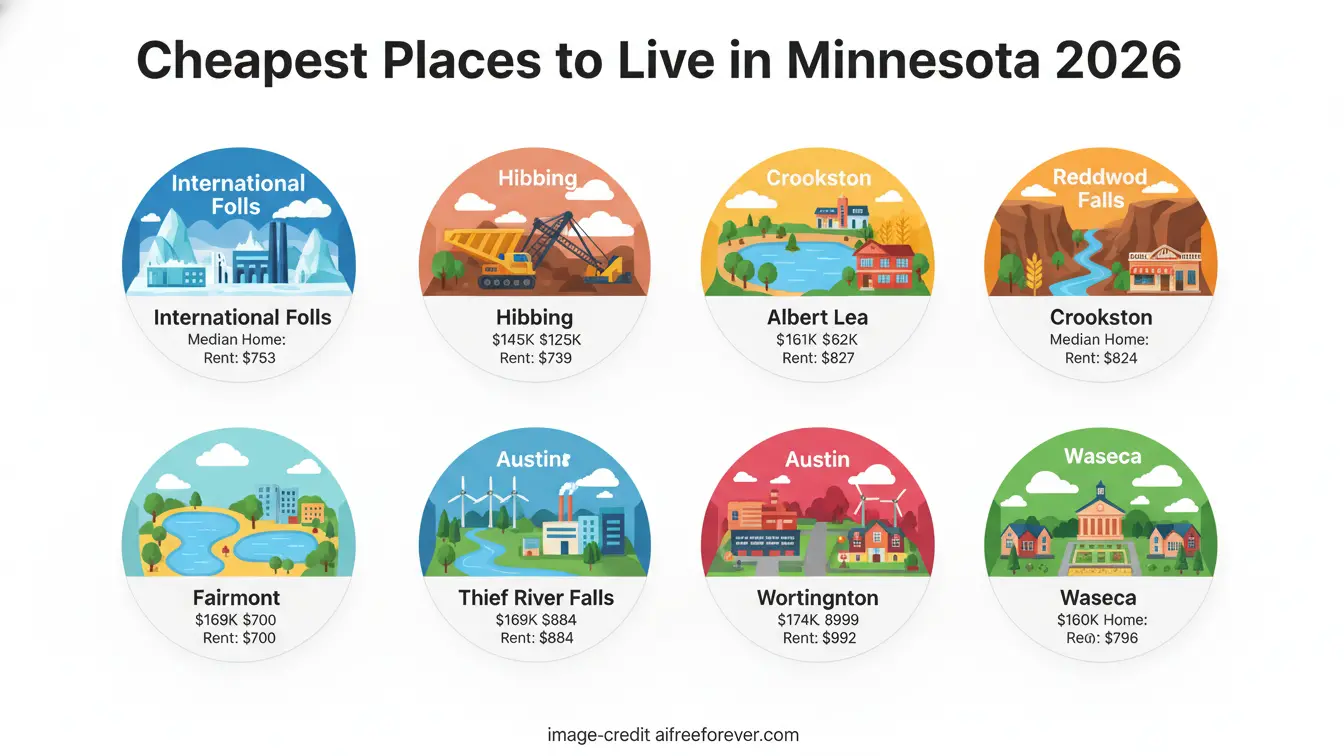
| Rank | City | Median Home Price | Median Rent | Cost of Living Index |
|---|---|---|---|---|
| 1 | International Falls | $115,000 | $753 | 80 |
| 2 | Hibbing | $145,000 | $925 | 85 |
| 3 | Albert Lea | $150,400 | $739 | 84 |
| 4 | Crookston | $160,700 | $827 | 84 |
| 5 | Redwood Falls | $162,000 | $824 | 87 |
| 6 | Fairmont | $168,800 | $700 | 86 |
| 7 | Thief River Falls | $169,300 | $884 | 83 |
| 8 | Austin | $174,200 | $899 | 86 |
| 9 | Worthington | $184,200 | $892 | 84 |
| 10 | Waseca | $185,600 | $796 | 87 |
1. International Falls
Population: 5,728
County: Koochiching County
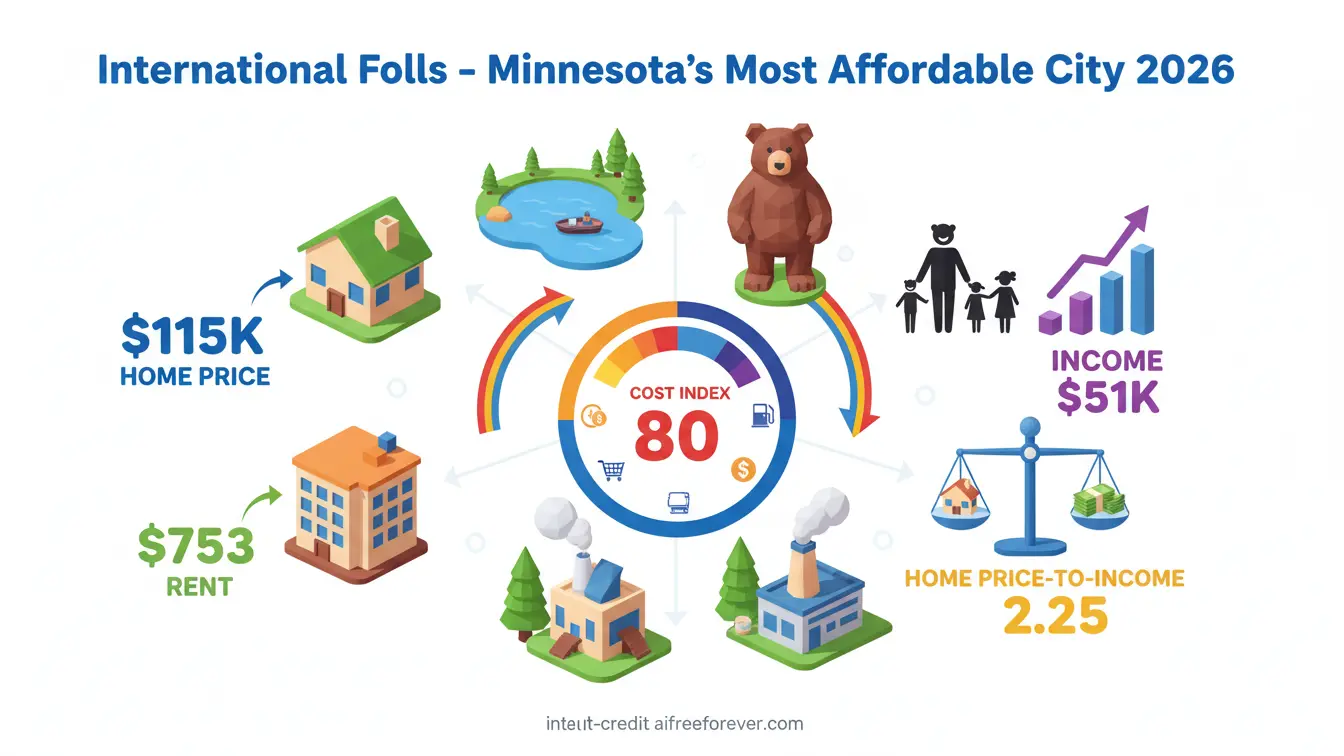
International Falls is called the “Icebox of the Nation.” It offers Minnesota’s lowest home prices and ranks among the cheapest places to live in the entire United States. This border town sits on the Canadian boundary. It trades mild winters for exceptional affordability.
| Cost Category | International Falls | Minnesota Average |
|---|---|---|
| Median Home Price | $115,000 | $351,600 |
| Median Rent | $753 | $1,420 |
| Cost of Living Index | 80 | 97 |
| Median Household Income | $51,119 | $72,200 |
| Home Price-to-Income Ratio | 2.25 | 4.87 |
International Falls is your gateway to Voyageurs National Park. It offers year-round outdoor recreation. Major employers include the paper mill industry, Rainy Lake Medical Center, and border-related services. The town’s Smokey Bear Park has a 26-foot bear statue and offers free admission. You can enjoy world-class fishing and boating on Rainy Lake at affordable prices.
2. Hibbing
Population: 16,214
County: St. Louis County
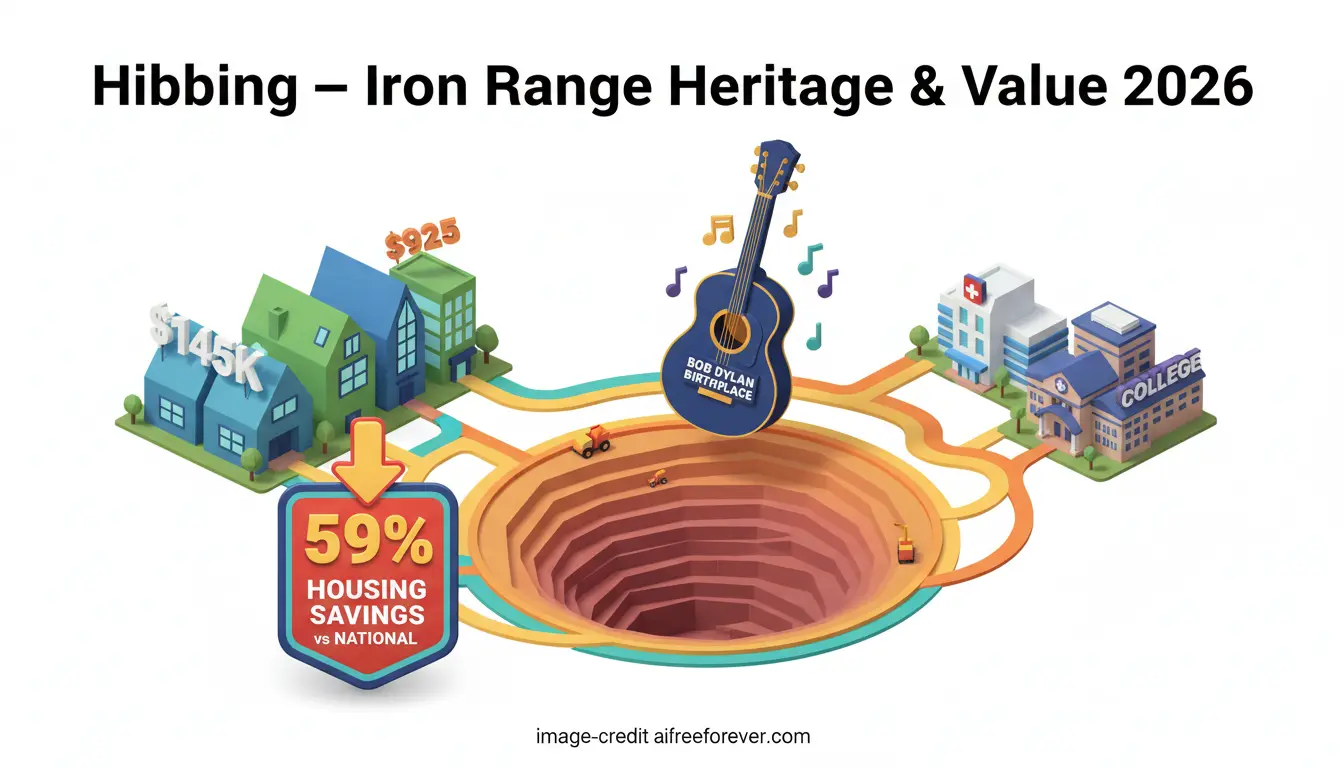
Hibbing sits at the heart of Minnesota’s Iron Range. It offers some of the state’s most affordable housing with rich cultural heritage. This is the birthplace of Bob Dylan. It’s home to the Hull-Rust-Mahoning Open Pit Iron Mine—one of the largest open-pit mines in the world.
| Cost Category | Hibbing | Minnesota Average |
|---|---|---|
| Median Home Price | $145,000 | $351,600 |
| Median Rent | $925 | $1,420 |
| Cost of Living Index | 85 | 97 |
| Median Household Income | $55,463 | $72,200 |
| Housing Savings vs. National | 59% | — |
According to Houzeo, Hibbing’s utilities run 12.8% below the national average. This adds to your overall savings. Major employers include Hibbing Taconite, Fairview Range Medical Center, and the Hibbing Public School District. You can attend Hibbing Community College for workforce training and higher education. The city has numerous parks, golf courses, and community events throughout the year.
3. Albert Lea
Population: 18,379
County: Freeborn County
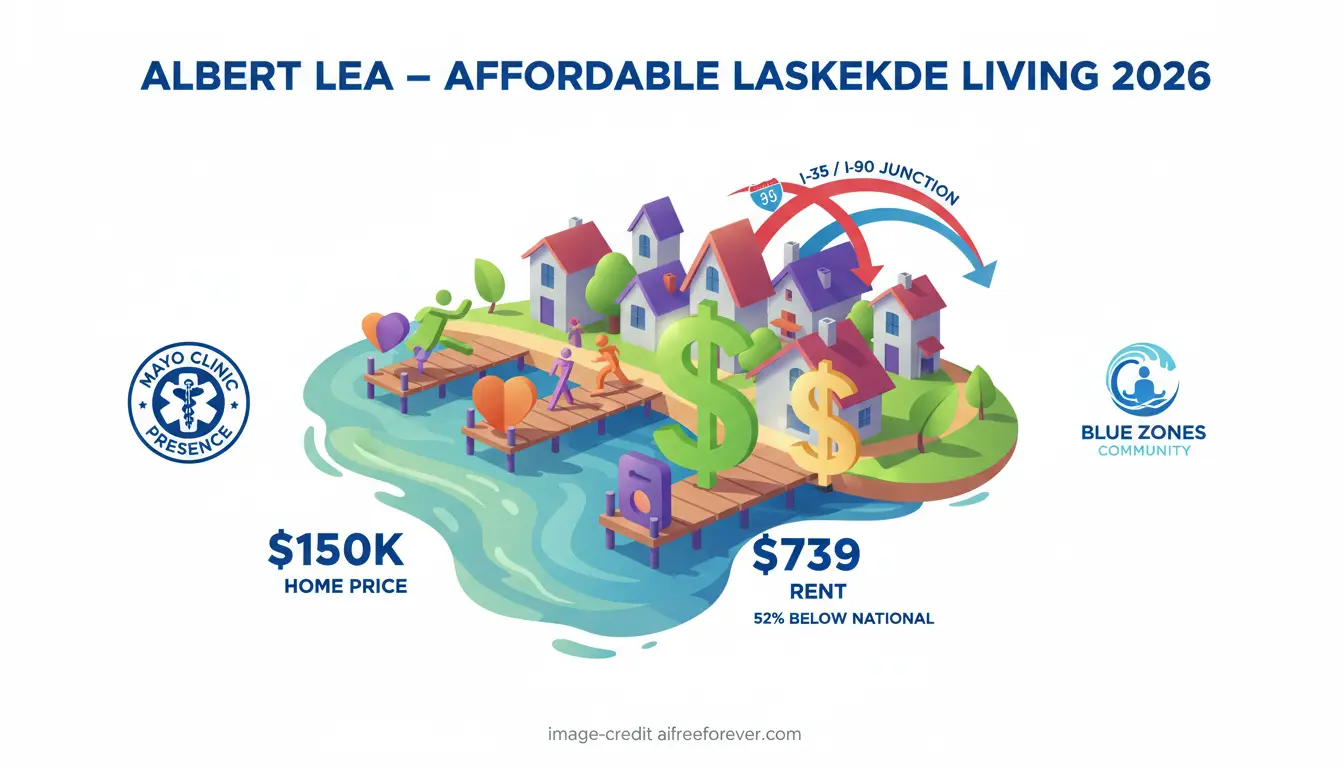
Albert Lea anchors southern Minnesota’s lake country at the intersection of Interstates 35 and 90. This scenic city sits on Fountain Lake and Albert Lea Lake. It offers exceptional value if you’re seeking affordable lakeside living within a two-hour drive of the Twin Cities.
| Cost Category | Albert Lea | Minnesota Average |
|---|---|---|
| Median Home Price | $150,400 | $351,600 |
| Median Rent | $739 | $1,420 |
| Cost of Living Index | 84 | 97 |
| Median Household Income | $62,522 | $72,200 |
| Cost of Living vs. National | 16% lower | — |
According to Apartments.com, average rent in Albert Lea is 52% lower than the national average. The city’s healthcare sector is anchored by Mayo Clinic Health Center. This provides stable employment. Albert Lea gained national attention as part of the Blue Zones Project. This program focuses on community health and longevity initiatives.
4. Crookston
County: Polk County
Crookston sits in the fertile Red River Valley of northwestern Minnesota. It offers affordable living with easy access to the Grand Forks, North Dakota metro area. This college town balances small-city charm with educational and healthcare job opportunities.
| Cost Category | Crookston | Minnesota Average |
|---|---|---|
| Median Home Price | $160,700 | $351,600 |
| Median Rent | $827 | $1,420 |
| Cost of Living Index | 84 | 97 |
| Median Household Income | $54,003 | $72,200 |
| Housing vs. National | 28% lower | — |
The University of Minnesota Crookston anchors the local economy. It provides educational opportunities, cultural events, and Division II athletics. RiverView Health and local agriculture businesses round out the employment picture. The city’s location in the Red River Valley means rich farmland surrounds the community. The Red River Valley was once the bed of glacial Lake Agassiz.
5. Redwood Falls
Population: 5,075
County: Redwood County
Redwood Falls sits in south-central Minnesota where the Redwood River meets the Minnesota River. This small city offers some of the state’s lowest housing costs. You also get extensive park systems and natural areas.
| Cost Category | Redwood Falls | Minnesota Average |
|---|---|---|
| Median Home Price | $162,000 | $351,600 |
| Median Rent | $824 | $1,420 |
| Cost of Living Index | 87 | 97 |
| Median Household Income | $61,947 | $72,200 |
Alexander Ramsey Park is Minnesota’s largest municipal park. It gives you 217 acres of hiking trails, waterfalls, and natural beauty at no cost. Major employers include Redwood Area Hospital, local manufacturing, and agricultural services. The city’s home price-to-income ratio makes homeownership very achievable for your family.
6. Fairmont
Population: 10,348
County: Martin County
Fairmont is called the “City of Lakes.” It has five interconnected lakes within city limits. This makes it a paradise if you want affordable waterfront living. It’s located near the Iowa border. This southern Minnesota gem combines recreation with remarkably low costs.
| Cost Category | Fairmont | Minnesota Average |
|---|---|---|
| Median Home Price | $168,800 | $351,600 |
| Median Rent | $700 | $1,420 |
| Cost of Living Index | 86 | 97 |
| Median Household Income | $59,228 | $72,200 |
| Cost of Living vs. National | 27.6% lower | — |
Fairmont boasts the lowest overall cost of living in Minnesota. It’s 27.6% below the national average. The Fairmont Opera House serves as a cultural hub. It hosts performances year-round. You can enjoy seven parks, lakeside trails, and excellent fishing opportunities. These provide free recreation. Fairmont Area Schools earns strong ratings. This makes the city ideal for your family.
7. Thief River Falls
Population: 8,841
County: Pennington County
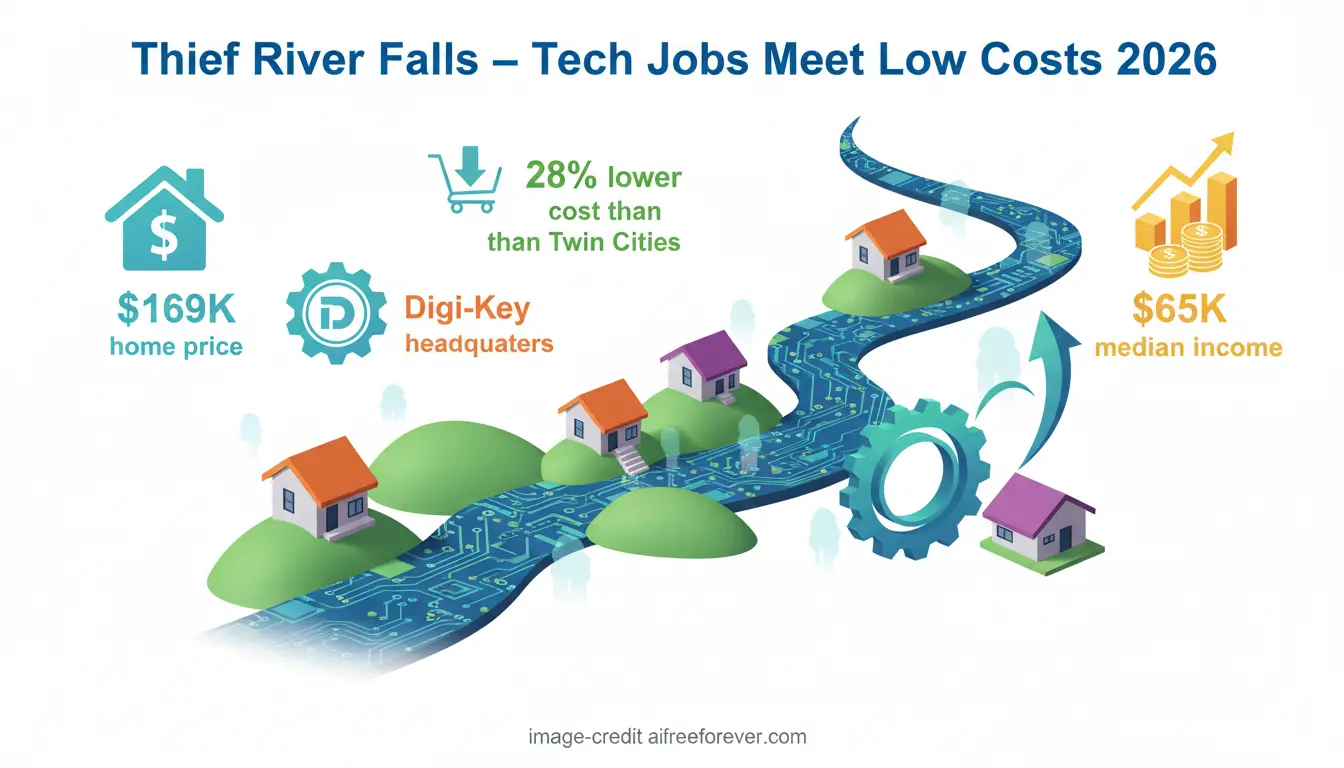
Thief River Falls sits at the confluence of the Red Lake River and Thief River in northwestern Minnesota. This regional hub offers affordable living alongside major job opportunities in manufacturing and technology.
| Cost Category | Thief River Falls | Minnesota Average |
|---|---|---|
| Median Home Price | $169,300 | $351,600 |
| Median Rent | $884 | $1,420 |
| Cost of Living Index | 83 | 97 |
| Median Household Income | $65,244 | $72,200 |
| Cost of Living vs. Twin Cities | 28% lower | — |
Digi-Key Electronics is headquartered here. It’s one of the world’s largest electronic component distributors and employs thousands of people. Arctic Cat (now Textron) also operates in the area. According to Advance Thief River, the cost of living in Pennington County runs 37% below the Twin Cities when you include taxes. The combination of major employers and low costs makes Thief River Falls exceptional if you’re career-minded.
8. Austin
Population: 26,174
County: Mower County
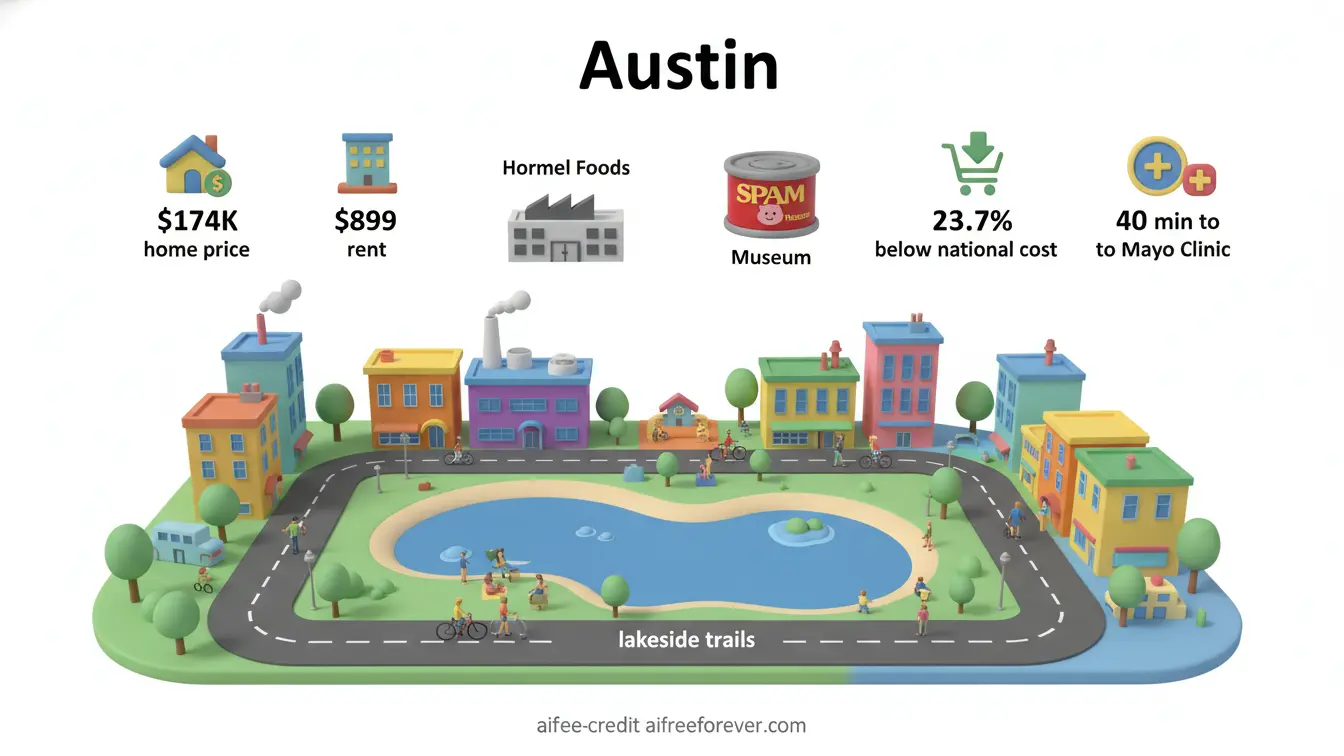
Austin is called “SPAM Town USA.” It’s home to Hormel Foods Corporation and the famous SPAM Museum. This southeastern Minnesota city offers affordable living with stable jobs from one of America’s most iconic food companies.
| Cost Category | Austin | Minnesota Average |
|---|---|---|
| Median Home Price | $174,200 | $351,600 |
| Median Rent | $899 | $1,420 |
| Cost of Living Index | 86 | 97 |
| Median Household Income | $61,546 | $72,200 |
| Cost of Living vs. National | 23.7% lower | — |
Hormel Foods employs about 1,800 local residents. It drives the regional economy. The free SPAM Museum attracts tourists year-round and shows the company’s history since 1891. Austin’s location along Interstate 90 gives you easy access to Rochester’s Mayo Clinic (40 minutes) and the Twin Cities (90 minutes). The Historic Hormel Home, Paramount Theatre, and annual events like the Mower County Fair add to the cultural offerings.
9. Worthington
Population: 13,792
County: Nobles County
Worthington celebrates its cultural diversity with the annual International Festival. This reflects the diverse workforce that supports local food processing industries. This southwestern Minnesota city offers lakeside living on Lake Okabena at prices well below state averages.
| Cost Category | Worthington | Minnesota Average |
|---|---|---|
| Median Home Price | $184,200 | $351,600 |
| Median Rent | $892 | $1,420 |
| Cost of Living Index | 84 | 97 |
| Median Household Income | $61,840 | $72,200 |
| Cost of Living vs. National | 27.6% lower | — |
JBS USA operates a major pork processing facility in Worthington. This provides significant employment. Lake Okabena offers fishing, boating, and swimming within city limits. The town’s diverse population brings international cuisine and cultural events to this affordable corner of Minnesota.
10. Waseca
Population: 9,209
County: Waseca County
Waseca sits in south-central Minnesota. It offers small-town living with easy access to Mankato and the Twin Cities via Interstate 35. Low utility costs add to the overall affordability of this lake-dotted community.
| Cost Category | Waseca | Minnesota Average |
|---|---|---|
| Median Home Price | $185,600 | $351,600 |
| Median Rent | $796 | $1,420 |
| Cost of Living Index | 87 | 97 |
| Median Household Income | $61,546 | $72,200 |
| Utilities vs. State Average | Lower | — |
Waseca earned recognition for particularly low utility costs. This stretches your household budget further. Clear Lake and other area lakes provide free recreation. Kiesler’s Campground draws visitors for affordable outdoor getaways. Local manufacturing, healthcare, and agriculture provide stable job opportunities for you.
How Does Minnesota’s Cost of Living Compare to Other States?
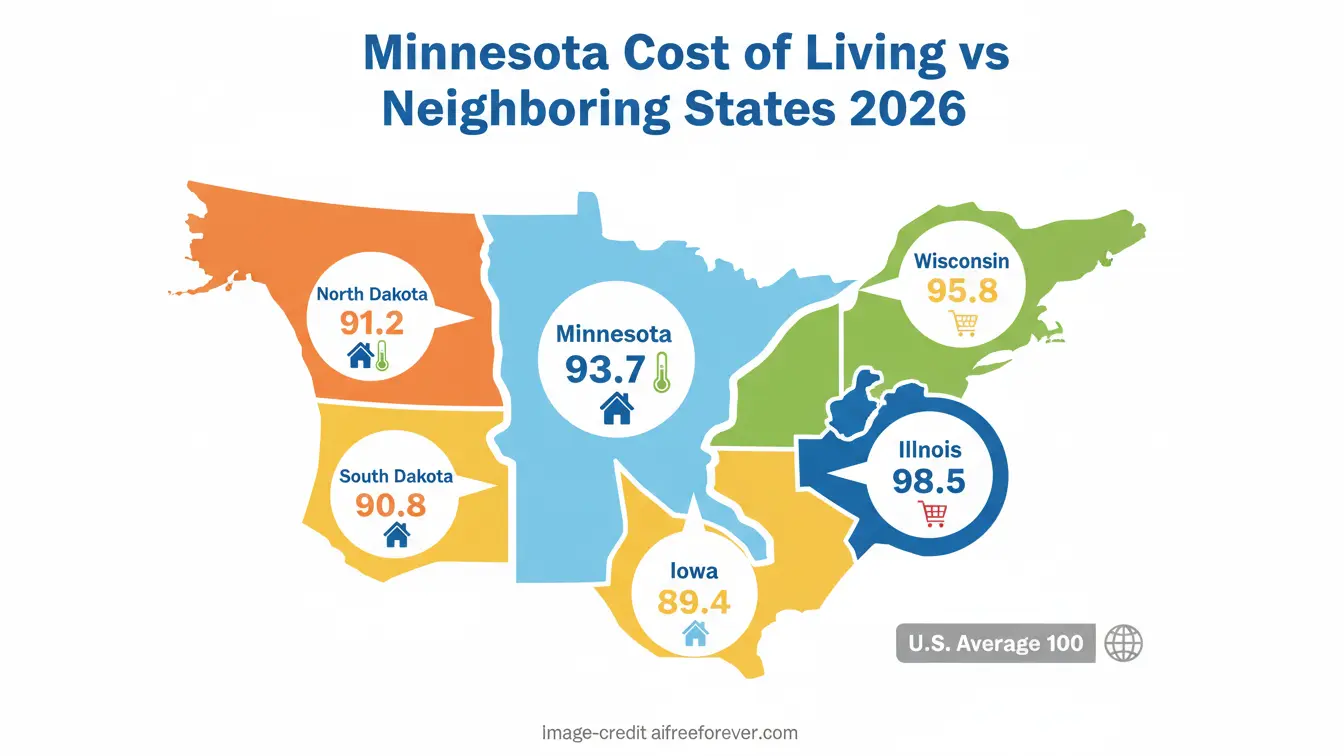
Minnesota ranks 18th nationally for lowest cost of living. This makes it more affordable than many neighboring states while offering exceptional quality of life.
| State | Cost of Living Index | Housing Index |
|---|---|---|
| Minnesota | 93.7 | 85 |
| Wisconsin | 95.8 | 89 |
| Illinois | 98.5 | 91 |
| Iowa | 89.4 | 78 |
| North Dakota | 91.2 | 82 |
| South Dakota | 90.8 | 80 |
| National Average | 100 | 100 |
What Salary Do You Need to Live Comfortably in Minnesota?
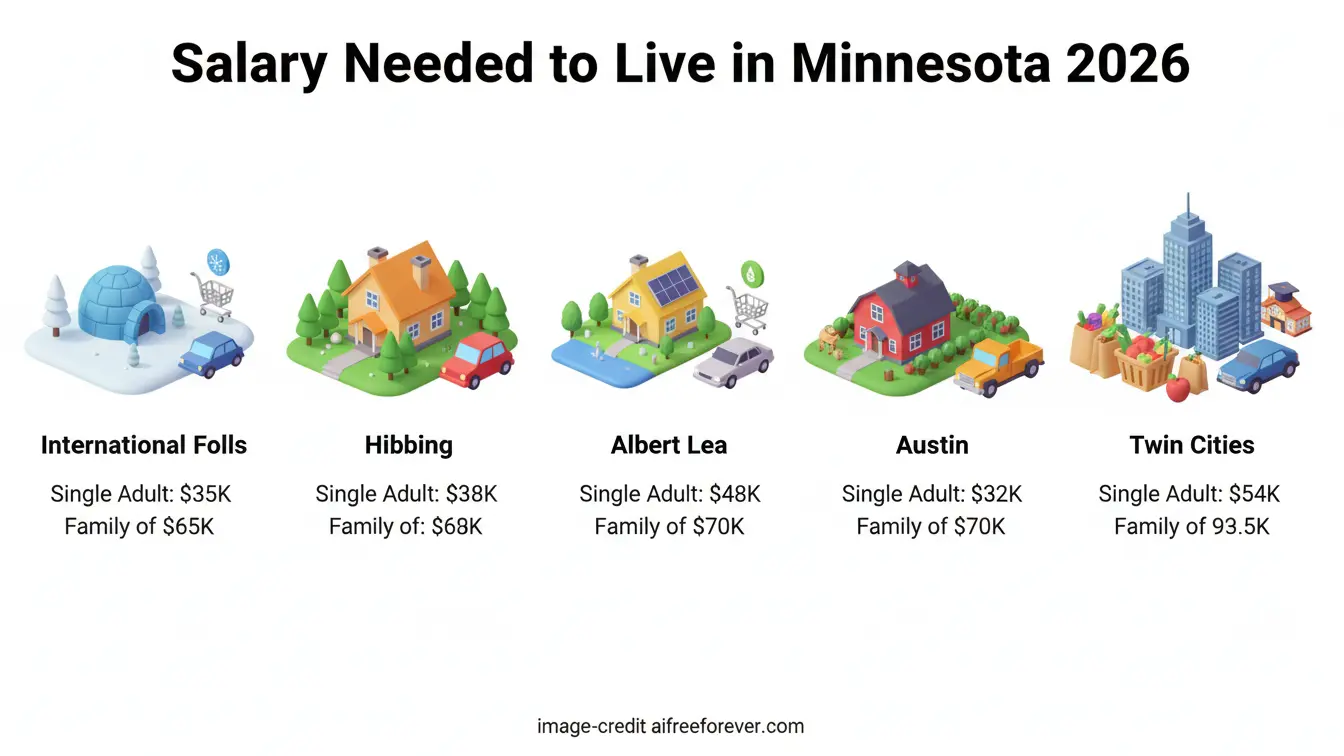
Your salary requirements will vary dramatically between Minnesota’s affordable small cities and the Twin Cities metro area.
| Location | Single Adult | Family of Four |
|---|---|---|
| International Falls | $35,000 | $65,000 |
| Hibbing | $38,000 | $68,000 |
| Albert Lea | $40,000 | $72,000 |
| Fairmont | $38,000 | $70,000 |
| Austin | $42,000 | $75,000 |
| Minneapolis-St. Paul | $54,000 | $93,500 |
| Rochester | $52,000 | $90,000 |
What Are the Hidden Costs of Living in Minnesota?
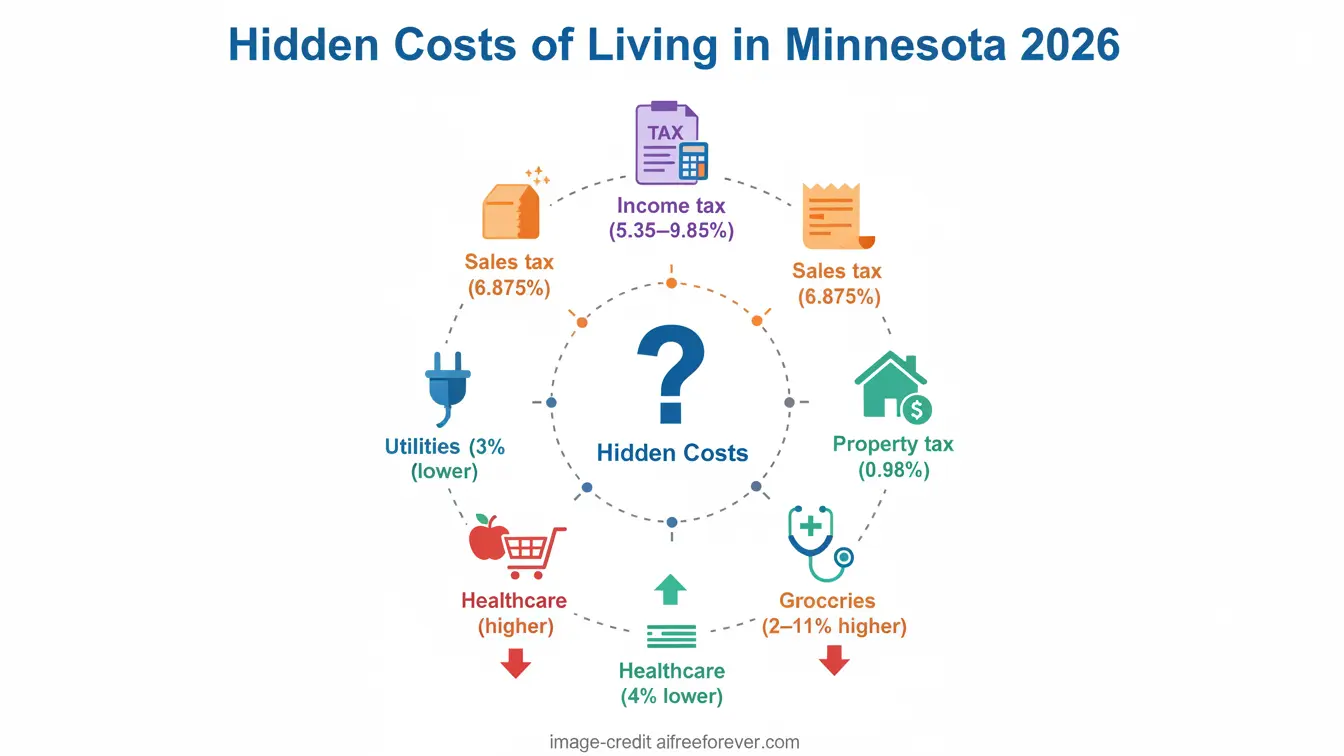
Beyond housing, several factors affect your total cost of living in Minnesota:
| Expense Category | Minnesota vs. National | Notes |
|---|---|---|
| State Income Tax | 5.35% – 9.85% | Progressive rates; higher than many states |
| Sales Tax | 6.875% + local | Clothing exempt; food exempt |
| Property Tax | 0.98% effective rate | Below national average |
| Utilities | 3% lower | Higher heating costs in winter |
| Groceries | 2-11% higher | Varies by location |
| Healthcare | 4% higher | Minnesota ranks #9 for healthcare access |
| Transportation | Similar to national | Car essential in small cities |
What Makes These Minnesota Cities Affordable?
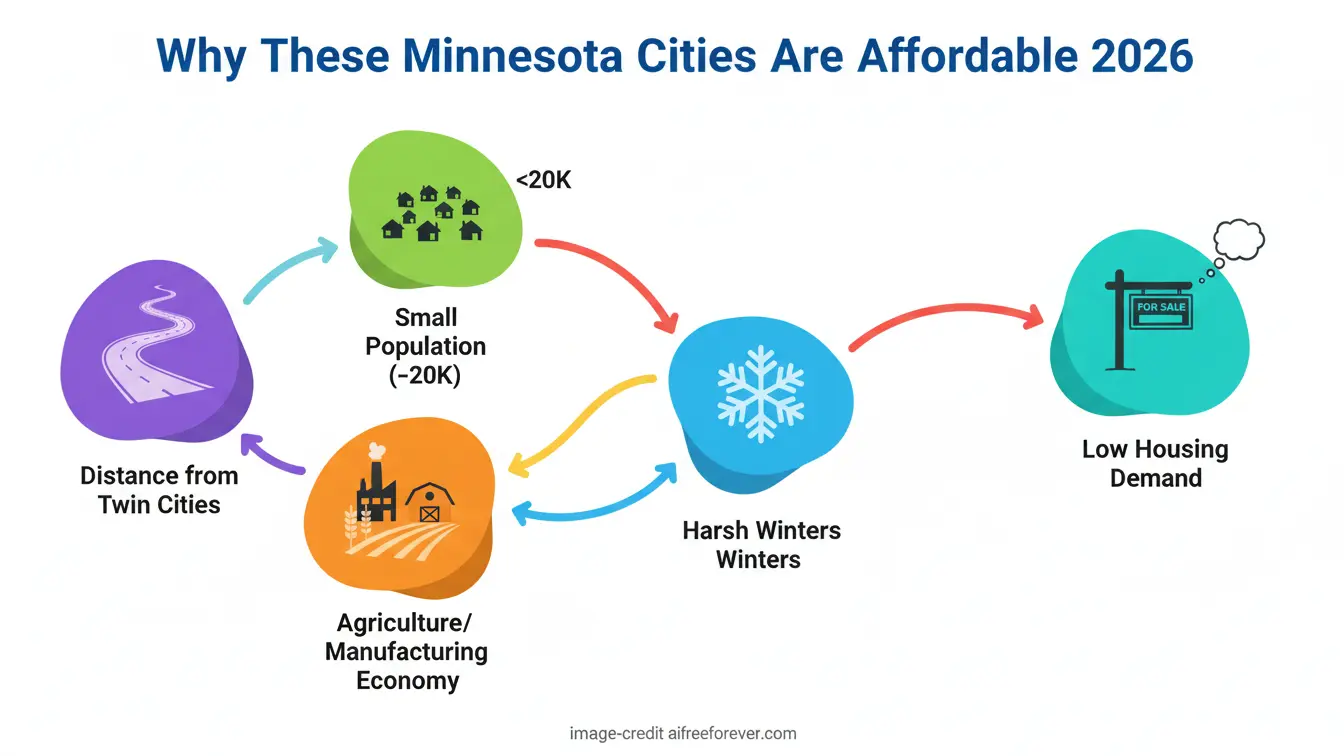
Several factors make Minnesota’s most affordable communities cost less:
| Factor | Impact on Affordability |
|---|---|
| Distance from Twin Cities | Cities 2+ hours from metro have 30-50% lower housing |
| Population Size | Cities under 20,000 typically cost less |
| Economic Base | Agricultural and manufacturing towns trend affordable |
| Climate | Northern cities with harsher winters often cost less |
| Competition | Less demand keeps housing prices stable |
What Should You Know Before Moving to Affordable Minnesota Cities?
While Minnesota’s affordable cities offer exceptional value, you should consider these factors:
| Consideration | What to Expect |
|---|---|
| Winter Weather | Temperatures below zero are common; International Falls averages -4°F in January |
| Job Market | Limited to local employers; remote work expands your options significantly |
| Healthcare Access | Regional hospitals are available; specialized care may require travel |
| Entertainment | Focus on outdoor recreation; major venues require travel to Twin Cities |
| Internet | Varies; verify high-speed availability before moving for remote work |
| Schools | Many affordable cities have above-average public schools |
Minnesota’s affordable cities prove that quality of life doesn’t require high costs. Whether you’re drawn to the historic Iron Range, the lakes of southern Minnesota, or the manufacturing hubs of the northwest, these communities offer you homeownership opportunities at prices increasingly rare in 21st-century America. With median home prices under $200,000 and strong community values, Minnesota’s small cities represent some of the best affordable living in the Upper Midwest.