You’re staring at a blank page. The cursor blinks. Nothing happens. You’ve been sitting there for 20 minutes, and your brain feels empty. Sound familiar? Writer’s block hits everyone. Research shows that most writers experience creative blocks where they can’t produce new material. Some blocks last days. Others drag on for weeks or even months.
But here’s the good news: AI story generators can help you break through that wall. These tools use artificial intelligence to turn your ideas into full stories in seconds. They’re free, easy to use, and surprisingly good at sparking creativity.
The AI story generator market reached $1.5 billion in 2025 and is growing fast. Writers, students, teachers, and content creators are all jumping on board. Why? Because these tools work.
In this guide, you’ll discover the 10 best free AI story generators available right now. We’ll show you how they work, which one fits your needs, and how to get the most out of them. No fluff. Just practical advice from real testing.
Table of Contents
- What Is an AI Story Generator?
- How Do AI Story Generators Work?
- Why Writers Use AI Story Generator Tools
- 10 Best Free AI Story Generators in 2025
- How These Tools Help Beat Writer’s Block
- How to Choose the Right Story Generator
- Tips for Getting Better Results
- Common Mistakes to Avoid
- The Future of AI Story Writing
- Frequently Asked Questions
- Key Takeaways
What Is an AI Story Generator?
An AI story generator is a tool that writes stories for you based on simple instructions. You type in a few words or ideas, and the AI creates a complete story.
It’s not magic. These tools use large language models—super advanced computer programs that learned how to write by reading millions of books, articles, and stories. They know how stories work. They get character development, plot structure, and dialogue.
According to AI story writing experts, these generators are “intelligent systems that produce fictional stories from minimal input.” You give them the basics, and they build a full narrative with a clear subject and events that make sense.
But here’s what makes them different from simple plot generators: AI story generators create actual stories with descriptions, character emotions, and flowing prose. They don’t just give you bullet points or outlines.
What Can These Tools Actually Do?
Modern AI story generators can:
- Write complete short stories from one sentence
- Create character backgrounds and descriptions
- Generate dialogue between characters
- Develop plot twists and story endings
- Adapt to different genres (romance, sci-fi, horror, fantasy)
- Match your preferred writing style or tone
- Continue existing stories you’ve started
Some tools even let you choose the point of view, story length, and creativity level. You’re in control, but the AI does the heavy lifting.

How Do AI Story Generators Work?
AI story generators work by predicting what words should come next. Sounds simple, but it’s powerful.
These tools analyze your prompt—the instructions you give them. They look at keywords, themes, character names, and genre hints. Then they use patterns from millions of stories they’ve learned to create something new.
Think of it like a super-smart writing assistant who’s read every book in the library. When you say “Write a story about a robot who wants to be human,” the AI knows:
- What robots typically do in stories
- How characters who want something usually act
- What kind of conflicts make sense
- How to describe emotions and settings
The AI doesn’t copy existing stories. It creates new ones using patterns it learned. That’s why every story is unique.
The Technology Behind the Magic
Modern AI story writers use something called transformer-based language models. These models excel at maintaining context and consistency throughout a story.
When you’re writing a story about a brave knight, the AI remembers that fact. It won’t suddenly turn your knight into a coward halfway through without a good reason. It tracks character traits, plot points, and story details to keep everything coherent.
Some advanced tools even have “memory” features. They remember what happened in earlier chapters so your long-form stories stay consistent.
Why Writers Use AI Story Generator Tools
Writers aren’t using AI story generators because they’re lazy. They’re using them because these tools solve real problems.
Breaking Through Writer’s Block
Writer’s block is brutal. Studies on writer’s block found that 146 writers surveyed experienced blocks with physiological and motivational causes. These blocks interfered more with composition than idea generation.
The four most effective solutions writers found were:
- Taking a break from writing
- Working on a different writing project
- Forcing themselves to keep writing
- Discussing ideas with others
AI story generators act like that “other person” to discuss ideas with. They give you something to react to, edit, and improve. Sometimes you just need a starting point, and these tools provide exactly that.
Saving Time on First Drafts
Testing shows that AI story generators can reduce first-draft time by 20-40%. That’s huge if you’re working on deadlines or just want to be more productive.
You’re not cutting corners. You’re using AI for the initial heavy lifting, then adding your personal touch, emotion, and creativity. The final product is still yours.
Exploring New Ideas Faster
Want to test 10 different plot directions? With AI, you can generate all 10 in minutes. See which one excites you most, then develop that one further.
This rapid exploration is perfect for:
- Trying new genres you’ve never written before
- Testing different character personalities
- Exploring “what if” scenarios
- Finding unexpected plot twists
Companies like Nike and HubSpot use AI writing tools to brainstorm and publish content faster. If major brands trust AI for content creation, there’s real value here.
Learning and Improving Your Writing
AI story generators can teach you. When you read what the AI produces, you see different:
- Sentence structures
- Ways to describe scenes
- Dialogue patterns
- Pacing techniques
This is especially helpful if English isn’t your first language or you’re just starting out as a writer. The AI models good writing, and you learn by example.
10 Best Free AI Story Generators in 2025
We tested dozens of AI story generators. Here are the 10 best free options that actually deliver quality results.
1. AI Free Forever Story Generator
Let’s start with the best option for writers who want maximum features without paying anything: AI Free Forever’s story generator tools.
AI Free Forever offers multiple specialized story generators that are completely free with no sign-up required:
- Story Prompt Generator – Creates unique prompts to jumpstart your writing
- Story Idea Generator – Generates complete story concepts with characters and conflicts
- AI Story Prompt Generator – Advanced prompt creation with genre-specific options
- Short Story Prompt Generator – Perfect for quick fiction projects
What makes AI Free Forever stand out is the quality and variety. You get professional-level results without hitting paywalls or credit limits. The tools are fast, intuitive, and designed specifically for writers.
Best for: Writers who want unlimited free access to multiple story generation tools without restrictions.
Key features:
- No sign-up or registration needed
- Unlimited generations
- Multiple specialized tools for different story needs
- Clean, ad-free interface
- Works on any device
2. ChatGPT
ChatGPT is the most popular AI tool in 2025, with 22% weekly usage according to recent surveys. It’s versatile and can write in any genre.
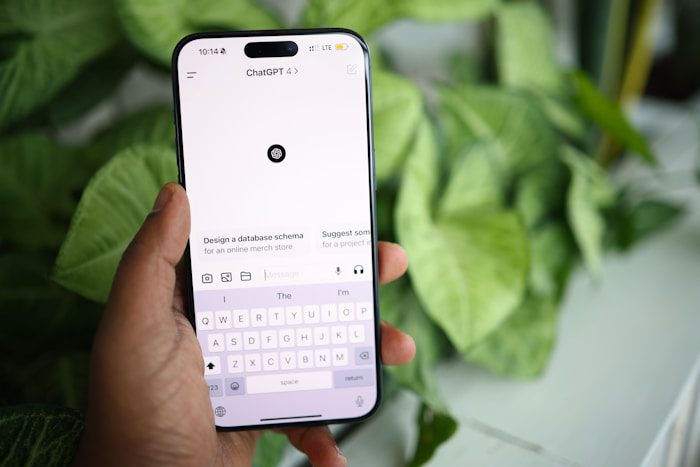
You can use ChatGPT to:
- Generate complete stories
- Continue existing narratives
- Revise and improve your drafts
- Create character profiles
- Brainstorm plot ideas
The free version gives you access to GPT-3.5, which is still very capable. You can have natural conversations with the AI, asking it to adjust the story as you go.
Best for: Writers who want a conversational AI that can handle multiple revisions and follow complex instructions.
Limitations: The free version has usage limits during peak times. GPT-4 requires a $20/month subscription.
3. Squibler AI Story Generator
Squibler is designed specifically for fiction writers. It’s completely free with no sign-up required.
What’s great about Squibler:
- Creates plagiarism-free, original content
- Keeps characters consistent throughout stories
- Works for any genre or style
- Generates instant stories from your prompts
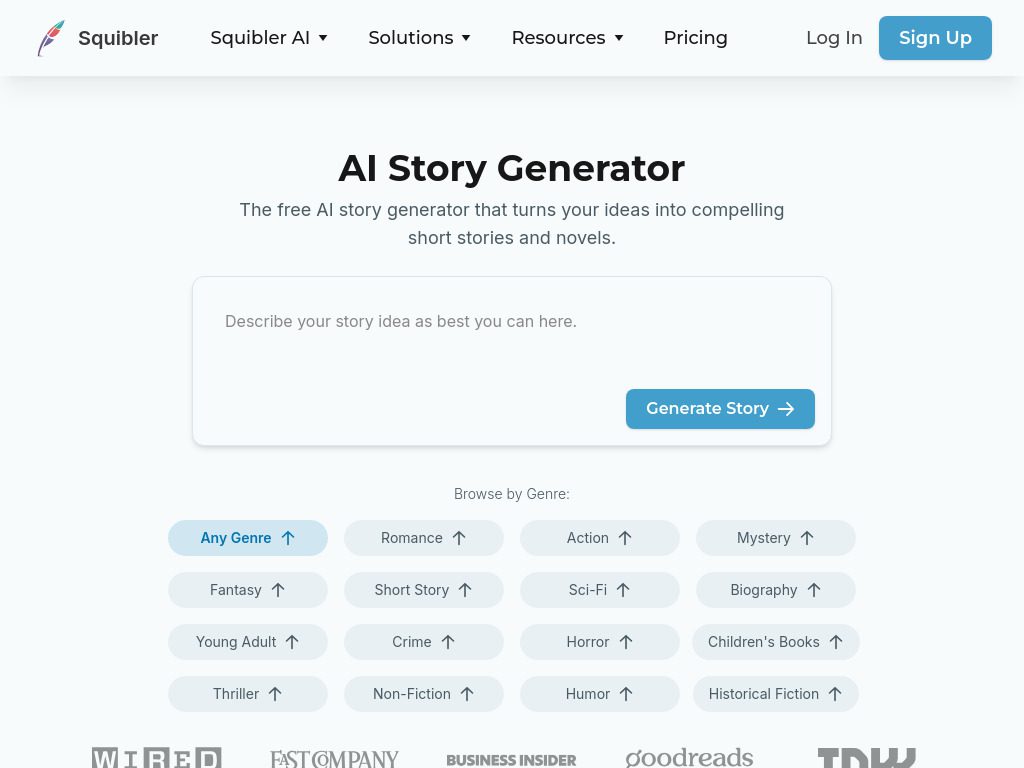
The tool is simple to use. Enter your story description, click generate, and get a complete narrative. You can regenerate as many times as you want to explore different versions.
Best for: Beginning writers and hobbyists who want quick story drafts without complex features.
4. Perchance AI Story Generator
Perchance is different. It’s not based on GPT technology. Instead, it uses structured templates and random generators to create stories.
This makes it perfect for:
- Fun, unpredictable plot ideas
- Fantasy and sci-fi quests
- Quick inspiration when you want something random
You visit perchance.org, select a generator type (like “fantasy quest” or “random plot”), and click generate. Each generation is completely unique and often surprising.
Best for: Writers who want structured randomness and enjoy the surprise factor.
Note: This is more for inspiration than complete story drafts.
5. StoryLab.ai
StoryLab focuses on structured content. It’s especially good for:
- Story hooks
- Outlines
- Short narratives
- Marketing stories
Marketers and educators love StoryLab because it helps create narrative lessons and brand stories quickly. The free version gives you solid access to core features.
Best for: Structured storytelling, marketing content, and educational purposes.
6. AI Dungeon
AI Dungeon is interactive storytelling. You make choices, and the AI continues the story based on your decisions.
It’s like a text-based RPG where:
- You control the main character
- The AI generates the world and NPCs
- Every playthrough is different
- Fantasy and sci-fi adventures work best
This isn’t for traditional story writing. It’s for interactive fiction and game-like experiences. But if that’s what you want, AI Dungeon delivers.
Best for: Interactive fiction, role-playing adventures, and gamified storytelling.
7. Toolbaz AI Story Generator
Toolbaz keeps things simple. You get:
- Clean, straightforward interface
- Short narratives and character sketches
- Dialogue snippets
- No account needed
It’s perfect for on-the-go drafting or when you need quick inspiration. The tool won’t write a full novel, but it’s great for short bursts of creativity.
Best for: Quick inspiration, mobile usage, and casual writing.
8. Talefy
Talefy is an unlimited, no-sign-up story generator that works fast. Drop in a prompt, and you get a complete scene in under a second.
Features include:
- Character deepening suggestions
- Scene-building help with sensory details
- Branching ideas for different story directions
- Easy editing and regeneration
The tool is designed for speed and experimentation. You can test multiple versions quickly to find what works.
Best for: Writers who want to rapidly test different story directions and scenes.
9. Summarizer.org Story Generator
Summarizer.org surprised testers with its quality. Reviews note it’s equipped with the latest AI technology and returns quality outputs consistently.
What makes it good:
- Latest AI tech (comparable to premium tools)
- High-quality, consistent outputs
- Free with no hidden limits
- Works for diverse topics
Best for: Writers who want premium-quality results from a free tool.
10. NovelAI
NovelAI offers a limited free tier, but it’s worth mentioning because it’s built specifically for long-form storytelling.
NovelAI excels at:
- Maintaining story consistency across chapters
- Character development over long narratives
- Fantasy and science fiction genres
- Creative control and privacy
The free tier is limited, but if you’re serious about novel writing, the paid plans ($10-25/month) offer unlimited generations with strong memory features.
Best for: Serious fiction writers working on novels or long-form projects.
Limitation: Free tier is very restricted. Best value comes from paid subscription.
How These Tools Help Beat Writer’s Block
Writer’s block isn’t just about being lazy or unmotivated. Medical research on writer’s block shows it’s often caused by fear of failure, perfectionism, or simply being mentally stuck.
AI story generators help in specific ways:
They Remove the Fear of the Blank Page
The blank page is terrifying. But when you have an AI tool ready to generate something—anything—that fear disappears. You’re not starting from nothing anymore.
As writer Stephen King said, “The scariest moment is always just before you start. After that, things can only get better.”
With AI, you’re already past that scary moment. You’ve got words on the page. Now you just need to shape them.
They Beat Perfectionism
Many writers suffer from “perfect draft syndrome.” They want their first attempt to be flawless. That’s impossible, and it causes blocks.
AI generators give you permission to start messy. The AI’s first draft isn’t perfect either. But it’s a starting point you can improve. This mindset shift is powerful.
They Provide Fresh Perspectives
Sometimes you’re stuck because you’re thinking in circles. AI story generators break those patterns by suggesting approaches you hadn’t considered.
Maybe your detective story needs a twist you didn’t see. Maybe your romance needs a different conflict. The AI can show you options you never thought of.
They Keep You Writing Daily
Research shows that writers who write daily experience shorter periods of writer’s block than those with inconsistent habits.
AI tools make it easier to write every day because:
- They reduce the mental effort of starting
- They give you something to edit and improve
- They make the process feel less daunting
- They turn writing into a conversation with the AI
Even if you only spend 15 minutes editing an AI-generated story, you’re still writing. You’re still practicing. You’re still moving forward.

How to Choose the Right Story Generator
Not all AI story generators work the same way. Here’s how to pick the right one for your needs.
Consider Your Writing Goals
Ask yourself:
- Are you writing short stories or novels? Use tools with better memory (NovelAI, ChatGPT) for long-form work.
- Do you need quick inspiration or complete drafts? Tools like AI Free Forever or Perchance work great for inspiration. Squibler or ChatGPT for complete drafts.
- Are you writing for fun or professionally? Fun writing can use simpler tools. Professional work benefits from more sophisticated options.
- What genre are you writing? Some tools excel at fantasy and sci-fi (NovelAI, AI Dungeon). Others work better for realistic fiction (ChatGPT, Squibler).
Test Multiple Tools
The best way to find your favorite is to try several. Give the same prompt to three different generators and compare:
- Which one’s style matches yours?
- Which produces the most usable content?
- Which is easiest to use?
- Which gives you the most creative ideas?
What works for someone else might not work for you. Your favorite tool is the one that fits your workflow.
Check the Limitations
Every free tool has limits. Some common ones:
- Generation limits: How many stories can you create per day?
- Length restrictions: Maximum word count per generation
- Feature access: Are important features locked behind paid plans?
- Commercial use: Can you publish AI-generated content?
Most AI story generators allow commercial use of outputs, but always check the terms of service if you plan to publish or sell your work.
Think About Your Privacy
Some tools store your stories on their servers. Others prioritize privacy. If you’re working on something confidential or valuable, check:
- Where are your stories stored?
- Can the company use your content for training?
- Can you delete your data?
- Is your content encrypted?
NovelAI specifically markets itself on privacy. Other tools are less clear about data usage.
Tips for Getting Better Results
The quality of AI-generated stories depends heavily on your prompts. Here’s how to get the best results.
Write Detailed Prompts
AI storytelling experts recommend being specific and sensory with your prompts.
Compare these two prompts:
Bad prompt: “Write a sci-fi story.”
Good prompt: “Write a sci-fi story about a teenage botanist on a desert planet who uncovers a forgotten AI civilization buried beneath the sand. The story should be told in first person, have a mysterious tone, and include themes of isolation and discovery.”
The second prompt gives the AI much more to work with. You get better results because the AI knows exactly what you want.
Include These Elements in Your Prompts
For the best results, tell the AI about:
- Characters: Name, age, personality traits, goals
- Setting: Where and when the story takes place
- Conflict: What problem does the character face?
- Tone: Is it funny, serious, dark, mysterious, romantic?
- Point of view: First person, third person?
- Genre: Fantasy, romance, thriller, sci-fi?
- Length: Short scene, complete short story, chapter?
The more details you provide, the closer the output gets to what you imagine.

Use the AI as a Partner, Not a Replacement
The best approach is collaboration. Let the AI:
- Generate the first draft
- Suggest plot directions
- Create descriptions you can refine
- Write dialogue you can improve
Then you:
- Add emotional depth
- Insert your unique voice
- Refine the pacing
- Polish the language
- Add personal touches and details
This collaboration gives you the efficiency of AI with the quality of human creativity.
Iterate and Refine
Don’t accept the first generation as final. The best AI story writers use a process:
- Generate: Create the initial story
- Review: Read what the AI produced
- Refine: Adjust your prompt based on what worked and what didn’t
- Regenerate: Create a new version with better instructions
- Edit: Manually polish the best parts
This iterative approach produces much better results than using the first draft as-is.
Save and Compare Multiple Versions
Generate three or four versions of the same story with slightly different prompts. Then:
- Compare them side-by-side
- Take the best parts from each
- Combine them into one superior version
This technique gives you more options and helps you discover what works best.
Common Mistakes to Avoid
Writers make predictable mistakes when using AI story generators. Here’s what to watch out for.
Using AI-Generated Content Without Editing
The biggest mistake is publishing AI content as-is. AI creates great drafts, but they need human polish.
Always edit for:
- Emotional authenticity
- Your personal voice and style
- Logical consistency
- Grammar and flow
- Unique details and observations
Readers can tell when content is purely AI-generated. It lacks the warmth and authenticity of human writing.
Being Too Vague in Prompts
Vague prompts produce generic stories. “Write a story about love” will give you a bland, predictable romance.
“Write a story about two rival chefs who fall in love while competing in a high-stakes cooking competition in Paris” gives the AI specific hooks to work with.
Specificity is your friend.
Expecting Perfection Immediately
AI story generators aren’t perfect. They sometimes:
- Generate repetitive phrases
- Lose track of plot details
- Create inconsistent characters
- Use clichés and predictable plots
That’s okay. These are starting points, not finished products. Your job is to fix these issues and make the story truly yours.

Relying Too Heavily on AI
AI is a tool, not a replacement for learning to write. If you never practice writing yourself, you won’t improve.
Use AI to:
- Get past blocks
- Generate ideas
- Speed up drafting
- Explore new directions
But also practice:
- Writing scenes from scratch
- Developing your unique voice
- Creating original characters
- Plotting complex narratives
Balance is key. AI helps you write more, but you still need to develop your skills.
Not Checking for Plagiarism
While AI generators create original content, they’re trained on existing stories. Sometimes they might produce something too similar to existing work.
Before publishing anything important:
- Run it through plagiarism checkers
- Do a Google search for unique phrases
- Add your own original elements
This protects you from accidentally publishing something problematic.
Ignoring Copyright and Licensing
Most tools allow commercial use of AI-generated content, but always check. Terms vary by platform.
Before publishing or selling your work:
- Read the tool’s terms of service
- Check if you own the output
- Understand any attribution requirements
- Know if there are commercial restrictions
Protect yourself legally before making money from AI-assisted work.
The Future of AI Story Writing
AI story generation is evolving fast. Here’s what’s coming.
More Sophisticated Memory and Context
Current AI can remember a few thousand words of context. Future versions will track entire novels, remembering:
- Every character detail
- All plot threads
- Consistent world-building rules
- Writing style preferences
This will make AI much better for long-form fiction.
Better Emotional Intelligence
Right now, AI struggles with subtle emotions and complex character psychology. Future AI will better capture:
- Authentic emotional responses
- Complex character motivations
- Subtle relationship dynamics
- Cultural and social nuances
The stories will feel more human and less mechanical.
Personalized Writing Assistants
Future AI tools will learn your personal writing style. They’ll adapt to:
- Your favorite phrases and rhythms
- Your typical story structures
- Your character archetypes
- Your unique voice
This will make AI an even better collaborative partner that truly understands your style.

Integration with Other Creative Tools
AI story generators will integrate with:
- Grammar checkers
- Plot structuring software
- Character development tools
- Publishing platforms
- Image generators for book covers
You’ll have a complete creative workflow powered by AI assistance at every step.
Market Growth and Accessibility
The AI story generator market is projected to reach $7.5 billion by 2033, with a growth rate of 25% annually. This means:
- More competition driving better free options
- Lower prices for premium features
- More specialized tools for specific genres
- Better quality across all platforms
Access to powerful AI story tools will become even easier and more affordable.
Ethical Considerations and Transparency
As AI becomes more powerful, expect:
- Better disclosure about AI usage
- Clearer copyright guidelines
- More tools for detecting AI content
- Industry standards for AI-assisted writing
The publishing industry is already developing guidelines for AI-generated content. This will become more standardized over time.
Frequently Asked Questions
Can I use AI-generated stories commercially?
Most AI story generators allow commercial use of the output. Tools like ChatGPT, Squibler, and AI Free Forever all permit you to use generated content in published work. However, always check the specific terms of service for the tool you’re using. Some platforms have different rules, especially paid versions.
Will AI replace human writers?
No. AI story generators are tools that help writers, not replacements for human creativity. Industry experts agree that “AI is not replacing the storyteller. It’s amplifying imagination—helping writers explore faster, deeper, and more boldly.” AI lacks lived experiences, cultural insight, and emotional nuance that humans bring to stories.
Are AI-generated stories plagiarism?
AI-generated content is not plagiarism in the traditional sense. AI creates new content based on patterns learned from millions of texts, but it doesn’t copy existing stories word-for-word. However, you should always edit AI content significantly and add your own creativity to make it truly original. Run important work through plagiarism checkers to be safe.
Do I need to disclose that I used AI?
There’s no legal requirement in most cases, but transparency is becoming expected. Some publishing platforms ask writers to disclose AI usage. Many successful writers openly discuss using AI as a brainstorming and drafting tool. The key is to ensure the final product reflects significant human creativity and editing.
Which AI story generator is best for beginners?
For complete beginners, start with AI Free Forever or Squibler. Both are free, require no sign-up, and have simple interfaces. They give you quick results without overwhelming you with options. Once you’re comfortable, experiment with ChatGPT for more control and sophistication.
Can AI write a full novel?
AI can generate novel-length content, but you shouldn’t use it to write an entire novel without heavy human involvement. The best approach is using AI for individual chapters, scenes, or sections, then editing extensively to maintain consistency, voice, and emotional depth. Tools like NovelAI are designed for longer works and have better memory, making them suitable for novel projects.
How do I make AI-generated stories sound more human?
Edit them! Add:
- Personal observations and details
- Emotional nuance and subtlety
- Your unique voice and style
- Sensory descriptions
- Authentic dialogue
- Cultural and personal experiences
The more you edit and personalize, the more human the story becomes.
Do AI story generators work for all genres?
Yes, but some tools perform better with specific genres. Fantasy and sci-fi work well across most platforms. Romance and contemporary fiction benefit from tools with better emotional intelligence like ChatGPT. Horror and thriller work well when you give very specific prompts. Experiment to find which tool handles your preferred genre best.
Can AI help with writer’s block?
Absolutely. Research shows that working on a different writing project is one of the top four solutions for writer’s block. AI generators let you quickly produce something different, breaking you out of your mental rut. Even if you don’t use the AI’s output, the process of reading and critiquing it can spark new ideas.
Are there any downsides to using AI story generators?
Yes, a few:
- Risk of becoming dependent and not developing your own skills
- AI can produce generic or clichéd content
- Lack of true emotional depth in generated text
- Potential for repetitive phrases or inconsistencies
- Some platforms have usage limits or paywalls
These are manageable if you use AI as a tool, not a crutch, and always edit the output significantly.

Key Takeaways
AI story generators are powerful tools that help writers overcome blocks, generate ideas faster, and explore new creative directions. Here’s what you need to remember:
- Start with AI Free Forever for the best free, unlimited story generation tools without sign-up requirements or hidden limits.
- The AI story generator market is booming, reaching $1.5 billion in 2025 with projected growth to $7.5 billion by 2033.
- Writer’s block affects most writers, but AI tools help by providing starting points and breaking creative paralysis.
- AI story generators work best as collaborative tools, not replacements for human creativity. Always edit and personalize the output.
- Detailed, specific prompts produce better results. Include character details, setting, conflict, tone, and genre in your instructions.
- Different tools excel at different tasks. ChatGPT for versatility, NovelAI for novels, Perchance for random inspiration, AI Dungeon for interactive fiction.
- Most platforms allow commercial use of AI-generated content, but always check terms of service before publishing or selling your work.
- The technology is evolving rapidly with better memory, emotional intelligence, and personalization coming soon.
- Use AI to speed up drafting by 20-40%, giving you more time to focus on editing and adding your unique voice.
- Balance is critical. Use AI to enhance your productivity, but continue developing your own writing skills through regular practice.
Ready to break through your writer’s block and start creating? Try AI Free Forever’s story generators today. No sign-up, no limits, no excuses. Just you, the AI, and unlimited creative possibilities.
The blank page doesn’t have to be scary anymore. With the right AI story generator, you’ll always have a creative partner ready to help you write your next great story. Start exploring these tools today and discover how much easier and more fun writing can be.
Need more AI writing tools? Check out our complete collection of free AI tools for writers, including AI answer generators, poetry generators, and writing assistants.