
Ohio is one of the cheapest states for renters. Average rent is 38% below the national rate. Even Ohio’s most expensive cities cost less than most coastal cities. Columbus is the biggest and most expensive market. But cities like Youngstown, Toledo, and Dayton have one-bedroom apartments for under $1,000 a month.
This guide shows rent prices across Ohio’s cities. You will find current averages by apartment size, city comparisons, and the salary you need to afford rent.
What Is the Average Rent in Ohio in 2026?
The statewide average rent in Ohio falls between $1,076 and $1,328. RentCafe data puts the average at $1,328 as of late 2025. This shows a 3.08% increase from the previous year. Apartments.com reports a lower figure of $1,076 for one-bedroom units. The HUD Fair Market Rent for Ohio sits at $1,104 for 2025.
These numbers make Ohio the 6th cheapest state for renters. About 33% of Ohio households rent their homes. The remaining 67% own.
| Source | Average Rent (All Units) | 1-Bedroom Average | 2-Bedroom Average |
|---|---|---|---|
| RentCafe | $1,328 | $1,142 | $1,407 |
| Apartments.com | $1,076 | $1,076 | $1,349 |
| Zillow | $1,300 | N/A | N/A |
| HUD Fair Market Rent | $1,104 | $835 | $950 |
| Rent.com | $1,160 | $887 | $1,141 |
How Does Ohio Rent Compare to the National Average?
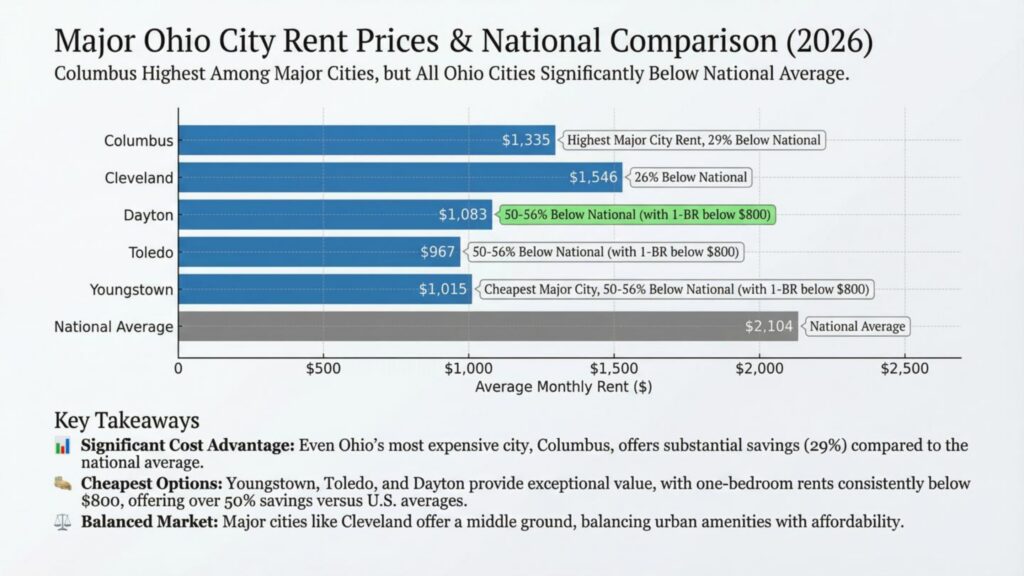
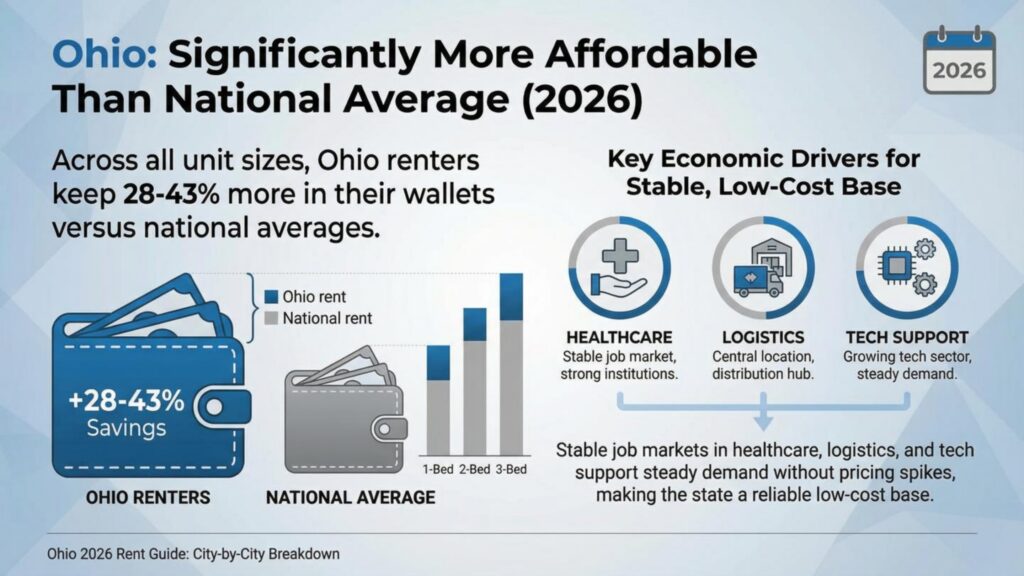
Ohio renters pay much less than the national average. Zillow reports Ohio rent runs 38% below the national median of $2,104. The Apartments.com comparison shows Ohio is 29-32% cheaper than national figures.
This gap saves Ohio renters hundreds each month. A one-bedroom apartment averaging $1,076 in Ohio costs $561 less than the $1,637 national average. Over a year, that adds up to $6,732 in savings just on rent.
| Metric | Ohio | National Average | Difference |
|---|---|---|---|
| Average Rent (All Units) | $1,300 | $2,104 | -38% |
| 1-Bedroom Average | $1,076 | $1,637 | -34% |
| 2-Bedroom Average | $1,349 | $1,876 | -28% |
| HUD 2BR Fair Market Rent | $950 | $1,670 | -43% |
| Rank Among 50 States | 6th lowest | – | – |
The cost of living in Ohio sits 17.3% below the national average overall. Housing drives most of those savings. Ohio ranks as the 14th cheapest state when factoring in groceries, utilities, healthcare, and transportation.
What Are the Average Rent Prices in Ohio’s Major Cities?
Rent varies across Ohio’s metro areas. Columbus has the highest prices among major cities. Youngstown and Toledo sit at the bottom. Cleveland and Cincinnati fall in between.
| City | Average Rent | 1-BR Rent | 2-BR Rent | vs. National |
|---|---|---|---|---|
| Columbus | $1,335 | $1,165 | $1,363 | -29% |
| Cleveland | $1,546 | $1,305 | $1,606 | -20% |
| Cincinnati | $1,451 | $1,118 | $1,408 | -32% |
| Dayton | $1,083 | $752 | $924 | -55% |
| Toledo | $967 | $797 | $976 | -51% |
| Akron | $1,107 | $958 | $1,137 | -32% |
| Youngstown | $1,015 | $722 | $844 | -56% |
| Canton | $1,067 | $794 | $1,197 | -35% |
Columbus Rent Prices
Columbus rent averages $1,335 per month. One-bedroom apartments cost $1,165 to $1,445. Two-bedrooms run $1,363 to $1,694. Rent increased 2.4% over the past year, adding about $28 to monthly costs.
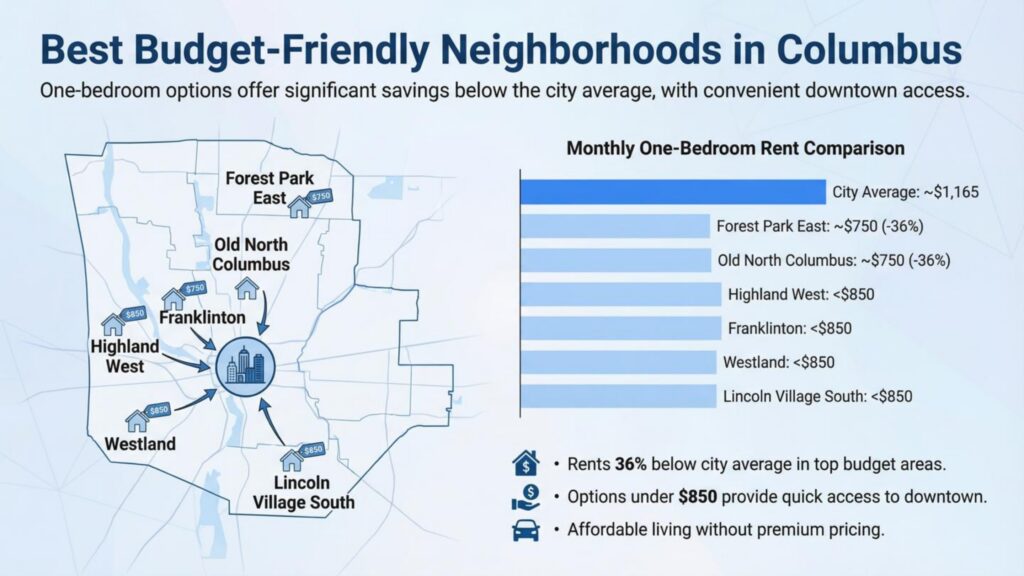
The most affordable Columbus neighborhoods include Forest Park East ($749 for a 1-bedroom), Old North Columbus ($750), and Highland West ($785). Downtown costs the most, with one-bedrooms averaging $1,926 and two-bedrooms at $2,861. Short North is also pricey at $1,945 average rent.
| Columbus Neighborhood | 1-BR Average | 2-BR Average |
|---|---|---|
| Forest Park East | $749 | $950 |
| Old North Columbus | $750 | $975 |
| Franklinton | $799 | $1,050 |
| Westland | $837 | $1,100 |
| Downtown Columbus | $1,926 | $2,861 |
| Short North | $1,945 | $2,500 |
| Northwest Columbus | $1,802 | $2,200 |
Cleveland Rent Prices
Cleveland rent averages $1,546 per month. This makes it one of Ohio’s pricier markets. But it still runs 20% below the national average. One-bedroom apartments cost $1,274 to $1,434. Two-bedrooms hit $1,606 to $1,798. Point2Homes data shows rent rose 2.16% year-over-year.
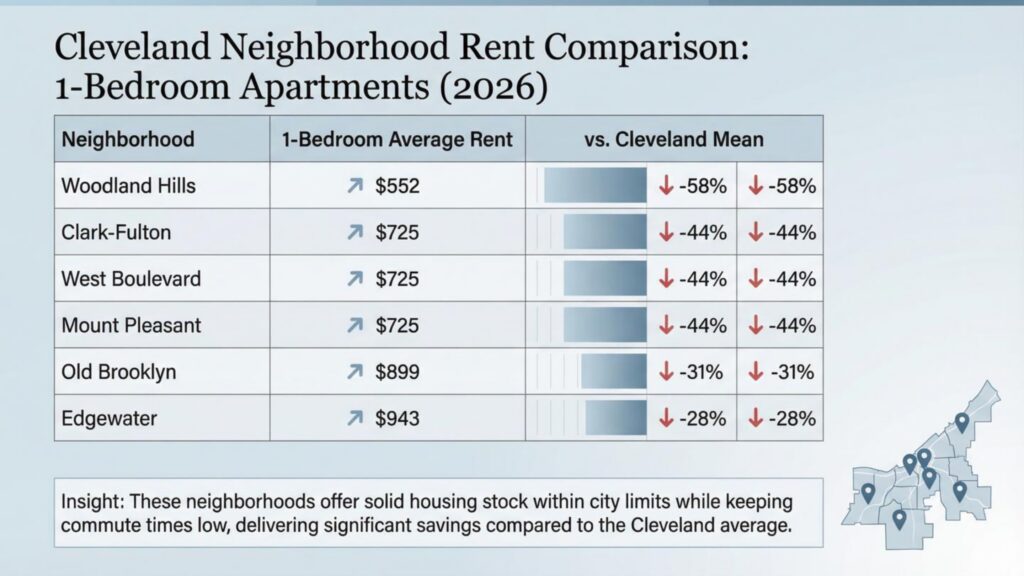
Budget-friendly Cleveland neighborhoods include Woodland Hills ($552 for a 1-bedroom), Clark-Fulton ($725), and Old Brooklyn ($899). Trendy areas like Ohio City ($2,047), Tremont ($2,082), and Little Italy ($2,362) cost much more. About 59% of Cleveland households rent.
Cincinnati Rent Prices
Cincinnati rent averages $1,451 monthly. This is up 3.55% from last year. One-bedroom units run $1,118 to $1,269. Two-bedrooms cost $1,365 to $1,523. About 61% of Cincinnati residents rent. This is the highest rate among Ohio’s major cities.
The cheapest Cincinnati neighborhoods include Cedar Grove ($650 for a 1-bedroom), Westwood ($660), and West End ($736). Mount Adams is the most expensive at $2,220 average rent. Downtown and the Central Business District charge $1,944 for one-bedrooms.
Dayton Rent Prices
Dayton offers some of Ohio’s most affordable rent at $1,083 average. One-bedroom apartments cost just $752. Two-bedrooms run $924. Rent increased only 1.81% over the past year. About 48% of Dayton’s housing units are rentals.
Downtown Dayton costs more at $1,473 average. But most neighborhoods stay under $1,000. Forest Ridge-Quail Hollow has the cheapest one-bedrooms at $500. South Park is the priciest neighborhood at $1,340 for a one-bedroom.
Toledo Rent Prices
Toledo ranks among Ohio’s cheapest rental markets. Average rent sits at $967. One-bedrooms run $725 to $797. Two-bedrooms are $899 to $976. Zillow data shows Toledo rent runs 51% below the national average.
The cheapest Toledo neighborhoods include Scott Park ($495 for a 1-bedroom) and North Towne ($525). Downtown Toledo averages $1,045 to $1,161 for one-bedrooms. About 64% of Toledo rentals cost under $1,000 per month.
Which Ohio Cities Have the Cheapest Rent?
Youngstown is Ohio’s most affordable major city for renters. Redfin research puts Youngstown at the top of affordable Ohio cities. One-bedroom rent averages just $722 per month. That is 56% below the national average.
| City | 1-BR Average | 2-BR Average | vs. National | Cost of Living Index |
|---|---|---|---|---|
| Youngstown | $722 | $844 | -56% | 74 (26% below avg) |
| Toledo | $725 | $902 | -56% | 77 (23% below avg) |
| Dayton | $752 | $924 | -54% | 81 (19% below avg) |
| Canton | $794 | $1,197 | -51% | 80 (20% below avg) |
| Akron | $880 | $1,137 | -46% | 81 (19% below avg) |
| Springfield | $827 | $995 | -49% | 79 (21% below avg) |
| Mansfield | $850 | $1,050 | -48% | 89 (11% below avg) |
Several factors keep rent low in these cities. Population decline over recent decades left excess housing. Manufacturing job losses reduced demand. Houzeo research shows Youngstown, Niles, Toledo, and Steubenville have Ohio’s lowest cost of living. SoFi analysis adds Van Wert at just $585 per month average rent.
Which Ohio Cities Have the Most Expensive Rent?
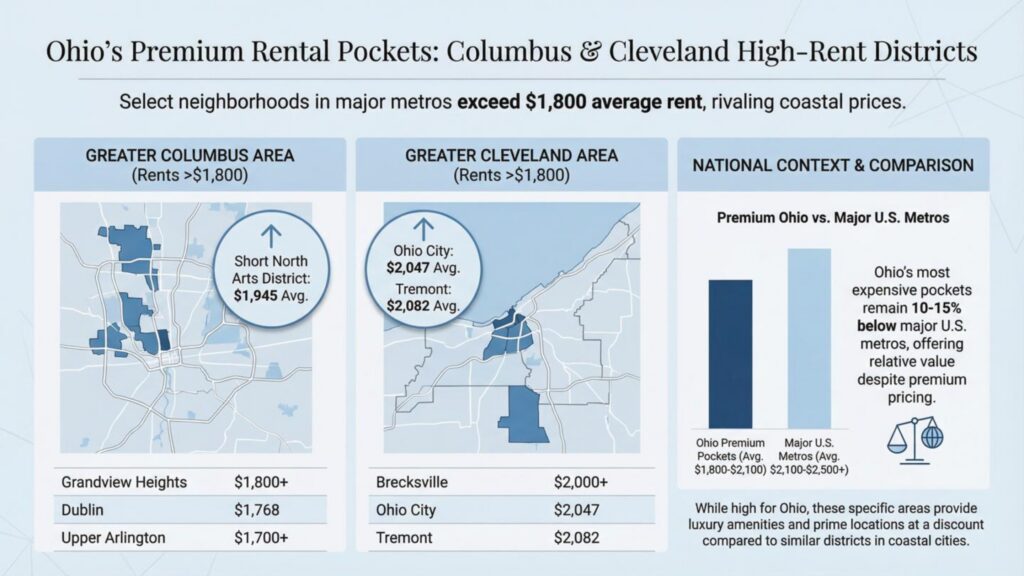
Columbus suburbs and Cleveland’s affluent neighborhoods have Ohio’s highest rents. Apartments.com data identifies Brecksville, Montgomery, and Grandview Heights as Ohio’s priciest rental markets.
| City/Area | Average Rent | 1-BR Average | 2-BR Average | Notes |
|---|---|---|---|---|
| Grandview Heights | $1,800+ | $1,500 | $2,100 | Columbus suburb, near downtown |
| Dublin | $1,768 | $1,375 | $1,768 | Affluent Columbus suburb |
| Upper Arlington | $1,700+ | $1,400 | $1,900 | Columbus suburb |
| Ohio City (Cleveland) | $2,047 | $1,759 | $2,200 | Trendy Cleveland neighborhood |
| Tremont (Cleveland) | $2,082 | $1,800 | $2,300 | Upscale Cleveland area |
| Short North (Columbus) | $1,945 | $1,600 | $2,200 | Arts district |
| Montgomery | $1,900+ | $1,550 | $2,100 | Cincinnati suburb |
| Brecksville | $2,000+ | $1,600 | $2,200 | Cleveland suburb |
Dublin rent increased 6.5% over the past year, adding $90 to monthly costs. Home prices in Dublin average over $640,000, pushing more residents toward renting. The Redfin list of Ohio’s priciest cities for home purchases includes many of these same suburbs.
How Much Does a One-Bedroom Apartment Cost in Ohio?
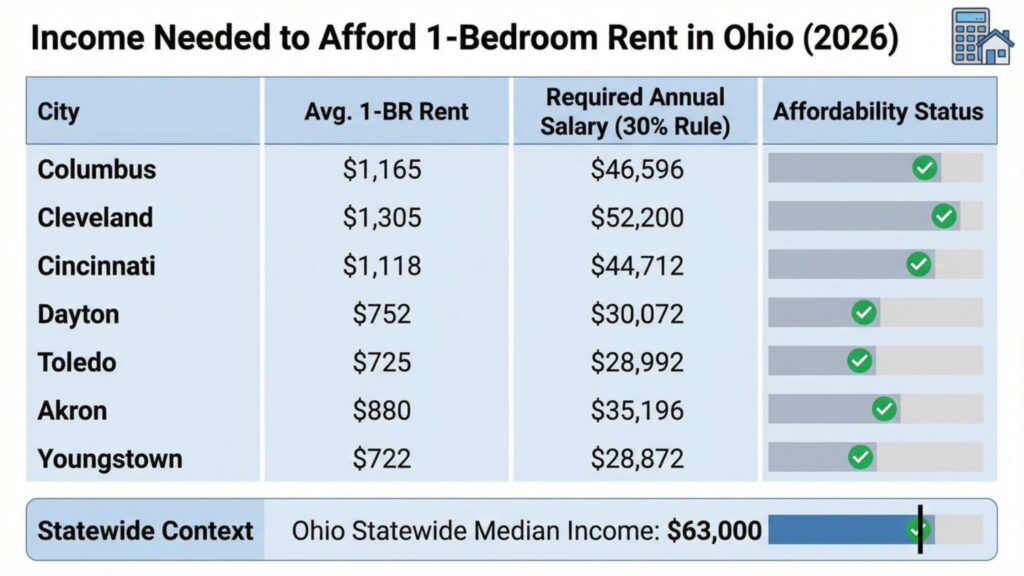
One-bedroom apartments in Ohio average $1,076 to $1,142 per month statewide. Prices range from under $500 in the cheapest neighborhoods to over $2,300 in premium locations.
| City | Studio | 1-Bedroom | Cheapest 1-BR Neighborhood | Price |
|---|---|---|---|---|
| Columbus | $930 | $1,165 | Forest Park East | $749 |
| Cleveland | $1,194 | $1,305 | Woodland Hills | $552 |
| Cincinnati | $1,099 | $1,118 | Cedar Grove | $650 |
| Dayton | $883 | $752 | Forest Ridge-Quail Hollow | $500 |
| Toledo | $625 | $725 | Scott Park | $495 |
| Akron | $782 | $880 | East Akron | $850 |
| Youngstown | $721 | $722 | North Youngstown | $550 |
| Canton | $605 | $794 | Southeast Canton | $600 |
The median one-bedroom rent in Ohio is $887 according to Apartment List data. This is the middle point of all listings. Using the 30% rule, you need to earn about $2,957 per month or $35,484 per year to afford the median one-bedroom comfortably.
How Much Does a Two-Bedroom Apartment Cost in Ohio?
Two-bedroom apartments in Ohio average $1,141 to $1,407 statewide. The HUD Fair Market Rent for a two-bedroom sits at $950. This represents the 40th percentile of actual rents.
| City | 2-Bedroom Average | 3-Bedroom Average | YoY Change |
|---|---|---|---|
| Columbus | $1,363 | $1,555 | +2.4% |
| Cleveland | $1,606 | $2,168 | +2.2% |
| Cincinnati | $1,408 | $1,704 | +3.5% |
| Dayton | $924 | $1,120 | +1.8% |
| Toledo | $976 | $1,120 | +2.5% |
| Akron | $1,137 | $1,252 | +2.9% |
| Youngstown | $844 | $950 | +1.3% |
| Canton | $1,197 | $1,400 | +2.0% |
Two-bedroom apartments work well for roommates splitting costs. In Columbus, two people sharing a $1,363 two-bedroom pay $681.50 each. That beats the $1,165 average for a one-bedroom by nearly $500 per person.
What Are Ohio Rent Prices by Apartment Size?
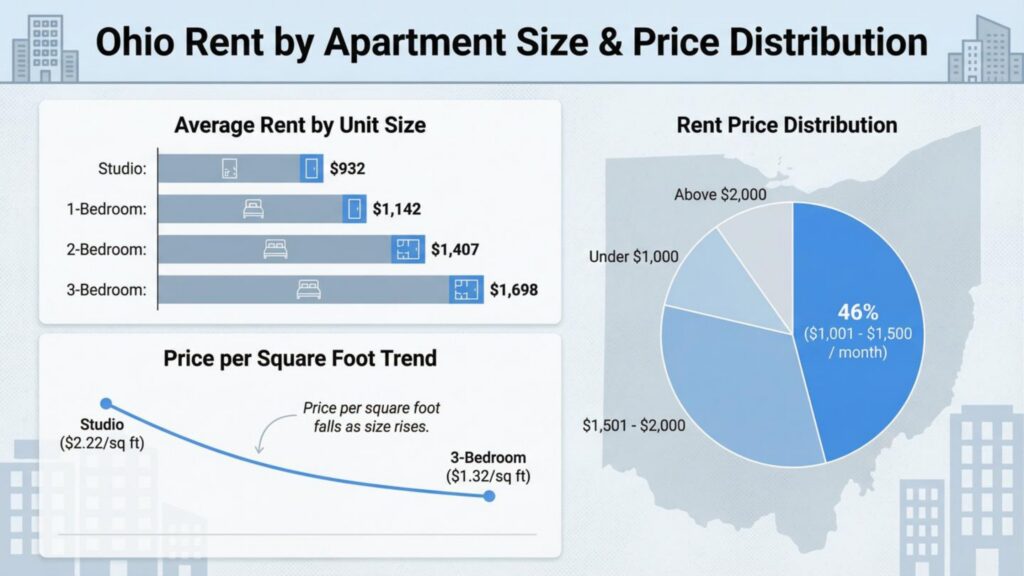
Rent increases with apartment size, but not proportionally. Studios average $932 statewide. Three-bedrooms hit $1,698. The jump from studio to one-bedroom adds about $210 per month. Going from one-bedroom to two-bedroom adds another $265.
| Unit Size | Ohio Average | Average Sq Ft | Price per Sq Ft | National Average |
|---|---|---|---|---|
| Studio | $932 | 420 | $2.22 | $1,384 |
| 1-Bedroom | $1,142 | 686 | $1.66 | $1,557 |
| 2-Bedroom | $1,407 | 1,010 | $1.39 | $1,876 |
| 3-Bedroom | $1,698 | 1,290 | $1.32 | $2,161 |
| 4-Bedroom | $1,496 | 1,500+ | $1.00 | $2,492 |
The largest share of Ohio rentals (46%) fall between $1,001 and $1,500 per month according to RentCafe data. About 19% rent for under $1,000. Only 2% cost more than $3,000 monthly.
How Have Ohio Rent Prices Changed Over Time?
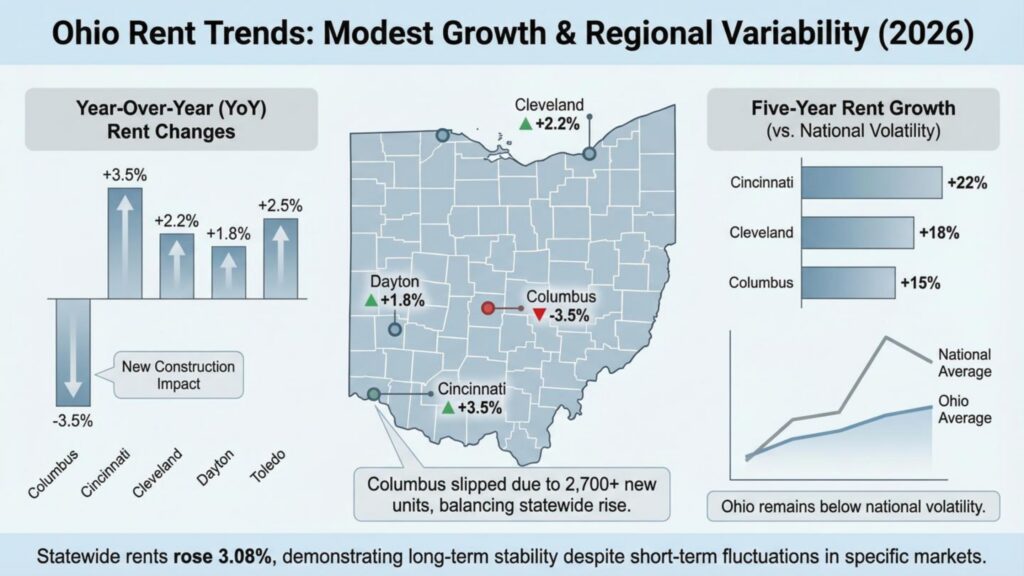
Ohio rent prices increased moderately over the past year. RentCafe reports a 3.08% statewide increase. This pushed average rent from $1,289 to $1,328. Some cities saw bigger jumps. Columbus actually saw a slight decline. RentHop analysis shows studio and one-bedroom prices fell year-over-year in some markets.
| City | YoY Change | 5-Year Change | Current Trend |
|---|---|---|---|
| Columbus | -3.5% | +15% | Declining (new construction) |
| Cleveland | +2.2% | +18% | Steady growth |
| Cincinnati | +3.5% | +22% | Above average growth |
| Dayton | +1.8% | +12% | Slow and steady |
| Toledo | +2.5% | +10% | Stable |
| Akron | +2.9% | +14% | Moderate growth |
| Youngstown | +1.3% | +8% | Minimal change |
| Dublin | +6.5% | +28% | Strong appreciation |
Columbus saw rent drop 3.5% due to new apartment construction adding supply. Redfin economist Taylor Fairweather called it a “return to normal” after sharp pandemic-era increases. She expects Columbus rents to rise again in 2026 as the city keeps growing.
Cincinnati posted the strongest growth among major cities at 3.5% year-over-year. Ohio ranked 8th for projected rent increases in 2025, though still below the 4.8% national average.
What Is the Rent Forecast for Ohio in 2026?
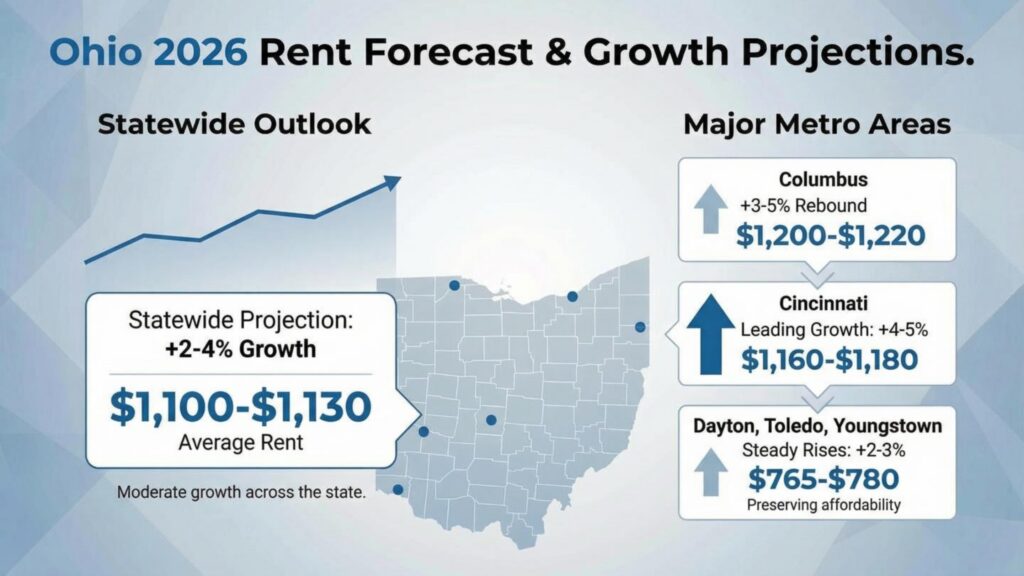
Ohio rent is expected to continue rising moderately through 2026. Industry forecasts project 2-4% increases statewide. Columbus will likely rebound after its 2025 dip. Cincinnati may see stronger growth given ongoing demand and limited new construction.
| City | 2025 Average 1-BR | Projected 2026 | Expected Change |
|---|---|---|---|
| Columbus | $1,165 | $1,200-$1,220 | +3-5% |
| Cleveland | $1,305 | $1,330-$1,360 | +2-4% |
| Cincinnati | $1,118 | $1,160-$1,180 | +4-5% |
| Dayton | $752 | $765-$780 | +2-3% |
| Toledo | $725 | $740-$755 | +2-4% |
| Ohio Statewide | $1,076 | $1,100-$1,130 | +2-5% |
Several factors will shape Ohio’s rental market in 2026. Job growth continues in healthcare, logistics, and technology. Migration from higher-cost states brings new renters. Millennials transitioning to homeownership may ease demand slightly in some markets. The rentership rate declined 1.8% to 6.6% in Ohio’s three largest cities from 2014 to 2024 as more residents became homeowners.
What Salary Do You Need to Afford Rent in Ohio?
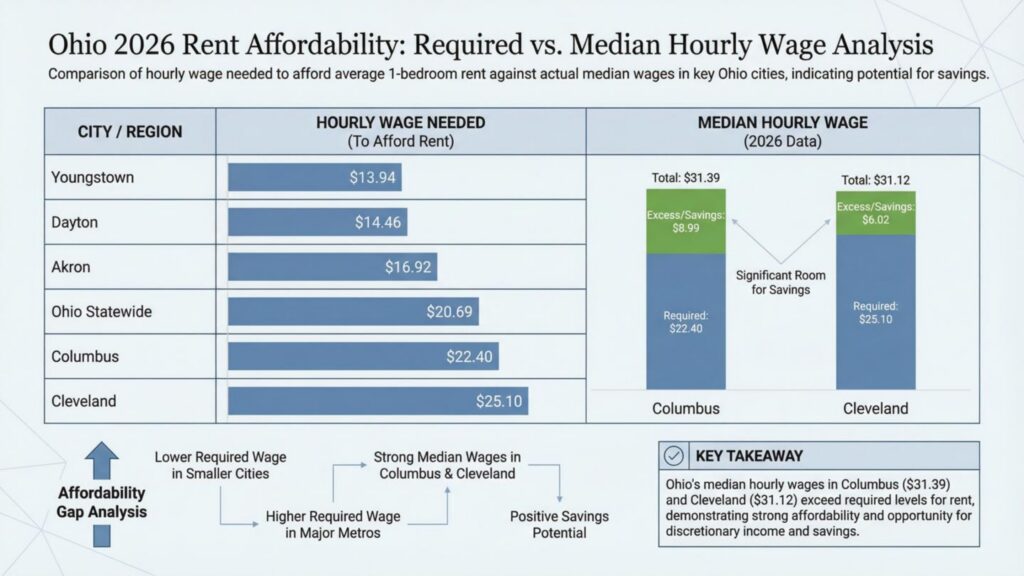
Using the 30% rule (spending no more than 30% of income on rent), you need different salaries depending on your city and apartment size.
| City | 1-BR Rent | Monthly Income Needed | Annual Salary Needed | Hourly Wage (40 hrs) |
|---|---|---|---|---|
| Columbus | $1,165 | $3,883 | $46,596 | $22.40 |
| Cleveland | $1,305 | $4,350 | $52,200 | $25.10 |
| Cincinnati | $1,118 | $3,726 | $44,712 | $21.50 |
| Dayton | $752 | $2,506 | $30,072 | $14.46 |
| Toledo | $725 | $2,416 | $28,992 | $13.94 |
| Akron | $880 | $2,933 | $35,196 | $16.92 |
| Youngstown | $722 | $2,406 | $28,872 | $13.88 |
| Ohio Statewide | $1,076 | $3,586 | $43,032 | $20.69 |
Ohio’s median household income sits around $63,000. This is well above the $43,032 needed to afford the average statewide rent. The state’s unemployment rate is near 4.5%, close to the national average. Major employers include healthcare systems like Cleveland Clinic and Ohio State Wexner Medical Center, manufacturers, and state government.
For context, the median hourly wage in Columbus was $31.39 as of mid-2025. Cleveland averaged $31.12. Both exceed the income needed to afford a one-bedroom apartment comfortably.
Which Ohio Neighborhoods Have the Best Rent Deals?
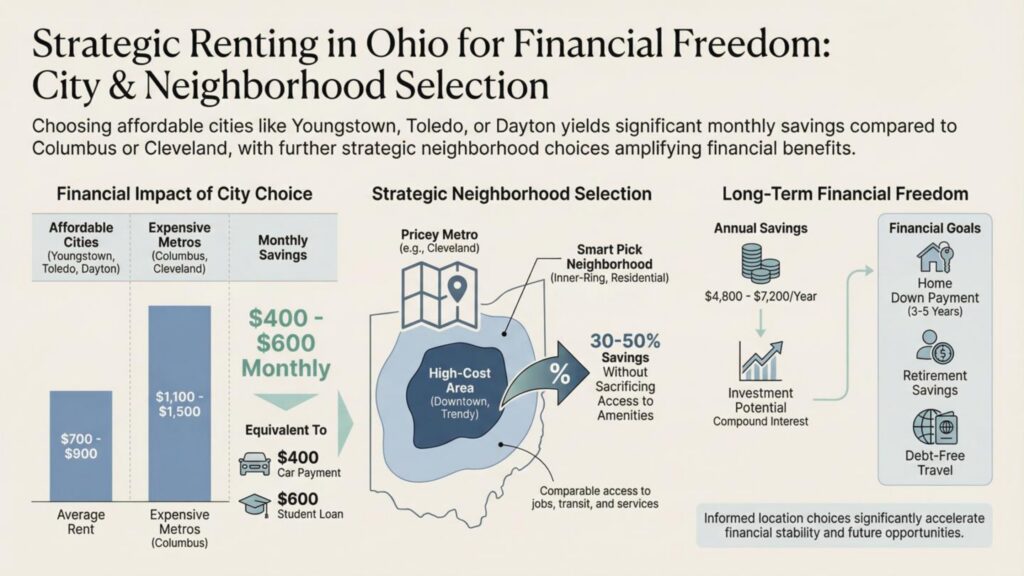
Every major Ohio city has neighborhoods where rent costs much less than the city average. Finding these areas can save you $200-500 per month. BestNeighborhood.org data maps rent costs across the state to help identify affordable zones.
Best Budget Neighborhoods in Columbus
Columbus has affordable pockets despite being Ohio’s most expensive major market. The south and west sides offer the best deals.
| Neighborhood | 1-BR Rent | vs. City Average | Character |
|---|---|---|---|
| Forest Park East | $749 | -36% | Quiet residential |
| Old North Columbus | $750 | -36% | Near OSU, older buildings |
| Highland West | $785 | -33% | Suburban feel |
| Franklinton | $799 | -31% | Gentrifying, arts scene |
| Westland | $837 | -28% | Strip mall access |
| Lincoln Village South | $850 | -27% | Family-friendly |
Best Budget Neighborhoods in Cleveland
Cleveland’s east and west sides offer rent well below the $1,305 city average. The gap between cheap and expensive neighborhoods is dramatic.
| Neighborhood | 1-BR Rent | vs. City Average | Character |
|---|---|---|---|
| Woodland Hills | $552 | -58% | East side, residential |
| Clark-Fulton | $725 | -44% | Hispanic community |
| West Boulevard | $725 | -44% | West side residential |
| Mount Pleasant | $725 | -44% | Southeast Cleveland |
| Old Brooklyn | $899 | -31% | South side, stable |
| Edgewater | $943 | -28% | Near lake, park access |
Best Budget Neighborhoods in Cincinnati
Cincinnati’s west side neighborhoods and northern suburbs offer savings compared to the trendy Over-the-Rhine and downtown areas.
| Neighborhood | 1-BR Rent | vs. City Average | Character |
|---|---|---|---|
| Cedar Grove | $650 | -42% | Quiet residential |
| Westwood | $660 | -41% | Large west side area |
| West End | $736 | -34% | Near downtown, improving |
| West Price Hill | $737 | -34% | Hillside views |
| Hartwell | $759 | -32% | North Cincinnati |
| Clifton | $950 | -15% | Near UC, walkable |
How Does Ohio Rent Compare to Neighboring States?
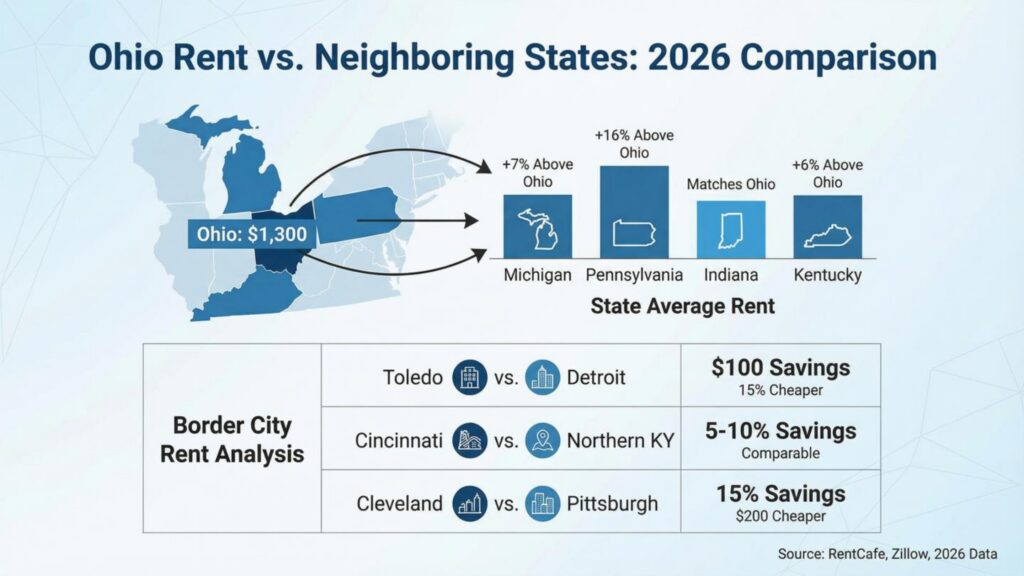
Ohio offers better rental value than most surrounding states. Only Indiana and Kentucky match Ohio’s affordability. Michigan, Pennsylvania, and West Virginia cost slightly more on average.
| State | Average Rent | 1-BR Average | vs. Ohio | Cost of Living Index |
|---|---|---|---|---|
| Ohio | $1,300 | $1,076 | – | 83 |
| Indiana | $1,250 | $1,050 | -2% | 84 |
| Kentucky | $1,200 | $1,000 | -7% | 81 |
| Michigan | $1,350 | $1,150 | +7% | 89 |
| Pennsylvania | $1,500 | $1,250 | +16% | 94 |
| West Virginia | $1,100 | $900 | -16% | 77 |
Border cities offer comparison opportunities. Toledo sits just south of Michigan, where Detroit rent averages $1,400. Cincinnati sits across from Newport and Covington, Kentucky, where rent runs 5-10% cheaper. Cleveland competes with Pittsburgh, where rent costs 15% more.
Tips for Finding Affordable Rent in Ohio
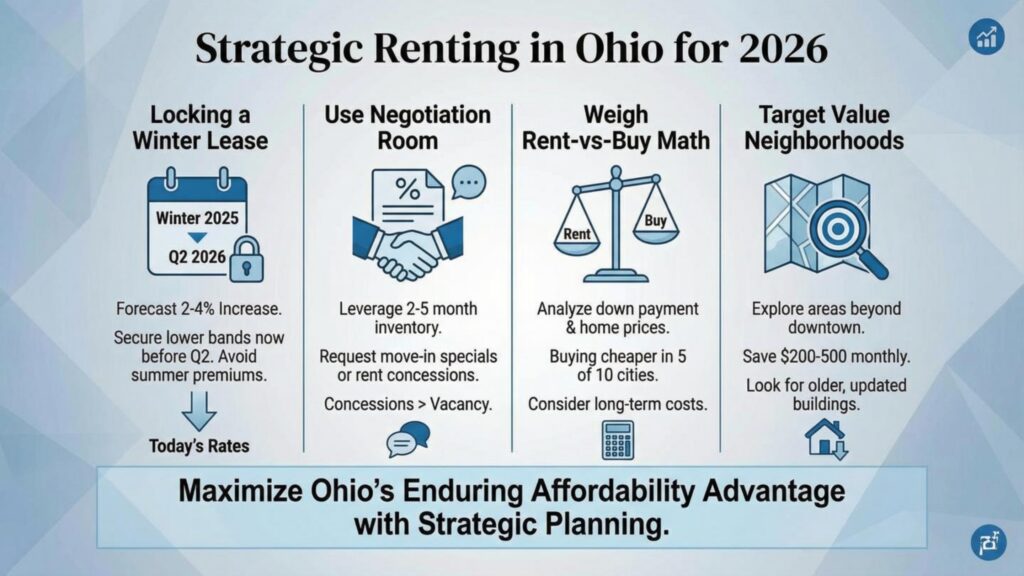
Ohio’s rental market gives renters leverage that doesn’t exist in tighter markets. MortgageResearch data shows buying is actually cheaper than renting in five of Ohio’s largest cities. Here’s how to get the best deal whether you rent or buy.
Time Your Move Right
Winter leases (December through February) typically cost $50-100 less per month than summer leases. Landlords want to avoid vacancies during slow months. College towns like Columbus see biggest summer premiums near Ohio State campus.
Look Beyond Downtown
Downtown and trendy neighborhoods in Columbus, Cleveland, and Cincinnati cost 30-50% more than surrounding areas. A 10-15 minute drive can save hundreds monthly. Public transit reaches many affordable neighborhoods.
Consider Older Buildings
Newer construction with amenities like gyms and pools charges premium rents. Older apartment buildings from the 1960s-1980s offer basic units at lower prices. Many have been updated with new appliances while keeping rents competitive.
Negotiate
Ohio’s 2-5 month inventory of available rentals gives renters negotiating power. Ask for move-in specials, reduced security deposits, or one month free on longer leases. Landlords often prefer concessions over vacancies.
Check Utility Costs
A $50 lower rent can be offset by $100 higher utilities. Older buildings with poor insulation cost more to heat in Ohio winters. Ask for average utility bills before signing. Some buildings include heat or water in rent.
Ohio Rental Market by Metro Area
Each Ohio metro area has distinct characteristics affecting rent prices and availability. RealWealth forecasts predict continued growth in Columbus and Cincinnati while smaller metros stay flat.
Columbus Metro
The Columbus metro includes Franklin County plus suburbs in Delaware, Licking, Fairfield, and Pickaway counties. The region added over 50,000 residents in recent years. This drove apartment construction. Apartment List reports over 2,700 available rentals at any time. The market temperature remains “warm” with steady demand.
Key Columbus submarkets include Dublin (average rent $1,768), Westerville ($1,350), Grove City ($1,200), and Reynoldsburg ($1,150). Downtown Columbus has the highest rents. Suburban options stay more affordable.
Cleveland Metro
Greater Cleveland spans Cuyahoga, Lake, and Geauga counties. The city proper lost population for decades, but inner-ring suburbs stay stable. About 1,350 rentals are available at any time according to Zillow.
The East Side/West Side divide affects rent prices. West side suburbs like Lakewood and Westlake cost more than east side areas. Downtown Cleveland’s Warehouse District and Flats have new luxury construction at premium prices.
Cincinnati Metro
The Cincinnati metro crosses into Kentucky and Indiana. Northern Kentucky suburbs offer alternatives to Ohio pricing. About 1,850 rentals are available across the metro.
The Over-the-Rhine neighborhood gentrified dramatically over the past decade, pushing rents up. Hyde Park and Mount Adams remain expensive. Price Hill, Westwood, and northern suburbs offer better value.
Smaller Ohio Metros
Dayton, Toledo, Akron, Canton, and Youngstown metros each have 300-600 available rentals at any time. Competition is lower, giving renters more options. These markets stay stable without rapid price changes.
Frequently Asked Questions About Ohio Rent
What is the cheapest city to rent in Ohio?
Youngstown offers Ohio’s cheapest rent among major cities. One-bedroom apartments average $722 per month. The overall cost of living sits 26% below the national average. Toledo and Dayton are close seconds with one-bedrooms under $800.
Is Ohio a good state for renters?
Ohio ranks among the best states for renters due to affordability. Rent averages 38% below national prices. Ohio is the 6th cheapest state for renters. Job markets in Columbus, Cleveland, and Cincinnati provide employment options.
How much do you need to earn to rent in Columbus?
To afford the average Columbus one-bedroom rent of $1,165, you need to earn about $46,596 per year or $22.40 per hour working full-time. The median Columbus income of around $65,000 comfortably covers this amount.
Are Ohio rents going up or down?
Ohio rents increased about 3% statewide over the past year. Columbus bucked the trend with a 3.5% decrease due to new apartment construction. Most cities saw moderate 2-4% increases. Forecasts predict continued modest growth of 2-4% through 2026.
What is the most expensive city to rent in Ohio?
Brecksville, Montgomery, and Grandview Heights top Ohio’s expensive rental markets. These Cleveland and Columbus suburbs have rents above $1,800 per month. Within major cities, Downtown Columbus and Cleveland’s Ohio City and Tremont neighborhoods have the highest prices.
Is it cheaper to rent or buy in Ohio?
In five of Ohio’s ten largest cities, buying is cheaper than renting. Cleveland, Toledo, Akron, Dayton, and Youngstown all favor buying over renting. Columbus, Cincinnati, and Canton favor renting. The break-even depends on down payment ability and local home prices.
What percentage of Ohio residents rent?
About 33% of Ohio households rent their homes. 67% own. This ratio varies by city. Cleveland has 59% renters. Cincinnati has 61% renters. Columbus sits at roughly 45% renters. Youngstown has just 44% renters.
When is the best time to find cheap rent in Ohio?
Winter months (December through February) typically offer the best rental deals. Demand drops during cold weather and holidays. Landlords may offer concessions to fill vacancies. Summer sees peak demand and higher prices, especially in college towns like Columbus near Ohio State.
How much is a studio apartment in Ohio?
Studios in Ohio average $932 per month. Toledo offers the cheapest studios at $625. Columbus studios average $930. Cleveland studios cost $1,194, among the highest due to limited inventory of smaller units.
What utilities cost in Ohio apartments?
Basic utilities (electric, heat, water, garbage) for a 900-square-foot apartment run $207 to $271 per month. Internet adds $50-75 monthly. Winter heating bills run higher due to Ohio’s cold weather. Total utility costs average $280-350 per month.