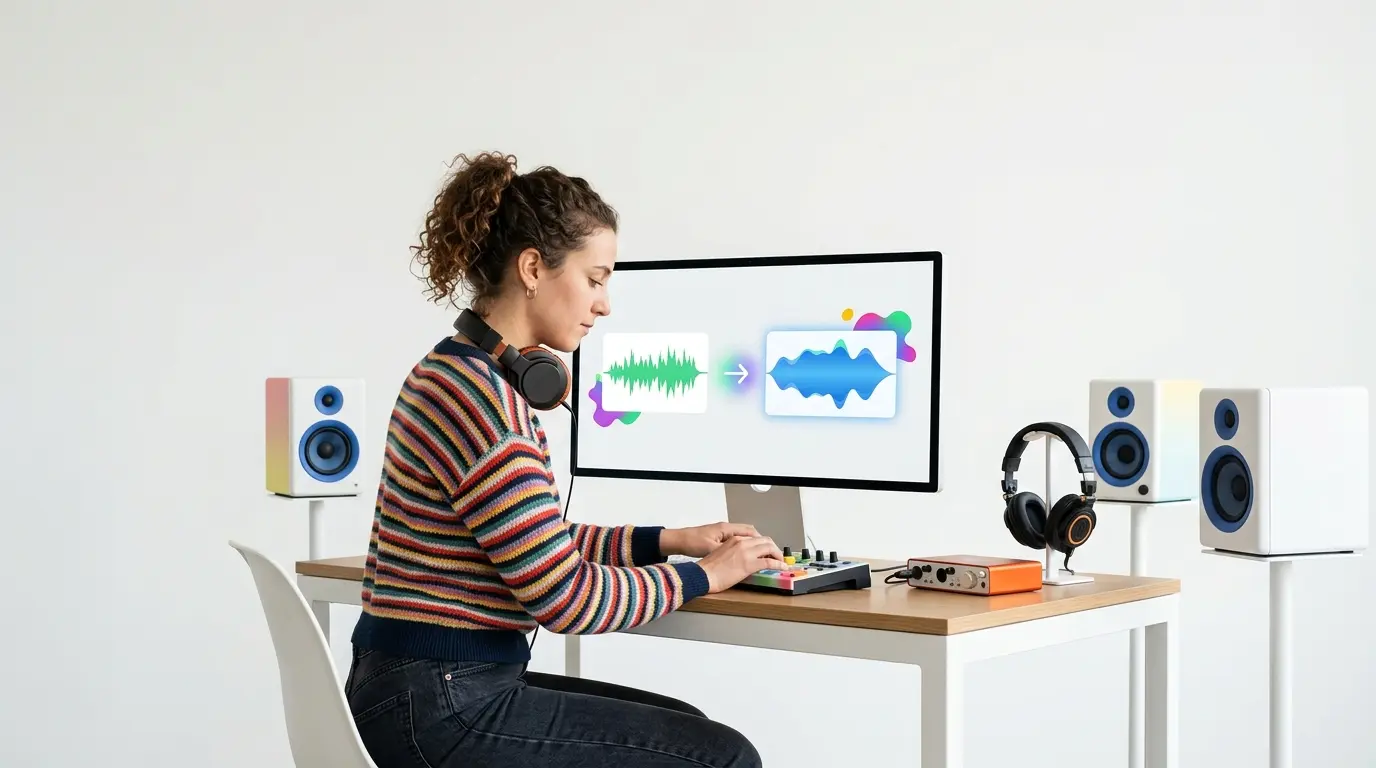
Audio mastering is the final technical stage of music production, the step that ensures a finished mix sounds balanced, consistent, and competitive across every playback device, from studio monitors to earbuds to club PA systems. Traditionally carried out by specialist engineers in purpose-built rooms, mastering has always required a trained ear, calibrated equipment, and an understanding of how music translates to the real world.
AI mastering on the other hand applies the same fundamental processes (EQ, compression, limiting, stereo imaging, and loudness normalisation). However, it uses a machine learning model trained on large datasets of professionally mastered audios.
How AI Mastering Works
AI mastering replaces the human engineer with a machine learning model trained on large datasets of professionally mastered audio. When you upload a track, the system analyses its loudness, frequency balance, dynamic range, and stereo width, then builds a processing chain tailored to that specific audio. The result is usually ready in one to two minutes.
There is no studio booking, no email thread, and no multi-day wait for revisions. You upload a mix, choose settings such as intensity level, style preference, and target loudness, and receive a mastered file. On a well-prepared mix, the best AI mastering tools produce results that are genuinely competitive for independent release on streaming platforms.
Human vs. AI Mastering
| Factor | Human Mastering | AI Mastering |
| Sound quality | Highest ceiling; nuanced, context-aware decisions shaped by experience and artistic intent | Very good on clean mixes; can sound generic on complex or unusual material |
| Cost | $50 to $500+ per track | $5 to $20 per track or subscription-based |
| Speed | 1 to 5 business days | 1 to 2 minutes |
| Revisions | Collaborative back-and-forth with the engineer | Instant re-processing with adjusted settings; no human feedback loop |
| Problem-solving | Can diagnose and work around mix issues; adapts approach in real time | Applies learned patterns; struggles with problems outside its training data |
| Emotional nuance | Engineer understands artistic intent and makes creative judgements | No understanding of context, genre conventions, or what the artist is trying to say |
| Consistency | Varies by engineer and session; great engineers are highly consistent | Algorithmically consistent; same input always produces a predictable result |
| Scalability | Limited by the engineer’s schedule | Unlimited; process hundreds of tracks instantly |
Top 5 AI Mastering Tools in 2026
1. LANDR
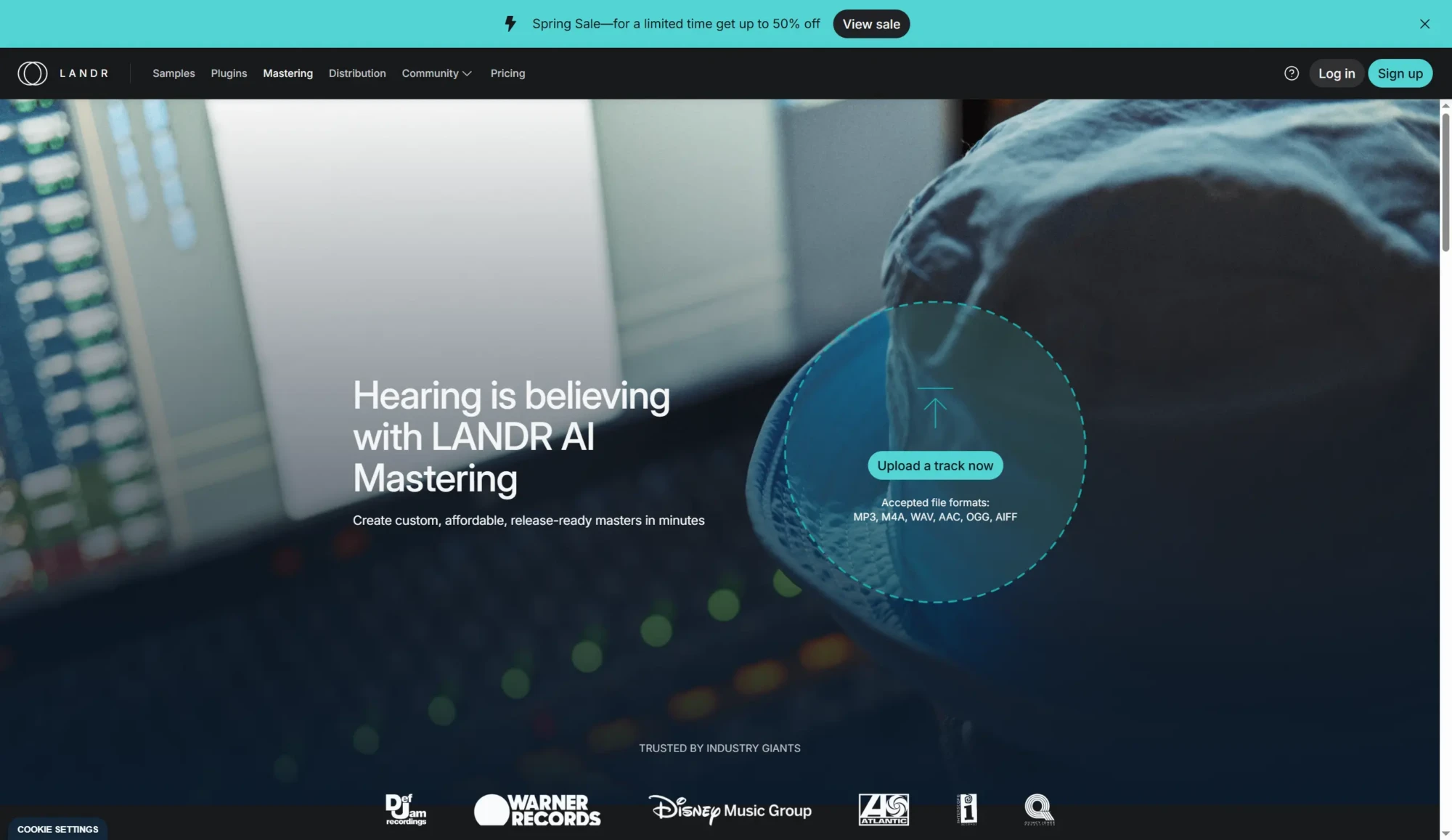
When it comes to AI mastering for working musicians today, LANDR wins across three areas that matter most: output quality, ethical AI development, and affordability. It was one of the earliest platforms to apply serious machine learning to audio mastering and has been refining its engine for over a decade, which shows in the consistency and intelligence of the results it produces.
Its engine analyses each uploaded track individually and builds a custom processing chain rather than applying a generic preset. This matters in practice because a dense hip-hop track and a delicate acoustic folk recording require fundamentally different approaches, and a system that treats them the same will produce mediocre results on both. LANDR handles that distinction automatically.
On the affordability front, LANDR starts at $8.25/month for unlimited masters or $10 for a single WAV master, which changes the economics of mastering entirely for independent artists releasing frequently. A five-track EP that might cost $500 or more with a human engineer can be mastered at that monthly rate regardless of how many times you revise and re-run it.
The ethical training question is increasingly relevant in 2026 as artists and labels scrutinise how AI models are built. LANDR’s engine has been developed with input from professional audio engineers over many years using properly licensed training data, which is a meaningful differentiator as the industry pushes for greater accountability in AI development.
LANDR is available as both an online mastering service (browser-based, no software required) and a DAW plugin that runs the same engine in real time inside Ableton, Logic, Pro Tools, or any VST or AU compatible host. The platform also bundles distribution, sample libraries, collaboration tools, and plugin access at higher subscription tiers, making it a broader production ecosystem rather than a mastering-only service.
2. iZotope Ozone 12
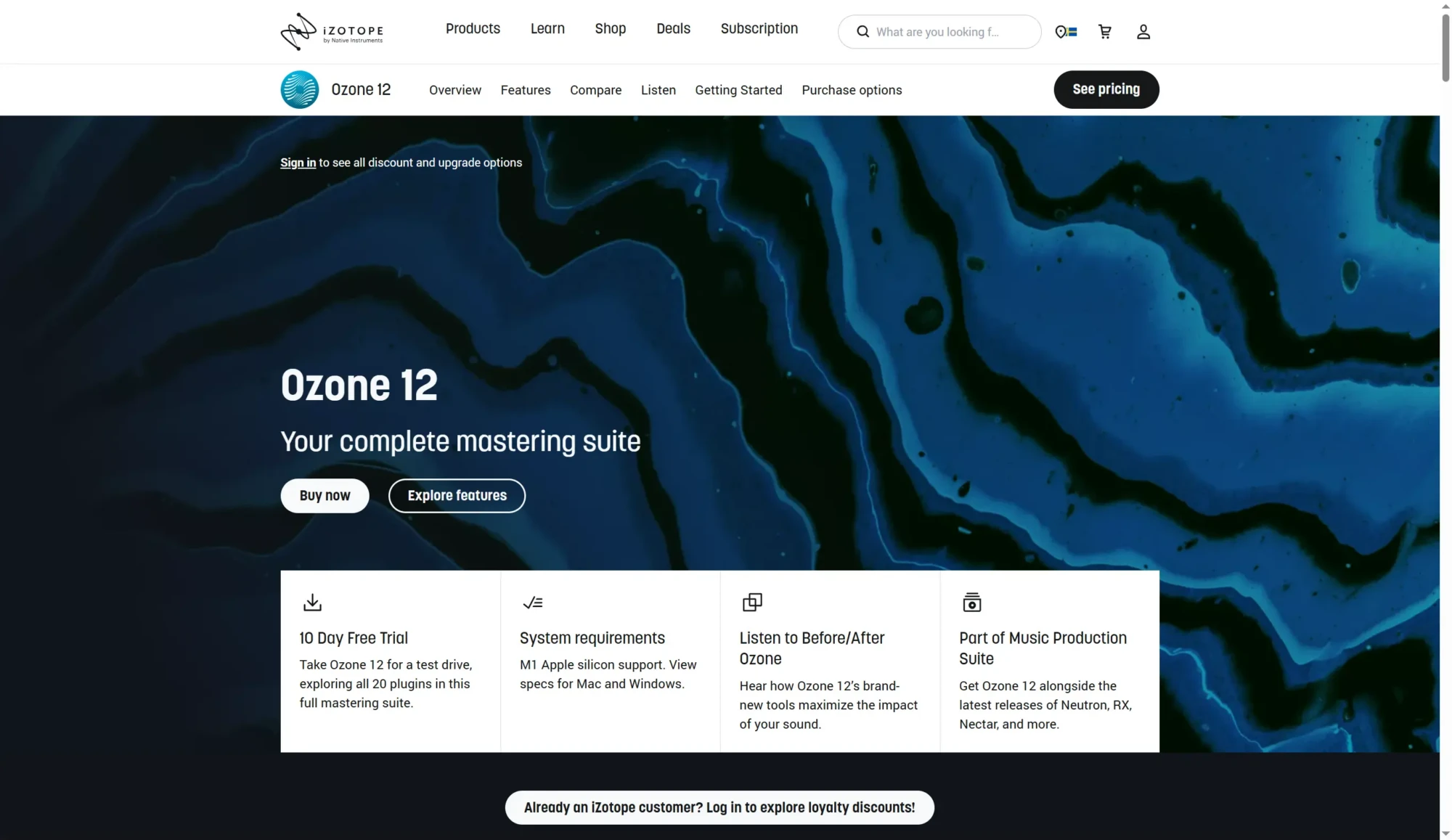
iZotope Ozone is the go-to choice for producers who want to stay inside their DAW and retain hands-on control over the mastering process. Its Master Assistant uses machine learning to analyse your track, optionally against a reference track you provide, and builds a full mastering chain with EQ, dynamics, limiting, and stereo imaging modules. It also includes a Stem Focus feature that can reach into a stereo file to adjust specific elements such as vocals or low end without reprocessing the entire track.
The key difference with Ozone compared to fully automated online services is transparency. Every module it builds is visible, editable, and bypassable. You can accept the AI suggestions as a starting point and refine from there, or use it purely as a learning tool by inspecting how it has approached a particular track.
3. eMastered
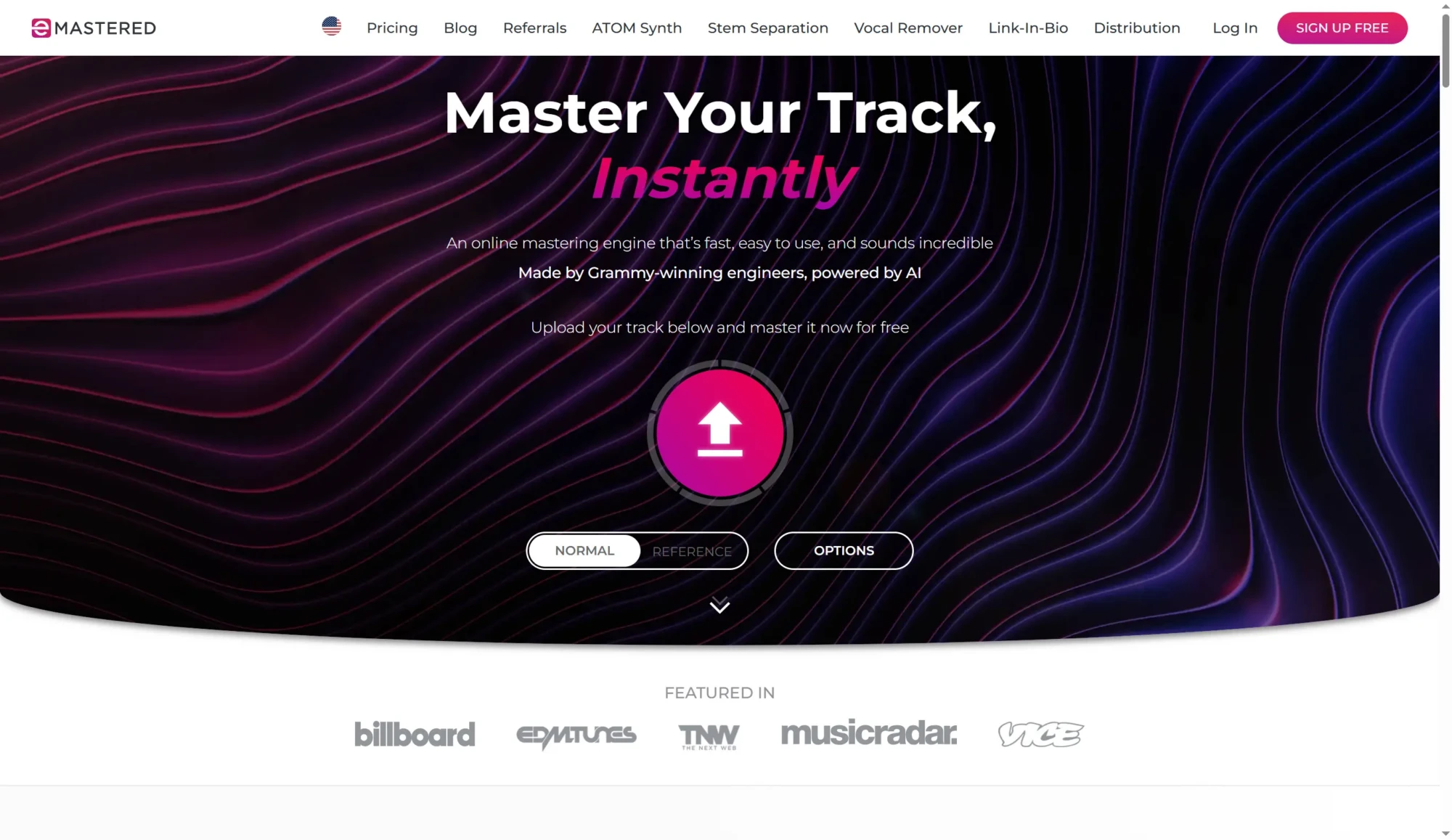
eMastered was built by Grammy-winning engineers and sits at the more hands-on end of the AI mastering spectrum. After the AI analyses and processes your track, it gives you visible sliders to manually adjust compression intensity, EQ balance across low, mid, and high bands, stereo width, volume, and overall mastering strength before downloading. You can also upload a reference track and have the system match its tonal and dynamic characteristics.
This level of post-AI adjustment is a genuine differentiator. For producers who are not ready to move into a full plugin environment like Ozone but still want some say in the final result, eMastered offers a useful middle ground. The engine uses machine learning that improves with each track it processes.
The main criticism from reviewers is pricing. At the time of writing, the most affordable plan runs around $13/month billed annually, rising to $49/month on a rolling monthly basis. For producers releasing infrequently, the cost per master works against it compared to competitors offering unlimited masters at a lower entry price.
4. Sonible smart:EQ 4
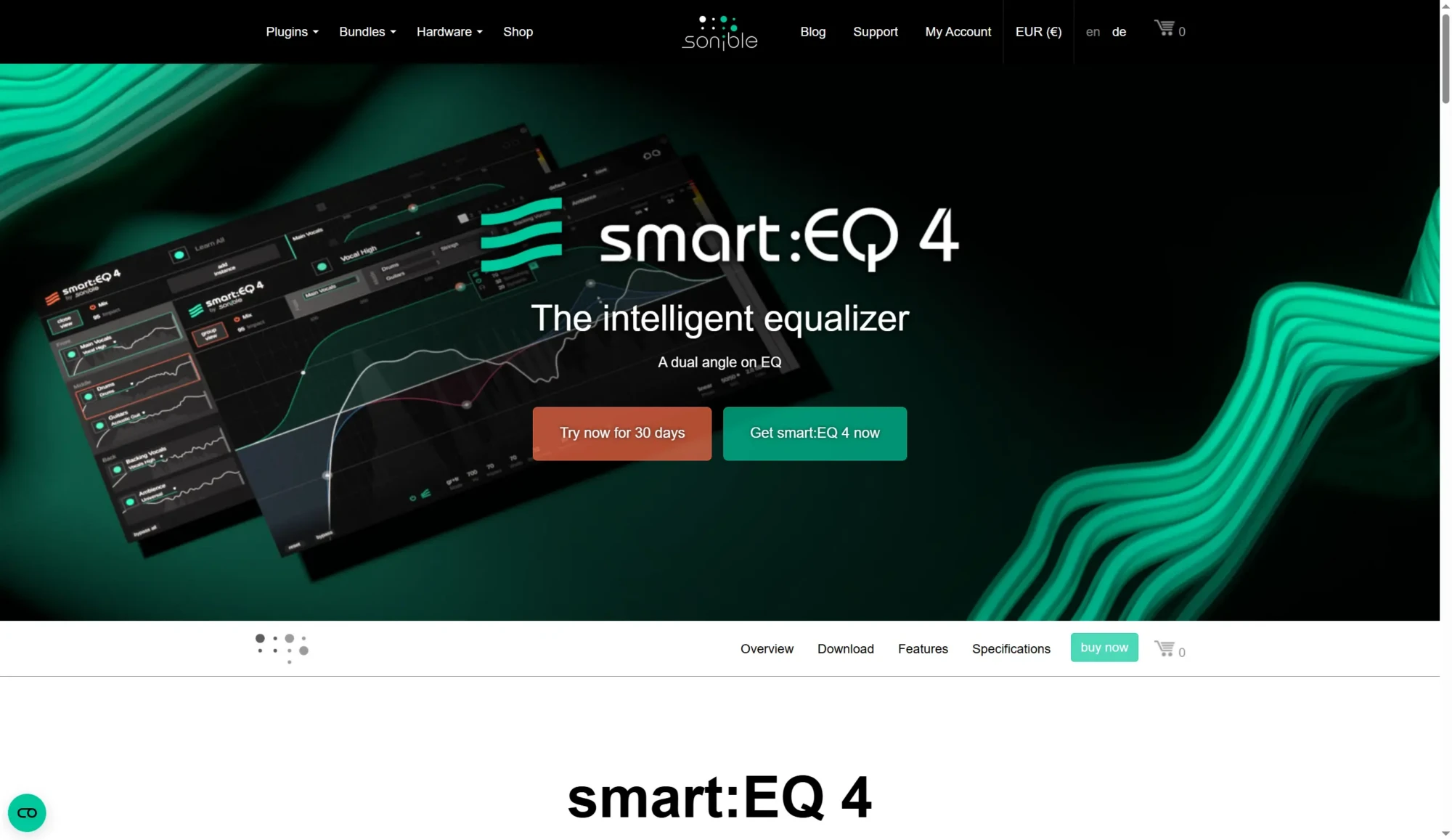
Sonible is an Austrian audio software company that has built a strong reputation for intelligent, minimalist plugin design. Smart:master is their AI mastering plugin, built around the idea that most producers want solid results without spending time in menus. The interface is designed around a single analysis step: the AI listens to your track, reads its genre and sonic characteristics, and applies targeted adjustments to loudness, spectral balance, and dynamic density.
What sets smart:master apart from other plugins is its readability. The interface shows what the processing is doing in a clear, approachable way, and it offers a set of style controls (Clean, Natural, Punchy, Open) that meaningfully change the character of the master rather than just adjusting loudness levels. It runs natively in any DAW as a VST, AU, or AAX plugin.
Sonible’s tools consistently earn strong feedback from producers who find iZotope Ozone’s full feature set more than they need and want something that sits quietly on the master bus and delivers consistent results.
5. BandLab Mastering
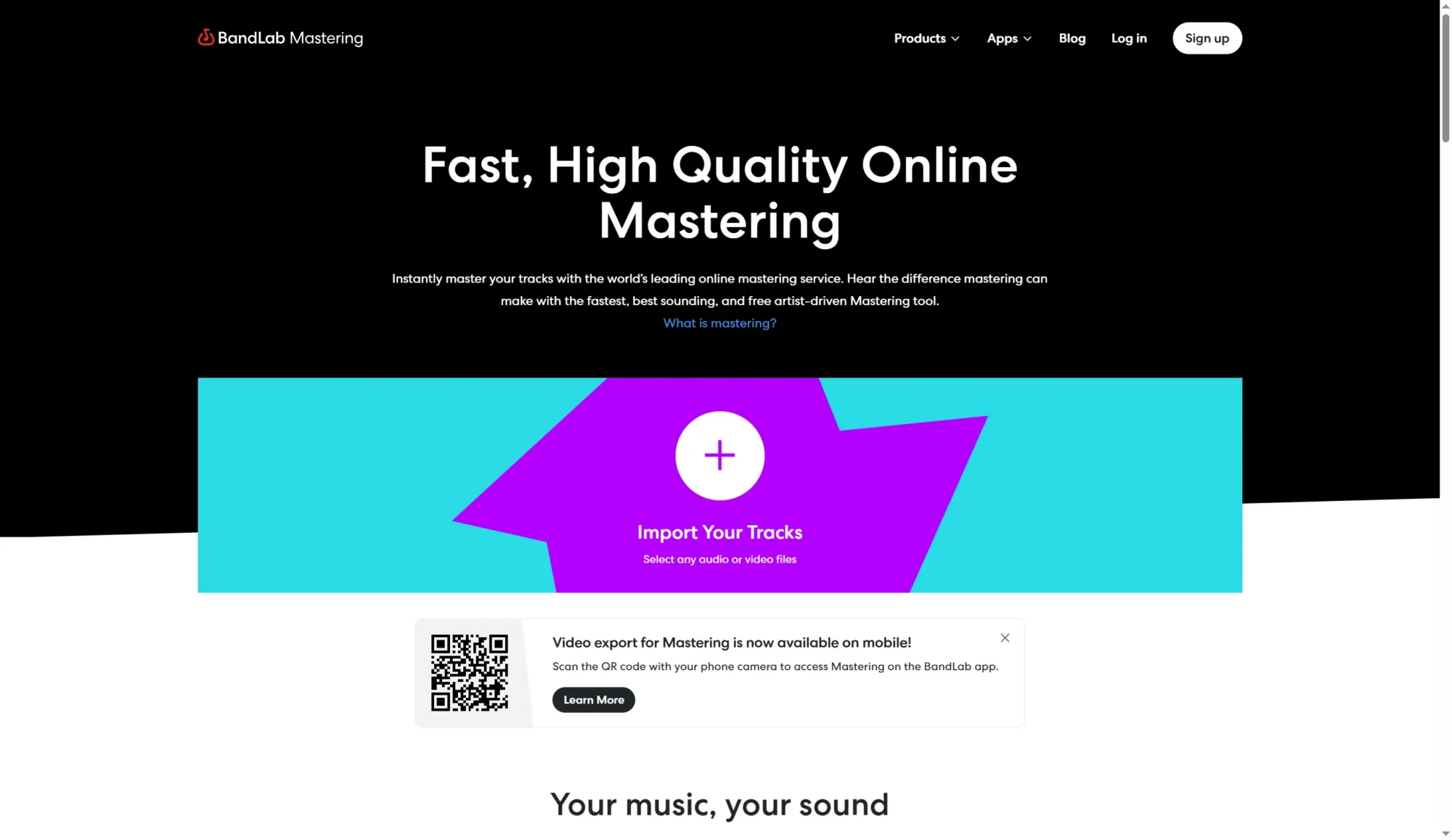
BandLab Mastering is the most accessible entry point on this list. It is free, browser-based, and requires no account for a basic preview. You upload a stereo mix, choose from four preset styles (Universal, Fire, Clarity, Tape), and receive a mastered file. The platform was developed in collaboration with Grammy-winning engineers.
The trade-offs are worth knowing. BandLab Mastering exports at 44.1kHz/16-bit regardless of your source file’s resolution, which is below the standard offered by dedicated services. There is no reference track matching, no DAW integration, and limited customisation beyond preset selection. Independent reviews note that results can be inconsistent depending on the source material.
For an independent artist mastering their first track with no budget, BandLab is a legitimate and genuinely free starting point. For anyone releasing music regularly or wanting consistent quality across a body of work, the limitations become a practical constraint.
When to choose between AI Mastering and Human Engineers
Choose AI mastering when:
- You are an independent artist releasing regularly on a tight budget
- The release needs to go out quickly
- You want a reference master to check how your mix translates before sending to a human engineer
- You produce high volumes of music such as beat packs, content library tracks, or demo releases
- You want mastering integrated directly into your DAW workflow
Choose a human engineer when:
- The release is a commercial album, EP, or high-profile single where quality ceiling matters
- You are pressing to vinyl or delivering for broadcast
- Your mix has complex problems that need a trained ear and specialist tools to resolve
- You want a genuine creative conversation about the sound of your record
For many working musicians in 2026, the most practical approach is a combination: AI mastering for regular releases and fast turnaround work, with a human engineer brought in for the records that matter most. The two approaches serve different needs at different stages of a career and a release cycle.