Fake Amazon Review Generator
A free satirical fake review generator creates obviously exaggerated parody reviews to help you spot fake reviews in the wild. For entertainment and educational purposes only — learn what fake reviews look like so you can identify them.
DISCLAIMER: This tool generates PARODY reviews for entertainment and educational purposes only. These reviews are intentionally exaggerated to help identify fake reviews. Do NOT post AI-generated reviews on Amazon, Google, Yelp, or any real platform. Doing so may violate FTC regulations, platform terms of service, and consumer protection laws.
What Is a Fake Amazon Review Generator?
This fake Amazon review generator is a satirical parody tool that creates obviously exaggerated fake reviews for educational and entertainment purposes. It is not a tool for creating deceptive content — it is the opposite. By generating intentionally over-the-top versions of the most common fake review patterns, it helps consumers learn to recognize the telltale signs of inauthentic reviews in the wild.
Fake reviews are a massive problem in online commerce. Studies estimate that a significant percentage of reviews on major platforms like Amazon are inauthentic — written by paid review farms, incentivized customers, or automated bots. By seeing these patterns satirized and exaggerated, shoppers become more skeptical and critical consumers. This fake review maker is a parody instrument, not a deception tool. For writing genuine, high-quality product descriptions for your own listings, the Amazon product description generator creates authentic, accurate content.
How the Fake Review Generator Works
Enter Product Details
Enter the product name in the text area — anything from a real product type to a completely fictional item. Select the product category to give the AI context for generating category-appropriate parody details. Choose your star rating from 1 to 5 stars. The rating significantly changes the character of the parody: a fake 5-star review looks very different from a fake 1-star review in terms of language, enthusiasm, and suspicious patterns.
Choose the Parody Style
Select from six satirical parody styles that each exaggerate a different type of fake review pattern. Overly Enthusiastic produces breathless, superlative-stuffed reviews that read like a paid promotional post. Suspiciously Generic creates vague, could-apply-to-anything reviews with no specific product details. Passive Aggressive adds a layer of barely concealed dissatisfaction behind technically positive words. Obviously Fake makes the inauthenticity impossible to miss. Sarcastic skewers the product while maintaining a veneer of politeness. Barely Literate reproduces the hallmarks of rushed, low-effort review farm output.
Get Exaggerated Reviews
Select how many parody reviews to generate — 1, 3, or 5 — then click Generate Fake Review. Each output includes a fake reviewer name, a star rating, and the review text in the chosen satirical style. The reviews are clearly labeled as parody content. You can continue the conversation to request different styles, ask for analysis of why each review reads as fake, or generate new batches with different parameters.
Disclaimer — For Education and Entertainment Only
Fake reviews cause real harm. They mislead consumers into purchasing inferior or even dangerous products. They unfairly disadvantage honest sellers who compete on genuine merit. They erode the foundational trust that makes e-commerce platforms function. The Federal Trade Commission (FTC) actively pursues fake review schemes and has issued multimillion-dollar fines against companies that purchase or incentivize fake reviews without disclosure.
In 2023, the FTC finalized a rule specifically targeting fake reviews, making it illegal to create, buy, disseminate, or suppress consumer reviews through deceptive means. Amazon itself has filed hundreds of lawsuits against fake review operations and regularly removes accounts engaged in review manipulation. Posting any AI-generated content as a genuine consumer review on Amazon, Google, Yelp, TripAdvisor, or any other platform is a violation of their terms of service and potentially a violation of applicable law.
This fake Amazon review generator exists purely as a satirical educational tool. The outputs are intentionally absurd, exaggerated, and labeled as parody. They are designed to be seen through immediately — not to deceive. Use them to understand the patterns, laugh at the absurdity, and become a smarter, more skeptical online shopper.
How to Spot Fake Reviews
Understanding what fake reviews look like is the most valuable outcome of using this tool. Here are the patterns to watch for when reading reviews on Amazon, Google, Yelp, or any other platform.
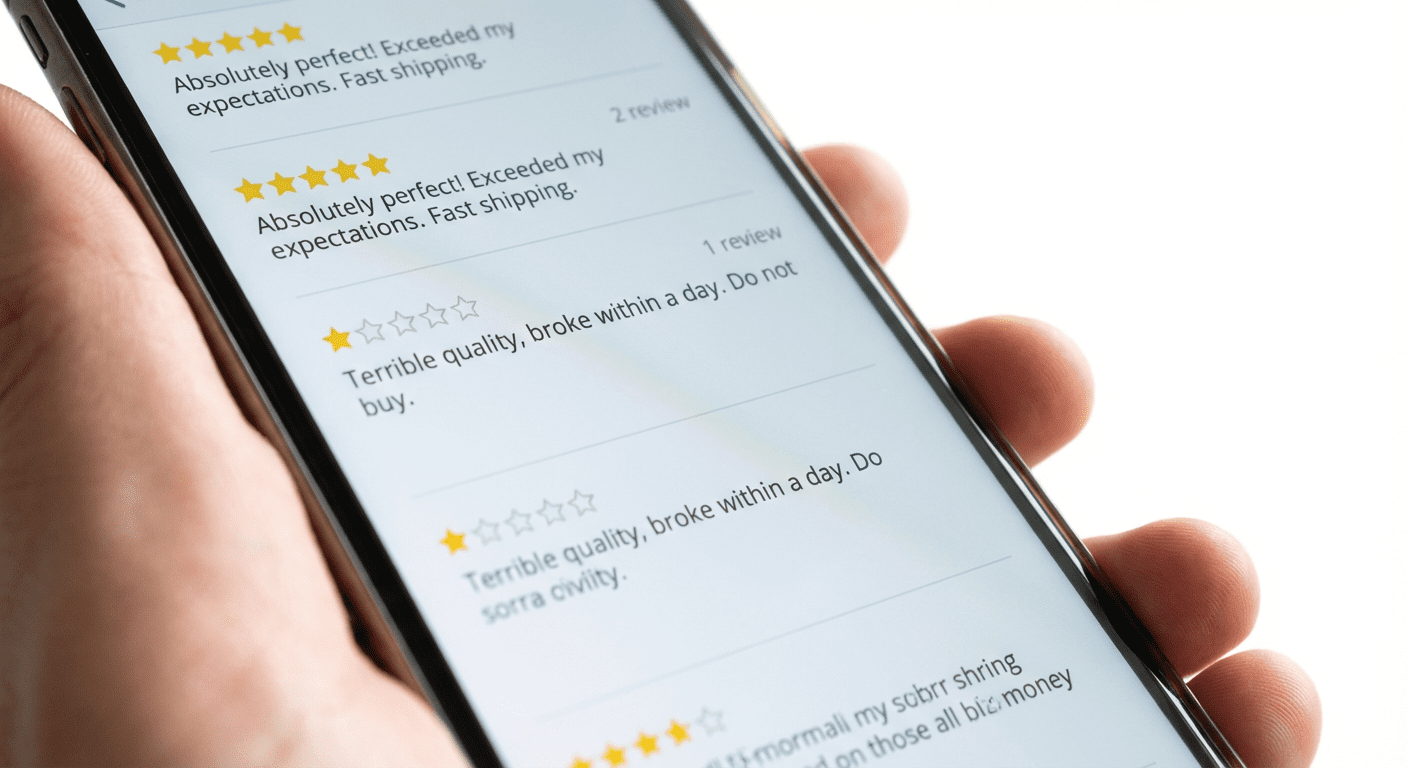
Overly Enthusiastic Language
Genuine reviews describe specific experiences. Fake reviews use superlatives in place of specifics — "absolutely amazing," "life-changing," "best product I have ever purchased," "exceeded every expectation." Real customers describe what a product actually did for them. Fake reviews describe how the product made them feel in vague, sweeping emotional terms. If a review for a spatula reads like a religious experience, be skeptical.
Generic and Vague Details
Authentic reviewers mention specific product features, compare the product to alternatives they have tried, or describe exactly how they use the product. Fake reviews, especially those written by review farms producing high volumes of content, tend to be generic enough to apply to dozens of similar products. If you removed the product name, would the review still make sense for a dozen other items in the same category? That is a red flag.
Review Timing Patterns
Fake review campaigns often produce bursts of reviews within a short time frame — dozens of 5-star reviews arriving in a single week for a product that had none before. Tools like Fakespot and ReviewMeta can analyze review timing patterns and reviewer histories to identify suspicious clusters. When checking a product, scroll the review timeline and look for unnatural spikes that don't correspond to known product launches or news events.
Verified Purchase Checks
On Amazon, look for the "Verified Purchase" badge — it indicates the reviewer bought the product through Amazon at a non-heavily discounted price. Non-verified reviews can still be genuine, but verified purchase status adds a layer of credibility. Also check the reviewer's profile: how many reviews have they written? Do they review products across many unrelated categories? A reviewer with 50 reviews all for electronics accessories within a two-week window is suspicious regardless of the verified purchase status.
The Problem with Fake Reviews
Consumer Trust
Consumer reviews are the backbone of online purchasing decisions. Studies consistently show that the majority of online shoppers read reviews before purchasing and trust peer reviews more than advertising. Fake reviews corrupt this trust infrastructure at a systemic level. When consumers can no longer trust review systems, they lose a critical information source that helps them make informed decisions. The result is purchases based on manipulated data, leading to dissatisfaction, returns, and erosion of confidence in e-commerce platforms.
Legal Consequences
The FTC's fake review rule allows fines of up to $50,120 per violation for companies that knowingly participate in fake review schemes. State attorneys general have also pursued fake review operations under state consumer protection statutes. Beyond regulatory fines, businesses caught in fake review schemes face reputational damage that can far exceed the financial penalties. High-profile enforcement actions have ended businesses and resulted in personal liability for executives who directed the schemes.
Platform Penalties
Amazon, Google, Yelp, and TripAdvisor all have aggressive review integrity programs. Amazon delists products, bans seller accounts, and pursues civil litigation against review manipulation operations. Google removes entire review histories and can suppress business listings in search results for policy violations. Yelp places consumer alerts on business pages when it detects suspicious review activity. The short-term ranking boost from fake reviews is typically outweighed by the long-term consequences of platform penalties. For building genuine Amazon presence, the Amazon keyword generator helps optimize real listings for organic discovery.
Parody Review Examples
Example 1 - Overly Enthusiastic 5-Star Parody
PARODY REVIEW — EDUCATIONAL PURPOSES ONLY
Product: USB Cable | Rating: 5 Stars | Style: Overly Enthusiastic
By TotallyRealPerson2847 — Verified Purchase
"I cannot express in words how this USB cable has COMPLETELY TRANSFORMED MY LIFE. Before this cable, I was a different person. A lesser person. I would stare at my devices, half-charged, wondering if happiness was even real. Then THIS CABLE arrived and everything changed. The charging speed is so fast I had to check if time itself had accelerated. My phone goes from 0 to 100% in what feels like SECONDS. I have purchased 47 of them as gifts for everyone I know. My therapist says I should explore why a USB cable made me cry. I told her she needs to order one immediately. FIVE STARS IS NOT ENOUGH. I would give it six million stars if the interface allowed it."
847 people found this helpful
Example 2 - Passive Aggressive 3-Star Parody
PARODY REVIEW — EDUCATIONAL PURPOSES ONLY
Product: Air Fryer | Rating: 3 Stars | Style: Passive Aggressive
By DisappointedButPolite — Verified Purchase
"It is fine. Totally fine. I'm sure other people absolutely love it and that's wonderful for them. It arrived on time, which I suppose is the bare minimum expectation one could have. The air fryer does technically fry things in air, so I cannot say the description was inaccurate, per se. Some of the plastic smells a little when it heats up but I'm sure that's just me being sensitive. My food comes out cooked, which is, objectively, what an air fryer is supposed to do. Three stars because I can't give two and a half and I wouldn't want to be unfair to a product that has done nothing technically wrong. Recommended, if you have no other options."
23 people found this helpful
Why This Parody Tool Matters
Media literacy and consumer education increasingly require people to recognize AI-generated and incentivized content. A fake review generator used satirically serves the same function as media literacy education — it builds pattern recognition through exposure. Just as studying propaganda techniques makes you less susceptible to propaganda, studying exaggerated fake review patterns makes you more resistant to subtle real ones.
The same principle applies to other forms of AI-generated content. For detecting whether text was written by AI, the free AI detector analyzes text for AI-generated patterns. For understanding how AI writes persuasively, the AI sales pitch generator shows the structure of persuasive AI content. Awareness of how AI generates content in different contexts makes you a more informed digital consumer across the board.
For sellers wanting to build legitimate Amazon presence through genuine product content, the product description generator creates accurate, honest product copy that converts without deception.
Frequently Asked Questions
Is this for creating real reviews?
No. This tool generates satirical parody reviews for entertainment and educational use only. The outputs are intentionally exaggerated to be obviously fake — not to deceive real consumers. Never post AI-generated content as genuine consumer reviews.
Can I post these reviews on Amazon?
No. Posting AI-generated fake reviews on Amazon or any other platform violates their terms of service, FTC regulations, and potentially state consumer protection laws. This tool is strictly for satire, education, and entertainment — never for posting as real consumer feedback.
Why does this tool exist?
The fake review generator helps consumers recognize fake review patterns through humor and satire. By seeing exaggerated parody versions of the most common fake review styles, users develop better critical reading skills for evaluating real reviews on shopping platforms.
How do I spot fake reviews?
Watch for overly enthusiastic language with no specific details, vague descriptions that could apply to any product, clusters of reviews posted within days of each other, reviewers with no review history, and repeated phrases across multiple reviews. Check for verified purchase badges and look at reviewer profiles for suspicious patterns. Third-party tools like Fakespot can also analyze review authenticity.
Is generating fake reviews illegal?
Posting fake reviews on commercial platforms can violate FTC regulations, platform terms of service, and state consumer protection laws. The FTC has issued multimillion-dollar fines for fake review schemes. Generating satirical parody reviews for private educational or entertainment purposes is different from posting deceptive content — but this tool must never be used to deceive consumers or game platform algorithms.