Tire Size Converter
A tire size converter calculates tire dimensions from metric size codes and converts between tire size formats. Enter your tire size below to see the overall diameter, width, sidewall height, circumference, and revolutions per mile, or compare two tire sizes side by side.
What Is a Tire Size Converter?
A tire size converter is a tool that reads the metric code printed on your tire sidewall and translates it into specific physical dimensions. The code format, such as 225/45R17, contains three pieces of information that define the tire's width, profile height, and rim size. From those three numbers, the converter calculates the overall tire diameter, sidewall height, section width in inches, total circumference, and the number of revolutions the tire makes per mile. These dimensions matter when comparing fitment options, checking for clearance, or verifying speedometer accuracy after a tire change.
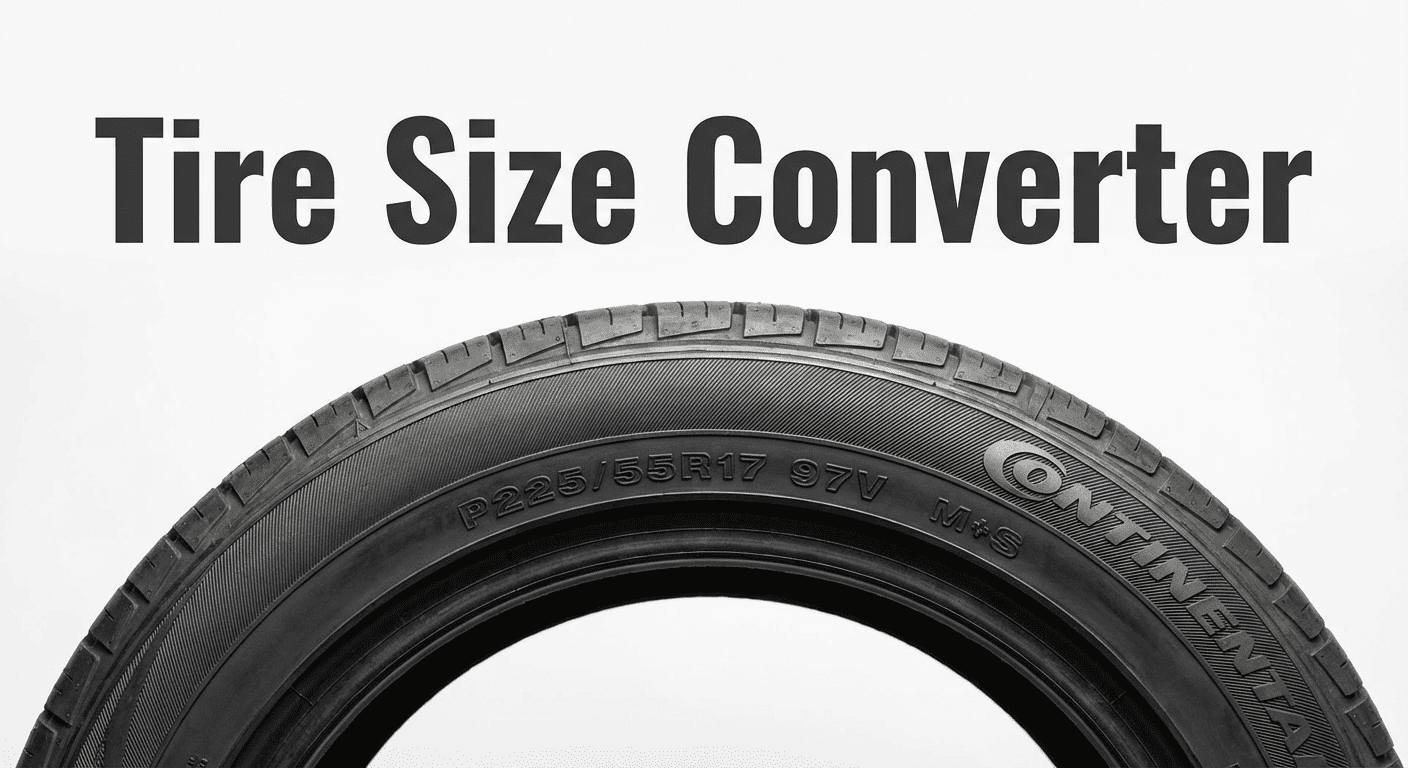
Tire size conversion is used by vehicle owners upgrading wheels, mechanics cross-referencing fitment specs, and drivers checking whether an alternative tire size will work on their vehicle. The converter works for passenger cars, trucks, SUVs, and light commercial vehicles using standard metric tire sizing. If you have an off-road or truck tire in inch format like 33x12.5R15, use our standard to metric tire converter to find the matching metric size. To go the other direction and convert a metric code to its inch equivalent, use our metric to standard tire converter.
How to Read Tire Size Numbers
The Metric Tire Size Format (e.g. 225/45R17)
The tire code printed on the sidewall of modern passenger tires follows a standard format. Using 225/45R17 as an example:
- 225 — Section width in millimeters. This is the width of the tire from sidewall to sidewall when mounted on the specified rim width and inflated to the recommended pressure. A wider number means a physically wider tire.
- 45 — Aspect ratio as a percentage. The sidewall height is 45% of the section width. For a 225 mm wide tire with a 45 aspect ratio, the sidewall height is 225 x 0.45 = 101.25 mm.
- R — Construction type. R stands for radial, meaning the internal cord plies run perpendicular to the direction of travel from bead to bead. Nearly all modern passenger tires are radial. ZR indicates a high-speed-rated radial. B indicates bias-belted construction, which is rare in passenger tires.
- 17 — Rim diameter in inches. This is the diameter of the wheel the tire is designed to mount on. This number must match your wheel exactly.
Width, Aspect Ratio, and Rim Diameter
The relationship between these three numbers determines every other tire dimension. The section width sets the foundation. The aspect ratio determines how tall the sidewall is relative to that width. The rim diameter anchors the bottom of the tire to the wheel. Together, they define the overall diameter of the tire, which determines how far the vehicle travels with each wheel rotation and what your speedometer reads. A taller aspect ratio produces a taller sidewall and larger overall diameter. A wider section width increases contact patch and rolling circumference.
Tire Size Conversion Chart
Common passenger car and truck tire sizes with calculated dimensions.
| Tire Size | Overall Diameter | Sidewall Height | Circumference | Revs/Mile |
|---|---|---|---|---|
| 195/65R15 | 24.98 in (634.3 mm) | 4.99 in (126.8 mm) | 78.46 in | 807.6 |
| 205/55R16 | 24.88 in (631.9 mm) | 4.44 in (112.8 mm) | 78.14 in | 810.9 |
| 215/55R17 | 27.31 in (693.7 mm) | 4.65 in (118.3 mm) | 85.80 in | 738.5 |
| 225/45R17 | 24.97 in (634.3 mm) | 3.99 in (101.3 mm) | 78.45 in | 807.7 |
| 235/45R18 | 26.33 in (668.9 mm) | 4.17 in (105.8 mm) | 82.72 in | 766.0 |
| 245/40R18 | 25.68 in (652.2 mm) | 3.84 in (98 mm) | 80.67 in | 785.3 |
| 255/35R19 | 25.97 in (659.9 mm) | 3.52 in (89.3 mm) | 81.59 in | 776.6 |
| 265/70R17 | 31.61 in (803 mm) | 7.31 in (185.5 mm) | 99.30 in | 638.1 |
| 275/55R20 | 31.91 in (810.5 mm) | 5.96 in (151.3 mm) | 100.25 in | 632.1 |
| 285/75R16 | 32.83 in (834 mm) | 8.41 in (213.8 mm) | 103.12 in | 614.4 |
How to Compare Two Tire Sizes
Diameter Difference
When comparing two tire sizes, the most important measurement is overall diameter. Two tires with the same rim diameter but different width and aspect ratio combinations can have significantly different overall diameters. A difference of more than 3% in overall diameter from the factory specification can cause clearance issues in the wheel well, interference with brake components, and inaccurate odometer readings. Use the compare mode in the converter above to enter both sizes and see the exact diameter difference.
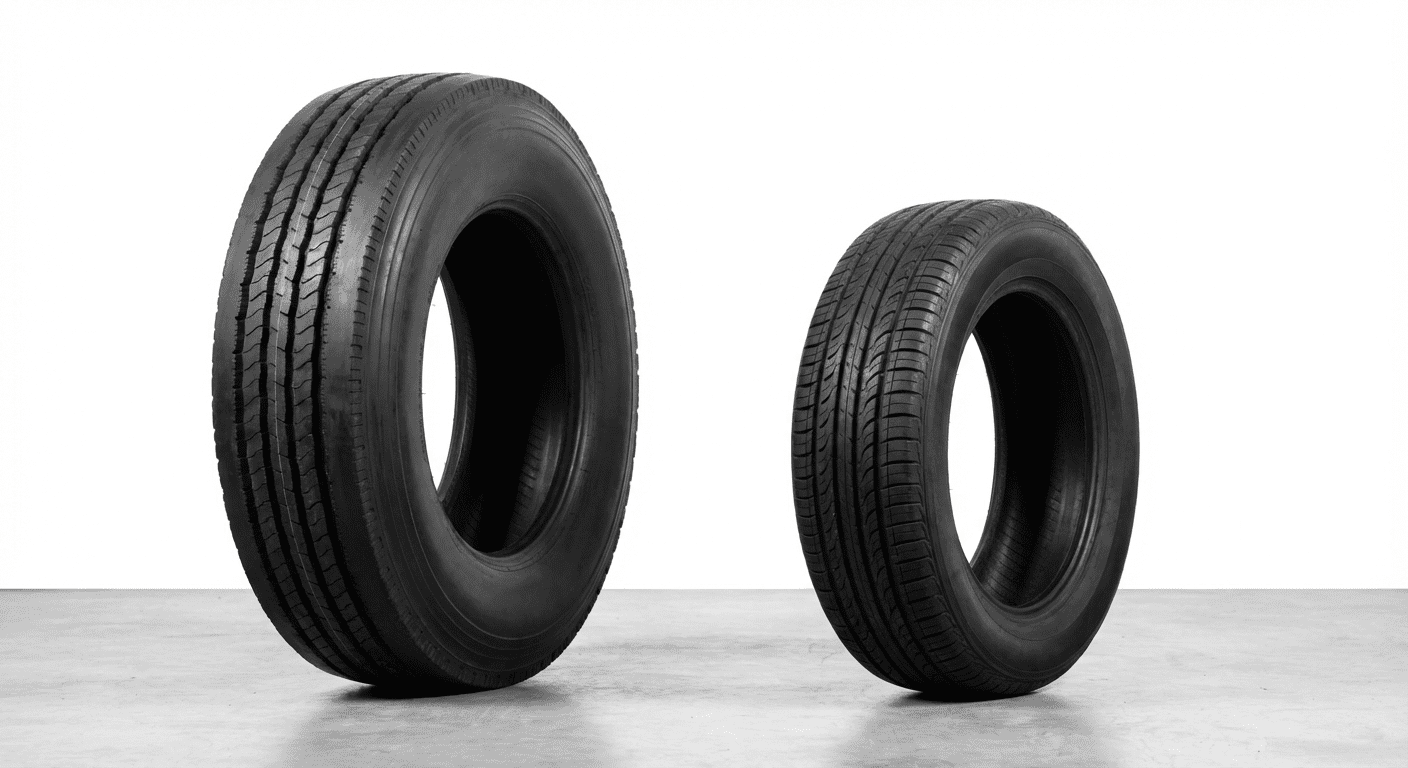
For plus-sizing wheels (increasing rim diameter while reducing aspect ratio), the goal is to keep the overall diameter within 1 to 2% of the original. For example, moving from 205/55R16 to 215/45R17 keeps the rolling diameter nearly identical while fitting a larger wheel. The converter calculates both sizes and shows the diameter variance so you can verify fitment before purchasing.
Speedometer Accuracy
Speedometers are calibrated to the factory tire's revolutions per mile. If you install a tire with a different overall diameter, the number of revolutions per mile changes, and your speedometer reading will be off. A larger diameter tire makes fewer revolutions per mile, causing the speedometer to read lower than actual speed, meaning you are driving faster than indicated. A smaller diameter tire makes more revolutions per mile, causing the speedometer to read higher than actual speed.
The speedometer error percentage equals the percentage difference in overall diameter. A 2% larger tire produces approximately 2% speedometer under-read. At a displayed 60 mph, you would actually be traveling 61.2 mph. The compare mode in the converter above calculates this impact automatically for any two tire sizes you enter.
Metric vs Standard Tire Sizes
Modern passenger car tires use metric sizing worldwide. The three-number metric code (such as 225/45R17) replaced older numeric and alphanumeric sizing systems. However, some light truck, off-road, and older vehicle tires still use numeric or flotation sizing such as 31x10.50R15, where the first number is overall diameter in inches, the second is section width in inches, and the third is rim diameter in inches. Converting between metric and numeric sizing requires calculating the equivalent overall diameter and section width.
For numeric tire sizes, the equivalent metric code can be estimated. A 31x10.50R15 tire has an overall diameter of 31 inches, section width of 10.5 inches (266.7 mm), and a rim of 15 inches. The sidewall height equals (31 - 15) / 2 = 8 inches (203.2 mm). The aspect ratio is 203.2 / 266.7 x 100 = 76.2%, so the metric equivalent is approximately 265/75R15. Use the Tire Rack tire size explanation for detailed guidance on cross-referencing tire sizing standards.
Common Tire Size Conversions
Passenger Car Sizes
Passenger cars typically use tire widths between 165 mm and 245 mm with aspect ratios from 35 to 65. Common compact car sizes include 185/65R15 and 195/55R16. Mid-size sedans often run 205/55R16 or 215/55R17. Performance cars use lower-profile tires such as 225/40R18 or 245/35R19 that sacrifice ride comfort for better cornering response. The lower the aspect ratio, the shorter the sidewall, which reduces flex and improves steering precision but increases harshness over road imperfections.
When replacing passenger car tires, staying within the same overall diameter keeps speedometer calibration accurate and prevents interference with wheel well liners. Minor width changes of plus or minus 10 mm are generally safe if the aspect ratio is adjusted to compensate and keep diameter consistent. Always verify clearance between the tire and the suspension or body components before purchasing an alternative size. The NHTSA tire safety information provides guidance on safe tire selection and replacement.
Truck and SUV Sizes
Light trucks and SUVs use wider tires with higher load ratings. Common sizes include 265/70R17 for mid-size trucks, 275/55R20 for full-size SUVs, and 285/75R16 for off-road applications. Truck tires often have higher aspect ratios than passenger tires because the taller sidewall provides additional load-carrying capacity and a more cushioned ride when hauling cargo or towing. Many truck owners increase tire size by one or two sizes beyond factory specification to improve off-road performance or appearance, which requires checking lift requirements and verifying gear ratio compatibility.
Oversizing truck tires beyond the factory recommendation affects fuel economy, acceleration, and braking distance because the engine and brakes must work harder against the additional rolling mass. A 10% increase in tire diameter typically reduces fuel economy by 1 to 3% on highway driving. Gear ratio recalibration is recommended for tire size increases greater than 15% in diameter. The TRA tire sizing standards define the specifications for load ratings across all vehicle categories.
Frequently Asked Questions
What does 225/45R17 mean?
225 is the tire width in millimeters. 45 is the aspect ratio, meaning the sidewall height is 45% of 225 mm, which equals 101.25 mm. R indicates radial construction. 17 is the rim diameter in inches. Using the standard formulas: overall diameter = (2 x 101.25 mm) + (17 x 25.4 mm) = 634.3 mm = 24.97 inches.
How do I convert tire size to inches?
Calculate sidewall height: Width x (Aspect/100). Then overall diameter: (2 x Sidewall mm) + (Rim inches x 25.4), then divide by 25.4 to get inches. For 225/45R17: Sidewall = 225 x 0.45 = 101.25 mm. Diameter = (2 x 101.25) + (17 x 25.4) = 634.3 mm = 24.97 in.
Can I use a different tire size?
Minor size changes are generally acceptable if the overall diameter stays within 3% of the factory specification. Changes beyond 3% can cause speedometer error, wheel well clearance problems, and ABS sensor miscalibration. Always verify the new size fits within the wheel well with full suspension travel and steering lock.
What does the R mean in tire size?
R stands for radial construction. The internal cord plies run radially, perpendicular to the direction of travel, from bead to bead. Radial tires offer better fuel efficiency, longer tread life, and improved ride quality compared to bias-ply tires. Nearly all modern passenger, truck, and SUV tires are radial. ZR indicates a performance radial rated for speeds above 149 mph.
How does tire size affect speedometer?
A larger overall tire diameter reduces revolutions per mile, causing the speedometer to under-read your actual speed. A smaller diameter increases revolutions per mile, causing the speedometer to over-read. The error percentage equals the percentage difference in overall diameter. A 2% larger tire means your speedometer reads 2% slower than you are actually traveling.