Skin Tone Chart
The Skin Tone Chart is a health reference tool covering skin tone chart, fitzpatrick skin tone chart, skin undertone chart, foundation shade chart. Use the chart below to look up values instantly. Printable and downloadable versions are available on this page.
Skin Undertone Finder
Answer 5 questions about your vein colour, jewellery preference, and sun reaction to get your warm, cool, or neutral undertone result with makeup and colour guidance.
1.Look at the veins on the inside of your wrist in natural daylight. What colour do they appear?
2.Hold a piece of gold jewellery against your face, then silver. Which looks more flattering?
3.How does your skin typically react to sun exposure?
4.Hold a plain white sheet of paper next to your bare face in natural light. Your skin looks…
5.Which clothing colours tend to make you look most radiant?
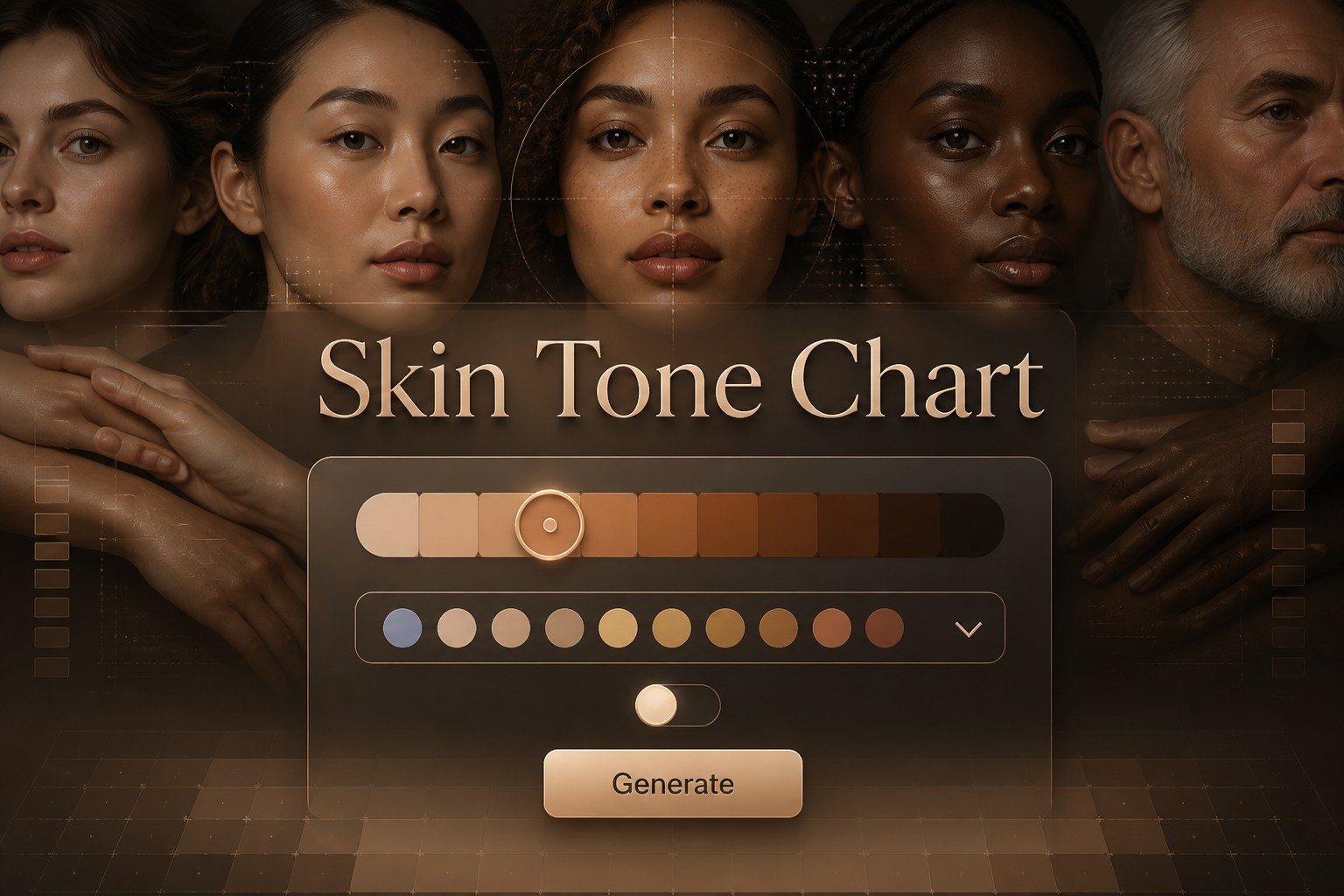
Fitzpatrick Skin Type Chart
The Fitzpatrick scale developed by Harvard dermatologist Thomas B. Fitzpatrick in 1975 is the standard clinical classification of human skin type based on its response to ultraviolet (UV) light exposure.
| Fitzpatrick Type | Description | Typical Skin Tone | Sun Reaction | SPF Recommendation |
|---|---|---|---|---|
| Type I | Very fair — always burns, never tans | Pale white, freckled skin. Often with red or blonde hair and green eyes. | Always burns severely. Never tans. Extreme sun sensitivity. | SPF 50+ always. Reapply every 2 hours. |
| Type II | Fair — usually burns, sometimes tans | Light to pale skin. Often with blonde or light brown hair and light eyes. | Burns easily. Tans minimally and slowly. | SPF 30 to 50. Limit sun exposure. Seek shade. |
| Type III | Medium — sometimes burns, gradually tans | Medium beige to light olive skin. Variable hair and eye colour. | Burns moderately. Tans uniformly over time. | SPF 30 minimum. Standard sun protection measures. |
| Type IV | Olive — rarely burns, tans easily | Light to medium brown or olive skin. Often with dark hair and brown or hazel eyes. | Burns minimally. Always tans well and darkens noticeably. | SPF 15 to 30. Still requires sun protection. |
| Type V | Brown — very rarely burns, tans darkly | Brown to dark brown skin. Dark hair and dark eyes. | Rarely burns. Tans very deeply and quickly. | SPF 15 minimum. Melanin provides natural protection but UV damage still occurs. |
| Type VI | Dark brown or black — almost never burns | Very dark brown to deepest black skin. Dark hair and dark eyes. | Almost never visibly burns but UV damage still occurs at the cellular level. | SPF 15 minimum. Skin cancer and hyperpigmentation risk still exists. |
Source: Fitzpatrick TB — Archives of Dermatology, 1975
Skin Undertone Chart
Skin undertone is the subtle hue beneath the surface of your skin and remains constant regardless of tanning or seasonal colour changes — it is the key factor in choosing flattering makeup, clothing, and hair colours.
| Undertone | How to Identify It | Flattering Jewellery | Flattering Clothing Colours |
|---|---|---|---|
| Warm Yellow, peachy, or golden | Veins on the inner wrist appear more green. You look better in gold jewellery. The sun makes skin look golden rather than pink. You tan easily. | Gold jewellery | Earth tones — oranges, yellows, warm reds, browns, olive greens, cream |
| Cool Pink, red, or bluish | Veins on the inner wrist appear blue or purple. Silver jewellery is more flattering. Sun exposure often causes redness or pinkness. | Silver or white gold jewellery | Jewel tones — blues, purples, pinks, cool reds, emerald green, black |
| Neutral A mix of warm and cool | Veins appear blue-green — both warm and cool. Both gold and silver look equally good. Most colours are reasonably flattering. | Both gold and silver work well | Wide range of colours work — both warm and cool palettes |
Skin Tone and Undertone — 4 At-Home Tests
- 1 The vein test — look at the veins on the inside of your wrist in natural daylight. Blue or purple veins indicate cool undertones. Green or olive veins indicate warm undertones. A mix of blue-green indicates neutral undertones.
- 2 The jewellery test — hold a piece of gold jewellery against your face then a piece of silver. The metal that makes your skin look more radiant and your eyes brighter is your answer. Gold = warm, silver = cool, both equally flattering = neutral.
- 3 The white paper test — hold a plain white piece of paper next to your bare face in natural light. If your face looks pink or rosy next to the paper you are likely cool. If it looks more yellow or golden you are likely warm. If it looks greyish you may have neutral or olive undertones.
- 4 The sun test — observe how your skin reacts to sun exposure. If you burn easily and turn pink then tan slowly or not at all you likely have cool undertones. If you tan quickly and rarely burn you likely have warm or neutral undertones.
Skin Undertone Finder
Answer the five questions below about your vein colour, jewellery preference, and sun reaction to find your warm, cool, or neutral undertone — with personalised makeup shades and colour palette recommendations.
1.Look at the veins on the inside of your wrist in natural daylight. What colour do they appear?
2.Hold a piece of gold jewellery against your face, then silver. Which looks more flattering?
3.How does your skin typically react to sun exposure?
4.Hold a plain white sheet of paper next to your bare face in natural light. Your skin looks…
5.Which clothing colours tend to make you look most radiant?
Frequently Asked Questions
The Fitzpatrick scale is a numerical classification of skin type based on its response to UV exposure — specifically whether it burns or tans. It is used in dermatology to assess skin cancer risk and to guide treatment decisions for laser procedures, chemical peels, and sun protection recommendations.
Find the row in the chart above that best matches your natural skin colour and your typical reaction to sun exposure (burns easily versus tans easily). If you burn every time and never tan you are likely Type I or II. If you tan quickly and rarely burn you are likely Type IV or V.
Skin tone is the surface colour of your skin — light, medium, or dark — which can change with sun exposure, seasons, or health. Skin undertone is the subtle hue beneath the surface (warm yellow-gold, cool pink-red, or neutral) that remains constant regardless of surface changes.
Olive skin typically has a warm or neutral undertone with a yellow-green or golden cast. Olive skin is most associated with Fitzpatrick Types III and IV and Mediterranean, Middle Eastern, South Asian, and Latin American skin tones.
Yes — all skin types including Fitzpatrick Types V and VI are subject to UV-induced DNA damage even without visible sunburn. Skin cancer, premature ageing, and hyperpigmentation can all occur in darker skin tones despite the melanin protection that reduces burning.
Fitzpatrick Types I and II should use SPF 50+ and seek shade. Types III and IV should use at least SPF 30. Types V and VI should use at least SPF 15 but higher protection is always advisable especially during prolonged outdoor exposure.
No — skin undertone is determined by the type and distribution of melanin, haemoglobin, and carotene in your skin and does not change. Your surface skin tone can change with tanning, illness, or age but the underlying cool, warm, or neutral undertone remains constant.
Fitzpatrick Type I — very pale skin that always burns and never tans — is the rarest type globally. It is most common in people of Irish, Scottish, and Northern European descent and represents fewer than 5 percent of the global population.