Surface Area Calculator
A surface area calculator computes the total surface area of common 3D shapes including boxes, cylinders, spheres, cones, pyramids, and triangular prisms. Select a shape and enter the dimensions to instantly calculate total and lateral surface area.
What Is Surface Area?
Surface area is the total area of all the outer faces or surfaces of a three-dimensional object. It is measured in square units — square inches, square centimeters, square feet, or any other area unit. Surface area is used in manufacturing to calculate material requirements, in physics and engineering for heat transfer calculations, in packaging design to determine how much material is needed to wrap or coat a product, and in geometry education.
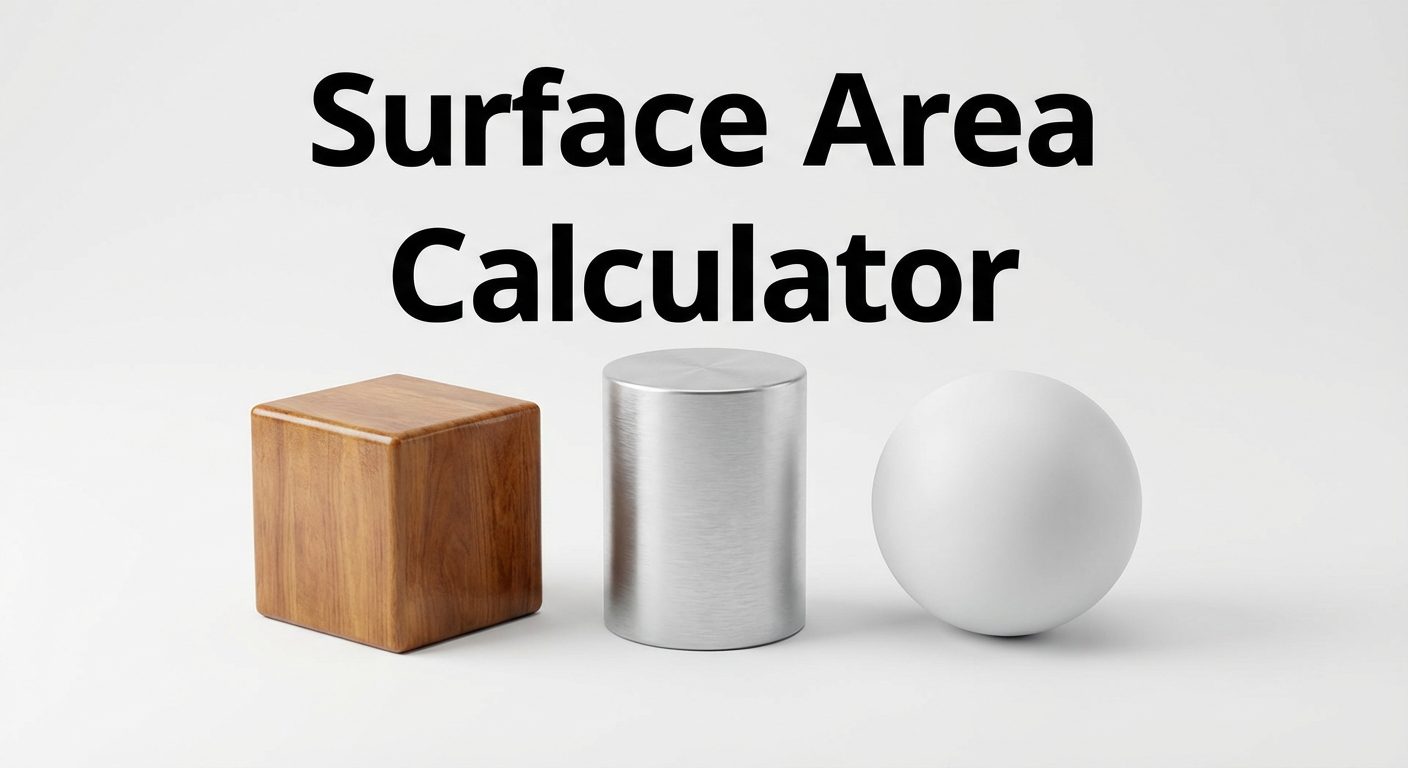
There are two types of surface area commonly used: total surface area and lateral surface area. Total surface area includes every face of the shape, including bases and caps. Lateral surface area includes only the side faces, excluding any flat bases. For a cylinder, the lateral surface area is the curved side only, while the total surface area adds the two circular ends. For more general area calculations see our area calculator, and for circle-specific measurements try the circle calculator.
Surface Area Formulas
Surface Area of a Box (Rectangular Prism)
A box has six rectangular faces: top, bottom, front, back, left, and right. The total surface area adds the area of all six faces. The lateral surface area covers only the four side faces, excluding the top and bottom.
Where l = length, w = width, h = height. For a box measuring 5 × 3 × 2: Total SA = 2(15 + 10 + 6) = 62 square units. Lateral SA = 2 × 2 × (5 + 3) = 32 square units.
Surface Area of a Cylinder
A cylinder has two circular bases (top and bottom) and one curved lateral surface. The lateral surface, when unrolled, forms a rectangle with width equal to the circumference and height equal to the cylinder's height.
Where r = radius, h = height. For a cylinder with radius 4 and height 10: Total SA = 2π × 4 × (4 + 10) = 351.86 square units. Lateral SA = 2π × 4 × 10 = 251.33 square units.
Surface Area of a Sphere
A sphere has a single continuous curved surface with no flat faces or bases. There is no lateral vs. total distinction — the entire surface area is one value. The formula was derived by Archimedes and equals exactly four times the area of a great circle.
For a sphere with radius 6: SA = 4 × π × 36 = 452.39 square units.
Surface Area of a Cone
A cone has a circular base and a curved lateral surface that tapers to a point (apex). The slant height (l) is the distance from the apex to the edge of the base along the surface — not the vertical height.
Where r = base radius, l = slant height. If you know the vertical height (h), slant height = √(r² + h²). For a cone with radius 3 and slant height 5: Total SA = π × 3 × (3 + 5) = 75.40 square units. Lateral SA = π × 3 × 5 = 47.12 square units.
Surface Area of a Pyramid
This calculator handles rectangular-base pyramids. The base is a rectangle (l × w) and the lateral faces are four triangles. When a single slant height (s) is given — measured from the apex to the midpoint of a base edge — the lateral surface area is calculated as the total perimeter times half the slant height, or equivalently (l + w) × s for rectangular bases.
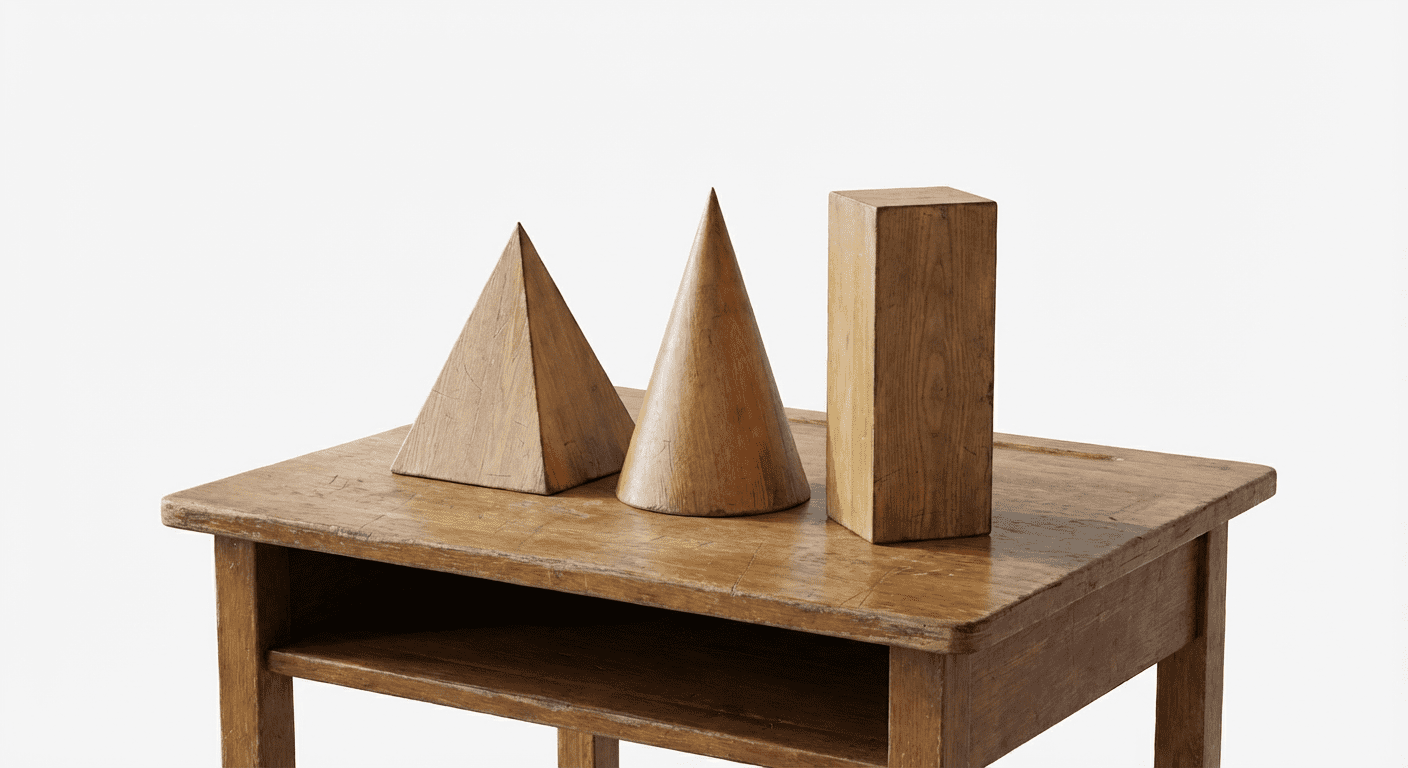
Where l = base length, w = base width, s = slant height. For a pyramid with base 6 × 4 and slant height 5: Total SA = 24 + (6 + 4) × 5 = 24 + 50 = 74 square units.
Surface Area of a Triangular Prism
A triangular prism has two triangular faces (the ends) and three rectangular lateral faces. The total surface area adds the two triangular face areas to the lateral area. The lateral area equals the perimeter of the triangular face times the length of the prism.
Where b = triangle base, h = triangle height, s1 and s2 = the other two sides of the triangle, L = prism length. Enter these five values in the calculator to get instant results.
Total vs Lateral Surface Area
Total surface area is the sum of all faces of a 3D shape, including any flat bases or caps. Lateral surface area refers only to the side surfaces, excluding the top and bottom faces. For a cylinder, the lateral surface area is just the curved tube, while the total surface area adds both circular ends. For a cone, the lateral surface area is the curved slanted side, while the total surface area adds the circular base.
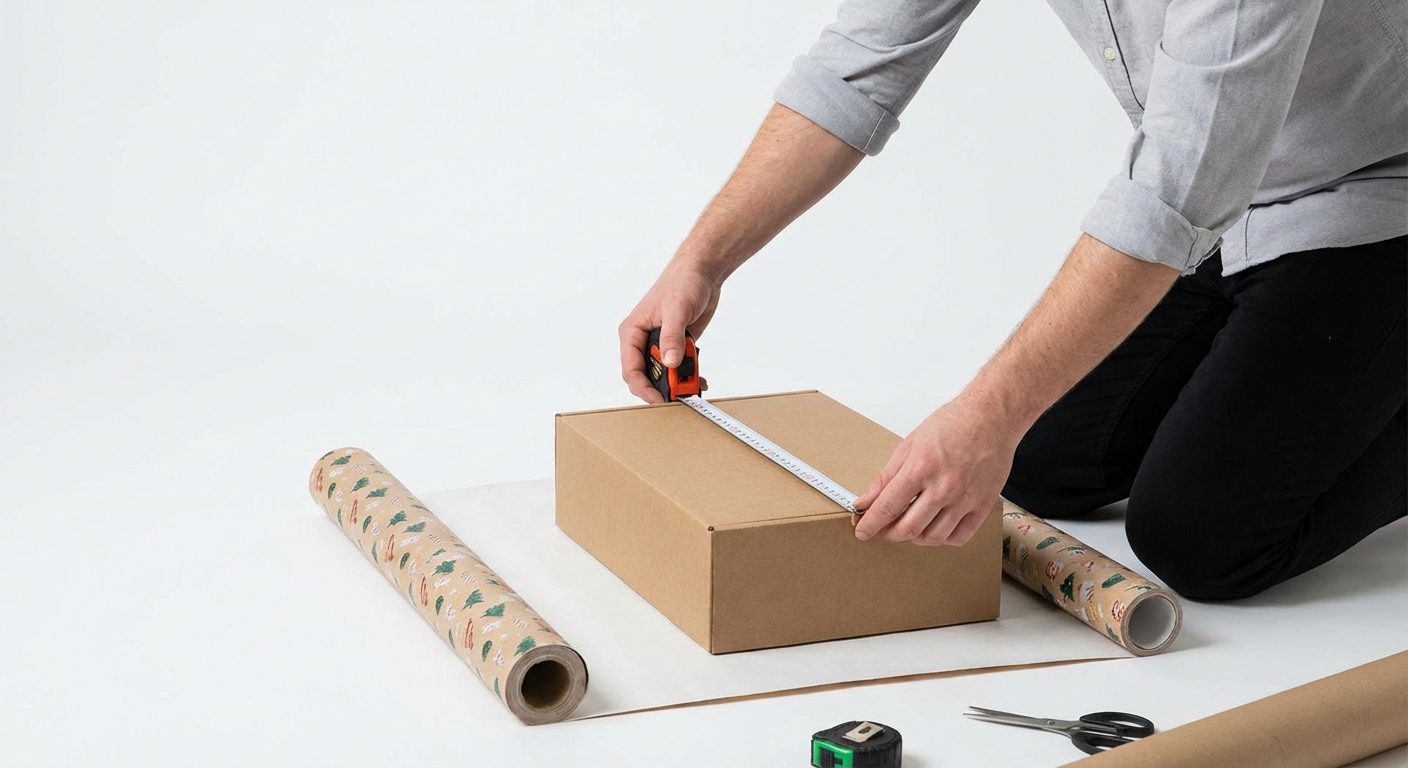
When to use which: lateral surface area is most useful when calculating the amount of material needed to wrap the sides of an object (like paint for the walls of a cylinder, not the floor or ceiling). Total surface area applies when calculating the complete outer covering of a shape — such as how much foil is needed to completely wrap a rectangular gift box, or how much material is required to manufacture a closed container.
Surface Area Calculator Examples
Example - Box 5 x 3 x 2
A rectangular box with length 5, width 3, height 2:
- Total SA = 2(5×3 + 5×2 + 3×2) = 2(15 + 10 + 6) = 2 × 31 = 62
- Lateral SA = 2 × 2 × (5 + 3) = 4 × 8 = 32
- Top + Bottom = 62 − 32 = 30 (two faces of 5 × 3 = 15 each)
Example - Triangular Prism
A triangular prism with a right triangle face (base 4, height 3, hypotenuse 5) and prism length 10:
- Triangle Face Area = (4 × 3) / 2 = 6
- Perimeter = 4 + 3 + 5 = 12
- Lateral SA = 12 × 10 = 120
- Total SA = 2 × 6 + 120 = 132
Example - Regular Pyramid
A square-base pyramid with base 6 × 6 and slant height 5:
- Base Area = 6 × 6 = 36
- Lateral SA = (6 + 6) × 5 = 12 × 5 = 60
- Total SA = 36 + 60 = 96
Frequently Asked Questions
What is surface area?
Surface area is the total area of all outer faces of a 3D object, measured in square units. It represents how much material would be needed to cover the outside of the shape completely. Total surface area includes every face; lateral surface area includes only the sides, excluding flat bases.
How to find the surface area of a box?
To find the surface area of a box (rectangular prism), use the formula SA = 2(lw + lh + wh) where l is length, w is width, and h is height. Add the areas of all six faces: two top/bottom faces (l × w each), two front/back faces (l × h each), and two side faces (w × h each). For a box with dimensions 5 × 3 × 2, SA = 2(15 + 10 + 6) = 62 square units.
What is lateral surface area?
Lateral surface area is the combined area of all side faces of a 3D shape, excluding the top and bottom (base) faces. For a cylinder, it is the curved side only: 2πrh. For a box, it is the four side walls: 2h(l + w). Lateral surface area is used when you need to know how much material covers just the sides — like painting the walls of a room without the floor or ceiling.
How to calculate surface area of a triangular prism?
The surface area of a triangular prism = 2 × (triangle face area) + (perimeter of triangle × prism length). First calculate the triangular face area using (base × height) / 2. Then find the triangle perimeter by adding all three sides. Multiply the perimeter by the prism length to get the lateral area. Add both triangular faces to get the total. For a prism with a right triangle (base 4, height 3, hypotenuse 5) and length 10: SA = 2×6 + 12×10 = 132.
What is the surface area of a pyramid?
The surface area of a pyramid with a rectangular base = base area + lateral area = lw + (l + w) × s, where l and w are the base dimensions and s is the slant height. For a square pyramid, this simplifies to b² + 2bs where b is the base side length. The lateral faces are triangles; the slant height is the height of each triangular face measured from the midpoint of the base edge to the apex.