Energy Converter
An energy converter transforms measurements between joules, kilojoules, calories, kilocalories, BTU, kilowatt-hours, electron volts, and foot-pounds. Enter a value and select units to instantly convert any energy measurement for physics, engineering, nutrition, or utility calculations.
What Is Energy Conversion?
Energy conversion is the process of expressing a quantity of energy in a different unit while preserving its magnitude. Energy is measured in many different units depending on the field of application: physicists use joules, nutritionists use kilocalories, utility companies use kilowatt-hours, HVAC engineers use BTU, and particle physicists use electron volts. Converting between these units requires applying the correct factor based on their definitions relative to the SI base unit, the joule.
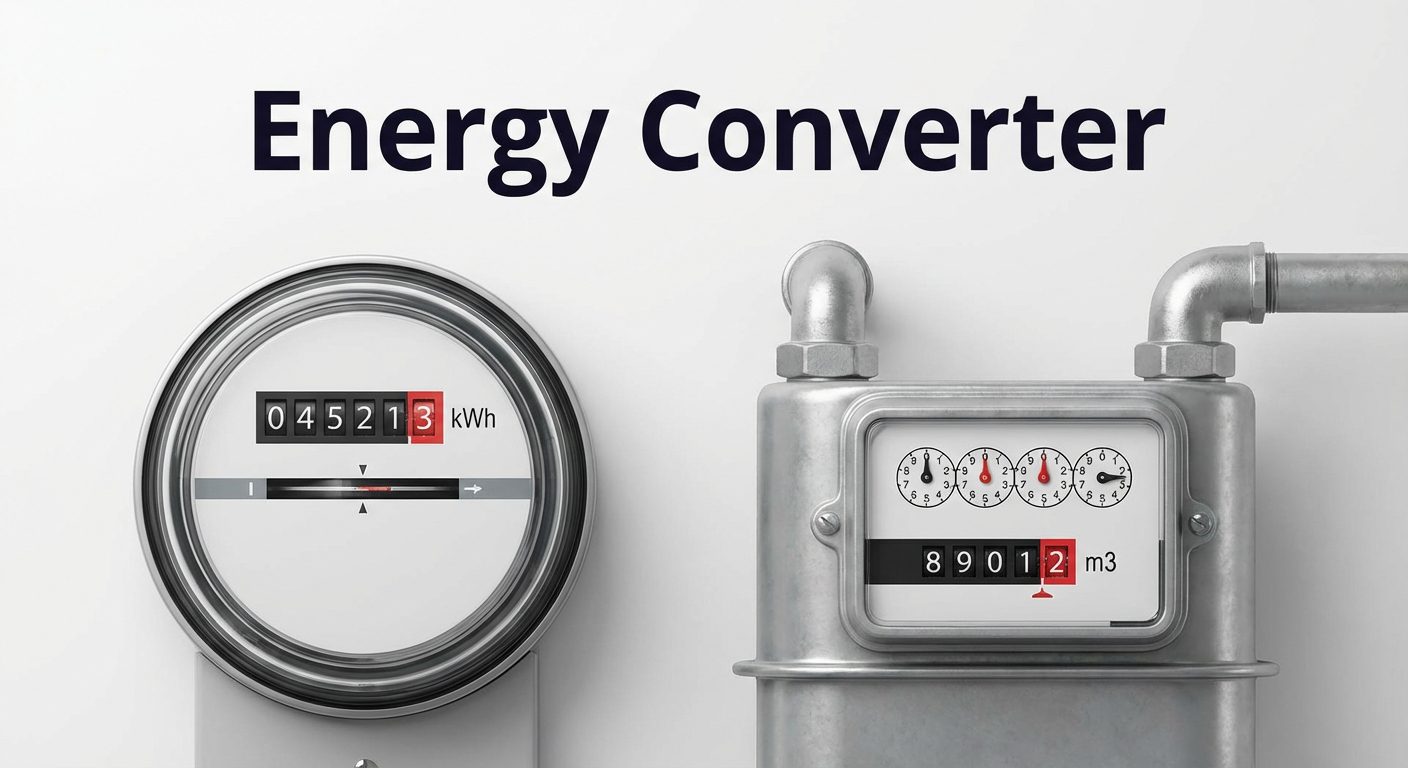
All energy units are interchangeable through fixed conversion factors because energy is a single physical quantity regardless of how it is measured. One BTU is always 1,055.06 joules. One kilowatt-hour is always 3,600,000 joules. One food calorie (kilocalorie) is always 4,184 joules. These relationships are exact by definition or measured to high precision, making energy conversion straightforward once the correct factor is applied. For more on energy physics problems, the free AI physics solver can work through energy equations step by step.
Energy Units Explained
Joules and Kilojoules
The joule (J) is the SI base unit of energy, named after the physicist James Prescott Joule. It is defined as the energy transferred when a force of one newton moves an object one metre in the direction of the force. One joule is a relatively small unit: lifting a 100-gram apple one metre requires about 1 joule of energy. The kilojoule (kJ), equal to 1,000 joules, is more practical for everyday measurements. Nutritional energy content on food labels in many countries is expressed in kilojoules alongside kilocalories.
In scientific contexts, joules are used across mechanics, thermodynamics, electricity, and chemistry. Electrical energy is often expressed as watt-seconds (which are joules), since 1 watt times 1 second equals 1 joule. This makes the joule the common link between mechanical, thermal, and electrical energy measurements.
Calories and Kilocalories
The calorie (cal) was originally defined as the heat required to raise one gram of water by one degree Celsius. The thermochemical calorie, the most commonly used definition in science, equals exactly 4.184 joules. The kilocalorie (kcal), equal to 1,000 calories or 4,184 joules, is the unit used in nutrition. When food packaging says a product contains 200 "calories," it means 200 kilocalories. The use of the word "calorie" for kilocalorie is a long-standing convention in everyday language and nutrition labelling, particularly in the United States.
BTU (British Thermal Unit)
The British Thermal Unit (BTU) is the amount of heat energy required to raise the temperature of one pound of water by one degree Fahrenheit. One BTU equals 1,055.06 joules or approximately 0.2931 watt-hours. BTU is the dominant energy unit in the HVAC industry in the United States and is printed on air conditioner, furnace, and boiler specifications. A typical window air conditioner is rated at 5,000 to 12,000 BTU per hour. The BTU per hour (BTU/h) rating describes the rate of heating or cooling capacity, not the total energy. For utility calculations involving BTU, the accounting AI solver can help calculate heating costs from BTU ratings and fuel prices.
Kilowatt-Hours
The kilowatt-hour (kWh) is the energy unit used on household electricity bills worldwide. It represents the energy consumed by a device drawing one kilowatt of power for one continuous hour. One kWh equals 3,600,000 joules (3.6 megajoules) or 3,412.14 BTU. A typical UK or US household uses between 8 and 30 kWh of electricity per day depending on the season, home size, and appliance usage. A single kWh of electricity can power a 100-watt bulb for 10 hours, charge a smartphone approximately 50 times, or run a laptop for 8 to 12 hours.
Electron Volts
The electron volt (eV) is a unit of energy used in atomic physics, nuclear physics, and particle physics. It is defined as the kinetic energy gained by an electron accelerating through a potential difference of one volt. One electron volt equals 1.602176634 × 10⁻¹⁹ joules — an extremely small amount of energy by everyday standards. Particle physicists routinely work with energies in the range of megaelectron volts (MeV) and gigaelectron volts (GeV). The eV is also used in chemistry to express ionisation energies and bond dissociation energies, where typical values fall in the range of 1 to 15 eV.
Energy Conversion Chart
This table shows key conversion factors between common energy units. All values are based on the thermochemical calorie (4.184 J) and the international BTU (1,055.06 J) definitions.
| From | Joules (J) | kJ | kcal | BTU | kWh |
|---|---|---|---|---|---|
| 1 Joule | 1 | 0.001 | 0.000239 | 0.000948 | 2.778e-7 |
| 1 kJ | 1,000 | 1 | 0.239 | 0.9478 | 0.0002778 |
| 1 cal | 4.184 | 0.004184 | 0.001 | 0.003966 | 1.162e-6 |
| 1 kcal | 4,184 | 4.184 | 1 | 3.966 | 0.001162 |
| 1 BTU | 1,055.06 | 1.05506 | 0.252 | 1 | 0.0002931 |
| 1 Wh | 3,600 | 3.6 | 0.860 | 3.412 | 0.001 |
| 1 kWh | 3,600,000 | 3,600 | 860.4 | 3,412.14 | 1 |
| 1 ft-lb | 1.35582 | 0.00136 | 0.000324 | 0.001285 | 3.766e-7 |
For comprehensive energy conversion factors and definitions, see the US Energy Information Administration energy units glossary and the NIST energy conversion reference.
BTU Explained
What Is a BTU?
The British Thermal Unit is a traditional unit of heat energy rooted in imperial measurement. It originated in the 19th century when engineers needed a practical unit for comparing the heat output of fuels and boilers. One BTU is the heat required to raise the temperature of one pound of water from 39°F to 40°F (close to its maximum density). In modern use, the International Table BTU is defined as exactly 1,055.05585262 joules, though 1,055.06 J is the commonly used rounded value.

Despite metrication, BTU remains the standard energy unit in the US heating and cooling industry. Gas utility bills in the United States often quote energy in therms (100,000 BTU) or MMBTU (one million BTU). Natural gas prices are quoted per MMBTU in commodity trading. For detailed energy-related financial calculations, see the accounting AI solver.
BTU in Heating and Cooling
In HVAC, BTU per hour (BTU/h) measures the rate of heat addition or removal. Air conditioner capacity in the US is rated in BTU/h: a 12,000 BTU/h unit is commonly called a "one-ton" air conditioner because it was historically equivalent to the cooling effect of melting one ton of ice per day. A central home air conditioner typically ranges from 18,000 to 60,000 BTU/h (1.5 to 5 tons) depending on home size and climate.
To convert BTU/h capacity to kilowatts (for comparison with metric-rated equipment): divide BTU/h by 3,412.14. A 12,000 BTU/h unit equals approximately 3.52 kW of cooling capacity. Furnace and boiler efficiency is expressed as Annual Fuel Utilization Efficiency (AFUE), showing what percentage of the fuel's BTU content is converted into usable heat. A 95% AFUE furnace converts 95 of every 100 BTU of gas burned into heat for the home.
Energy in Everyday Life
Utility Bills (kWh)
Household electricity consumption is measured in kilowatt-hours. The average US household consumes approximately 877 kWh per month (about 29 kWh per day). UK households average around 242 kWh per month. Electricity rates vary widely: in the United States, the average residential rate is approximately $0.16 per kWh; in the UK, the Ofgem price cap sets rates around £0.24 per kWh (2024 figures).
To estimate an appliance's energy cost: multiply the wattage by hours of use, divide by 1,000 to get kWh, then multiply by your rate. A 2,000-watt electric heater running 4 hours per day for 30 days consumes 2,000 × 4 × 30 ÷ 1,000 = 240 kWh, costing approximately $38 at the US average rate or £58 at the UK rate. The Department of Energy energy basics guide provides further guidance on estimating and reducing home energy consumption.
Food Energy (Calories)
Dietary energy is expressed in kilocalories (kcal), commonly called "calories" on food labels. One food calorie equals 4,184 joules or 4.184 kilojoules. An average adult requires approximately 2,000 to 2,500 kcal per day, equivalent to 8,368 to 10,460 kJ. Carbohydrates and proteins provide approximately 4 kcal per gram (16.7 kJ/g), while fat provides 9 kcal per gram (37.6 kJ/g), and alcohol provides 7 kcal per gram (29.3 kJ/g).
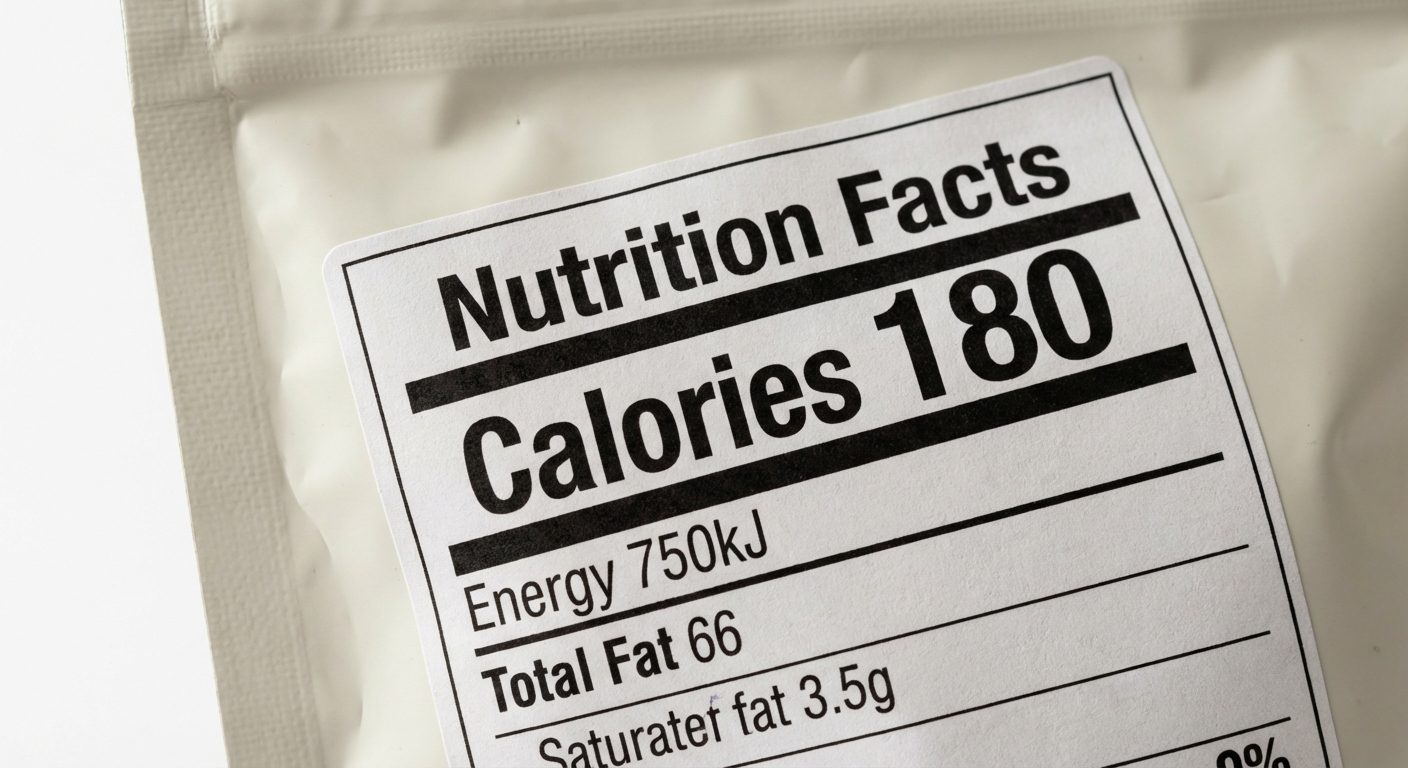
The energy content of food can also be expressed in BTU for comparison with fuel: a 2,000 kcal daily diet equals approximately 7,932 BTU, roughly equivalent to the energy in one cup (about 237 ml) of gasoline. The human body operates at roughly 20% efficiency, meaning about 80% of food energy is dissipated as heat rather than converted to mechanical work. For educational tools on nutrition and metabolism, see the AI math solvers for calculating energy intakes and deficits.
Frequently Asked Questions
What is a BTU?
A BTU (British Thermal Unit) is the heat energy required to raise the temperature of one pound of water by one degree Fahrenheit. One BTU equals 1,055.06 joules or about 0.293 watt-hours. It is used primarily in the US for HVAC ratings, natural gas billing, and boiler specifications.
How do you convert BTU to kWh?
Divide BTU by 3,412.14 to get kWh. This is because 1 kWh equals 3,412.14 BTU. Example: 10,000 BTU ÷ 3,412.14 = 2.931 kWh. To go the other way, multiply kWh by 3,412.14 to get BTU.
How many calories are in a joule?
One calorie (thermochemical) equals 4.184 joules. One joule therefore equals 1 ÷ 4.184 = 0.239 calories. Food calories are actually kilocalories: one food calorie (kcal) equals 4,184 joules or 4.184 kJ.
What is a kilowatt-hour (kWh)?
A kilowatt-hour is the energy used by a 1,000-watt (1 kW) device running for one hour. It equals 3,600,000 joules (3.6 MJ) or 3,412.14 BTU. Your electricity bill charges you per kWh. A typical home kettle uses about 0.1 kWh to boil water; a washing machine cycle uses 0.5 to 1.5 kWh.
How to calculate energy consumption?
Energy (kWh) = Power (watts) × Time (hours) ÷ 1,000. For example, a 1,500-watt heater running 4 hours = 1,500 × 4 ÷ 1,000 = 6 kWh. Multiply by your electricity rate to find the cost. Convert to other units using the converter above.