Horsepower Calculator
A horsepower calculator converts between HP, watts, kilowatts, and torque using standard engineering formulas. Use the panel on the left to calculate HP from torque and RPM, convert HP to watts or kilowatts, or convert watts and kilowatts back to horsepower. Results are instant with full formula breakdowns.
What Is Horsepower?
Horsepower (HP) is a unit of power that measures the rate at which work is performed. The term was coined by Scottish engineer James Watt in the late 18th century to market his improved steam engine. Watt observed that a mill horse could perform approximately 33,000 foot-pounds of work per minute and defined this as one horsepower, giving customers a way to compare his engines against the horses they were replacing.
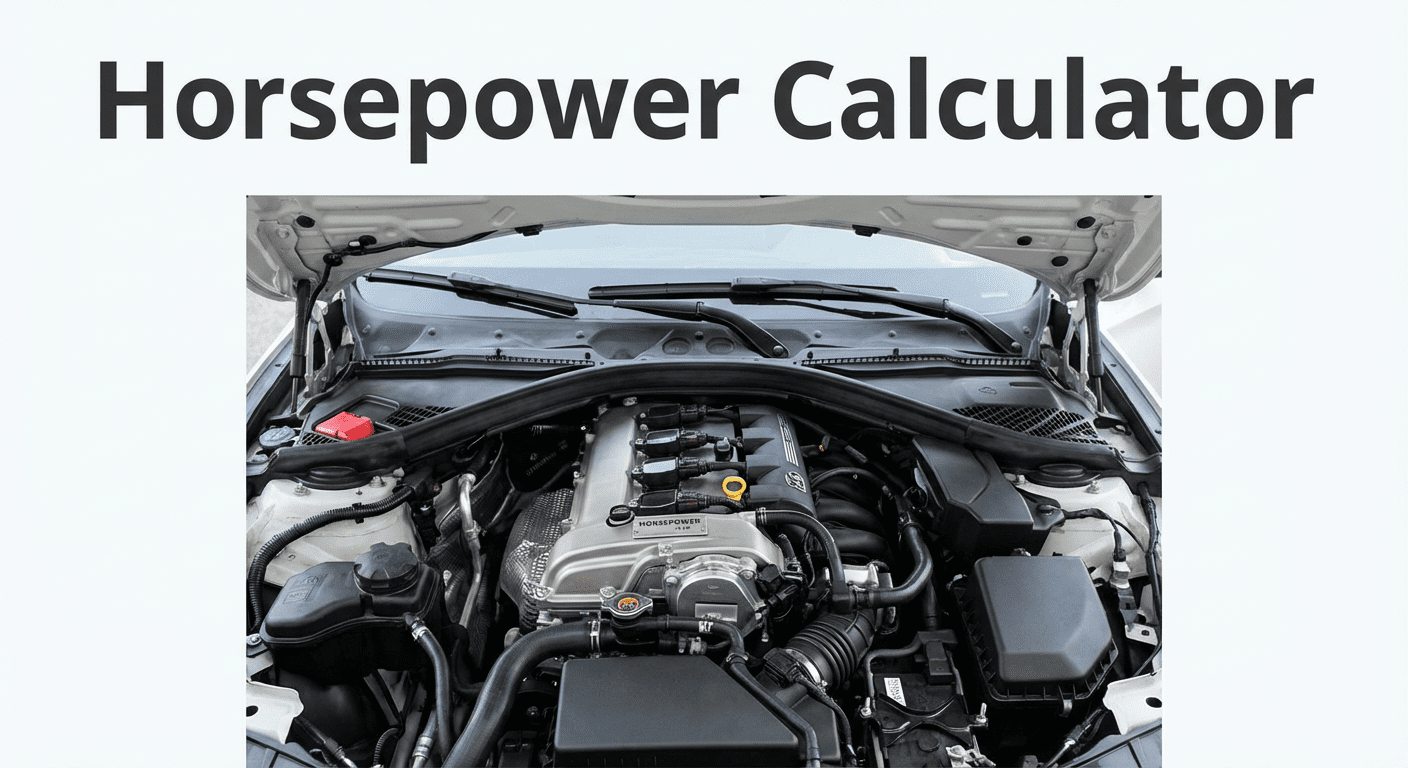
Today horsepower is used across automotive engineering, electrical motors, industrial machinery, and consumer products to quantify power output. One mechanical horsepower equals 745.7 watts — a standard used in the United States and most English-speaking engineering contexts. For electrical applications and motor ratings, a slightly different value of 746 W is often used. European markets commonly use metric horsepower (PS), which equals approximately 735.5 watts.
How the Horsepower Calculator Works
Calculating HP from Torque and RPM
When you know an engine's torque output and rotational speed (RPM), you can calculate horsepower using the Torque-HP formula. Enter the torque in ft-lbs or Newton-meters and the RPM in the calculator. The tool converts Newton-meters to ft-lbs if needed, then applies the formula to return HP, watts, kilowatts, and metric PS simultaneously.
Converting HP to Watts and Kilowatts
To convert horsepower to watts, the calculator multiplies your HP value by 745.7 (the mechanical horsepower constant). The result is also expressed in kilowatts (divided by 1,000), metric PS, BTU/hr, and ft-lbs/sec — all common power units used in different engineering and commercial contexts. This mode is useful when comparing engine specs across US and European standards.
Converting Watts and Kilowatts to HP
When converting an electric motor's wattage to HP, the calculator divides watts by 745.7. Select whether your input is in watts or kilowatts using the unit toggle. This mode is commonly used when evaluating electric motors, generators, HVAC compressors, and other industrial equipment rated in SI units. The result includes both mechanical HP and metric PS for full international comparison.
Horsepower Formulas
HP = (Torque × RPM) / 5252
This is the primary formula for calculating mechanical horsepower from engine torque and RPM. The constant 5252 derives from the original HP definition: 33,000 ft-lbs/min divided by 2π (one complete revolution in radians) gives approximately 5,252. This formula is fundamental to dynamometer testing and engine performance evaluation. When torque is in Newton-meters, multiply by 0.7376 to convert to ft-lbs first, or use the alternative formula HP = (Nm × RPM) / 7120.8.
HP to Watts (1 HP = 745.7 W)
The conversion factor between mechanical horsepower and watts is 745.69987 W, commonly rounded to 745.7 W. This was established by the International System of Units (SI) based on James Watt's original definition converted to metric units. The conversion is:
Mechanical vs Electrical vs Metric HP
Three main definitions of horsepower exist in common use. Mechanical (imperial) HP is 745.7 W and is used for automotive and general engineering. Electrical HP is exactly 746 W and is used for motor ratings by the US National Electrical Manufacturers Association (NEMA). Metric HP (PS) is 735.49875 W and is used in European vehicle specifications. The differences are small (under 1.5%) but matter in precise engineering calculations.
Types of Horsepower
Mechanical (Imperial) Horsepower
Mechanical horsepower (also called imperial horsepower) is the US standard at 745.7 watts. It is used for automotive power ratings in the United States, Canada, and the UK, and for general industrial and engineering applications. When you see HP ratings on car spec sheets in American publications, this is the definition being used.
Electrical Horsepower
Electrical horsepower is defined as exactly 746 watts by the NEMA standard. It is used for rating AC and DC electric motors, pumps, compressors, and HVAC systems in US electrical engineering. The difference from mechanical HP (0.04%) is negligible in most practical contexts but is the correct value to use for motor wiring calculations and electrical load analysis. For electrical work, also see our Ohm's Law Calculator and Motor FLA Calculator.
Metric Horsepower (PS)
Metric horsepower (PS from German Pferdestärke, or CV in French/Spanish) equals 735.49875 watts, or the power needed to lift 75 kilograms by 1 meter in 1 second. It is used for vehicle ratings across Europe, Japan, and much of Asia. German, Italian, Japanese, and Korean car manufacturers typically publish power figures in PS or kW. One mechanical HP equals approximately 1.0139 PS, making them nearly equivalent but not identical.
Brake Horsepower (BHP)
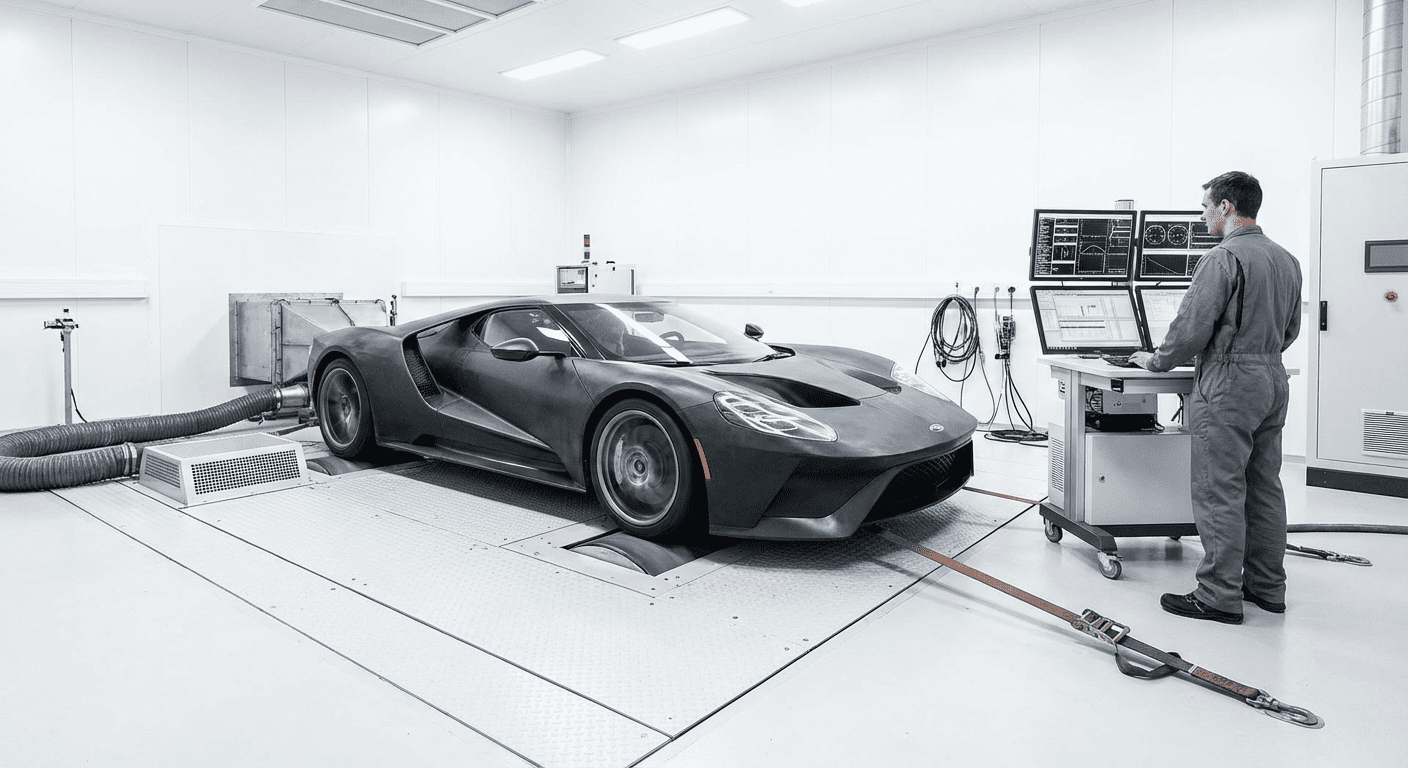
Brake Horsepower (BHP) is horsepower measured directly at the crankshaft using a dynamometer with a braking load. It represents actual engine output before drivetrain losses (transmission, differential, tires). In the UK, BHP is the standard automotive rating. BHP is usually slightly higher than wheel horsepower (WHP), which is measured at the driven wheels after drivetrain losses of typically 10–20%. When manufacturers quote BHP, they are measuring at the engine; when tuners quote power, they often quote WHP.
Horsepower Conversion Table
| HP | Watts (W) | Kilowatts (kW) | BTU/hr | ft-lbs/s |
|---|---|---|---|---|
| 1 HP | 745.7 W | 0.746 kW | 2,544 BTU/hr | 550 ft-lbs/s |
| 5 HP | 3,729 W | 3.729 kW | 12,722 BTU/hr | 2,750 ft-lbs/s |
| 10 HP | 7,457 W | 7.457 kW | 25,444 BTU/hr | 5,500 ft-lbs/s |
| 50 HP | 37,285 W | 37.285 kW | 127,220 BTU/hr | 27,500 ft-lbs/s |
| 100 HP | 74,570 W | 74.57 kW | 254,443 BTU/hr | 55,000 ft-lbs/s |
| 200 HP | 149,140 W | 149.14 kW | 508,886 BTU/hr | 110,000 ft-lbs/s |
| 500 HP | 372,850 W | 372.85 kW | 1,272,215 BTU/hr | 275,000 ft-lbs/s |
Common Horsepower Ratings
Car Engines
Compact economy cars typically produce 100–150 HP. Mid-size sedans and family SUVs range from 150–300 HP. Performance sports cars like the Ford Mustang GT (450 HP) and Chevrolet Corvette (490 HP) occupy the upper mid-range. Supercars such as the Ferrari 296 GTB (819 HP) and Lamborghini Huracán (631 HP) reach well beyond 600 HP. High-performance electric vehicles are closing this gap — the Rimac Nevera produces 1,914 HP from four electric motors. Use our speed calculator and MPG calculator alongside this tool for full vehicle performance analysis.
Electric Motors
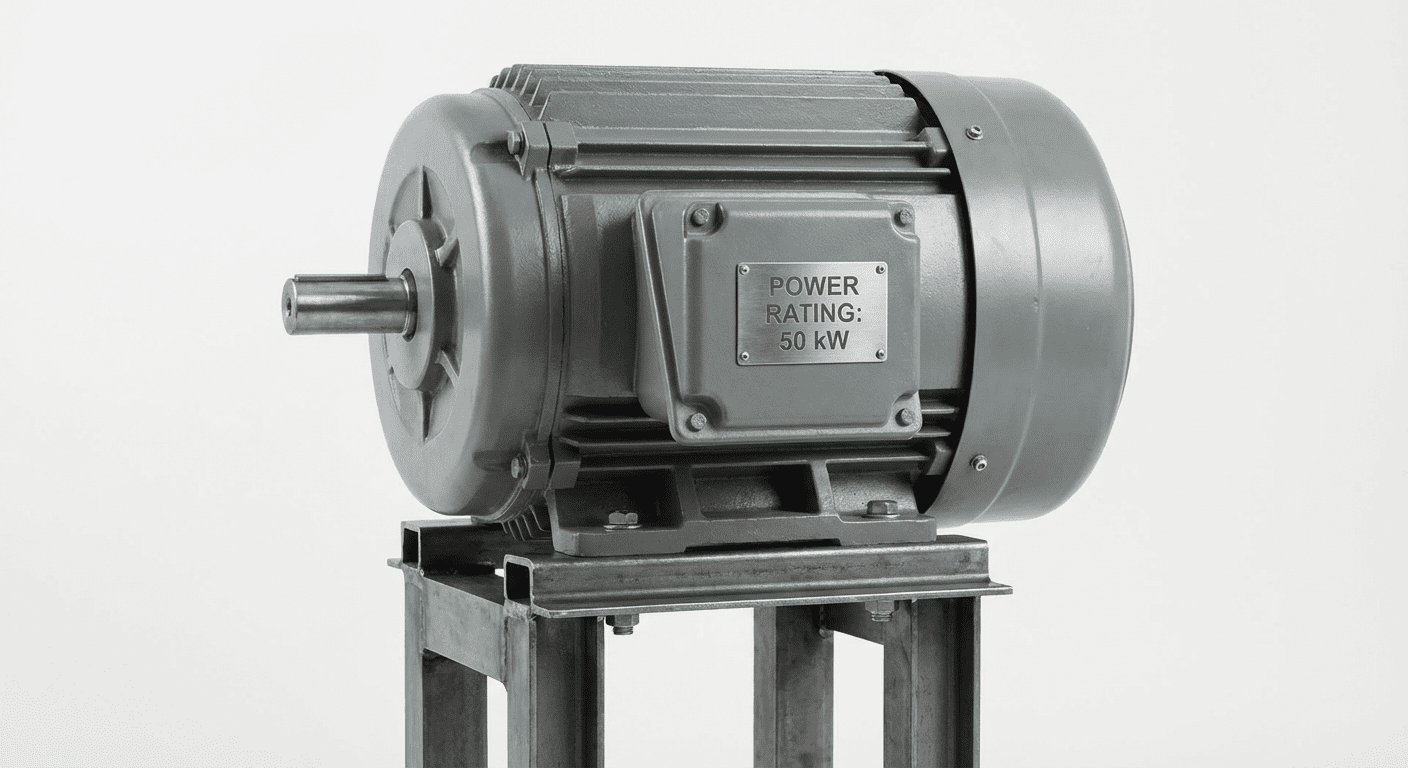
Small fractional-horsepower motors (0.25–2 HP) power household appliances like fans, pumps, and power tools. HVAC systems typically use 1–10 HP motors. Industrial conveyor and pump systems commonly use 10–100 HP motors. Large industrial compressors and industrial machinery may use motors from 100 HP to over 1,000 HP. Electric motors are often rated in kW in international markets, making the watts-to-HP conversion in this calculator particularly useful.
Lawn Mowers and Small Engines
Walk-behind push mowers typically produce 4–7 HP from their small gasoline engines. Self-propelled mowers range from 6–11 HP. Riding mowers and zero-turn mowers use engines in the 14–30 HP range. Chainsaws produce 2–6 HP. Portable generators are rated from 1 HP (about 750W) for small inverter units up to 15+ HP for large standby generators. Small engine ratings in HP remain standard in North American consumer markets.
Horsepower Calculator Examples
Example 1 - 300 ft-lbs Torque at 5000 RPM
An engine produces 300 ft-lbs of torque at 5,000 RPM. HP = (300 × 5000) ÷ 5252 = 1,500,000 ÷ 5252 = 285.6 HP. Converting to watts: 285.6 × 745.7 = 212,972 W = 213.0 kW. This is consistent with a performance V6 or turbocharged four-cylinder engine in a sport sedan. Use the quick action button in the calculator above to run this example instantly.
Example 2 - Convert 150 HP to kW
A vehicle rated at 150 HP in US specs. Converting: 150 × 745.7 = 111,855 W = 111.9 kW. In metric PS: 150 × 1.01387 = 152.1 PS. This explains why European car specs often show a slightly higher PS figure than the US HP figure for the same engine — the two units are close but not identical.
Example 3 - Convert 2200W Motor to HP
An electric motor rated at 2,200 watts. HP = 2,200 ÷ 745.7 = 2.95 HP. This is a typical small workshop motor suitable for a bench grinder, air compressor, or pool pump. The metric equivalent is 2,200 ÷ 735.5 = 2.99 PS. For full electrical circuit analysis of this motor, use our motor full-load amperage calculator.
Frequently Asked Questions
What is 1 horsepower equal to in watts?
One mechanical horsepower equals 745.7 watts (745.69987 W to be precise). This is the standard conversion used in the United States and most engineering contexts. Electrical horsepower is slightly different at exactly 746 W, and metric horsepower (PS) equals approximately 735.5 watts.
How do you calculate HP from torque?
Horsepower is calculated from torque and RPM using the formula: HP = (Torque in ft-lbs × RPM) ÷ 5252. The constant 5252 comes from converting the rotational units (one revolution = 2π radians, combined with the 33,000 ft-lbs/min definition of one horsepower). If torque is in Newton-meters, first convert to ft-lbs by multiplying by 0.7376, then apply the same formula.
What is the difference between HP and BHP?
BHP (Brake Horsepower) measures the power output at the engine's crankshaft, measured directly on a dynamometer (dyno) using a braking mechanism. Standard HP ratings from manufacturers may be measured at the flywheel before accounting for drivetrain losses. In practice, BHP and HP are often used interchangeably, but BHP specifically refers to a direct measurement method rather than a theoretical calculation.
How many HP is a typical car?
A typical economy car produces between 100 and 150 HP. Mid-range family sedans and SUVs typically produce 150 to 300 HP. Performance and sports cars range from 300 to 500 HP. High-performance supercars exceed 500 HP, with some modern hypercars exceeding 1,500 HP. Electric vehicles like the Tesla Model S Performance produce around 670 HP.
What is metric horsepower?
Metric horsepower (PS from the German Pferdestärke, or CV in French and Spanish) is defined as the power needed to lift 75 kilograms by 1 meter in 1 second. This equals approximately 735.5 watts, compared to 745.7 watts for mechanical horsepower. Metric HP is commonly used in European and Asian vehicle specifications. 1 mechanical HP equals approximately 1.0139 PS.
Also check out: