Urine Color Chart
The Urine Color Chart is a health reference tool covering urine color chart, urine color meanings, urine color chart hydration, dark urine chart. Use the chart below to look up values instantly. Printable and downloadable versions are available on this page.
Urine Color Chart — Complete Reference
| Colour Description | Hydration Status | Most Likely Cause | Possible Medical Cause | What to Do |
|---|---|---|---|---|
| Clear — no colour | Over-hydrated | Drinking excessive water | Diabetes insipidus (rare) | Reduce water intake slightly. Excessive dilution can lower electrolytes. |
| Pale straw — very light yellow | Excellently hydrated | Normal healthy output | None | This is the ideal target colour. |
| Yellow — standard | Well hydrated | Normal urochrome pigment concentration | None | Normal. Maintain current fluid intake. |
| Dark yellow or amber | Mildly dehydrated | Insufficient fluid intake | None | Drink one to two glasses of water now. |
| Honey or dark orange-yellow | Moderately dehydrated | Very low fluid intake or concentrated morning urine | Liver condition (if persistent) | Drink water urgently. See doctor if persists without dietary cause. |
| Orange | Severely dehydrated or dietary | Beta-carotene foods, B2 vitamins, rifampicin antibiotic | Liver or bile duct condition | See doctor if not explained by food or medication. |
| Pink or light red | Dietary | Beets, blackberries, rhubarb, red food dye | Haematuria (blood in urine) — kidney stones, UTI, or tumour | See doctor promptly if not explained by food within 24 hours. |
| Brown or cola-coloured | Medical concern | Exercise-induced rhabdomyolysis, severe dehydration | Liver disease, kidney failure | Seek immediate medical attention — especially after intense exercise. |
| Green or blue-green | Medication or infection | Methylene blue medication, asparagus (rare) | Pseudomonas UTI (rare) | Consult doctor if no medication explains it. |
| Cloudy, milky, or foamy | Infection or other | UTI, kidney stones, high-protein diet (foamy) | Proteinuria (kidney disease) — foamy urine indicates protein | See doctor if persistent beyond one or two days. |
Source: Cleveland Clinic and NHS urine colour assessment guidelines
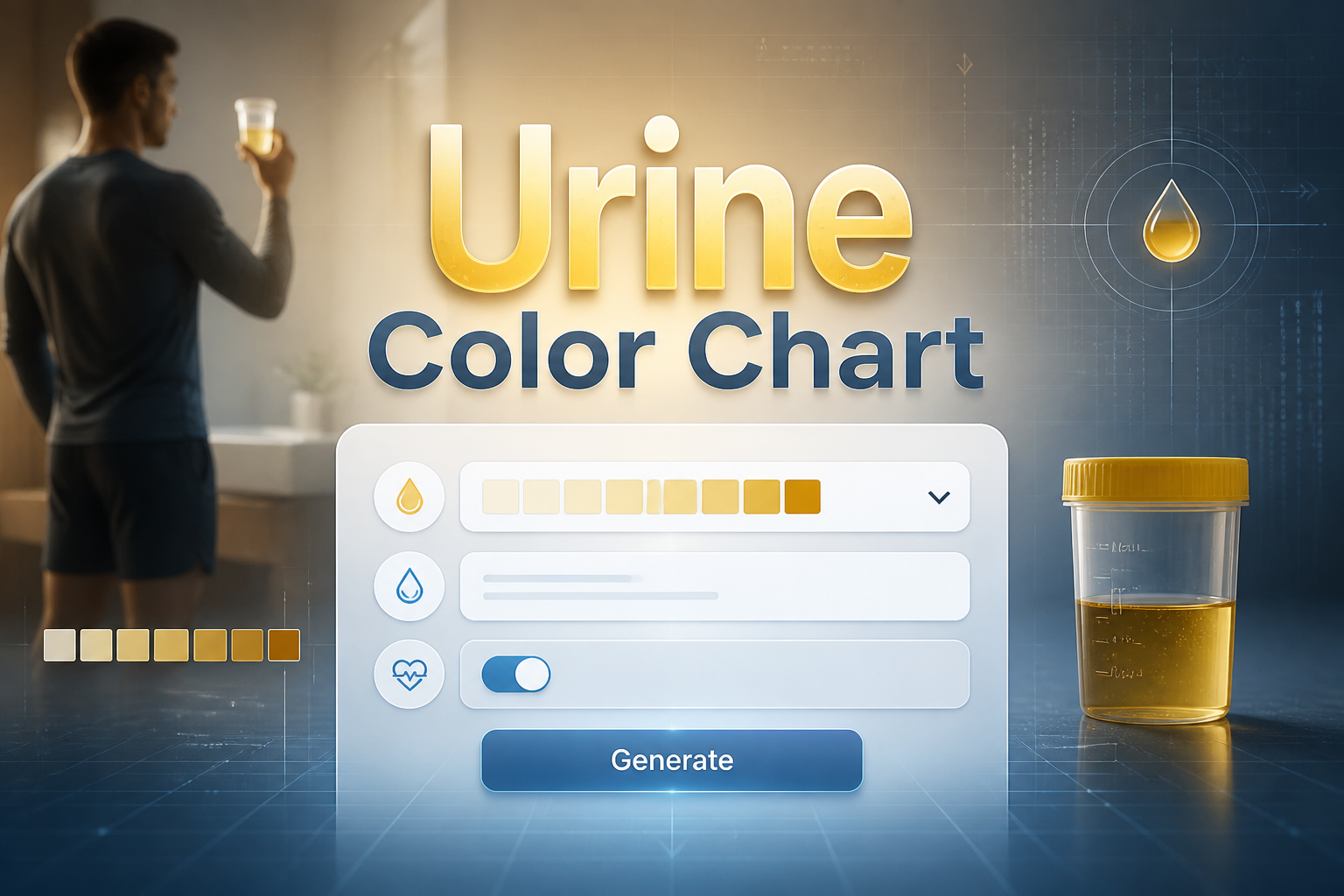
Urine Colour Hydration Scale
The simplest real-time hydration check is to observe urine colour — pale yellow is the target and indicates healthy fluid balance throughout the day.
| Level | Colour Description | Hydration Status and Recommended Action |
|---|---|---|
| Level 1 | Clear — no colour | Over-hydrated. Slow down fluid intake slightly. Excessive water dilutes electrolytes. |
| Level 2 | Very pale straw | Excellent hydration. Maintain current intake. |
| Level 3 ★ | Pale yellow | Well hydrated. This is the ideal target colour throughout the day. |
| Level 4 | Yellow | Adequately hydrated. Normal colour for most of the day. |
| Level 5 | Dark yellow | Slightly dehydrated. Drink one to two glasses of water. |
| Level 6 | Amber | Dehydrated. Drink water now and continue drinking steadily. |
| Level 7 | Dark amber or orange | Moderately to severely dehydrated. Drink water immediately and consider electrolyte replacement. |
| Level 8 | Brown or very dark | Severely dehydrated or possible medical cause. See a doctor — especially if this follows intense exercise or is accompanied by pain. |
Source: NHS hydration guidelines and Armstrong hydration colour scale
Foods and Medications That Change Urine Colour
| Substance | Colour Effect on Urine | How Long the Effect Lasts |
|---|---|---|
| Beets and beetroot | Pink to red | Up to 24 hours. Only affects approximately 10–14% of people (a genetic trait). |
| Blackberries and berries | Pink to dark pink | Up to 24 hours. |
| Carrots (large amounts) | Orange-yellow | 24–48 hours. |
| Asparagus | Greenish tint and distinctive sulphur odour | 15 minutes to a few hours after eating. |
| B vitamins — especially riboflavin (B2) | Bright neon or fluorescent yellow | While supplement is actively being excreted. |
| Vitamin C (high dose) | Brighter yellow | While being excreted. |
| Rifampicin (antibiotic for TB) | Orange to red-orange | Throughout the entire course of treatment. |
| Nitrofurantoin (UTI antibiotic) | Yellow to brown | Throughout the course of treatment. |
| Phenazopyridine (bladder pain relief — AZO) | Bright vivid orange | Throughout use — this is expected and harmless. |
| Methylene blue (diagnostic tests and supplements) | Blue to blue-green | Up to 24 hours. |
| Iron supplements | Darker yellow or greenish-brown | Throughout supplementation. |
| Senna laxatives | Yellow-brown to orange-brown | After each use. |
Source: Cleveland Clinic pharmacology reference
Urine Colour in Pregnancy
Pregnancy increases blood volume and kidney filtration rate — understanding normal urine colour changes during pregnancy helps distinguish expected variation from signs that need attention.
- Dark morning urine — more concentrated urine in the morning is common in pregnancy due to increased fluid needs. Drink water immediately upon waking.
- Cloudy urine — some cloudiness can be normal in pregnancy due to changes in vaginal discharge and kidney filtration. However persistent cloudiness with burning or odour may indicate a UTI which requires prompt treatment during pregnancy.
- Pink or red urine — any blood-tinged urine in pregnancy should be reported to an obstetrician promptly. It can indicate a UTI, kidney stones, or in rare cases more serious conditions.
- Foamy urine — persistent foamy or bubbly urine may indicate proteinuria which can be an early sign of pre-eclampsia and should be evaluated by a healthcare provider.
Hydration Checker
Select your urine colour and enter your body weight to get a hydration level assessment and recommended daily water intake.
For a complete picture of digestive health, also see the Bristol Stool Chart which explains what each stool type from 1 to 7 indicates about gut transit time and hydration levels, and the Stool Color Chart for a plain-English guide to poop colour meanings, causes, and when to seek medical advice.