Chapter Title Generator
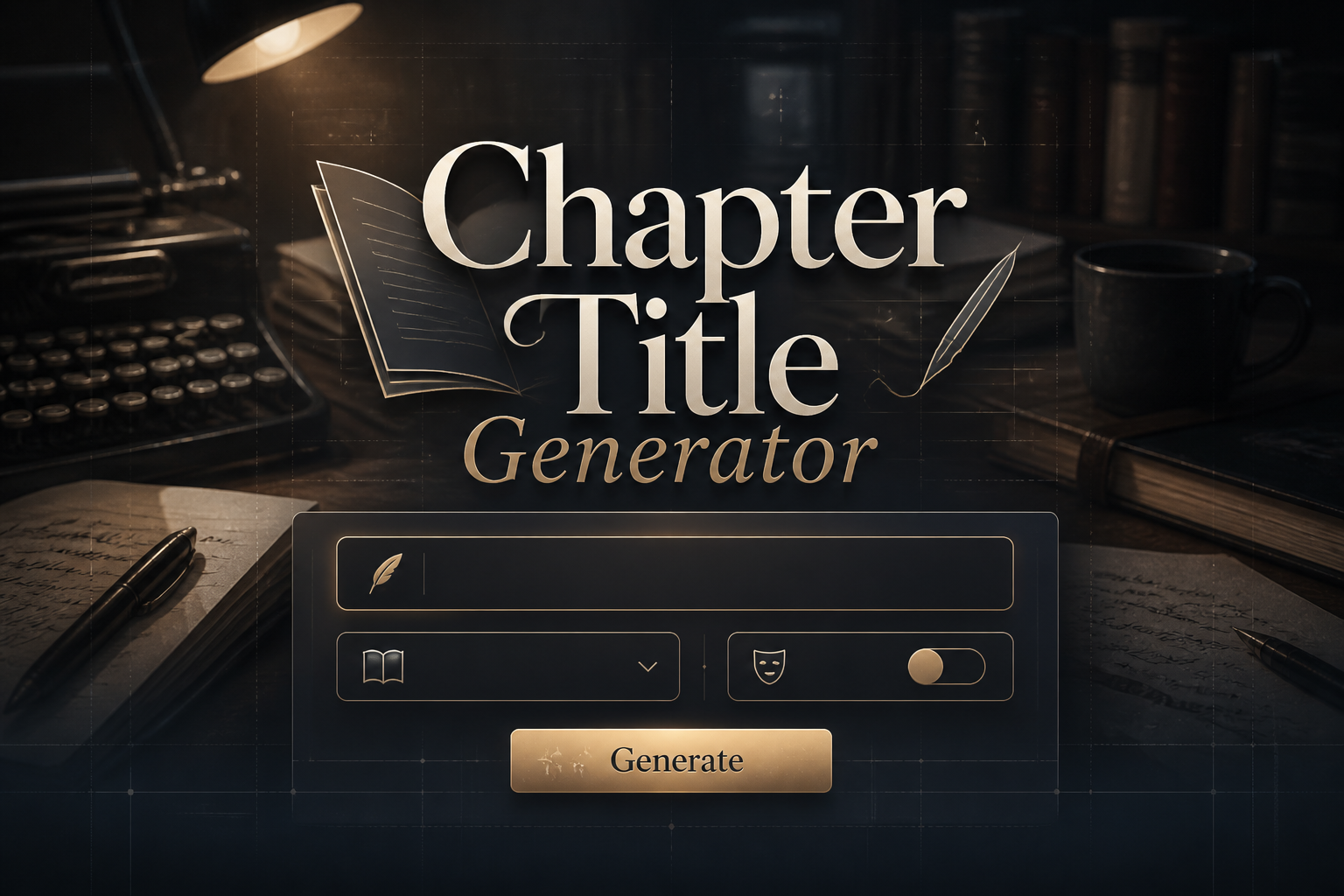
Create bold, creative chapter titles for any story with AI. Choose your genre, mood, and theme for tailored results.
Chapter Title Generator
Create bold, creative chapter titles for any story with AI. Choose your genre, mood, and theme for tailored results.
What is Chapter Title Generator
AIfreeforever's Chapter Title Generator creates compelling, creative chapter titles for books, stories, and written content. This free chapter title generator helps authors, writers, and content creators craft engaging titles that match their genre, tone, and narrative style.
Whether you write fantasy novels, mystery stories, romance books, or any other genre, this chapter title generator produces thematic titles that enhance your narrative and captivate readers. Perfect for novelists, short story writers, and creative writing enthusiasts who want professional-quality chapter titles.
The tool works well with other writing resources like book title generators and complements story writing tools for complete creative writing workflows. To plan all your chapters before naming them, use the book outline generator — it creates a full chapter-by-chapter outline with summaries for each chapter so you know exactly what each chapter needs to communicate before choosing its title.
How to Use Chapter Title Generator
1. Enter Story Details
Provide your book or story title to help the AI understand the overall context and theme of your work.
2. Select Your Genre
Choose from Fantasy, Sci-Fi, Mystery, Romance, Horror, Adventure, Historical, or Custom to match your story setting and themes.
3. Choose Tone Style
Select Dramatic, Lighthearted, Suspenseful, Emotional, Dark, or Poetic to set the emotional feel of your chapter titles.
4. Add Keywords or Themes
Include specific themes, events, or keywords you want incorporated into your chapter titles for better relevance.
5. Generate Chapter Titles
Click generate to create multiple creative title options, then copy your favorites or download the complete list for your project.
Types of Chapter Title Styles
• Descriptive Chapter Titles
Straightforward titles that clearly indicate chapter content and set reader expectations with direct, informative language.
• Thematic Chapter Titles
Titles that highlight the central theme or emotional core of the chapter rather than specific events or actions.
• Quote-Based Chapter Titles
Using memorable dialogue lines or quotes from the chapter as titles to create intrigue and emotional resonance.
• Metaphorical Chapter Titles
Using figurative language and symbolism to create deeper meaning that reflects the chapter's events and themes.
• Character-Focused Chapter Titles
Titles that center on specific characters, highlighting their journey, perspective, or development in that chapter.
Benefits of Creative Chapter Titles
• Enhance Reader Engagement
Compelling chapter titles create intrigue and anticipation that keeps readers turning pages and invested in your story. Pair chapter titles with our Book Title Generator for a compelling book that hooks readers.
• Improve Story Structure
Well-crafted titles help organize your narrative and provide clear signposts for readers to follow your story arc.
• Professional Presentation
Quality chapter titles give your work a polished, professional appearance that impresses readers and publishers.
• Save Writing Time
Generate multiple creative title options instantly instead of spending hours brainstorming and crafting titles manually.
Perfect for Creative Writers
• Novel Writers
Create thematic signposts and anticipation builders for longer works where chapter titles help readers track story progression.
• Short Story Authors
Generate meaningful section breaks and perspective shifts that emphasize thematic elements in shorter fiction works.
• Fanfiction Writers
Create titles that reference canon material while highlighting unique character development and story divergences.
• Content Creators
Develop engaging chapter titles for serialized content, blog series, and episodic storytelling across various platforms.
Chapter Title Writing Best Practices
• Create Intrigue Without Spoilers
Craft titles that hint at chapter content without revealing major plot twists or story developments to maintain suspense.
• Maintain Consistent Style
Keep a consistent approach throughout your book whether using metaphorical, descriptive, or thematic title styles.
• Consider Narrative Arc
Align chapter titles with your overall story arc, with early chapters suggesting beginnings and later ones building toward resolution.
• Use Effective Brevity
Keep titles concise and impactful, typically one to six words that capture the essence of the chapter content.
Chapter Title Formatting Tips
• Title Case Formatting
Use standard title case capitalization for chapter titles, capitalizing major words while keeping articles and prepositions lowercase.
• Subtitle Integration
Consider using subtitle formats like "Chapter 1: The Beginning" to add depth and context to your chapter organization.
• Genre Conventions
Follow established conventions for your genre while adding your unique creative touch to stand out from similar works.
• Table of Contents Appeal
Ensure your chapter titles look appealing in the table of contents and entice readers to continue through your book.
Frequently Asked Questions
Do all books need chapter titles?
No, chapter titles are optional. Many successful books use only numbers or no divisions. Choose based on your genre conventions and narrative needs.
How long should chapter titles be?
Most effective chapter titles are brief, typically one to six words. Consistency throughout your work is more important than specific length.
When should I create chapter titles?
You can create preliminary titles during outlining or wait until after drafting. Many authors use working titles and refine them after completion.
Can I use subtitles in chapter titles?
Yes, subtitle formats like "The Beginning: Where Shadows Meet" work well in fantasy, historical fiction, and literary genres.
Should chapter titles match my book title style?
While not required, maintaining some stylistic consistency between your book title and chapter titles creates a cohesive reading experience.