Egg Prices Chart
The Egg Prices Chart is a reference tool covering egg prices chart, egg price history chart, average egg price chart, egg inflation chart. Use the chart below to look up values instantly. Printable and downloadable versions are available on this page.
Historical Egg Prices Chart — Average US Price Per Dozen
| Year | Average Price Per Dozen (Grade A Large) | Notable Events Affecting Price |
|---|---|---|
| 2015 | $1.47 | Avian influenza outbreak — largest egg price spike on record at the time. Prices reached $3.00+ mid-year before falling. |
| 2016 | $1.32 | Recovery from HPAI — prices fell back to pre-outbreak levels. |
| 2017 | $1.32 | Stable market conditions. |
| 2018 | $1.36 | Slight inflation-driven increase. |
| 2019 | $1.40 | Stable. |
| 2020 | $1.47 | COVID-19 pandemic caused brief price spike in March–April 2020 due to panic buying. |
| 2021 | $1.72 | Supply chain disruptions and rising feed costs. |
| 2022 | $2.52 | Highly pathogenic avian influenza (HPAI) returned — devastating commercial flock losses. Inflation also contributed. |
| 2023 | $2.97 annual avg (peak $4.82 in January) | Worst HPAI outbreak in US history — over 58 million birds affected. Historic price peak. |
| 2026 | $3.37 annual avg | Ongoing HPAI pressure, inflation, and rising production costs kept prices elevated. |
Source: US Bureau of Labor Statistics Consumer Price Index for eggs and USDA Economic Research Service
Egg Types and Price Comparison
| Egg Type | Approximate Price Range Per Dozen | What the Label Means |
|---|---|---|
| Conventional (caged) | Lowest — $2.00 to $3.50 | Hens kept in battery cages. Least space per bird. |
| Cage-free | $3.50 to $5.00 | Hens not in cages but kept in barns — not required to have outdoor access. |
| Free-range | $4.00 to $6.00 | Hens have some outdoor access — USDA does not specify minimum space or time outdoors. |
| Pasture-raised | $6.00 to $9.00 | Hens have significant outdoor access on pasture — typically 108 sq ft per bird for certified brands. |
| Organic | $5.00 to $8.00 | USDA certified organic feed — no pesticides or antibiotics. Hens must be cage-free. |
| Organic pasture-raised | $8.00 to $12.00+ | Highest welfare standard with organic certification — most expensive category. |
| Backyard or local farm eggs | Highly variable $3.00 to $10.00+ | Not USDA graded — quality and welfare vary widely by producer. |
Source: USDA Agricultural Marketing Service and Consumer Reports egg label analysis
Egg Nutrition Reference
| Nutrient | Amount Per Large Egg |
|---|---|
| Calories | 70 kcal |
| Total Fat | 4.8 g |
| Saturated Fat | 1.6 g |
| Cholesterol | 186 mg |
| Protein | 6.3 g |
| Carbohydrates | 0.4 g |
| Vitamin D | 44 IU (11% DV) |
| Vitamin B12 | 0.45 mcg (19% DV) |
| Choline | 147 mg (27% DV) |
| Selenium | 15.4 mcg (22% DV) |
| Riboflavin (B2) | 0.23 mg (18% DV) |
| Lutein and Zeaxanthin | 252 mcg — important for eye health |
Source: USDA FoodData Central — large whole egg nutrient data
Egg Price Tracker
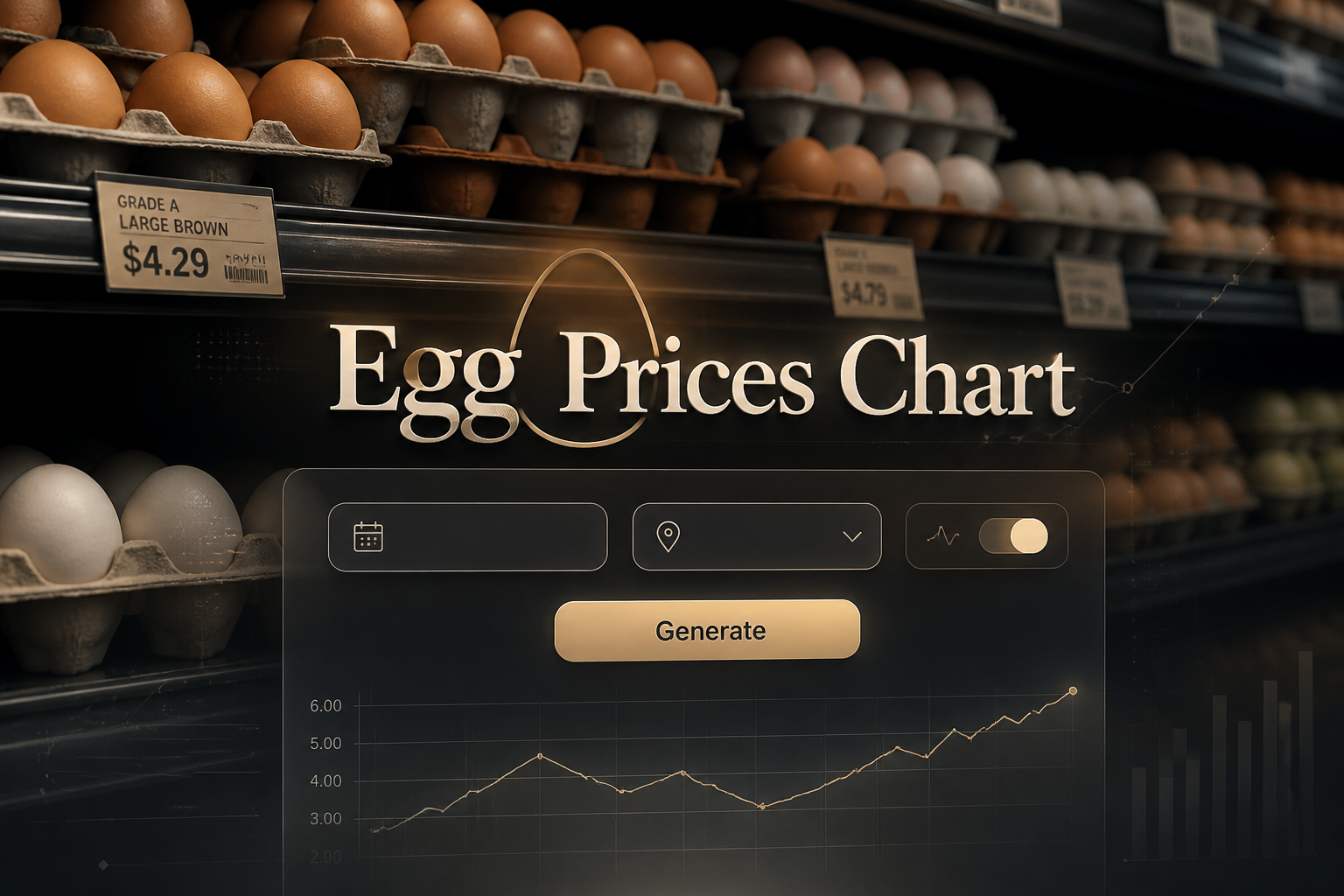
Toggle between conventional, organic, and free-range to compare historical price trends per dozen eggs. Hover over the chart for exact values by year.
Frequently Asked Questions
Why are egg prices so high right now?
Egg prices have been elevated since 2022 due to the worst outbreak of highly pathogenic avian influenza (HPAI) in US history — over 58 million commercial egg-laying hens were lost in 2022 to 2023 alone. The resulting supply shortage combined with inflation in feed costs, energy, and transportation produced sustained price increases.
What is HPAI and how does it affect egg prices?
HPAI (Highly Pathogenic Avian Influenza) is a deadly strain of bird flu that can wipe out entire commercial flocks rapidly. When large numbers of laying hens are killed the egg supply falls sharply but demand remains constant — driving prices up until flocks can be rebuilt, which takes 12 to 18 months.
Are more expensive eggs more nutritious?
Pasture-raised eggs consistently show somewhat higher levels of omega-3 fatty acids, vitamin D, and beta-carotene compared to conventional eggs due to the hens' varied outdoor diet. However the nutritional differences are relatively modest and all egg types are excellent protein sources.
What does cage-free mean on an egg carton?
Cage-free means the hens are not kept in battery cages but are housed in barns with no requirement for outdoor access. It is a welfare improvement over conventional caged housing but significantly less than free-range or pasture-raised.
How long do eggs last in the refrigerator?
Fresh eggs last 3 to 5 weeks in the refrigerator from the purchase date. The sell-by date on the carton is typically 30 days after packing — eggs are still safe to eat for 3 to 5 weeks after this date if properly refrigerated.
What is the difference between white and brown eggs?
White eggs come from white-feathered hens (like White Leghorns) and brown eggs come from brown or red-feathered hens (like Rhode Island Reds). There is no nutritional or taste difference — shell colour is determined purely by the breed of hen.
Why are egg prices lowest in autumn?
Hens naturally lay more eggs in autumn and spring when daylight hours are in mid-range — this seasonal production increase can lower prices slightly. Commercial operations use artificial lighting to reduce seasonality but some fluctuation still occurs.
Should I buy organic eggs?
Organic eggs guarantee that hens were fed certified organic feed free from pesticides and were not given antibiotics — and they must be cage-free. Whether organic is worth the premium depends on your priorities — for welfare outcomes pasture-raised certification often provides more meaningful benefits than organic certification alone.