Wind Chill Calculator
A wind chill calculator estimates the perceived temperature your body feels when wind combines with cold air. Enter the current air temperature and wind speed to instantly calculate the wind chill factor using the National Weather Service formula.
What Is Wind Chill?
Wind chill is the perceived decrease in air temperature felt by the human body due to the flow of air across exposed skin. When wind blows across skin, it carries away the thin layer of warm air that the body produces, increasing the rate of heat loss. The faster the wind, the faster heat is lost, and the colder the skin feels — even though the actual air temperature has not changed.
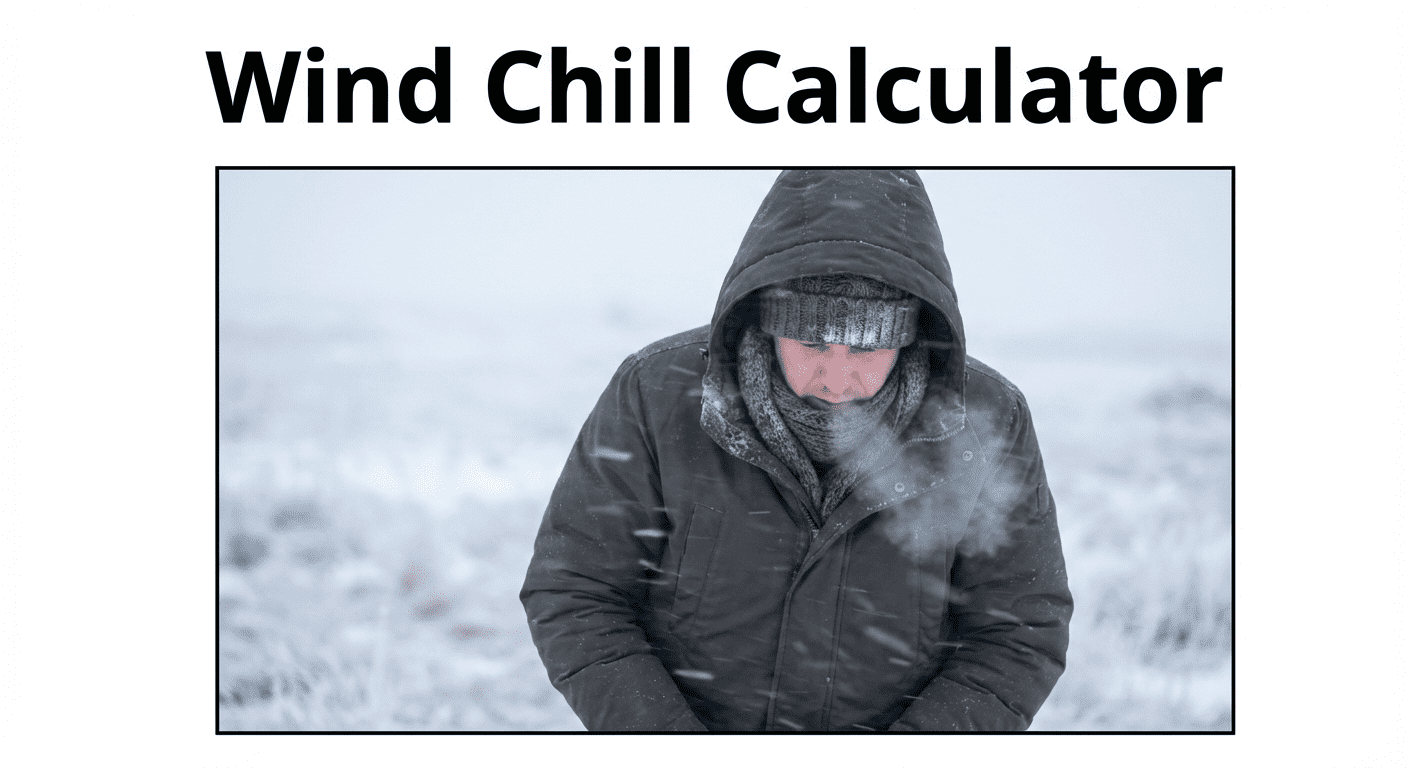
Wind chill only affects living organisms with metabolic heat — it does not change the temperature of inanimate objects. A car parked outside in -20°F air with 30 mph winds will get as cold as -20°F, not the wind chill of -39°F. But a person standing outside will lose body heat at the rate implied by the -39°F wind chill, dramatically increasing frostbite and hypothermia risk. The National Weather Service wind chill chart is the standard reference used by meteorologists across North America.
Wind Chill Formula (NWS)
The Formula Explained
The current wind chill formula was developed by the National Weather Service in 2001 following clinical trials and atmospheric research. It replaced an older formula developed in the 1940s that was less accurate at typical human walking speeds and body shapes.
WC = 35.74 + 0.6215T − 35.75(V^0.16) + 0.4275T(V^0.16)
Where:
WC = Wind Chill Temperature (°F)
T = Air Temperature (°F)
V = Wind Speed (mph)
To convert Celsius to Fahrenheit before applying the formula: F = (C × 9/5) + 32. To convert km/h to mph: mph = km/h × 0.621371. The calculator above handles all unit conversions automatically.
When Wind Chill Applies
The NWS formula is only valid when the air temperature is at or below 50°F (10°C) and wind speed is greater than 3 mph (4.8 km/h). Above 50°F the body's heat dissipation mechanisms respond differently, and below 3 mph wind movement is too slight to cause meaningful additional cooling. In calm or warm conditions, the actual air temperature is the best measure of thermal comfort.
Wind Chill Chart
This table shows NWS wind chill values (°F) for common temperature and wind speed combinations. Values below 0°F carry frostbite risk on exposed skin.
| Temp °F \ mph | 5 | 10 | 15 | 20 | 25 | 30 | 35 | 40 |
|---|---|---|---|---|---|---|---|---|
| 40°F | 36 | 34 | 32 | 30 | 29 | 28 | 28 | 27 |
| 30°F | 25 | 21 | 19 | 17 | 16 | 15 | 14 | 13 |
| 20°F | 13 | 9 | 6 | 4 | 3 | 1 | 0 | -1 |
| 10°F | 1 | -4 | -7 | -9 | -11 | -12 | -14 | -15 |
| 0°F | -11 | -16 | -19 | -22 | -24 | -26 | -27 | -29 |
| -10°F | -22 | -28 | -32 | -35 | -37 | -39 | -41 | -43 |
| -20°F | -34 | -41 | -45 | -48 | -51 | -53 | -55 | -57 |
| -30°F | -46 | -53 | -58 | -61 | -64 | -67 | -69 | -71 |
Values in orange indicate moderate frostbite risk (30 min exposure). Red indicates high risk (10 min). Bold red indicates extreme danger (5 min or less). Source: NWS Wind Chill Temperature Index.
Frostbite Risk by Wind Chill
Danger Zones
Above 0°F — Low Risk
No significant frostbite risk at typical outdoor exposure times. Cold and uncomfortable but not immediately dangerous for healthy adults with appropriate clothing.
0°F to -19°F — Moderate Risk
Frostbite possible on exposed skin within 30 minutes. Cover ears, nose, cheeks, and fingers. Limit outdoor exposure for children and the elderly.
-20°F to -39°F — High Risk
Frostbite on exposed skin within 10 minutes. Keep all skin covered. The NWS issues Wind Chill Warnings at -35°F with 10 mph winds or stronger.
-40°F to -57°F — Very High Risk
Frostbite on exposed skin within 5 minutes. Avoid outdoor activity except in emergencies. All skin must be fully covered with insulated waterproof gear.
Below -57°F — Extreme Danger
Frostbite in under 2 minutes. Stay indoors. Outdoor exposure is life-threatening without full head-to-toe insulated protection. These conditions occur in northern Canada, Alaska, and northern Russia.
How Quickly Frostbite Can Occur
Frostbite begins when tissue freezes — typically starting in the extremities (fingers, toes, ears, nose, cheeks). Early frostbite (frostnip) causes numbness, redness, and tingling. At this stage, the tissue has not yet frozen and full recovery is likely with rewarming. Superficial frostbite freezes the surface skin layers and causes blistering. Deep frostbite, which can be permanent, affects deeper tissues and requires medical attention. According to the CDC guidelines on cold stress, workers and outdoor recreationists should monitor each other for signs of frostbite since the affected area often becomes numb before the person realizes the danger.
How to Dress for Wind Chill
Layering is the most effective strategy for managing wind chill exposure. Three layers work together to retain heat and protect against moisture and wind.
- —Base layer (moisture wicking). Thin synthetic or merino wool fabric worn directly on skin. Moves sweat away from the body so it does not cool the skin. Avoid cotton — it retains moisture and loses insulating value when wet.
- —Mid layer (insulation). Fleece, down, or synthetic fill that traps warm air close to the body. Thicker for extreme cold, lighter for moderate conditions.
- —Outer shell (wind and water protection). A windproof and waterproof shell prevents cold air from penetrating the insulation layer. This layer has the greatest impact on wind chill protection.
- —Extremity coverage. Insulated waterproof gloves or mittens (mittens are warmer), a hat covering the ears, a balaclava or face covering for severe wind chill, and wool or synthetic socks with waterproof boots.
- —Stay dry. Wet clothing loses virtually all insulating value. If you sweat heavily, reduce the mid-layer thickness rather than removing the shell.
Wind Chill vs Heat Index
Wind chill and heat index are both "feels like" temperature measures — they describe how temperature is perceived by the human body rather than what a thermometer reads. Wind chill applies in cold conditions and accounts for the cooling effect of wind on exposed skin. Heat index applies in hot and humid conditions and accounts for how high humidity reduces the body's ability to cool itself through sweating.
Both are biologically based calculations that help people make decisions about outdoor exposure, clothing, and activity level. Neither affects the actual air temperature, the freezing point of water, or the temperature of inanimate objects. For outdoor workers, athletes, and emergency planners, both metrics are essential: heat index governs summer safety, while wind chill governs winter safety. You can also use our percentage calculator to work out temperature change percentages or conversion differences when analyzing weather data.
Wind Chill Calculator Examples
Example — 20°F With 15 mph Wind
Apply the NWS formula with T = 20°F and V = 15 mph:
At 20°F with a 15 mph wind, the perceived temperature is about 5°F. No frostbite risk at short exposures, but cold enough to require proper layering.
Example — -5°F With 25 mph Wind
Apply the NWS formula with T = -5°F and V = 25 mph:
At -5°F with 25 mph winds, the wind chill is approximately -31°F. This is in the High Risk zone — frostbite on exposed skin can occur within 10 minutes. A Wind Chill Warning would likely be in effect.
Frequently Asked Questions

What wind chill is dangerous?
Wind chill becomes dangerous below 0°F (-18°C) where frostbite can occur on exposed skin within 30 minutes. At -20°F (-29°C) the risk rises to 10 minutes. Below -40°F (-40°C) is considered extreme danger with frostbite possible in under 2 minutes. The NWS issues Wind Chill Warnings when wind chills reach -35°F or colder with wind speeds of at least 10 mph.
At what wind chill does frostbite occur?
Frostbite can begin on exposed skin at wind chills below 0°F (-18°C) within about 30 minutes. At -20°F (-29°C) frostbite may occur in 10 minutes. At -40°F frostbite can happen in 5 minutes. At -57°F or colder, frostbite can occur in under 2 minutes. These times apply to exposed skin — proper insulated layering significantly extends safe outdoor time.
Is wind chill the actual temperature?
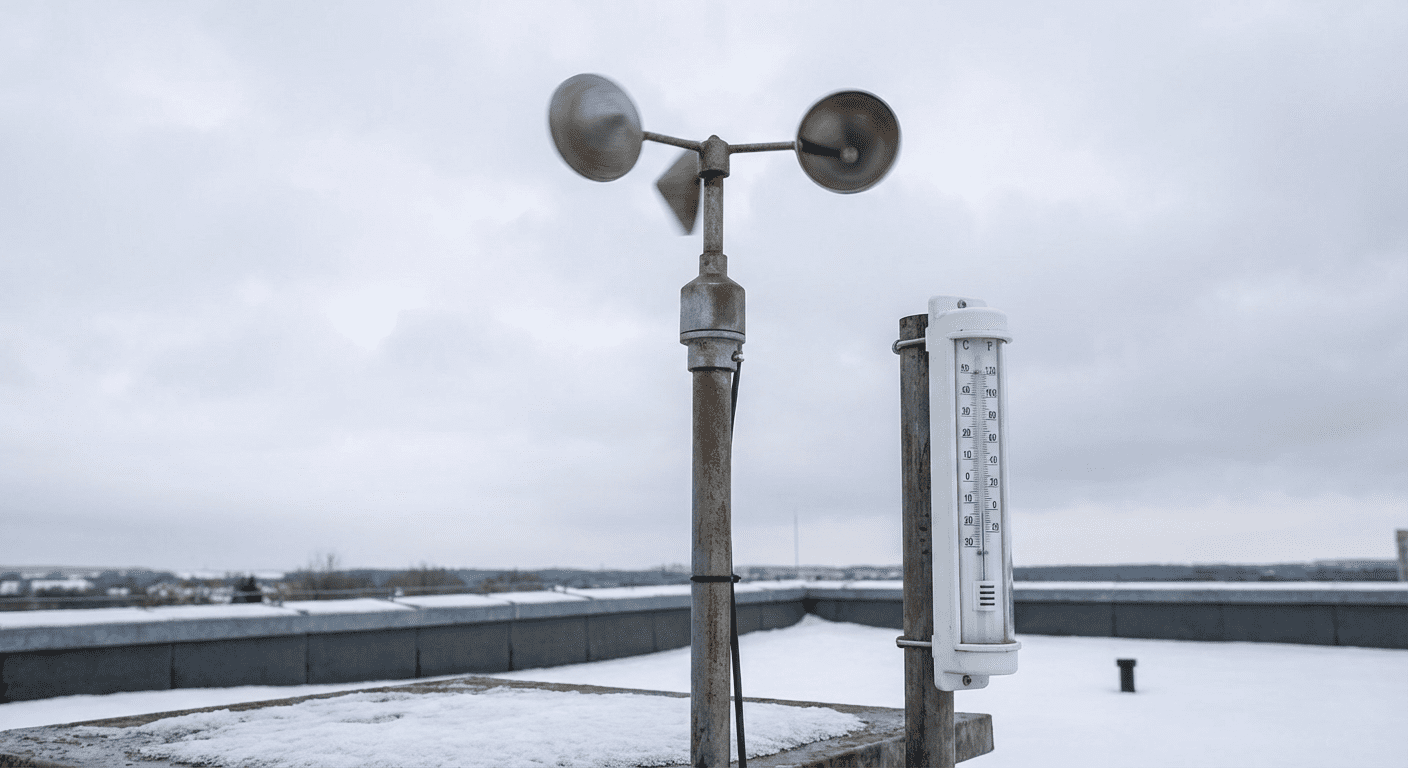
No. Wind chill is not the actual air temperature. It represents how cold exposed human skin feels due to accelerated heat loss from wind. The actual air temperature remains unchanged. A thermometer, car engine, or water pipe will only reach the actual air temperature, not the wind chill temperature. Only living tissue with metabolic heat production is affected by wind chill.
Does wind chill affect cars?
Wind chill does not affect inanimate objects like cars, pipes, or structures. A car will get no colder than the actual air temperature. However, wind does speed up the rate at which a warm car engine or interior cools toward that temperature. People working on vehicles outdoors in cold wind face real frostbite risk even though the car itself is unaffected by wind chill.
What is the wind chill formula?
The NWS Wind Chill Temperature Index formula is: WC = 35.74 + 0.6215T − 35.75(V^0.16) + 0.4275T(V^0.16), where T is air temperature in Fahrenheit and V is wind speed in mph. It applies when temperature is at or below 50°F and wind speed is above 3 mph. This formula was developed in 2001 based on human clinical trials.